

A website forum can turn visitors into a community. Customers answer each other's questions, share ideas, and return again and again, while the business gains insight into what its audience really cares about. But adding a forum raises a big decision early on: use a hosted community platform or build something custom. Each path comes with different costs, timelines, and trade-offs. This blog covers how to choose between hosted community platforms and custom development, including features, design, integration, moderation, and long-term maintenance.
Key Takeaways
- Hosted platforms launch quickly with built-in features and maintenance.
- Custom forums offer full control over design, features, and data.
- Integration with the main website shapes the community experience.
- Moderation and community management matter as much as the technology.
- Long-term costs and upkeep should guide the final decision.
Why Businesses Add Forums to Their Websites
A forum gives customers a place to talk with each other and with the brand. Product companies use forums for support and feature requests, membership organizations use them to connect members, and service businesses use them to share expertise and build trust. Over time, the community becomes a valuable resource that answers questions before customers ever contact support.
Communities also deepen loyalty in ways regular content cannot. People who help others or share their experiences feel invested in the brand. The difference outlined in community building vs. audience building explains why a two-way space where members interact often creates stronger relationships than one-way publishing alone.
What Hosted Community Platforms Offer
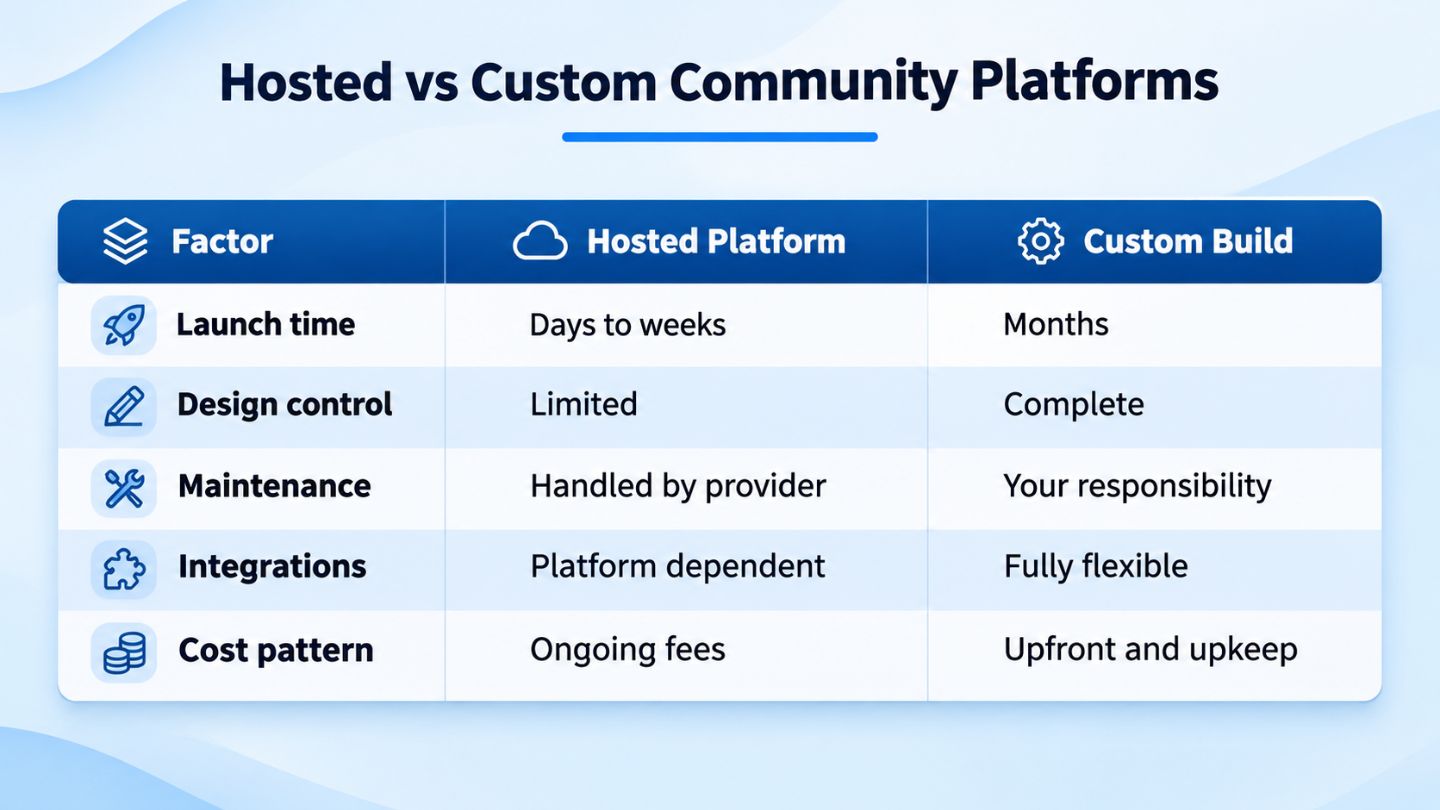
Hosted platforms provide ready-made forum software managed by a third party. Businesses sign up, configure settings, apply branding, and launch, often within days. Hosting, security updates, backups, and new features are handled by the provider, which removes much of the technical burden from the business and its team.
Most hosted options include essentials like user profiles, categories, search, notifications, moderation tools, and mobile-friendly layouts. Many also offer integrations with common tools such as email platforms or single sign-on. The trade-off is flexibility, since design and functionality are limited to what the platform supports, and costs usually rise as the community grows.
Each approach balances speed, control, and long-term cost differently.
When Custom Development Makes More Sense
Custom development gives a business complete control over how its forum looks and works. That might mean deep integration with an existing customer account system, unique features tailored to a specific industry, or strict data requirements that rule out third-party hosting. For businesses where the community is central to the product, these benefits can justify the investment.
The trade-offs are significant. Custom builds take longer, cost more upfront, and require ongoing development for security patches, bug fixes, and new features. Hosting also becomes the business's responsibility, and the right setup matters, so it pays to choose a web host that can handle the traffic and database demands of an active community.
Questions to Ask Before Choosing
- How quickly does the community need to launch?
- How closely must it match the main website's design?
- Which integrations are essential from day one?
- Who will maintain, update, and moderate it long term?
Read More: Common Web Application Development Challenges: Security, Scalability, and Performance
Design and Brand Consistency
A forum should feel like part of the website, not a separate destination. Matching colors, typography, logos, and navigation reassures members that they are still on the brand's site. Hosted platforms usually allow themes and custom styles, though some layout elements may be fixed, while custom builds can match the main site exactly. Keeping that look uniform is also how consistent brand design improves customer recognition, so members feel at home the moment they arrive.
Usability matters as much as appearance. Clear categories, prominent search, readable threads, and simple posting tools encourage participation. Thoughtful design of profiles, badges, and notifications can reward helpful members and keep conversations active. Investing in a clean, consistent design helps the community feel trustworthy and welcoming from the very first visit.
Integration With Your Website and Tools
Integration decides how smoothly members move between the forum and the rest of the site. Single sign-on lets customers use one account across the website, store, and community, which removes a major barrier to joining. Linking forum content to help centers, product pages, and newsletters also helps members find answers and stay engaged.
Data integration matters too. Connecting the community to a CRM or support system reveals which customers are most active and which topics generate the most questions. Hosted platforms vary in how much integration they allow, while custom builds can connect to almost anything, provided the budget and development resources are available.
Search Visibility and Community Content
Community discussions can attract search traffic when they answer real questions in genuine language. Forums and discussion sites have become increasingly visible in search results, a trend covered in how Reddit and forums are becoming search traffic sources, and a well-organized community on your own domain can benefit from the same shift.
Structure determines whether that content helps or hurts. Clean URLs, descriptive thread titles, internal links between related discussions, and controls for thin or duplicate pages all matter. Moderation plays a role as well, and understanding the value of user-generated content helps teams encourage useful discussions while keeping spam and low-quality posts out of view.
Read More: How to Find & Fix Duplicate Content Issues
Planning for Moderation and Community Management
Technology alone does not create a healthy community. Clear guidelines, active moderation, and people who welcome newcomers and keep discussions on track are essential. Hosted platforms often include strong moderation tools like spam filtering and reporting, while custom builds need these features designed and built from scratch.
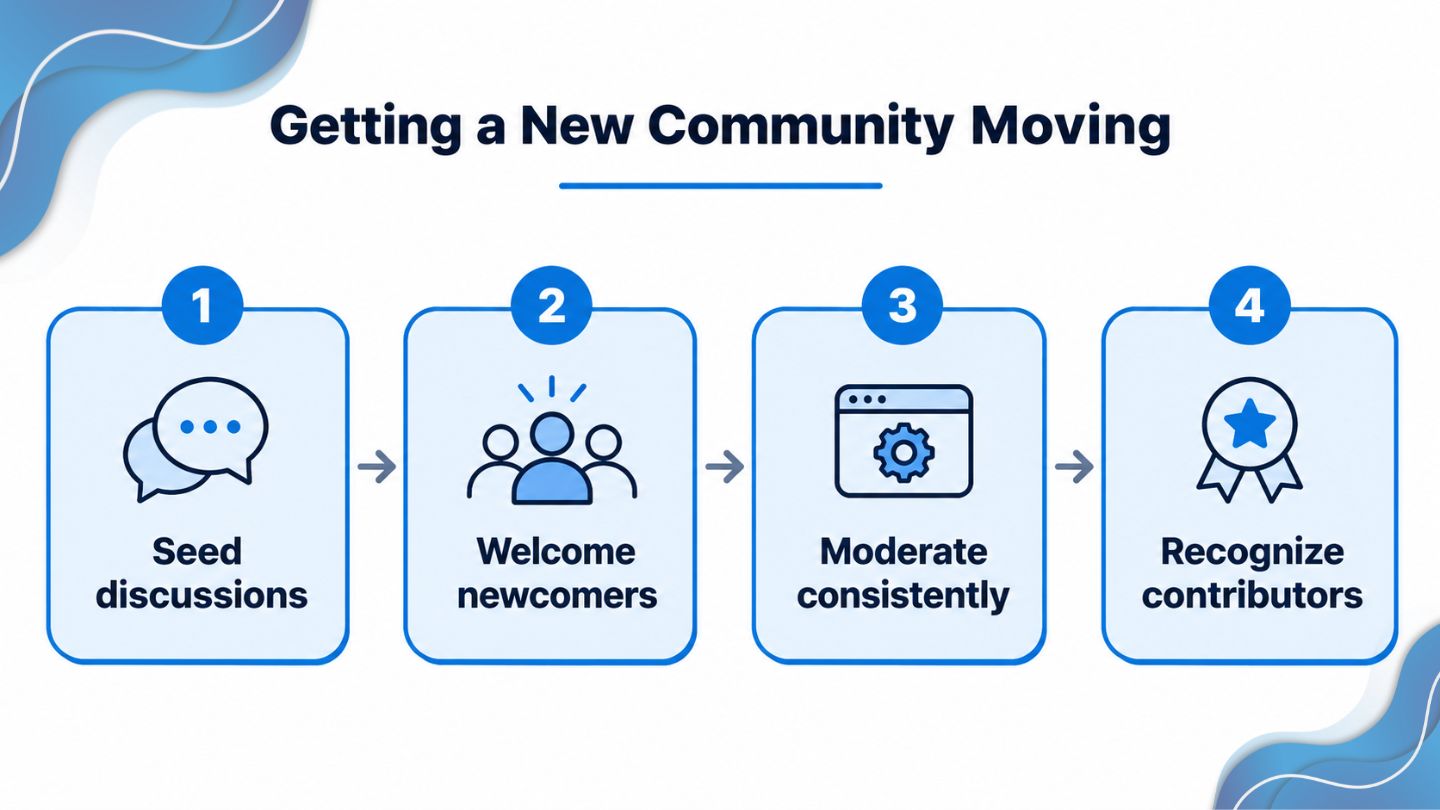
Plan who will manage the community before launch. Seeding the forum with helpful starter discussions, answering early questions quickly, and recognizing active members encourage participation. Without that early attention, many forums stall, so budgeting time for community management matters as much as budgeting for the platform itself.
Early community management matters as much as the platform choice.
Comparing Long-Term Costs
What Hosted Platforms Cost Over Time
Hosted platforms usually charge monthly or annual fees that grow with members, features, or traffic. These costs are predictable and include maintenance, but they can become significant for large communities. Switching platforms later can also be difficult, so export options and data ownership deserve attention before signing up.
What Custom Builds Cost Over Time
Custom forums shift costs toward development and ongoing maintenance. Initial builds are expensive, and security updates, hosting, and feature work continue for as long as the community exists. Comparing total costs over three to five years, rather than just launch costs, gives a clearer picture of which approach makes financial sense.
Encouraging Quality Contributions
A forum's long-term value depends on the quality of what members post. Clear guidelines, examples of helpful answers, and recognition for top contributors encourage thoughtful participation. Features like upvotes, accepted answers, and member badges help the most useful posts rise to the top where others can find them.
The value of user-generated content grows when discussions are well organized and moderated. Merging duplicate threads, closing outdated topics, and linking related discussions keep the community tidy and make it easier for both members and search engines to find helpful answers.
Choosing the Right Home for Your Community

Adding a forum can strengthen loyalty, reduce support demand, and create valuable content, but the platform choice shapes everything that follows. Hosted platforms offer speed, built-in features, and managed upkeep, while custom development delivers complete control at a higher cost. Weighing design needs, integrations, moderation plans, search considerations, and long-term costs leads to a community that fits the business and its members.
At The Ocean Marketing, we help businesses create online experiences that feel consistent, welcoming, and easy to use. Our graphic design services shape community layouts, branding, and interfaces that match your website, and a free SEO audit can show how your current site supports visitors. Contact us to plan a community space your customers will want to join.
Frequently Asked Questions
Is it better to use a hosted forum platform or build a custom one?
Hosted platforms suit most businesses that need a fast, affordable launch. Custom development makes sense when unique features, deep integration, or strict data control are essential.
Can a website forum help with search visibility?
Yes, when discussions are well organized and moderated. Helpful threads can rank for real questions, while spam and thin pages should be controlled.
How do I keep a new forum active?
Seed it with useful discussions, respond quickly to early posts, recognize helpful members, and assign someone to manage and moderate the community.