
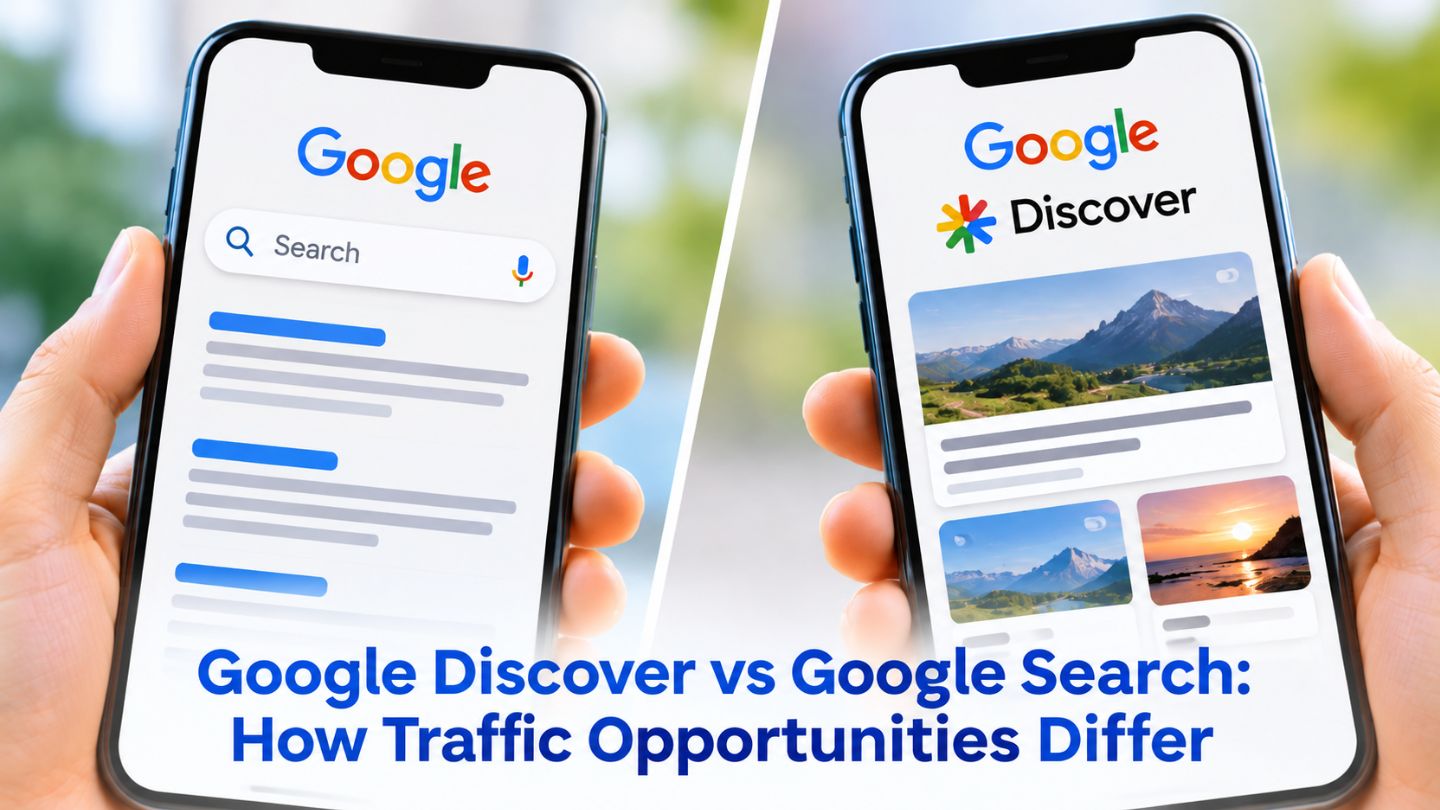
Most traffic planning revolves around Google Search, where people type a query and choose from the results. Google Discover works differently. It recommends content to people before they search, based on their interests, and it can send sudden waves of visitors to a site. Treating the two the same leads to confused expectations and missed opportunities. This blog covers how Google Discover and Google Search differ, what drives visibility in each, how their traffic behaves, and how to build content that can succeed in both.
Key Takeaways
- Search responds to queries, while Discover recommends content based on interests.
- Discover needs no special tags, but content must be indexed and policy compliant.
- Large, high-quality images strongly influence Discover performance.
- Discover traffic is less predictable and should be treated as supplemental.
- Search Console offers separate performance reports for each source.
How Google Search Traffic Works
Google Search is driven by intent. Someone has a question or need, types a query, and Google ranks pages that best answer it. Because search demand for many topics is steady, traffic from Search tends to be predictable. A page that ranks well for a valuable keyword can bring in visitors month after month, often for years, as long as it stays relevant and competitive.
Visibility in Search depends on understanding what people look for and how they phrase it. Keyword research, helpful content, clear page structure, technical health, and authority all play a role. Results pages have also changed, and features like AI-generated answers mean some searches end without a click, a shift explained in how zero-click searches are impacting search and how to adapt.
How Google Discover Works
Google Discover is a feed that appears in the Google app and on mobile Google pages, showing articles and videos people might find interesting. According to Google's guidance on how to get on Discover, it is part of Google Search and selects content based on a person's Web and App Activity rather than a typed query.
That means people often meet your content before they knew they wanted it. A gardening enthusiast might see a new article on fall planting, or someone following a sports team might get a story about a recent trade. Discover favors content that is timely, tells a story well, or offers unique insight, and it can surface older pieces too when they match a person's current interests.
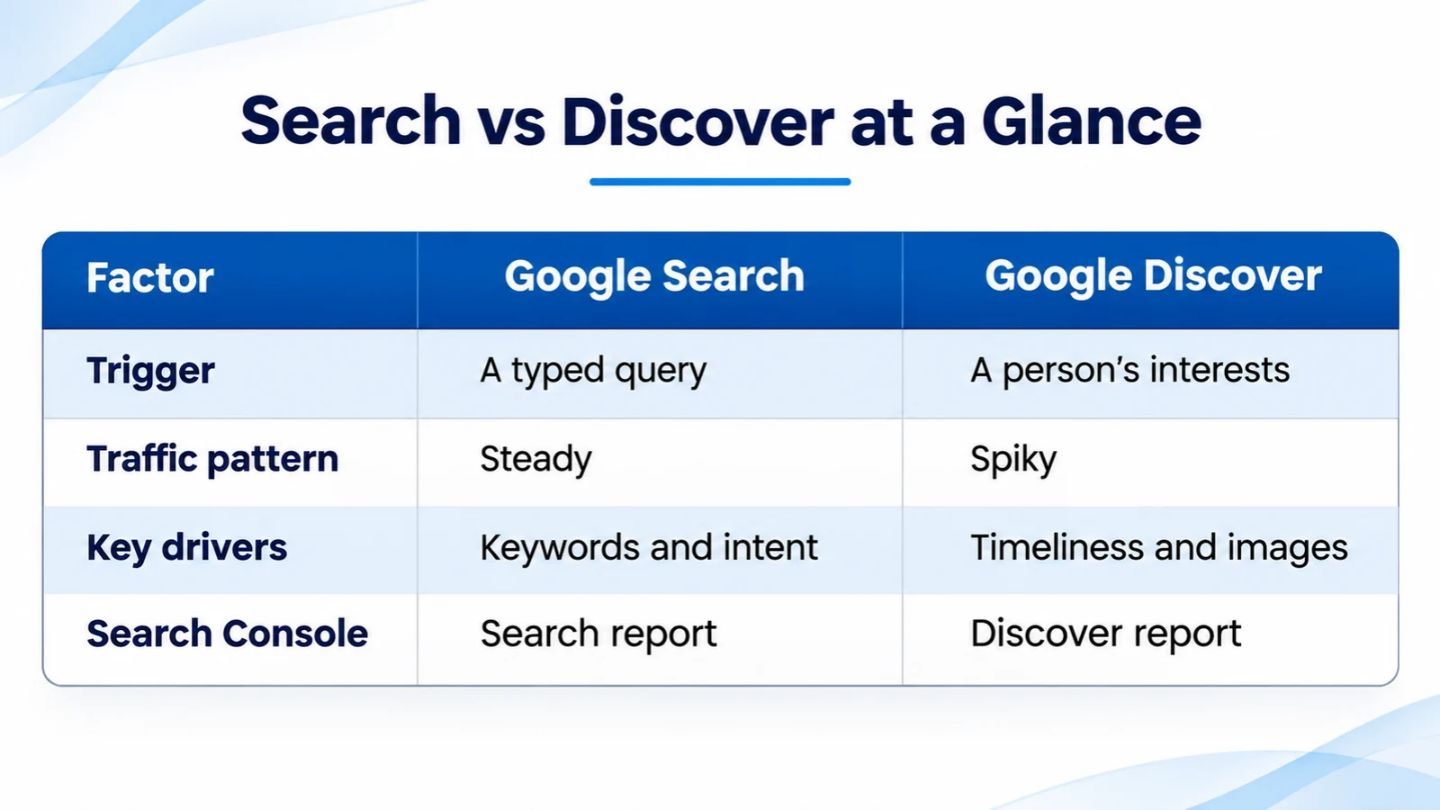
Search and Discover reach people in different ways and behave differently over time.
Eligibility and What Discover Looks For
Google notes that content is automatically eligible for Discover if it is indexed and meets Discover's content policies, with no special tags or structured data required. Eligibility does not guarantee appearance, though. Discover draws on many of the same systems that identify helpful, people-first content in Search, so quality and trustworthiness still matter a great deal.
Presentation plays a larger role than in Search. Google recommends compelling, high-quality images that are at least 1200 pixels wide, enabled through the max-image-preview: large setting, along with titles that capture the essence of the content. Clickbait, sensational headlines, and misleading images work against a page, and sites that break the content policies may receive Discover-specific manual actions.
Discover Readiness Checklist
- Indexed pages that follow Discover content policies.
- Large, relevant images at least 1200 pixels wide.
- The max-image-preview: large setting enabled.
- Honest, descriptive titles without clickbait.
Read More: E-E-A-T Optimization: How to Build Authority in Your Niche
Why Discover Traffic Is So Unpredictable
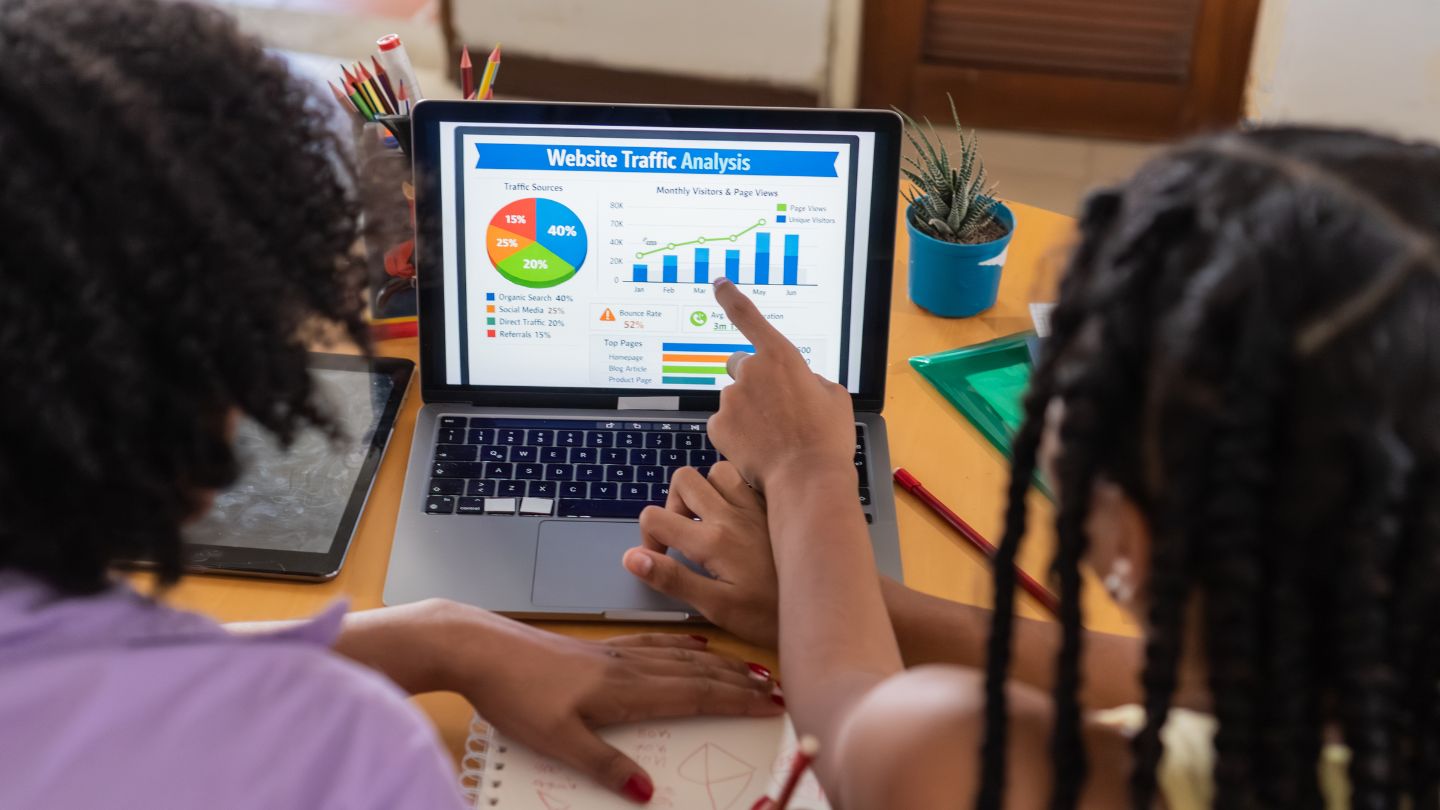
Discover traffic tends to arrive in spikes. A story might bring thousands of visits in a day or two and then fade almost completely. Google itself describes Discover traffic as less predictable than keyword-driven search visits and suggests treating it as supplemental. People's interests shift, the feed changes constantly, and competing content appears every hour.
Algorithm updates can also reshape what Discover shows, as seen with the February 2026 Discover core update, which placed more emphasis on quality and expertise. Because of this volatility, businesses should enjoy Discover traffic when it comes without building their entire strategy around it, keeping Search as the steadier foundation.
Measuring Each Traffic Source Separately
Search Console provides separate performance reports for Search and Discover, and comparing them reveals how each source behaves. The Discover report shows impressions, clicks, and click-through rate for content that has appeared in the feed, though it only appears once a site reaches a minimum threshold of impressions. Search reports add query data, which Discover does not provide.
When pages drop or fail to appear, the cause is often technical rather than editorial. Using URL inspection to diagnose indexing problems confirms whether Google can access and index a page at all, since content that is not indexed cannot appear in either Search or Discover.
Content That Suits Each Channel
Content Built for Search
Search rewards content that answers specific questions thoroughly, such as guides, comparisons, how-to articles, and service pages. These pieces often target clear keywords and keep earning traffic as long as demand continues. They form the backbone of most long-term traffic strategies because their audience returns every time someone searches.
Content Built for Discovery
Discover rewards content with broader appeal and a timely or story-driven angle. News, trend analysis, original research, expert commentary, and visually strong articles tend to perform well. Some pieces can succeed in both, such as an in-depth guide published with a fresh angle and a strong image, but planning content with each channel in mind leads to better results than hoping one piece fits everything.
Building a Balanced Traffic Strategy
A healthy content plan uses Search as its base and Discover as an occasional bonus. Evergreen pages built around steady demand provide reliable traffic, while timely articles, unique insights, and strong visuals give the site chances to appear in the Discover feed. Tracking both sources separately keeps expectations realistic and helps teams understand where growth actually comes from.
It also helps to watch how Google's results keep evolving. AI-generated answers now sit alongside traditional results, and understanding AI Overviews vs AI Mode gives context for how search behavior is changing. Diversifying traffic across Search, Discover, and other channels protects a business from depending too heavily on any single source.
Common Mistakes When Chasing Discover Traffic
The appeal of sudden Discover traffic leads some publishers into habits that backfire. Sensational headlines, misleading thumbnails, and stories stretched thin to fit a trend can bring a short burst of clicks but often break Discover's content policies. Over time, these tactics can damage trust with readers and reduce how often a site's content is recommended.
Another mistake is shifting an entire content plan toward trending topics at the expense of evergreen pages. When Discover traffic dips, as it often does, sites without a solid foundation of search-focused content see their total traffic fall sharply. Balancing timely pieces with lasting resources protects against those swings. Weighing evergreen vs trending content helps teams decide how much of the calendar should chase the moment and how much should last.
How Images Influence Both Channels

Images play a different role in each channel. In Discover, a large, compelling image is often the first thing people notice, and it can decide whether someone taps on a story. In Search, images support the content and can bring extra visibility through image results, but the text usually carries more weight in earning the click.
Using original, high-quality images that genuinely reflect the content works well in both places. Descriptive file names, helpful alt text, and an image chosen specifically for previews help Google understand and display visuals correctly. Avoiding generic stock photos and text-heavy graphics also keeps previews clean and more appealing in a crowded feed.
Read More: Visual Search SEO: How to Optimize Images for Better Rankings
Making the Most of Both Traffic Sources
Google Search and Google Discover offer very different paths to visitors. Search meets people when they actively look for answers, producing steady, intent-driven traffic. Discover reaches people based on their interests, sending powerful but unpredictable bursts. Understanding these differences, meeting Discover's quality and image recommendations, and measuring each source separately helps businesses set realistic goals and grow traffic sustainably.
At The Ocean Marketing, we help businesses build content strategies that perform in Search and take advantage of opportunities in Discover. Our SEO team focuses on helpful content, technical health, and long-term visibility, and a free SEO audit can show where your site stands today. Contact us to plan content that reaches people wherever they find it.
Frequently Asked Questions
What is the main difference between Google Discover and Google Search?
Search shows results in response to a typed query, while Discover recommends content to people based on their interests, often before they search for anything.
Do I need special markup to appear in Google Discover?
No. Content is eligible if it is indexed and follows Discover's content policies. Large, high-quality images and honest titles improve the chances of appearing.
Why does my Discover traffic go up and down so much?
Discover depends on changing interests and constantly updated feeds, so traffic often comes in short spikes. Google recommends treating it as supplemental to search traffic.