

In the language of backlinks, a referring page is the specific page that links to your site, as distinct from a referring domain, which is the whole website that the link comes from. The difference matters because it changes how you analyze your backlink profile and what the numbers actually mean. This article covers what referring pages are, how they differ from referring domains, why the distinction matters, and how to find the referring pages pointing at your site.
Key Takeaways
- A referring page is the individual page that links to your site.
- A referring domain is the whole website that the link comes from.
- One referring domain can contain many referring pages.
- The distinction changes how you read your backlink profile.
- You can find referring pages using backlink analysis tools.
What Is a Referring Page?

A referring page is the exact page on another website that contains a link to your site. If a blog post on another site links to you, that specific post is a referring page. It is the precise location of the link, down to the individual URL, rather than just the site the link lives on.
This precision is what distinguishes it from the broader concept of a referring domain, which is the entire website that page belongs to. Understanding backlinks at the page level gives you a more detailed picture than looking only at domains, which matters when you are genuinely analyzing where your links come from, a core part of any backlink audit to analyze and clean your links.
How Do Referring Pages Differ From Referring Domains?
They differ in scope: one referring domain can contain many referring pages. A single website might link to you from ten different pages, which counts as ten referring pages but only one referring domain. Both numbers describe your backlinks, and they describe different things, which is why both appear in backlink analysis.
This matters because the two numbers tell different stories. A profile with many referring pages but few referring domains means a small number of sites link to you a lot, while many referring domains means many different sites link to you, which is generally a broader, stronger signal. Earning that diversity is the harder part, and building backlinks for a new website with no domain authority is where it starts.
Many Pages, One Domain
Ten links from one site is ten referring pages but one referring domain. The two numbers describe different things, so read both.
Why Does the Distinction Matter?
The distinction matters because it changes how you interpret your backlink profile. If you looked only at referring pages, a site linking to you from many pages could make your profile look stronger than it is in terms of diversity, since all those links come from one source. Looking at referring domains alongside corrects that picture.
Diversity of referring domains is generally a stronger signal than sheer volume of referring pages, because links from many different sites suggest broader recognition than many links from one site. Reading both numbers together prevents misjudging your profile, and using link intersect to find competitors' backlinks shows where that domain diversity is worth chasing.
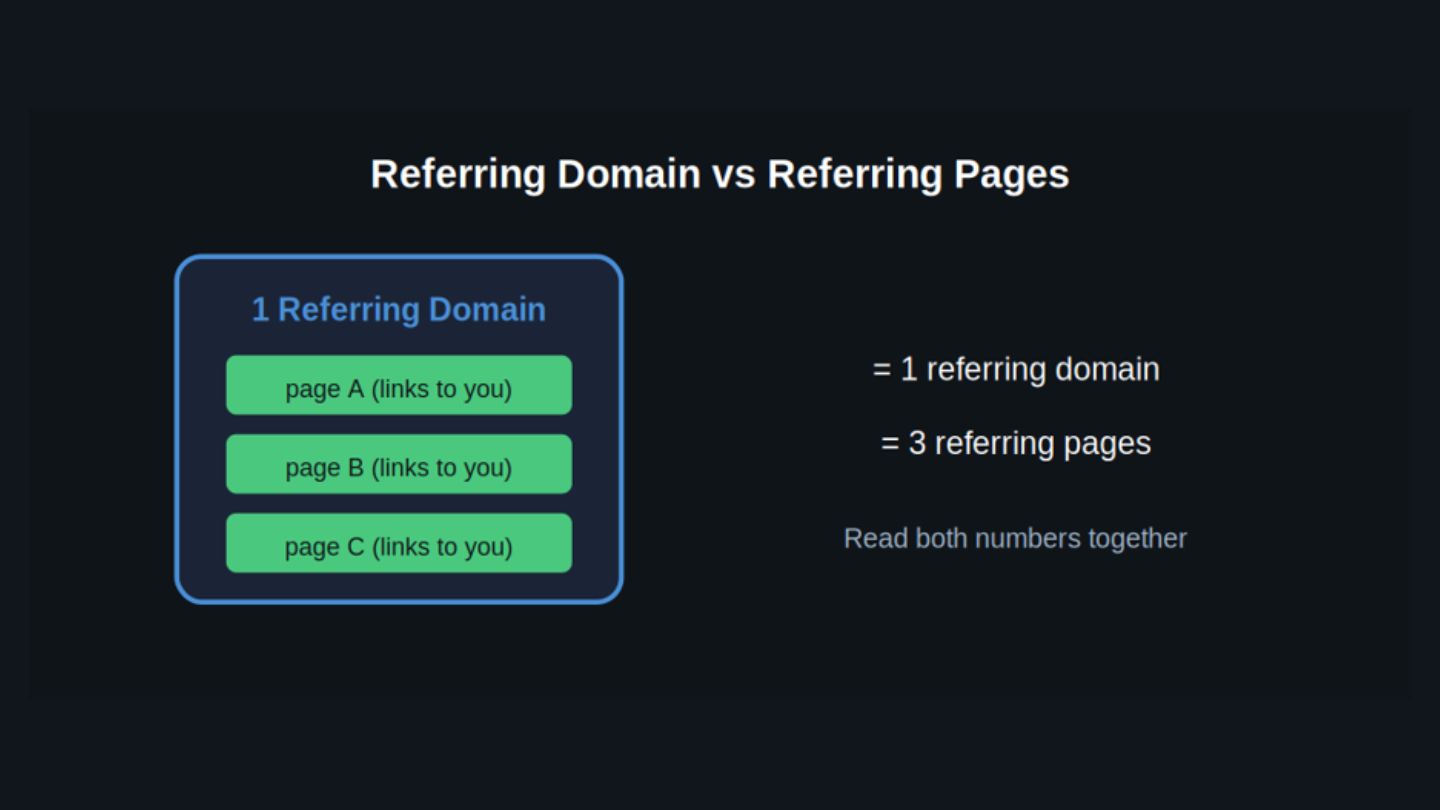
Three links from one site count as three referring pages but a single referring domain.
How Do You Find Your Referring Pages?
You find referring pages using backlink analysis tools, which show the specific pages linking to your site rather than just the domains. These tools let you see exactly where each link lives, which is what you need for detailed analysis, including assessing the quality and relevance of individual links.
Looking at referring pages rather than only domains lets you examine links individually, seeing the actual context each link sits in. This page-level view is useful for spotting both valuable links worth noting and problematic ones worth addressing, and link reclamation is how you recover the valuable ones once they break.
How Do You Put the Concept to Use?
You put it to use by working at the right level of detail for the question you are asking. When analyzing your profile, look at both referring pages and referring domains to understand both the volume and the diversity of your links. When assessing link quality, the page-level view lets you examine the specific context of each link rather than judging only by the site.
This page-level awareness also helps when something goes wrong, since identifying the specific referring page lets you address an individual problematic link rather than treating a whole domain as the unit. Working at the right level, page versus domain, depending on the question, is what makes backlink analysis precise rather than vague.
Understanding Your Links at the Right Level
A referring page is the specific page that links to your site, while a referring domain is the whole website it comes from, and one domain can contain many referring pages. The distinction matters because the two numbers tell different stories: volume of pages versus diversity of domains, with domain diversity generally the stronger signal. Looking at both together, and using backlink tools to examine referring pages individually, gives you an accurate picture of your profile and lets you analyze links at the right level of detail for whatever question you are asking.
At The Ocean Marketing, we help businesses understand and improve their SEO, including making sense of a backlink profile at the level of detail that actually informs decisions. Whether you need your links analyzed, a stronger profile built, or a free SEO audit to see where your site currently stands, our team can help. Contact us and let's make sense of where your links come from.
Frequently Asked Questions
What is the difference between a referring page and a referring domain?
A referring page is the specific page that contains a link to your site; a referring domain is the whole website that page belongs to. One domain can contain many referring pages, so the two numbers measure different things: volume of individual links versus diversity of sites.
Are more referring pages or more referring domains better?
Diversity of referring domains is generally the stronger signal, because links from many different sites suggest broader recognition than many links from a single site. Referring pages matter for examining individual links, but domain diversity usually says more about overall profile strength.
How do I see which pages link to my website?
Use a backlink analysis tool, which lists the specific referring pages pointing at your site rather than just the domains. That page-level view lets you examine the context and quality of each link and spot any that are problematic.