
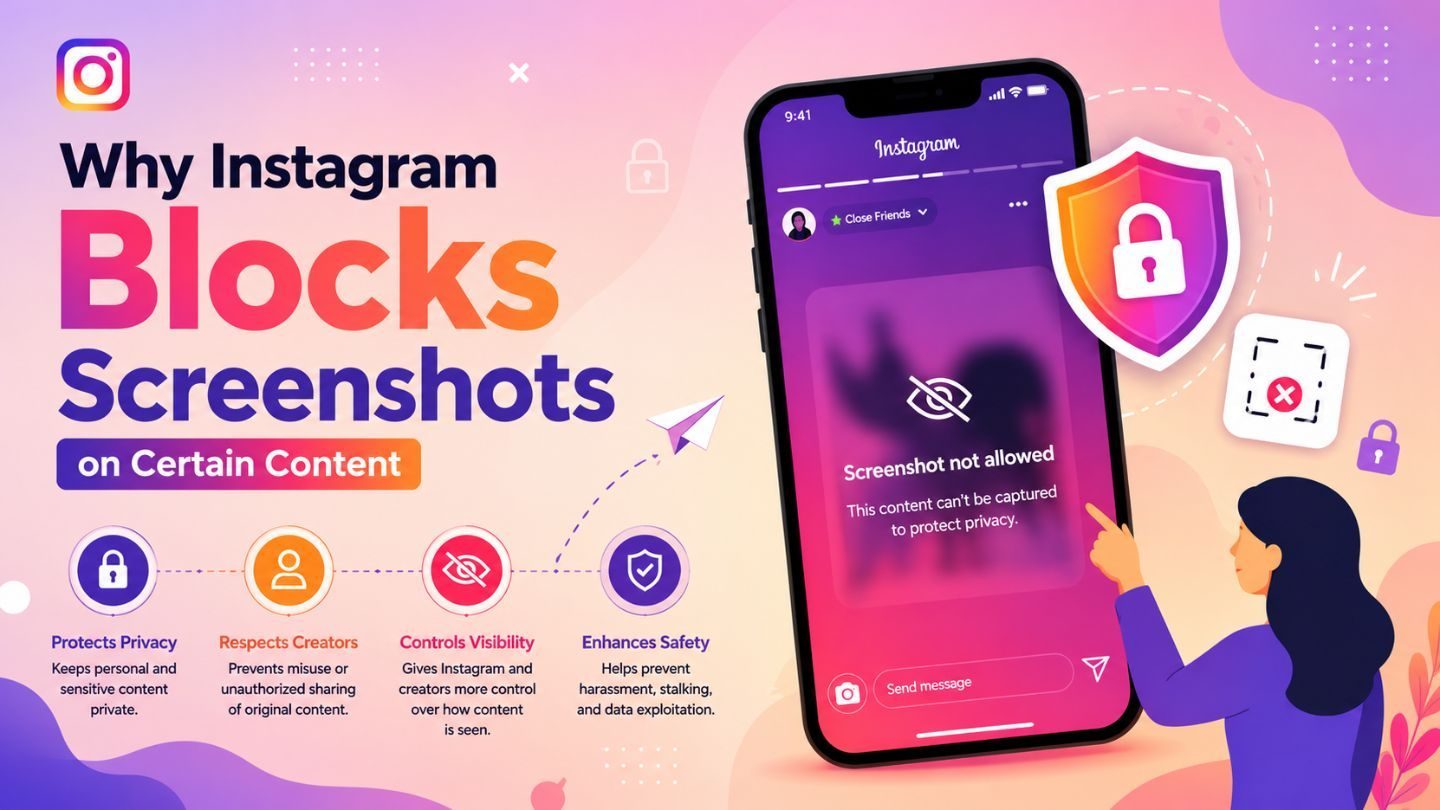
Instagram has become one of the most interactive social platforms, but privacy concerns continue to grow as more users share personal photos, disappearing messages, and private conversations online. Many users notice that screenshots work normally in some areas of the app but become restricted in others. That often raises questions about why Instagram treats certain content differently. In this blog, we’ll discuss why Instagram blocks screenshots on specific content, how the feature protects user privacy, and what it means for creators, businesses, and everyday users. This blog outlines the reasoning behind these restrictions and explains how Instagram balances convenience with digital safety.
Key Takeaways
- Instagram blocks screenshots mainly to protect private or disappearing content
- Screenshot restrictions are tied closely to user privacy and safety
- Vanish Mode and disappearing media are the most common restricted areas
- The feature helps reduce misuse, leaks, and unauthorized sharing
- Instagram wants users to feel safer sharing personal content
- Screenshot policies may continue evolving as privacy expectations grow
Instagram’s Growing Focus on User Privacy
Social media platforms have changed dramatically over the last few years. People are no longer posting only public vacation photos or casual updates. Many users now use Instagram for personal conversations, private media sharing, and close-friends-only interactions. Because of that shift, privacy tools have become much more important than they used to be.
Instagram understands that users are more likely to engage openly when they feel their content is protected. Screenshot blocking is part of that broader privacy approach. The platform wants to discourage users from secretly saving disappearing photos, videos, or chats that were intended to stay temporary. Without these protections, many users would hesitate to share more personal content inside the app.
The Main Reason Instagram Blocks Screenshots
At its core, screenshot blocking exists to prevent unauthorized saving and sharing of sensitive content. When someone sends disappearing photos or videos through direct messages, they usually expect that content to remain temporary. A screenshot defeats that expectation instantly.
Instagram introduced restrictions mainly to reinforce trust between users. If disappearing content could easily be captured without warning, the feature would lose its purpose entirely. By limiting screenshots or notifying users about them, Instagram encourages more responsible behavior and gives people better control over their digital interactions.
Where Instagram Usually Restricts Screenshots
Instagram does not block screenshots everywhere across the app. Most public content, stories, posts, reels, and profiles can still be captured normally. Restrictions mainly apply to areas designed around temporary or private sharing.
Vanish Mode Is One of the Biggest Examples
Vanish Mode is specifically built for temporary conversations. Messages disappear once the chat is closed, creating a more private experience between users. Because the feature is designed around disappearing communication, Instagram monitors screenshots much more closely in this area.
If someone captures a screenshot during Vanish Mode chats, Instagram usually sends a notification to the other participant. That alert helps maintain transparency and discourages people from secretly saving private conversations or media without consent.
Disappearing Photos and Videos Have Extra Protection
Instagram also adds screenshot protections to disappearing media sent through direct messages. These photos and videos are only meant to be viewed briefly, sometimes just once. Allowing unrestricted screenshots would completely undermine that temporary format. The platform may not always fully block screenshots, depending on the device, but Instagram often warns the sender if a screenshot is taken.
This creates accountability and makes users more aware of how their shared content is being handled. For users who want a deeper look at temporary media, Instagram’s view once feature explains why some content is designed to disappear instead of being saved permanently.
Why This Matters for Everyday Users
For many people, screenshot restrictions may initially feel annoying or unnecessary. However, the feature addresses a very real concern surrounding online privacy and digital misuse. Screenshots can spread personal content far beyond its intended audience within seconds. Many users share personal moments, sensitive conversations, or private media, believing it will remain temporary. Without protections in place, those interactions could easily be copied, redistributed, or used maliciously. Instagram’s restrictions help reduce that risk and encourage safer communication on the platform.
The Problem With Unauthorized Sharing
Unauthorized sharing has become one of the biggest challenges on social media. A single screenshot can quickly move from a private conversation into group chats, public posts, or even other websites. Once that happens, users often lose control of their own content completely. Instagram’s policies attempt to reduce these situations before they happen. While screenshot blocking cannot eliminate misuse entirely, it does create friction that makes users think twice before capturing or distributing someone else’s private content.
How Screenshot Restrictions Affect Content Creators
Creators and influencers also benefit from stronger privacy controls. Many creators use Instagram DMs to communicate with fans, clients, or collaborators. Private previews, unreleased ideas, or sensitive brand discussions may happen inside these conversations. Without screenshot protections, confidential information could spread very quickly. While creators still need to be cautious online, Instagram’s restrictions provide an additional layer of protection for professional and personal interactions alike.
It Helps Build Audience Trust
Trust matters heavily in creator communities. Followers are more likely to engage through direct messages or exclusive content if they believe their interactions are treated respectfully. Privacy-focused features make audiences feel more comfortable participating in closer digital communities.
For creators offering premium content, private coaching, or subscriber-only experiences, screenshot restrictions can also help reduce unauthorized sharing. Although no system is perfect, these tools help maintain some control over exclusive interactions.
Read More: How Instagram Subscription Model Works for Creators
Screenshot Blocking Is Not Completely Foolproof
Despite these protections, screenshot blocking is not a perfect solution. Users can still find workarounds in many situations. External cameras, screen recording tools, or secondary devices can sometimes bypass restrictions altogether. This is also why many users ask whether Instagram sends screenshot alerts on regular posts, since the rules can feel different depending on the content type.
Instagram understands this limitation, which is why its approach focuses more on discouragement and transparency than absolute prevention. Notifications and warnings still play an important role because they create accountability between users even when technical limitations exist.
Different Devices Handle Restrictions Differently
Another reason users get confused about screenshot blocking is that the behavior can vary depending on the device or operating system. Some Android and iPhone versions may respond differently to restricted content. In some cases, Instagram only sends notifications instead of fully blocking screenshots. In others, screen recording features may behave differently from standard screenshots. Because mobile operating systems constantly evolve, Instagram’s restrictions also continue to adapt over time.
Privacy Expectations Are Changing Across Social Media
Instagram is not the only platform focusing heavily on screenshot protection. Apps like Snapchat helped popularize disappearing content years ago, and privacy expectations have continued growing since then. Users increasingly want more control over how their content is viewed, saved, and shared. Selective sharing features are part of this shift, too, especially when brands use Instagram close friends to create more controlled and trusted audience experiences.
Modern social media platforms are responding by adding more temporary communication tools, encrypted messaging features, and content visibility controls. Screenshot restrictions fit naturally into this broader shift toward user-centered privacy protection.
Younger Users Especially Value Temporary Sharing
Younger audiences, particularly Gen Z users, often prefer temporary and less permanent forms of online interaction. Many users feel more comfortable sharing casual or personal content when they know it will disappear later. This behavior has influenced how platforms design their messaging systems. Features like disappearing media, temporary chats, and screenshot alerts are all responses to changing user expectations around digital privacy and authenticity.
The Balance Between Convenience and Protection
Instagram faces a difficult balancing act. Users want convenience and flexibility, but they also want privacy and security. Restricting screenshots too aggressively could frustrate users, while offering no protection at all could increase privacy risks significantly. The platform attempts to strike a middle ground by limiting restrictions mainly to temporary or sensitive content. Public content remains easy to share, while private interactions receive stronger safeguards. This approach helps Instagram maintain usability while still addressing growing privacy concerns.
Read More: How to Hide Followers on Instagram: A Complete Guide
Could Instagram Expand Screenshot Restrictions Further?
As privacy conversations continue evolving, Instagram may eventually introduce additional screenshot protections across other areas of the platform. Features involving close friends, subscriber content, or private communities could potentially see stronger controls in the future. At the same time, Instagram also needs to avoid making the app feel restrictive or difficult to use. The company will likely continue testing privacy features carefully while monitoring user behavior and feedback before expanding major restrictions further.
Final Thoughts
Instagram blocks screenshots on certain content primarily to protect privacy, encourage safer interactions, and reduce unauthorized sharing. As more users rely on private messaging and temporary content, these protections become increasingly important for maintaining trust on the platform. While screenshot restrictions are not completely foolproof, they still help create more transparency and accountability between users online.
At The Ocean Marketing, we help businesses stay updated with changing platform behaviors, privacy trends, and audience expectations through smart Social Media Marketing strategies. If you want to strengthen your online presence, improve engagement, or explore growth opportunities, contact us today for a free SEO audit and discover how we can support your digital goals naturally and effectively.