
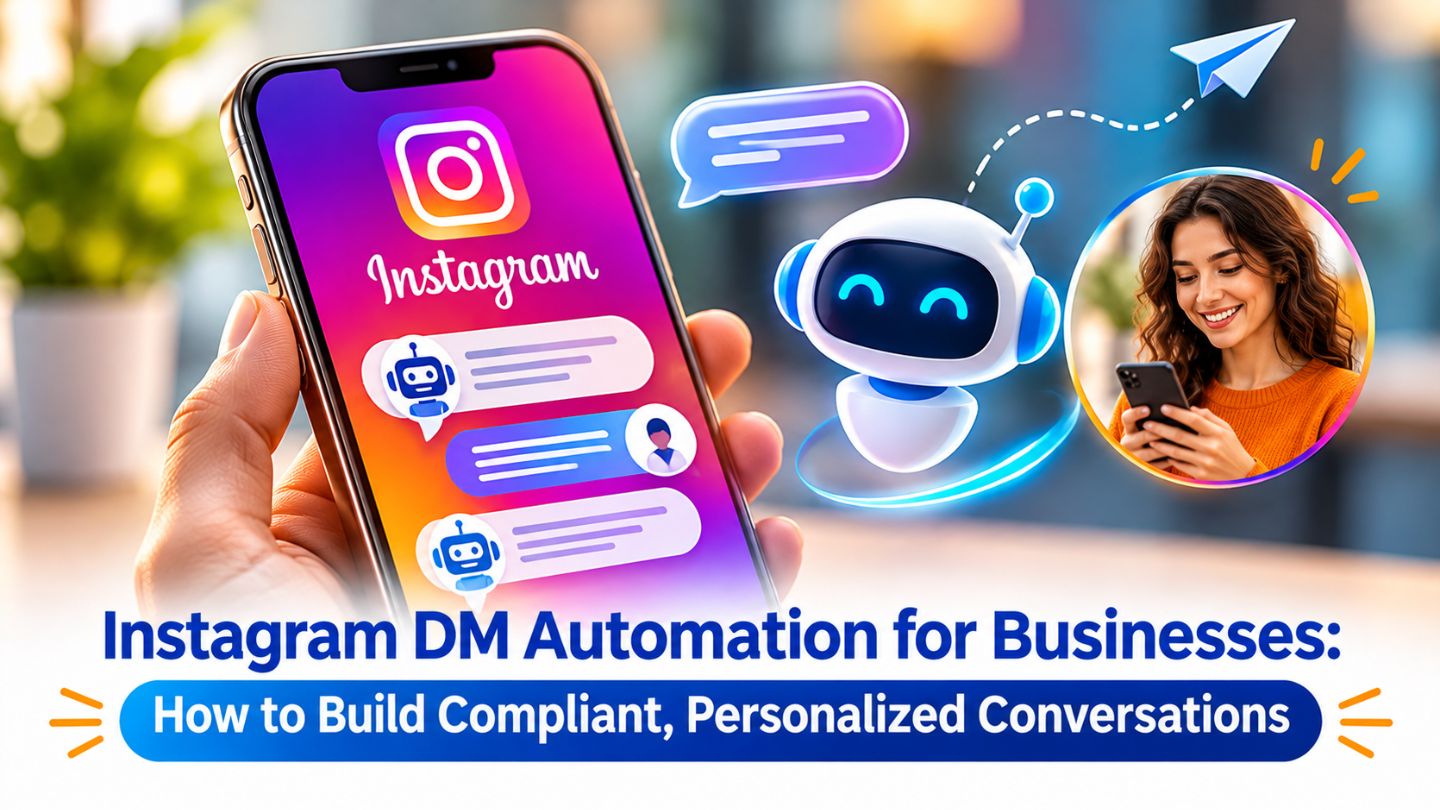
Instagram direct messages have become a front door for many businesses. Customers ask about prices, availability, and orders, and they expect quick answers, often outside business hours. Automation makes that possible, but poorly built flows can feel robotic, frustrate customers, or break platform rules. This blog covers how Instagram DM automation works for businesses, the rules that keep it compliant, and practical ways to build automated conversations that still feel personal and genuinely helpful.
Key Takeaways
- DM automation helps businesses respond quickly and consistently.
- Automation must run through Meta's approved tools and messaging rules.
- Conversations should start with the customer and respect messaging windows.
- Personalization and clear paths to a human keep automation helpful.
- Regular reviews keep automated flows accurate and on-brand.
Why Businesses Automate Instagram DMs
Message volume grows quickly as an Instagram account gains followers. The same questions arrive again and again, such as hours, pricing, shipping, and booking, and answering each one manually takes time away from other work. Slow replies can also cost sales, since many customers message several businesses at once and go with whoever responds first.
Automation handles these repetitive conversations instantly and consistently. It can answer common questions, share links, collect contact details, and route complex requests to the right person. As a lead channel, Instagram DM marketing works best when automation handles the first response and people step in where judgment and empathy matter most. Drawing that line is the broader question of what marketers should automate in social media work.
The Rules That Keep Automation Compliant
Instagram DM automation must run through Meta's approved messaging tools or authorized partners connected through official integrations. Unofficial bots that log into accounts or mass-message users can lead to restrictions or bans. Professional accounts are required for most automation features, and businesses should follow Meta's platform and messaging policies at every step of the setup.
Messaging windows are a key part of these rules. In general, businesses can send automated replies within a 24-hour window after a person messages them, and messages outside that window are limited to specific, permitted cases such as human agent follow-ups. Automation should respond to conversations people start, never send unsolicited messages to users who have not interacted with the account.
- Use Meta's tools or approved partners only.
- Respond to conversations users start.
- Respect messaging windows and permitted follow-ups.
- Never send unsolicited bulk messages.
Read More: Social Commerce: How Brands Drive Sales Through Social Platforms
Common Automation Triggers and Flows
Most automated flows begin with a clear trigger. Instant replies greet new conversations, keyword triggers respond when someone types a word like "price" or "book," and story reply automations respond to people reacting to specific Stories. Comment-to-DM flows send a private message when someone comments a chosen keyword on a post, which works well for sharing guides, discounts, or links.
Frequently asked questions and conversation starters give users quick buttons to tap, guiding them toward common topics without typing. It is also worth checking where new messages land, since conversations from people who do not follow the account may appear as Instagram message requests rather than in the main inbox, which affects how quickly they are seen and answered.
Strong automation answers simple questions fast and hands complex conversations to people.
Making Automated Conversations Feel Personal
Automation does not have to sound robotic. Using the person's name, matching the brand's natural tone, and keeping messages short and conversational all help. Responses should acknowledge what the person asked rather than pushing a generic menu, and buttons or quick replies should offer real choices that match the needs customers most often have.
Context makes a big difference. Different flows for different entry points, such as a Story reply versus a product comment, allow messages to reference what the person was looking at. Thoughtful details like sending a specific product link instead of the homepage, or following up with a helpful tip, make automated conversations feel attentive rather than scripted.
Knowing When to Hand Off to a Human
Some conversations should never stay automated. Complaints, sensitive questions, complex requests, and customers ready to make a large purchase all deserve a real person. Every flow should include an easy way to reach a human, such as a button to talk to the team, along with clear expectations about when someone will reply.
Deciding where automation ends requires the same balance as automated and manual review responses: speed and consistency weighed against empathy and judgment. Routing rules, notifications, and shared inboxes help teams pick up conversations quickly, so customers never feel stuck in an endless loop of automated replies.
Good flows answer simple questions and pass complex ones to a person.
Protecting Customer Data and Trust
DM conversations often include personal details such as names, emails, phone numbers, and order information. Businesses should collect only what they need, store it securely, and follow applicable privacy laws and platform policies. Being transparent about why information is requested and how it will be used helps customers feel comfortable sharing it.
Honesty about automation builds trust too. Letting people know they are chatting with an automated assistant, and making it clear how to reach a person, sets the right expectations. Avoiding misleading claims, high-pressure tactics, and excessive follow-ups keeps conversations respectful and protects the brand's reputation over the long run.
Read More: Content Personalization: What It Is & How to Do It
Measuring and Improving Your Flows
Automation should be reviewed regularly, not set and forgotten. Track response times, conversation completion rates, link clicks, leads captured, and how often people ask for a human. These numbers reveal which flows are working and where customers drop off, get confused, or give up before getting what they came for.
Reading real conversations is just as valuable. Look for questions the automation fails to answer, outdated information, and messages that feel awkward. Updating flows based on these insights keeps them accurate, and tying them to efforts that turn Instagram profile visits into website traffic connects DM conversations to the broader customer journey.
Testing New Flows Before Launch
New automation flows should be tested carefully before they reach customers. Walk through every path as if you were a new follower, checking that buttons work, links open the right pages, and messages read naturally on a phone screen. Testing from a separate account also reveals how messages appear to people who do not follow the business.
A soft launch helps catch issues that testing misses. Turning a flow on for a single post or Story first lets the team watch real conversations, fix confusing steps, and adjust tone before rolling it out more widely. This small extra step prevents awkward mistakes from reaching hundreds of customers at once.
Aligning Automation With the Wider Customer Journey
DM automation works best when it connects smoothly with everything else a business does. Product links should lead to pages with matching offers, booking flows should sync with real availability, and lead details should reach the sales or service team quickly. Gaps between these systems can leave customers confused after an otherwise smooth conversation.
Keeping messaging consistent across channels matters too. The answers given in DMs should match the website, email, and in-store information, especially for pricing, policies, and hours. Reviewing automated responses whenever something changes in the business keeps every conversation accurate and protects the trust that automation is meant to build.
Creating Conversations Customers Appreciate

Instagram DM automation helps businesses respond quickly, answer common questions, and capture leads at any hour. Building flows through approved tools, respecting messaging rules, personalizing responses, handing complex conversations to people, protecting customer data, and reviewing performance regularly keeps automation compliant and genuinely helpful. Done well, it saves time while making customers feel heard.
At The Ocean Marketing, we help businesses build Instagram strategies that combine efficient automation with genuine customer care. Our Social Media Marketing team designs compliant messaging flows and content that drives conversations, and a free SEO audit can show how your social channels support your website. Contact us to create conversations your customers will appreciate.
Frequently Asked Questions
Is Instagram DM automation allowed?
Yes, when it runs through Meta's approved tools or authorized partners and follows platform messaging policies. Unofficial bots and unsolicited mass messaging can lead to restrictions.
Can automated DMs message people who have not contacted my business?
Generally, no. Automation should respond to conversations people start, such as messages, story replies, or keyword comments, within permitted messaging windows.
How do I keep automated DMs from sounding robotic?
Use names, a natural brand tone, short messages, and context-specific flows, and always offer an easy way to reach a real person.