
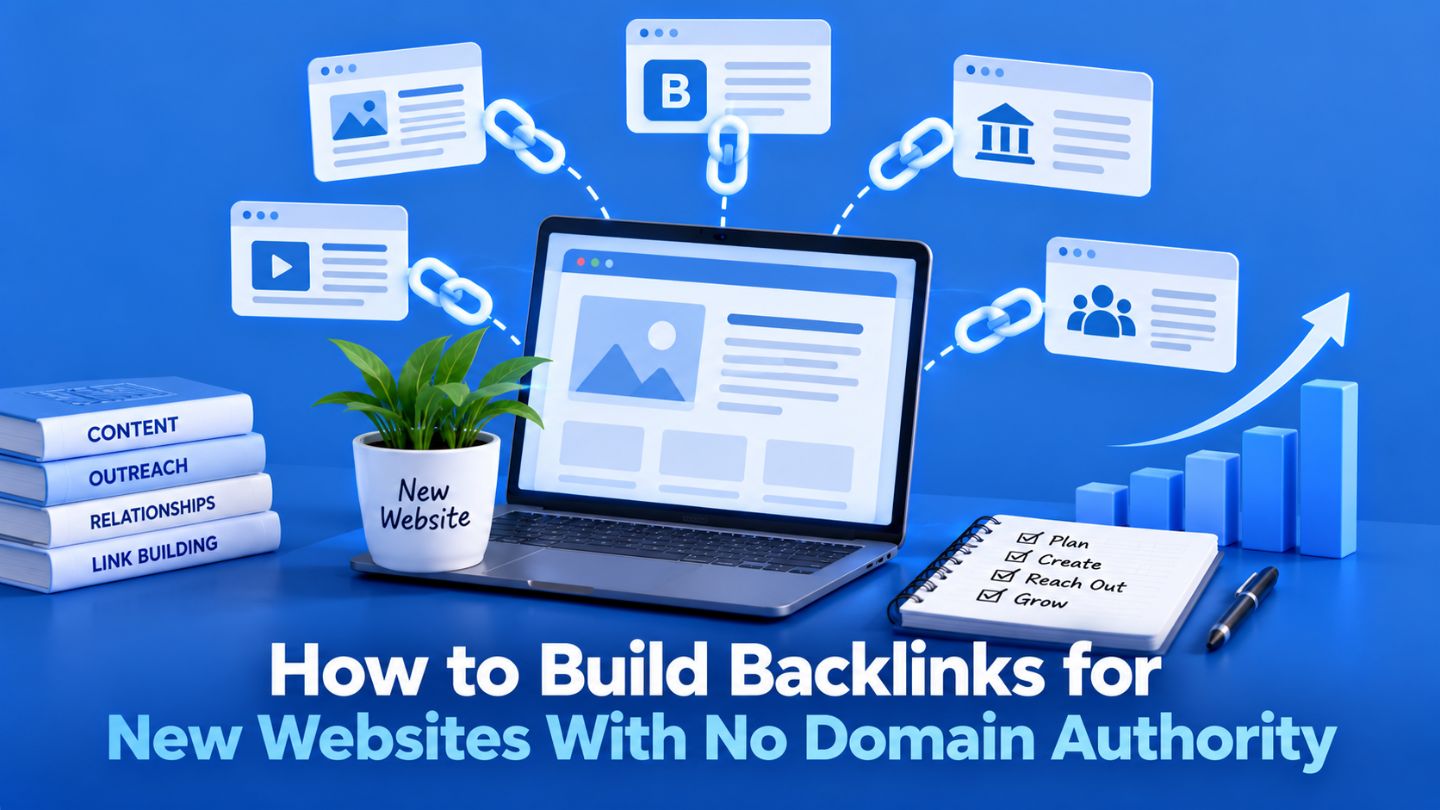
Starting a site with no authority is a genuine cold-start problem: the tactics that work for established sites assume a reputation you do not have yet, and most outreach fails because there is no reason for anyone to say yes. This blog covers what actually works in the first year, which common advice is a waste of time at this stage, and how to build a foundation that makes later link building considerably easier than it is right now.
Key Takeaways
- New sites need reasons to be linked, not better outreach templates.
- Foundational listings and relationships come before editorial links.
- One genuinely useful asset outperforms fifty outreach emails.
- Chasing high-authority sites early wastes months for almost nothing.
- Early links compound, so the order of effort matters.
Why Standard Outreach Fails at Zero Authority
Link outreach works when the recipient gets something: a useful resource for their readers, a credible source, a reciprocal relationship. A brand-new site with thin content offers none of those, so the email is asking for a favor with nothing on the other side of it. Improving the template does not change that arithmetic.
This is why new site owners often send hundreds of emails for a handful of low-value placements and conclude that link building does not work. The problem was never the pitch. Until there is a genuine reason to link, effort is better spent creating that reason than refining how you ask.
Start With Links You Do Not Have to Earn
Some links are available by right rather than persuasion: your industry association, your chamber of commerce, relevant professional bodies, supplier or partner directories, and the platforms where your business genuinely belongs. None of these pass enormous authority, and collectively they establish that the business exists and is real.
That baseline matters more for a new site than for an established one, because it is the difference between a domain with no footprint and one with a coherent presence. Keep the details identical everywhere, since inconsistency at this stage undermines exactly the legitimacy you are trying to establish. This is the same discipline behind why NAP consistency matters for local visibility.
Use the Relationships You Already Have

New businesses usually have more existing connections than they credit: suppliers, partners, clients, former colleagues, professional networks, and any organization they belong to. Several of those have websites, and a partner or supplier listing is a legitimate link that requires no cold outreach at all.
Working through that list systematically is one of the fastest early wins available. It is not glamorous, and it produces genuinely relevant links from sites that have an actual reason to mention you, which is more than most outreach achieves in its first six months.
Build One Thing Worth Linking To
The fastest route out of the cold start is producing a single asset that gives people a genuine reason to reference you: original data from your own operations, a tool that solves a small recurring problem, or a genuinely better explanation of something your industry handles badly.
This is slower than sending emails and considerably more effective, because it changes what you are asking for. Instead of requesting a link, you are offering something a writer can use. Even a modest study, honestly scoped, gives you a specific number to pitch. The approach behind original research content that attracts links applies directly and works at small scale.
One Asset Beats Ten Articles
Ten competent blog posts on covered topics earn nothing. One piece of information nobody else has published earns citations for years. At zero authority, that asymmetry is your only real leverage.
Read More: How to Build Links Without Outreach Emails
Internal Linking Is Free and Underused
While external links are hard to earn early, the links within your own site are entirely under your control and frequently neglected. A new site with twenty pages and no meaningful internal structure is wasting the authority it does have.
Connecting related pages deliberately, with anchor text that describes the destination, helps both crawlers and readers find what you have published. It will not substitute for external links, and it makes the ones you eventually earn considerably more effective. The mechanics of how internal linking builds authority are worth understanding before you spend a year chasing external links.
What to Skip Entirely in Year One

Chasing links from major publications is a poor use of a new site's time. Those placements go to sources with established credibility, and the months spent pursuing them produce very little. The same applies to broad guest posting on unrelated sites, which now carries more risk than benefit.
Paid link schemes promising volume are worse than useless, since they leave a footprint that is expensive to unwind later. A new site is exactly the wrong place to accumulate cleanup work. Understanding how to recognize genuinely high-quality backlinks is worth doing early, mostly so you can confidently ignore most of what gets offered to you.
Getting the Basics Right First
Links pointing at a site with technical problems waste part of their value. Before investing in acquisition, confirm the pages you want to build authority around are actually indexable, load reasonably, and are not competing with duplicate versions of themselves through parameter or protocol variations.
This is dull, and it prevents a specific frustration later, where a new site accumulates links and still fails to rank because the underlying pages were never properly crawlable. An hour spent confirming the foundation is sound is worth more than another twenty outreach emails. Duplicate versions created by query strings are the usual culprit, which is what URL parameter cleanup exists to solve.
Relationships Before Requests
The links that eventually matter come from people who know your work exists. That relationship is built by being visibly useful in the places your industry already gathers, answering questions in communities, contributing where a genuine perspective helps, and being a reliable source when someone needs one.
This is slow, and it is the part that compounds. A year of visible participation makes outreach a follow-up to an existing relationship rather than a cold ask, and the response rate difference between those two situations is enormous. Businesses that skip this stage are still sending cold emails three years later.
Read More: HARO Link Building: How to Earn Authority Links from Media
Sequencing the First Twelve Months
A workable order: foundational listings first, since they are quick and establish legitimacy. Then one substantial asset worth citing, given real time rather than squeezed in. Then visible participation in your industry's actual venues. Outreach comes last, once there is something to point at and someone who recognizes your name.
Measure the right thing along the way. Link count is a poor early indicator; whether you are being mentioned at all, whether your asset gets referenced, and whether anyone in your industry recognizes the business are better signals of whether the foundation is forming. Those precede links reliably, and their absence explains why outreach is not working yet.
Setting Realistic Expectations for Year One
A new site building links properly should expect a slow first six months and visible momentum somewhere after that. Anyone promising faster is either buying links or counting placements that do not matter, and both create cleanup work rather than progress.
Setting that expectation internally matters, because the most common failure is abandoning a working approach at month four for a faster-sounding one. The businesses that end up with strong link profiles are usually the ones that kept doing the unglamorous version long enough for it to compound.
Knowing What Progress Looks Like Early

Link counts move slowly at the start, which makes them a discouraging early metric. Better signals arrive sooner: whether anyone is mentioning the business at all, whether your one substantial asset is being viewed and referenced, and whether people in your industry recognize the name when you make contact.
Those precede links fairly reliably. Their absence after several months usually means the foundation is not forming rather than that outreach needs refining, which is a more useful diagnosis than assuming the emails were the problem.
Building From Zero Without Wasting the First Year
New sites do not need better outreach; they need reasons to be linked. Foundational listings establish that the business is real. One genuinely useful asset gives writers something to cite. Visible participation turns cold emails into warm ones. And skipping the tactics built for established sites- major publication pitches, volume guest posting, paid schemes- saves months that are better spent building the foundation those tactics assume you already have.
At The Ocean Marketing, we build link-building programs that match where a site actually is rather than applying tactics built for someone else's authority. Whether you are starting from nothing, unsure which opportunities are worth pursuing, or want a free SEO audit to see where your site currently stands, our team can help. Contact us and let's work out the right first moves.