

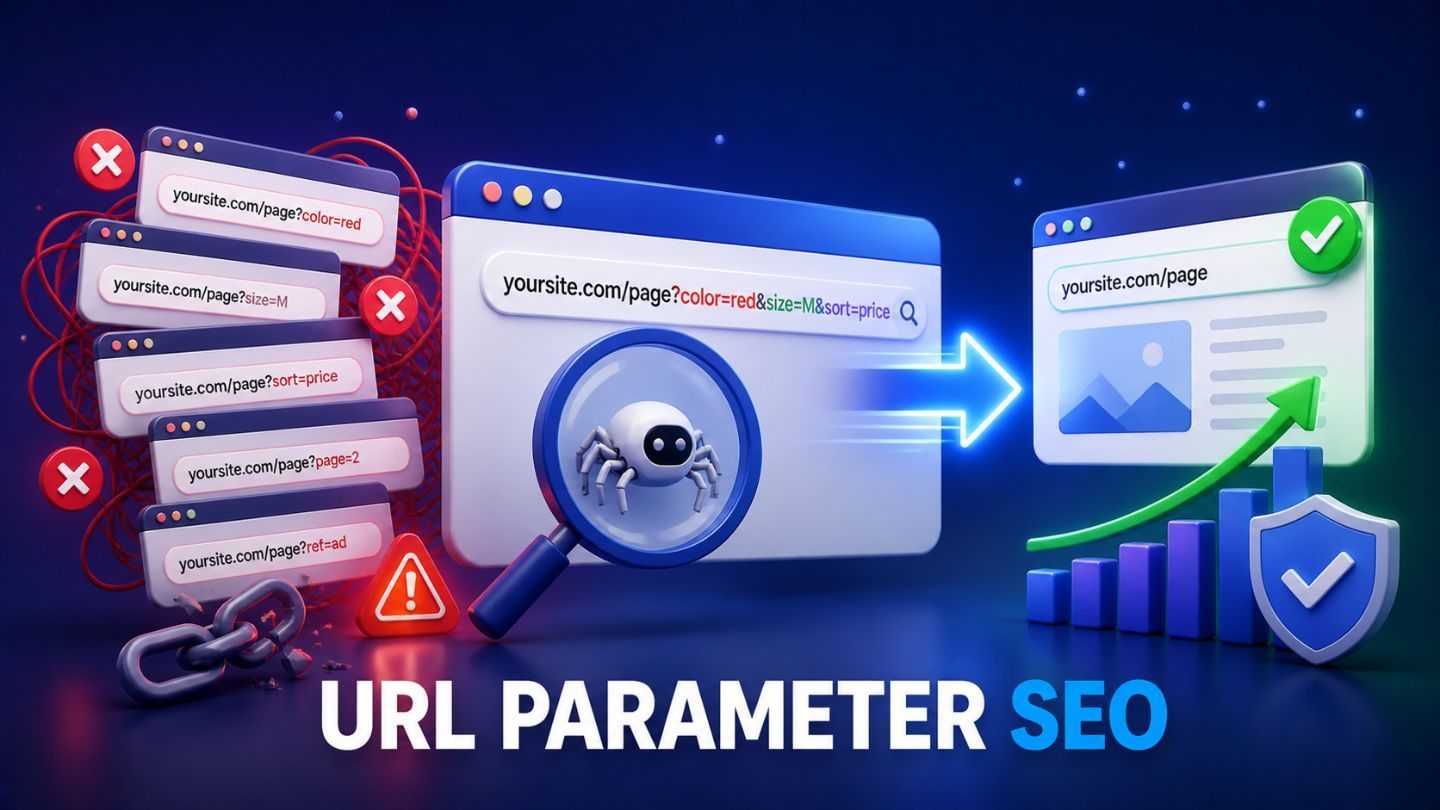
URL parameters may seem like a small technical detail, but they can have a major impact on your website’s SEO performance. When not managed properly, they often lead to duplicate content, inefficient crawling, and indexing issues that can hold your site back in search rankings. Many websites unknowingly create multiple versions of the same page through filtering, sorting, or tracking parameters. This not only confuses search engines but also dilutes your overall visibility. This blog outlines how URL parameters affect SEO and provides practical strategies to fix duplicate content, improve crawling efficiency, and ensure proper indexing for better search performance.
Key Takeaways
- URL parameters can unintentionally create multiple versions of the same page
- Duplicate content from parameters can dilute ranking signals
- Improper handling wastes crawl budget and impacts indexing
- Canonical tags and parameter settings help consolidate SEO value
- Google Search Console can be used to manage parameter behavior
- Clean URL structures improve user experience and search performance
- Strategic fixes can boost overall SEO effectiveness
What Are URL Parameters in SEO?
URL parameters are additional elements added to a URL, typically after a question mark (?), used to pass information such as filters, sorting options, tracking codes, or session IDs. For example, an eCommerce site may use parameters to display products based on size, color, or price range. While these parameters are helpful for users, they often create multiple URLs that display similar or identical content.
Search engines treat each unique URL as a separate page. This means that even slight variations caused by parameters can lead to duplicate pages being indexed. Over time, this creates confusion for search engines trying to determine which version of the page is the most relevant. As a result, your rankings may suffer due to diluted authority across multiple URLs instead of being concentrated on one primary page.
How URL Parameters Cause Duplicate Content Issues
Duplicate content arises when multiple URLs display the same or very similar content. URL parameters are one of the biggest contributors to this problem, especially on large websites with dynamic filtering systems. For instance, a product listing page can have dozens of parameter combinations, all leading to nearly identical content. This duplication creates several SEO challenges. First, search engines may split ranking signals like backlinks and relevance across multiple URLs, weakening your overall visibility.
Second, it becomes difficult for search engines to identify the canonical version of the page, leading to inconsistent indexing. Lastly, duplicate pages can compete against each other in search results, reducing click-through rates and confusing users. Ignoring this issue can result in cluttered search results and unnecessary indexed pages, underscoring the importance of understanding index bloat and its impact on rankings. Therefore, addressing duplicate content caused by URL parameters is essential for maintaining a strong SEO foundation.
Impact on Crawling and Crawl Budget
Search engines allocate a limited crawl budget to each website, which determines how many pages they will crawl within a given timeframe. When your site has numerous parameter-based URLs, search engine bots may spend a significant portion of their crawl budget exploring these duplicate pages instead of focusing on your core content. This inefficiency can delay the discovery and indexing of new or updated pages. For websites that frequently update content, such as blogs or e-commerce platforms, this can be particularly harmful.
Important pages may remain unindexed or take longer to appear in search results, making the difference between crawling and indexing in SEO especially important for protecting organic traffic. Moreover, excessive crawling of parameterized URLs can strain server resources, leading to slower website performance. This not only impacts SEO but also affects user experience, making it crucial to manage URL parameters effectively.
Read more: Crawl vs Rendering Budget: What SEOs Should Optimize First
Indexing Challenges with Parameterized URLs

Indexing issues occur when search engines include unnecessary or duplicate pages in their database. URL parameters often lead to the indexing of pages that offer little to no unique value. For example, filtered product pages with minimal differences may still get indexed, cluttering search engine results. This can result in low-quality pages appearing in search results, potentially harming your brand’s credibility. Additionally, important pages may struggle to rank because search engines are unsure which version to prioritize. Over time, this reduces the overall effectiveness of your SEO efforts. Another challenge is that parameterized URLs can generate an overwhelming number of indexable pages. Without proper controls, this can lead to index bloat, where search engines store too many unnecessary pages, reducing the overall quality of your indexed content.
Best Practices to Fix URL Parameter SEO Issues
1. Use Canonical Tags
Canonical tags are one of the most effective ways to handle duplicate content caused by URL parameters. By specifying how canonical URLs work, you tell search engines which version of the page should be considered the primary one. This helps consolidate ranking signals and ensures that duplicate pages do not compete with each other.
2. Optimize URL Structure
A clean and simple URL structure reduces the need for excessive parameters. Instead of relying heavily on dynamic parameters, consider using static URLs that clearly represent the content. This not only improves SEO but also enhances user experience by making URLs easier to read and share.
Read more: URL Structure Optimization: Does URL Depth Still Matter?
3. Configure Google Search Console
Google Search Console allows you to define how certain parameters should be treated. You can specify whether a parameter changes page content or is used for tracking purposes. This helps Google understand which URLs to crawl and index, reducing unnecessary duplication.
4. Implement Robots.txt Rules
Using the robots.txt file, you can block search engines from crawling specific parameter-based URLs. While this does not prevent indexing entirely, it helps conserve crawl budget and reduces the chances of duplicate pages being explored.
5. Use Noindex Tags
For pages that do not provide unique value, adding a noindex tag ensures they are not included in search engine results. This is particularly useful for filtered or sorted pages that are not meant to rank independently.
6. Avoid Session IDs in URLs
Session IDs can create unique URLs for each user session, leading to massive duplication. Instead, use cookies to manage sessions and keep URLs consistent.
7. Limit Parameter Combinations
Reducing the number of parameter combinations on your website can significantly decrease duplicate content issues. Focus on essential filters and avoid creating unnecessary variations that do not add value to users.
Real-World Example of URL Parameter Optimization
Consider an online clothing store that allows users to filter products by size, color, and price. Without proper management, each combination generates a unique URL, leading to hundreds or even thousands of duplicate pages. By implementing canonical tags and limiting indexable parameter combinations, the store can ensure that only the main category pages are indexed. Additionally, using noindex tags for filtered pages and blocking unnecessary parameters in robots.txt can further streamline crawling and indexing. As a result, the website experiences improved rankings, faster indexing of new products, and better overall performance.
Benefits of Fixing URL Parameter SEO Issues

Addressing URL parameter issues offers several long-term benefits for your website. First, it improves crawl efficiency, allowing search engines to focus on your most important pages. This leads to faster indexing and better visibility in search results. Second, it consolidates ranking signals, ensuring that your pages have stronger authority and relevance. This can result in higher rankings and increased organic traffic. Third, it enhances user experience by providing clean and consistent URLs, making it easier for visitors to navigate your site. Finally, resolving these issues helps maintain a well-structured website that aligns with search engine guidelines. This not only improves your current performance but also sets a strong foundation for future SEO growth.
Common Mistakes to Avoid
Many website owners make the mistake of ignoring URL parameter issues until they become severe. One common error is relying solely on robots.txt to block duplicate pages without implementing canonical tags. Another mistake is allowing all parameterized URLs to be indexed, leading to index bloat. Additionally, some websites use inconsistent canonical tags or fail to update them when making changes. This can create confusion for search engines and negate the benefits of optimization efforts. Avoiding these mistakes is essential for maintaining a healthy SEO strategy.
Final Thoughts
URL parameter SEO is a crucial yet often neglected part of technical optimization that can significantly influence your website’s performance. From creating duplicate content to wasting crawl budget and causing indexing confusion, poorly managed parameters can limit your search visibility. By implementing solutions such as canonical tags, optimized URL structures, controlled indexing, and proper parameter handling, you can streamline how search engines interact with your site. Taking a proactive approach ensures that your most valuable pages are prioritized, helping you build stronger authority and achieve better rankings over time.
At The Ocean Marketing, we specialize in advanced SEO strategies designed to resolve complex technical issues and improve your website’s performance. Whether you need expert guidance or a free SEO audit to identify hidden problems, our team is ready to support your growth. We focus on delivering data-driven solutions that enhance visibility, fix underlying SEO challenges, and drive sustainable organic traffic. Contact us today, and let’s take your website to the next level.