
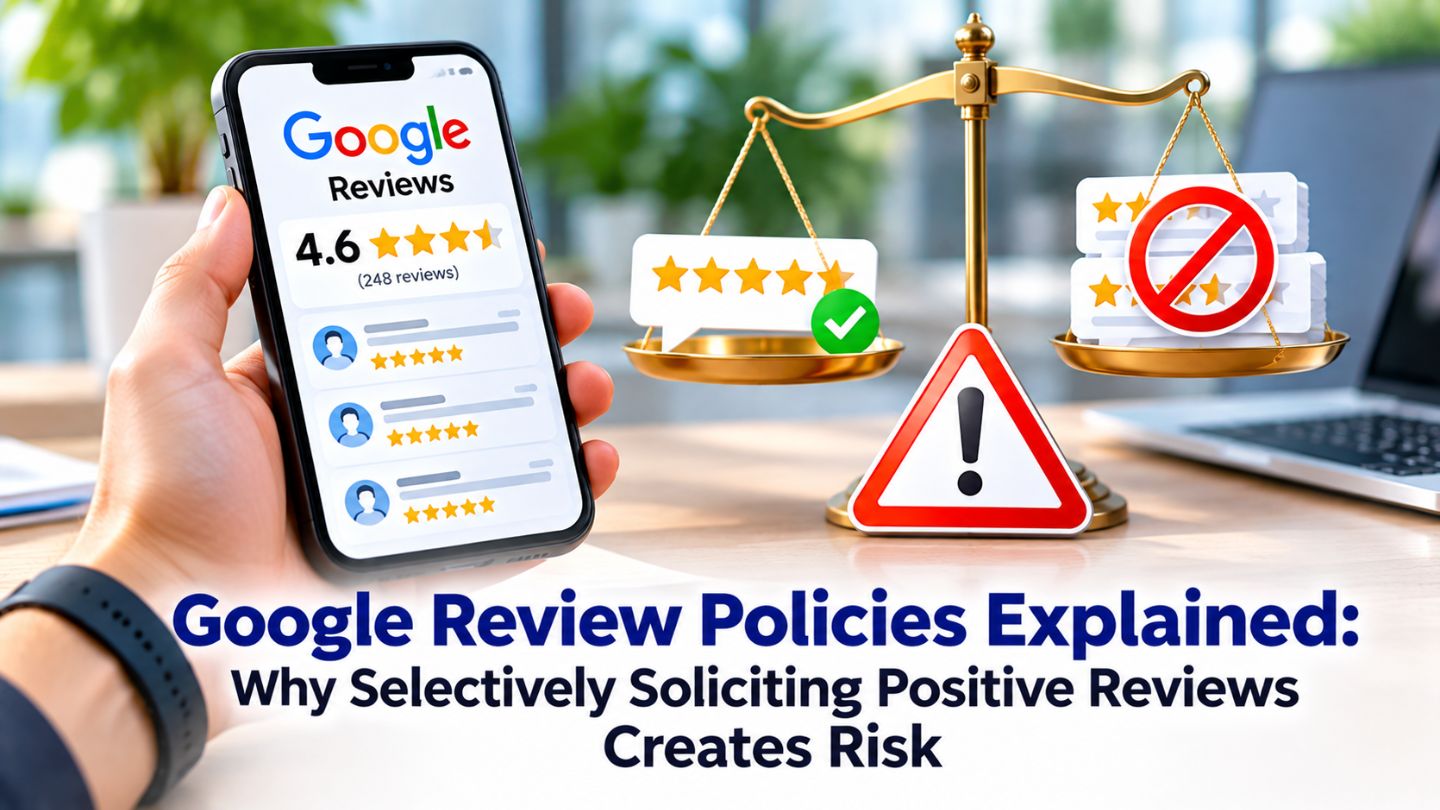
Reviews influence where people spend their money, so it is tempting to steer the process. Some businesses send review requests only to customers they know were happy, or use surveys that filter unhappy customers away from Google. It feels like smart reputation management, but Google's policies treat it as manipulation. This blog covers what Google's review policies say about selectively soliciting positive reviews, why the practice creates real risk, and how businesses can ask for reviews in a way that stays compliant and still builds a strong reputation.
Key Takeaways
- Google prohibits selectively soliciting positive reviews from customers.
- Review gating, incentives, and pressure tactics all violate Google's policies.
- Policy violations can lead to removed reviews and other restrictions.
- Asking every customer the same way keeps requests compliant.
- Genuine, balanced reviews build more trust than a perfect score.
What Google's Review Policy Actually Says
Google's prohibited and restricted content policy makes clear that reviews should reflect a genuine experience and be unbiased. Under its rules on fake engagement and rating manipulation, Google states that merchants may not discourage or prohibit negative reviews, or selectively solicit positive reviews from customers.
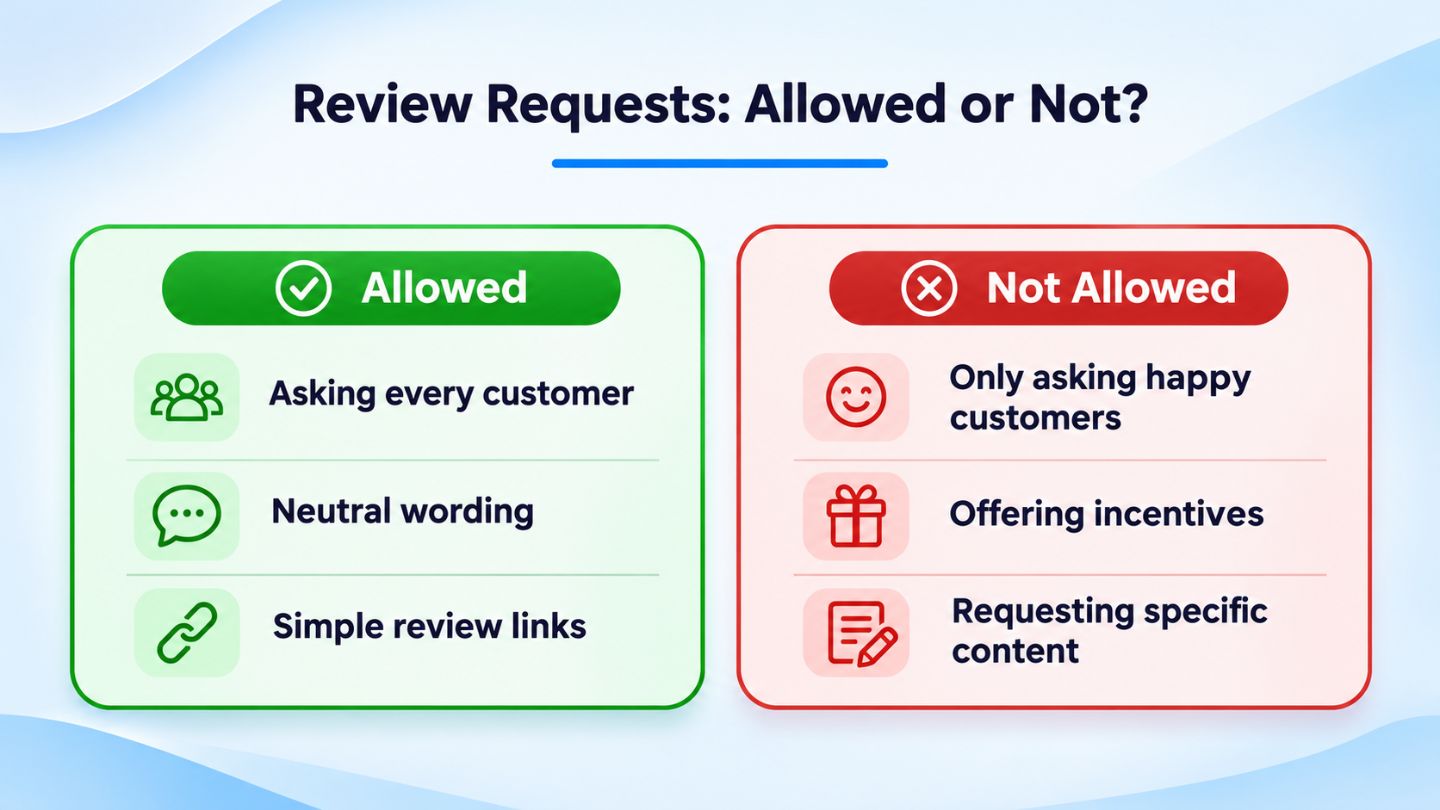
The same policy covers related tactics. Businesses may not offer incentives such as payments, discounts, or free services in exchange for reviews, pressure customers to leave reviews while on the premises, or ask for specific content in a review, such as naming a staff member. Google allows businesses to encourage genuine reviews, as long as they don’t try to influence the rating or content.
What Selective Solicitation Looks Like in Practice
Selective solicitation, often called review gating, can take several forms. A business might send a short survey asking customers to rate their experience, then direct only those who give high ratings to Google while sending others to a private feedback form. Another version involves staff asking only visibly happy customers for reviews while avoiding anyone who had a problem.
Some review software includes gating features by default, and businesses may use them without realizing they violate Google's policies. Instructions like "if you loved your visit, leave us a review" can also signal selective intent. The common thread is that customers with negative experiences are discouraged or filtered out before they ever reach the review page.
Common Forms of Review Gating
- Sending only satisfied survey respondents to Google.
- Asking only customers who seem happy.
- Wording requests that invite only positive feedback.
- Using tools that filter out unhappy customers automatically.
Google allows businesses to ask for reviews, as long as every customer gets the same fair chance.
Why Google Treats This as Manipulation

Reviews only help customers if they reflect the full range of real experiences. When a business filters out unhappy voices, its rating no longer represents reality, and people make decisions based on a distorted picture. That is exactly what Google's rules against rating manipulation are designed to prevent.
Trust in the review system also depends on fairness across businesses. If some companies inflate their ratings through gating while others ask every customer honestly, the honest businesses are put at a disadvantage. Enforcing these rules protects both consumers and competitors, which is why Google takes rating manipulation seriously.
The Real Risks for Your Business
The most direct risk is losing reviews. Google uses automated systems and manual reviews to detect manipulation, and it can remove reviews tied to policy violations. Businesses sometimes see review counts drop suddenly, and the reasons explained in why businesses lose reviews on Google suddenly often include patterns that look manipulated.
There are broader consequences as well. Google can restrict profiles involved in review manipulation, and consumer protection rules in many places target deceptive review practices. Damage to customer trust is just as serious, since people who discover that a business filters feedback may question everything else it says. Fake reviews in 2026 and their fallout are covered in fake reviews in 2026 and how they damage brand trust.
Read More: Reasons Your Google Business Profile Might Get Suspended
Why a Perfect Rating Is Not the Goal

Many businesses chase a flawless five-star average, but customers often view perfect scores with suspicion. A mix of mostly positive reviews with a few honest criticisms looks more believable, especially when the business responds thoughtfully to concerns. The reasoning behind why perfect 5-star reviews might be hurting your business suggests authenticity often matters more than perfection.
Negative reviews also provide useful information. They reveal problems with service, communication, or products that the business can fix. Handling criticism well, with a calm and helpful response, shows prospective customers how the business treats people when something goes wrong, which can build more trust than a spotless rating ever could.
How to Ask for Reviews the Right Way
Use the Same Request for Everyone
The compliant approach is simple: ask every customer the same way, at the same point in the experience. A short email, text, or receipt message after a completed service, with a direct link to the review page and neutral wording, works well. Phrases like "we'd appreciate hearing about your experience" invite honest feedback without suggesting what to say.
Build Requests Into Your Process
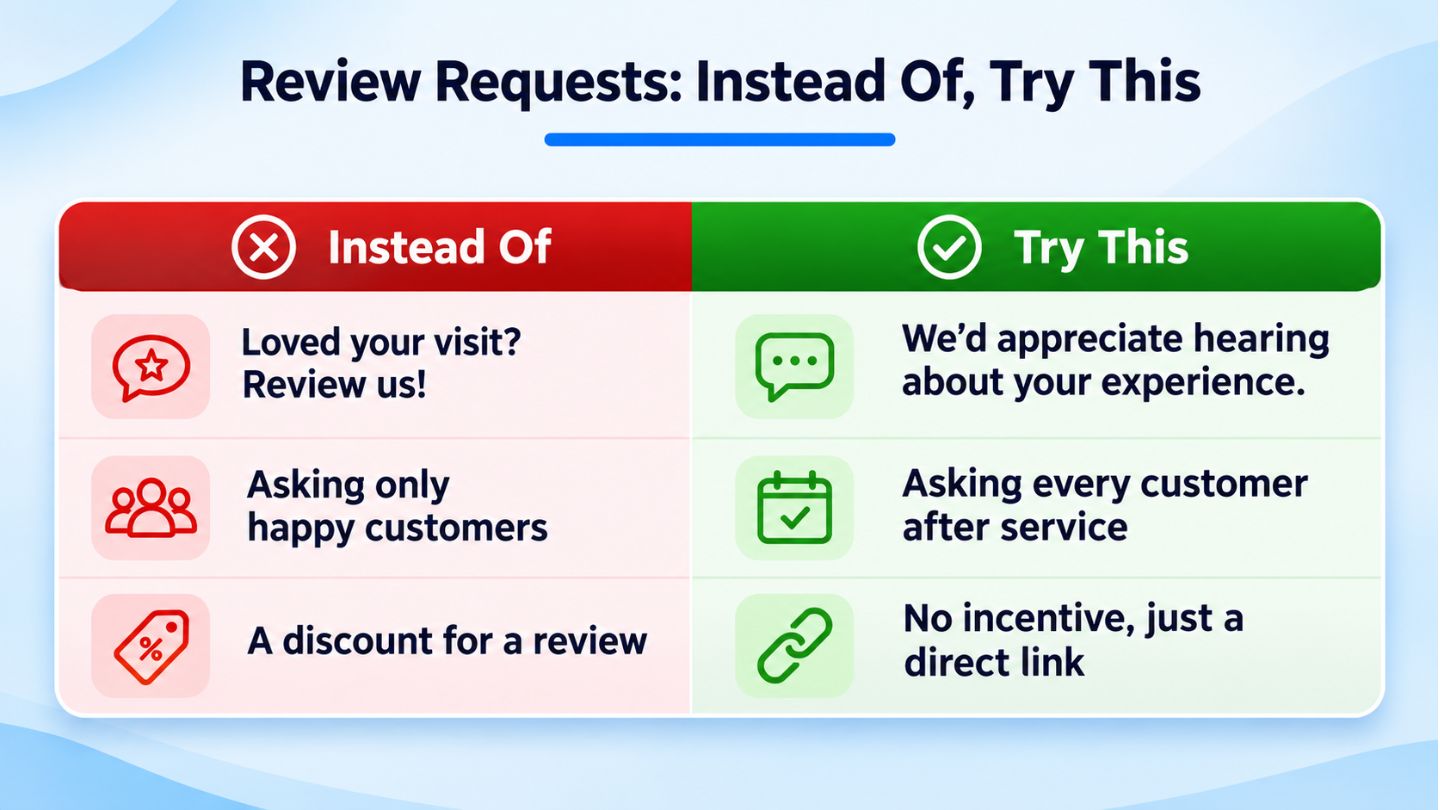
Consistency is the key safeguard. Build review requests into the normal customer process so they go out automatically, rather than relying on staff to decide who to ask. If a survey is used for internal feedback, every respondent should still receive the same option to leave a public review, regardless of how they answered.
Neutral wording and consistent requests keep review collection compliant.
Responding to Reviews Once They Arrive
Asking fairly is only half of good review management. Responding to reviews, both positive and negative, shows customers that the business listens. Short, personal thank-you replies to positive reviews and calm, solution-focused replies to criticism help future customers understand how the business operates. Replies can matter beyond reputation too, which is why it helps to know how Google review responses help with SEO.
Over time, a steady flow of genuine reviews and thoughtful responses builds a strong, trustworthy profile. The methods in Google reviews strategies that scale show how businesses can grow reviews consistently without crossing policy lines, combining automated requests with real engagement.
Training Your Team on Review Requests
Staff often handle review requests in person or by phone, so they need clear guidance. A short policy that explains how to ask every customer, which wording to use, and what to avoid, such as offering discounts or asking for specific names in reviews, keeps everyone aligned. Reviewing this policy with new employees prevents well-meaning mistakes.
Watch for tools and habits that create risk. Review platforms with built-in gating features, staff incentives tied to review counts, and scripts that steer customers toward five stars can all cross policy lines. The damage described in fake reviews in 2026 and how they damage brand trust shows why it is worth reviewing these practices carefully.
Turning Honest Feedback Into Improvements
Asking every customer for a review means some feedback will be critical. Rather than avoiding it, use it. Patterns in negative reviews often reveal specific issues, such as long wait times, unclear pricing, or communication gaps, that the business can fix to improve the customer experience.
Sharing improvements publicly can also strengthen trust. When a review mentions a problem that has since been solved, a reply explaining the change shows future customers that feedback leads to action. Over time, this approach builds a reputation for listening, which often matters more to customers than a perfect rating.
Read More: How to Turn Customer Reviews into High-Converting Website Content
Building a Reputation That Holds Up

Selectively soliciting positive reviews may seem like a shortcut to a better rating, but Google's policies explicitly prohibit it, and the risks include removed reviews, profile restrictions, and lost customer trust. Asking every customer consistently, avoiding incentives and pressure, embracing honest feedback, and responding thoughtfully builds a reputation that is both compliant and credible.
At The Ocean Marketing, we help businesses build review strategies that grow genuine feedback and strengthen local trust. Our Google Maps SEO team sets up compliant review requests and manages profile reputation, and a free SEO audit can show how your profile compares with competitors. Contact us to build a review process you can rely on.
Frequently Asked Questions
Is it against Google's rules to ask only happy customers for reviews?
Yes. Google's policies state that merchants may not selectively solicit positive reviews or discourage negative ones.
Can I offer a discount in exchange for a Google review?
No. Google prohibits offering incentives such as payments, discounts, or free services in exchange for reviews.
What is the safest way to ask for Google reviews?
Ask every customer in the same way, with neutral wording and a direct link, without trying to influence the rating or content.