
Fake Reviews in 2026: How They Can Damage Brand Trust and Local Visibility – The Ocean Marketing blog
Local SEO Reviews & Citations September 25, 2026 17 minute read

Fake Reviews in 2026: How They Can Damage Brand Trust and Local Visibility

OM By The Ocean Marketing
Fake Reviews in 2026: How They Can Damage Brand Trust and Local Visibility

Google blocked or removed more than 292 million policy-violating reviews on Maps in 2025, up from more than 240 million the year before (Google, April 2026). That number tells you two things at once. Fake reviews are everywhere, and the systems catching them have never been busier.

For a local business, fake reviews hurt in two directions. There are the ones a competitor or scammer points at you, and there are the ones a business is tempted to buy to look better. In 2026 both carry a higher cost than ever: US federal fines, UK penalties tied to global turnover, and Google profile restrictions that can freeze or hide your reviews for a set period (six months or more for UK repeat offenders).

This post covers what changed in the rules, how Google now punishes review fraud, how fake reviews erode customer trust and local rankings, and what to do if you're on the receiving end.

Key Takeaways

  • Buying, selling or posting fake reviews is now explicitly illegal in the US and UK. The FTC can seek up to $53,088 per violation (2025 inflation-adjusted figure), and UK fines can reach 10% of global turnover.
  • Google removed or blocked over 292 million policy-violating reviews in 2025. Caught businesses can lose the ability to get new reviews, have existing reviews hidden, and display a public warning label.
  • Consumers are getting stricter: 68% now need at least a 4-star rating before using a local business, up from 55% a year earlier (BrightLocal, 2026).
  • Review count, rating, recency and a steady flow of reviews all rank in Whitespark's top 15 local pack factors, so losing reviews to a fraud penalty directly costs map visibility.
  • The durable fix is a steady, policy-safe review habit, plus fast reporting of fake reviews aimed at you. Gating and "review for a discount" offers break Google policy, and since April 2026 so do staff review quotas.

How this post was made: it was researched from the primary sources listed at the end, drafted with AI assistance, then fact-checked, edited and published by the content team at The Ocean Marketing, which holds editorial responsibility for it.

Until recently, the worst outcome of buying reviews was having them deleted. That changed when two major markets wrote fake reviews into law.

In the US, the FTC's Trade Regulation Rule on the Use of Consumer Reviews and Testimonials went into effect on October 21, 2024 (FTC). It bans fake or AI-generated reviews, buying reviews with incentives conditioned on a positive or negative sentiment, undisclosed reviews from insiders, company-controlled "independent" review sites, and suppressing reviews through "unfounded or groundless legal threats, physical threats, intimidation." It also bans buying or selling fake social influence, such as bot followers or views (FTC, August 2024). Knowing violations can bring civil penalties of up to $53,088 per violation, the figure set in the FTC's 2025 inflation adjustment (FTC).

Enforcement has started. On December 22, 2025, FTC staff sent warning letters to 10 companies about possible violations of the rule (FTC).

The UK went further. Under the Digital Markets, Competition and Consumers Act, fake reviews were banned from April 6, 2025, and platforms must run "adequate detection and removal procedures" (GOV.UK). The CMA can fine businesses up to 10% of global turnover (CMA, January 2025). In its first year, the CMA sent advisory letters to 54 firms and in March 2026 opened investigations into five companies over misleading reviews (CMA blog, April 2026).

United States (FTC) United Kingdom (CMA)
In force since October 21, 2024 April 6, 2025
Maximum penalty $53,088 per violation Up to 10% of global turnover
Covers AI-written fake reviews Yes Yes
Enforcement so far Warning letters to 10 companies (Dec 2025) 54 advisory letters; 5 investigations opened (Mar 2026)

The phrase "per violation" is the part small businesses tend to skip. A batch of 50 purchased reviews isn't one mistake in the eyes of a regulator. The legal risk now scales with the size of the manipulation, which is exactly the opposite of what review sellers promise.

How Google Catches and Punishes Fake Reviews in 2026

Google's enforcement is the risk most local businesses will actually meet. In 2025 it blocked or removed over 292 million policy-violating reviews, removed more than 13 million fake Business Profiles, and placed restrictions on more than 782,000 accounts (Google, April 2026).

Detection has also moved beyond the moment a review is posted. Google says it can "revisit reviews more frequently to identify new abuse patterns even months after they were originally posted" (Google, April 2025). A batch of bought reviews that survives its first week isn't safe. It can be caught and removed long after the money has changed hands.

Policy-violating reviews Google blocked or removed Policy-violating Google Maps reviews blocked or removed Millions of reviews per year, as reported by Google 2024 240M+ 2025 292M+ Roughly a 22% year-over-year increase in enforcement volume.
Sources: Google, "Google Maps uses AI to fight fake Business Profiles" (April 2025); Google, "New ways we're protecting businesses on Maps" (April 2026).

When Google decides a business has been buying or soliciting fake reviews, the penalties hit the profile itself. Per Google's Business Profile help center, a restricted business "will not be able to receive new reviews or ratings for set period of time," its "existing reviews or ratings will be unpublished for set period of time," and Google may "display a warning to let consumers know that fake reviews were removed" (Google Business Profile Help). By April 2025, Google had rolled out alerts in the US, UK and India flagging places where it had recently removed suspicious five-star reviews, and said the warnings would expand globally (Google, April 2025).

In the UK, Google's commitments to the CMA spell out how these combine. Businesses caught boosting their ratings get "prominent 'warning' alerts" and can't receive new reviews, and repeat offenders can have all their reviews deleted "for 6 months or more" (CMA).

Other platforms are moving the same way. Yelp filtered out nearly half a million suspected AI-generated reviews in 2025 and placed 128 Compensated Activity Alerts on business pages (Yelp, February 2026). Tripadvisor flagged and removed 214,000 AI-generated reviews from its 2024 submissions (Tripadvisor).

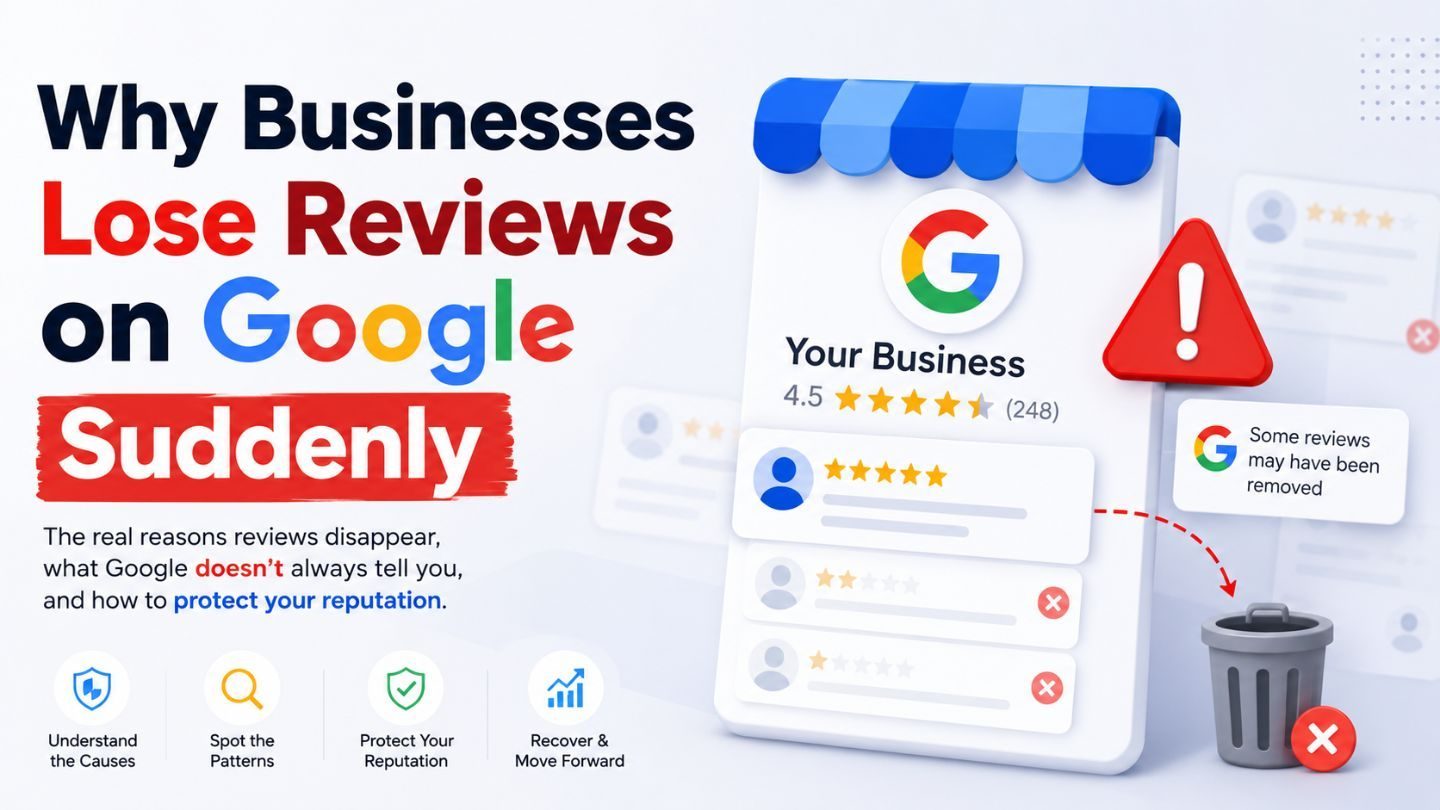
If a profile has already been hit, our guide to why businesses lose Google reviews suddenly walks through the common causes, and reasons a Google Business Profile might get suspended covers the more serious end.

How Fake Reviews Damage Brand Trust

Reviews only work because people believe them. BrightLocal's 2026 Local Consumer Review Survey of 1,002 US adults found that 97% read reviews for local businesses, and 41% "always" read them, up from 29% in 2025. Yet only 49% trust reviews as much as personal recommendations (BrightLocal, February 2026). Half of your audience is already reading with some skepticism.

Minimum star rating consumers require, 2025 vs 2026 Minimum star rating consumers need before using a local business Share of US consumers, BrightLocal Local Consumer Review Survey 55% 68% 4 stars or higher 17% 31% 4.5 stars or higher 2025 2026
Source: BrightLocal, Local Consumer Review Survey 2026 (n=1,002 US adults, February 2026), compared with the 2025 edition.

Rising standards are the trap. When 68% of consumers want at least four stars and 31% want 4.5 or more, a 3.9-star business feels real pressure to "fix" its rating. But the same strictness makes getting caught more expensive. A Google warning label or a sudden drop in visible reviews tells exactly those picky customers that something is off.

Consumers also want fake reviews punished. In BrightLocal's 2026 data, 93% said someone should be responsible for detecting fake reviews, 97% want consequences for businesses that post them, and 57% support banning offenders from review platforms (BrightLocal, February 2026).

There's also a problem that has nothing to do with enforcement: fake reviews tend to look fake. Bursts of five-star posts from one-review accounts, generic praise with no detail, identical phrasing. Our piece on why perfect 5-star reviews might be hurting your business explains why a realistic 4.6 with detailed feedback often converts better than a spotless 5.0.

AI makes this worse, not better. Originality.ai estimated that the share of AI-generated Google reviews in its sample rose from 5.01% in 2019 to 19% in 2024 (Originality.ai, October 2025). Because the sample and detector are the vendor's own, treat the exact figures as directional. Yelp's and Tripadvisor's removal volumes, above, point the same way.

Estimated share of AI-generated Google reviews Estimated share of Google reviews that are AI-generated Originality.ai sample, 15 North American cities, own detector 0% 10% 20% 5.0% 12.2% 19% 2019 2023 2024 Years 2020 to 2022 not reported. Vendor study; treat figures as directional.
Source: Originality.ai, "From 2019 to 2024: AI-Generated Google Reviews Increased by 279.2%" (October 2025).

How Fake Reviews Hurt Local Visibility

Reviews are a documented local ranking input, so anything that removes or freezes them costs you map-pack visibility. Google's own help page says prominence includes "how many reviews you have," and that "more reviews and positive ratings can help your business's local ranking" (Google Business Profile Help).

Practitioners rate reviews even more heavily. In Whitespark's 2026 Local Search Ranking Factors survey, where 47 experts rated 187 factors, four review signals rank in the top 15 for the local pack and Maps (Whitespark, November 2025):

Rank (Local Pack/Maps) Review factor
#6 High numerical Google ratings
#9 Quantity of native Google reviews (with text)
#11 Recency of reviews
#14 Sustained influx of reviews over time (rather than bursts)

Look at #14. The factor that rewards a steady flow "rather than bursts" is the same pattern that fake review campaigns break. A purchased batch shows up as a spike. In our reading, that's exactly the kind of unnatural pattern Google's systems are built to spot, and it's also what the ranking factor doesn't reward anyway.

The visibility damage from getting caught can be severe. Sterling Sky documented a home-services company that bought fake reviews. After Google's first cleanup, one location dropped from 60 reviews at 4.1 stars to 18 reviews at 3.0 stars (Sterling Sky, 2023). That's a loss of volume, rating and trust in a single sweep, before any warning label or posting freeze.

Fake reviews also hurt through listings, not just reviews. Spam listings with keyword-stuffed names can outrank real businesses until they're reported. See our breakdown of Google Maps spam detection and how fake listings impact rankings.

AI search is widening the stakes. BrightLocal found 45% of consumers now use ChatGPT or other AI tools to find local business information, up from 6% in 2025 (BrightLocal). Those assistants summarize review sentiment. A profile carrying a fake-review warning or a thin, suspicious review history is a poor source for that summary. Our guide to AI search reputation management covers how assistants read your reputation.

The Gray Areas That Now Count as Review Manipulation

Most businesses don't buy reviews from a click farm. The bigger risk is common practices that feel harmless but break Google policy, the FTC rule, or both. Most of these rules are years old. What's new is that Google tightened its policy in April 2026, banning merchants from "requesting that staff solicit a certain number of reviews" and from having staff seek reviews with "content that identifies a staff member" (Google Maps content policy; Search Engine Roundtable, April 2026).

Practice Status in 2026
Asking every customer for an honest review Allowed and encouraged
Discount or freebie in exchange for a Google review Breaks Google policy on incentivized content
Discount only for positive reviews Breaks Google policy and the FTC rule
Review gating (only asking happy customers) Breaks Google policy ("selectively solicit positive reviews")
Requiring staff to hit review quotas, or to ask customers to mention them by name Breaks Google policy since April 2026 (the ban applies to the business's request)
Owners, staff or family reviewing the business Breaks Google policy; undisclosed insider reviews break the FTC rule
Writing reviews for customers, including with AI Breaks Google policy; a fake review under the FTC rule when it misrepresents who wrote it or their experience
Groundless or unfounded legal threats to get a review removed Review suppression under the FTC rule

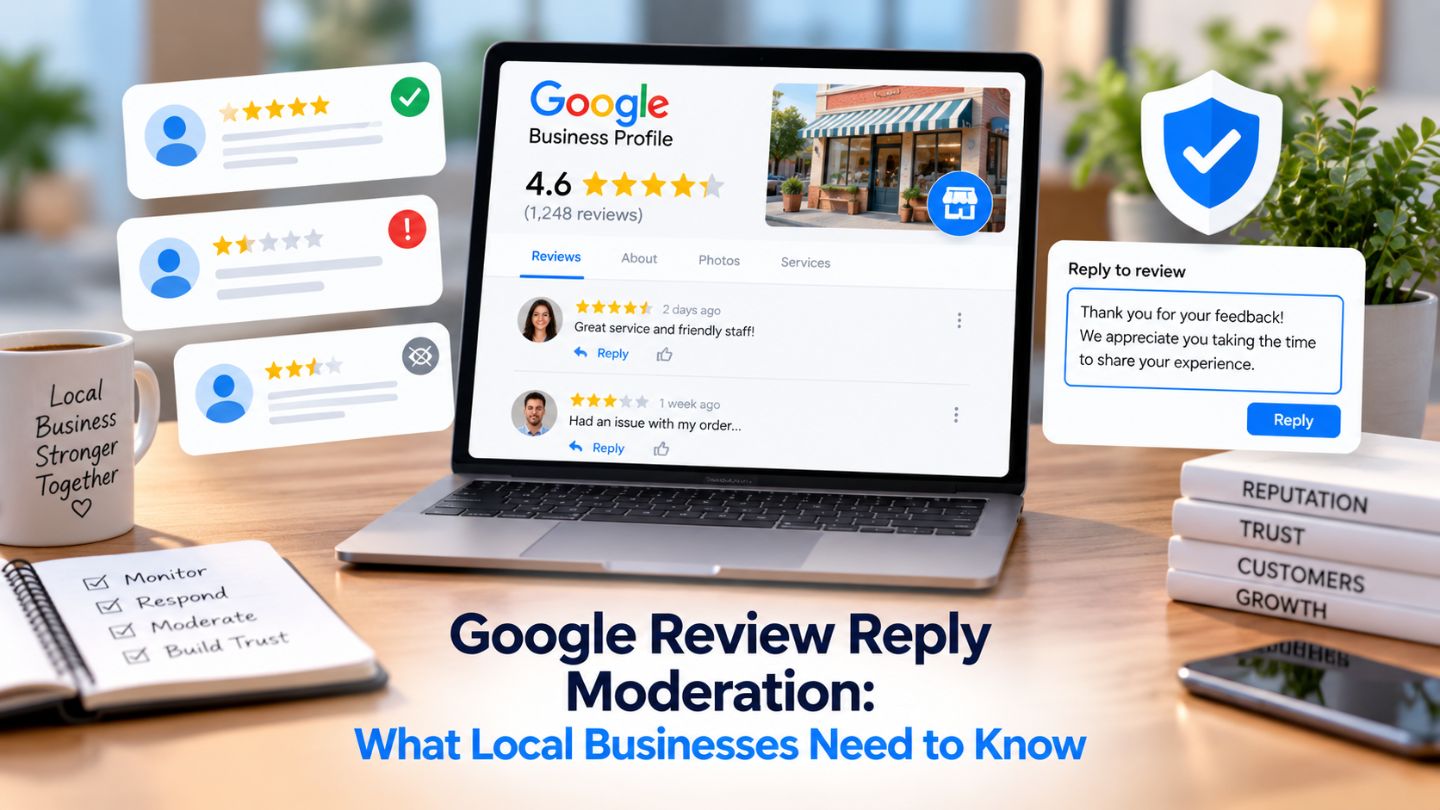
If your review program uses any of the red-flag practices above, fix it now rather than waiting for a restriction. Our guide to Google review reply moderation covers the owner-side rules in more depth.

When the Fake Reviews Are Aimed at You

Fake negative reviews are the other half of the problem. Review bombing, extortion schemes and competitor attacks all target the same trust signals. The fix is a reporting process, not a public argument.

Google has added some protection here. In April 2026 it said that when it sees "a sudden spike in spam reviews," it will "remove the fake content, pause new reviews on the profile, alert the Business Profile owner and display a notification banner" explaining the pause (Google, April 2026). It also says its systems now better detect extortion scams that demand payment to remove fake one-star reviews. That doesn't replace your own reporting, but it means a sudden attack is more likely to be caught quickly.

  1. Monitor weekly and document early. Turn on review notifications and check your profile at least weekly, since a fresh attack is easier to report than one that has sat for a month. Screenshot each suspicious review with the date, reviewer name and review count. Note bursts, such as several one-star reviews in a day from new accounts.
  2. Report through the right channel. Flag each review from your Business Profile, then use Google's review management tool to track status and appeal if the first decision goes against you.
  3. Reply once, calmly. A short, factual reply ("We have no record of this visit; please contact us at...") reassures readers without accusing anyone. Never threaten legal action in a reply. Under the FTC rule, groundless legal threats to suppress reviews are themselves a violation.
  4. Never pay to remove reviews. Extortion schemes promise to stop one-star attacks for a fee. Report them to Google instead.
  5. Keep genuine reviews flowing. A steady base of real reviews dilutes an attack and keeps your rating stable while reports are processed.

Our step-by-step guide on how to handle and remove a fake Google review covers the reporting flow in detail.

Watch: Sterling Sky's Google Review EXTORTION! Protect Your Business (3 Proven Fixes) walks through extortion-style review attacks. For the April 2026 policy change on staff quotas, see Let's Talk SEO's The Popular Review Strategy Google Just BANNED.

A Review Strategy That Holds Up in 2026

The strategy that survives both regulators and Google's filters is also the one that ranks: a steady flow of genuine, detailed, recent reviews. BrightLocal found 74% of consumers want to see reviews from the last three months (BrightLocal), and Whitespark's experts rank recency and sustained flow among the top local factors.

  1. Ask everyone, every time. Build the request into invoicing, follow-up texts or job completion. Asking every customer keeps you clear of gating rules and produces the steady cadence that ranks.
  2. Make it one tap. Use your Business Profile's review link or QR code. Friction kills response rates.
  3. Prompt for detail, not stars. Ask what the customer needed and how it went. Detailed reviews read as genuine and give AI assistants more to summarize.
  4. Reply to all reviews. Replies show an engaged business and add your context. Our post on whether Google review responses help SEO covers the ranking side.
  5. Audit old tactics. Check any vendor, incentive or staff program you've used against the table above. Quietly stopping a banned practice beats waiting for a restriction.
  6. Reuse reviews on your site. Real customer language builds trust on service pages too, as long as you quote genuine reviews accurately.

For a scaled version of this playbook, read Google reviews SEO: advanced strategies that scale.

Frequently Asked Questions

Is it illegal to buy Google reviews in 2026?

Buying fake reviews is illegal in the US and UK. The FTC's consumer review rule, in force since October 21, 2024, bans buying fake reviews and incentives tied to positive or negative sentiment, with civil penalties of up to $53,088 per violation. The UK's DMCC Act has banned fake reviews since April 6, 2025, with fines of up to 10% of global turnover. Google's policies separately prohibit any incentivized Google review, fake or not.

Can I offer customers a discount for leaving a review?

Not for Google reviews. Google's policy treats reviews incentivized with discounts, free goods or services as fake engagement, even if you don't ask for a positive review. The FTC rule specifically bans incentives tied to a positive or negative sentiment.

Can fake negative reviews from competitors hurt my local ranking?

They can hurt your rating and conversion rate, and rating is one of the review signals local experts rank highly. Report each fake review through your Business Profile, reply once calmly, and keep genuine reviews coming so an attack doesn't dominate your profile.

What happens if Google catches my business with fake reviews?

Google can remove the reviews, block new reviews for a set period, unpublish existing reviews, and show a public warning that fake reviews were removed. In the UK, repeat offenders can have all reviews deleted for six months or more.

Are AI-written reviews considered fake?

AI-generated reviews that misrepresent who wrote them or whether that person had a real experience are fake reviews under the FTC rule, which names AI-generated reviews explicitly. Google's policy also bans content that doesn't reflect a genuine experience, so writing reviews on customers' behalf, with or without AI, breaks Google policy.

Trust Is the Ranking Factor You Can't Buy

Fake reviews used to be a gamble with a platform. In 2026 they're a gamble with the FTC, the CMA and Google at the same time, and the penalty often lands on the exact signals that drive local visibility. The businesses that come out ahead are the ones with boring, consistent review habits: ask every customer, reply to everyone, report fraud quickly, and never pay for praise.

Worried about a sudden review drop, a competitor attack or a review program that might break the new rules? The Google Maps SEO team at The Ocean Marketing audits review profiles and builds policy-safe review strategies. Get a free SEO audit and we'll review your profile and flag the risks.

About the publisher: The Ocean Marketing is a New York-based digital marketing agency covering Google Maps SEO, search engine optimization, content writing, link building and paid search. Questions about this post? Contact the team.

References and Retrieval Notes

All sources retrieved September 25, 2026.

Share this article

Ready when you are

Let's put this to work for your business

Tell us your goals and we'll build the plan — or start with a free SEO audit to see where you stand today.