
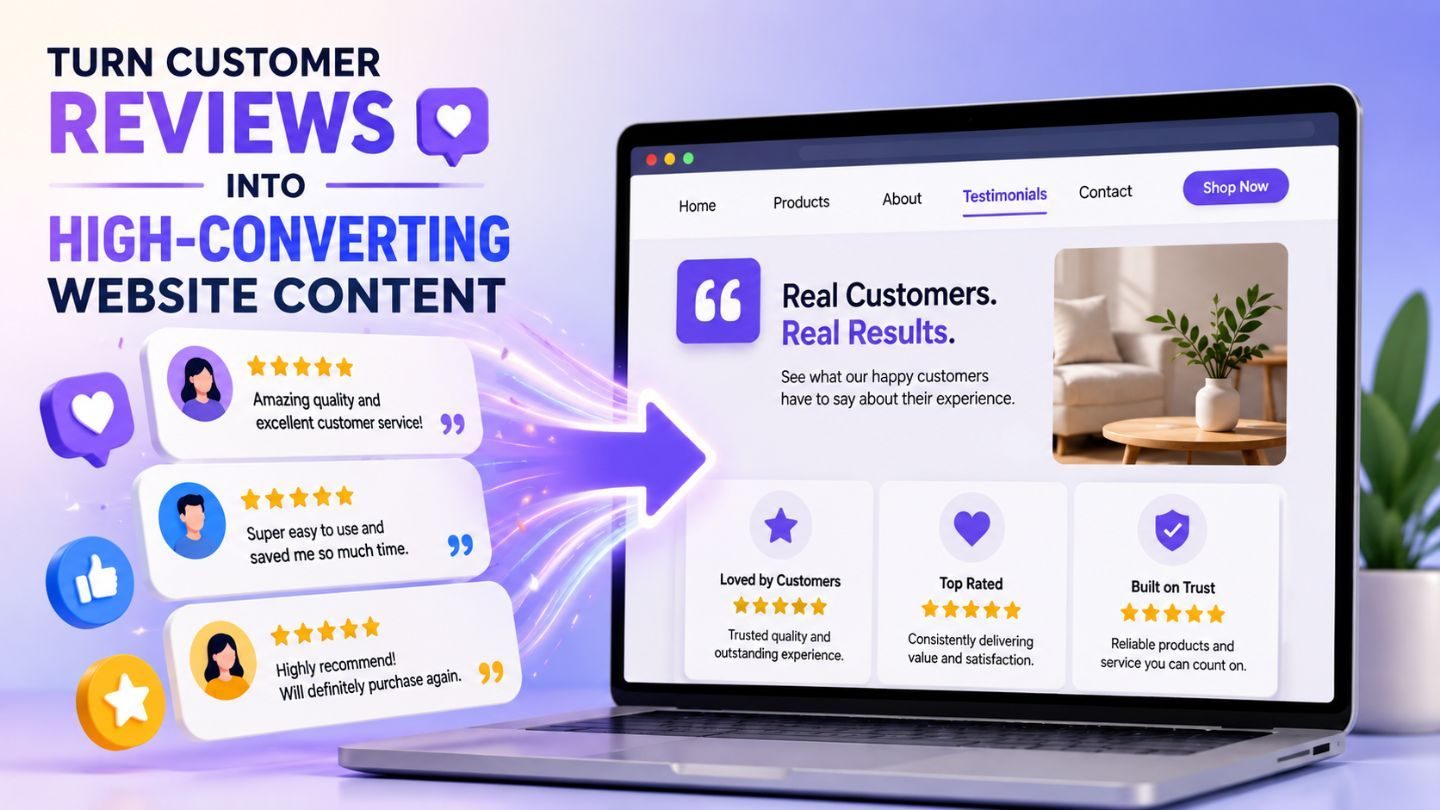
Customer reviews are often treated as proof of quality, but they can do much more than sit on a testimonial page. Real customer feedback contains valuable insights, persuasive language, and authentic experiences that can strengthen website content across multiple pages. When used strategically, reviews help build trust, answer buyer concerns, and influence purchasing decisions. In this blog, we'll discuss how to turn customer reviews into high-converting website content that supports engagement, improves credibility, and helps visitors move closer to becoming customers. You'll also learn practical ways to incorporate reviews throughout your website without making them feel forced or repetitive.
Key Takeaways
- Customer reviews provide authentic content that builds trust.
- Testimonials can improve conversions across multiple website pages.
- Review language often reveals what customers value most.
- Social proof works best when integrated naturally into content.
- Reviews can strengthen SEO and content relevance.
- Strategic placement increases the impact of customer feedback.
Why Customer Reviews Are More Valuable Than Most Businesses Realize
Many businesses collect reviews simply to showcase ratings, but reviews are actually a rich source of customer-driven content. They reveal how people describe your products, services, and overall experience in their own words. Those natural descriptions often resonate more strongly with potential buyers than carefully crafted marketing copy.
Reviews also provide insight into the specific outcomes customers achieve. Instead of telling visitors why your business is great, you can demonstrate it through real experiences. This creates credibility that traditional promotional content often struggles to achieve because prospects tend to trust other customers more than direct brand messaging.
Find the Conversion Gold Hidden in Review Language
One of the biggest advantages of customer reviews is the language customers naturally use. Their comments often highlight benefits, concerns, and priorities that may not be obvious to your marketing team. These phrases can become valuable additions to website content because they reflect how your audience actually thinks and speaks. Rather than rewriting everything from scratch, analyze recurring themes across reviews. If multiple customers mention quick response times, excellent communication, or noticeable results, those themes deserve a stronger presence throughout your website. Consistent customer feedback often points directly to your strongest selling points.
Look for Patterns, Not Just Praise
Instead of focusing only on five-star compliments, pay attention to repeated observations. Common themes often reveal what truly influences buying decisions and customer satisfaction.
Some useful patterns to identify include:
- Frequently mentioned service benefits
- Common customer challenges solved
- Specific product features customers love
- Reasons customers chose your company
- Outcomes customers experienced after purchase
These insights can help shape more persuasive website messaging.
Read More: Advanced Tactics to Maximize the SEO Value of User-Generated Content
Transform Reviews Into Stronger Homepage Content

Your homepage is often the first impression visitors receive, making it one of the best places to incorporate customer feedback. Instead of placing testimonials in a single section and leaving them there, use review insights throughout the page to reinforce key messages.
For example, if customers consistently praise your reliability, weave that theme into headlines, service summaries, and supporting copy. Then back those statements up with direct testimonial snippets. This approach creates a stronger connection between your marketing claims and actual customer experiences, making your homepage more convincing.
Read More: Top Conversion-Focused Homepage Design Strategies
Use Reviews to Improve Service and Product Pages
Service and product pages are designed to help visitors make decisions. Customer reviews can support that process by providing real-world validation for the benefits you describe. When prospects see evidence that others have achieved positive outcomes, hesitation often decreases. Rather than adding a large block of testimonials at the bottom of the page, strategically place relevant review excerpts near important decision points. For example, a review discussing ease of use might appear near product features, while comments about customer support could appear near contact information or purchasing sections.
Create Benefit-Focused Content Using Customer Experiences
Many businesses focus heavily on features, but customers usually care more about results. Reviews often reveal those results in a way that feels authentic and relatable. Instead of simply listing capabilities, use customer experiences to demonstrate real value. A customer who says a service saved time, reduced stress, improved efficiency, or delivered measurable results provides a compelling story. Incorporating these experiences into website content helps prospects visualize their own potential outcomes. That emotional connection can be a powerful conversion driver.
Turn Positive Reviews Into Engaging Website Stories
Individual reviews can often be expanded into short customer success stories. These stories add depth and context that a single testimonial cannot always provide. They help visitors understand the customer's challenge, the solution provided, and the final result. You don't necessarily need lengthy case studies.
Even a few paragraphs outlining a customer's experience can be highly effective. These stories work particularly well on service pages, landing pages, and dedicated success story sections where visitors are actively evaluating solutions. If a customer review highlights a clear problem, solution, and result, it can become part of writing effective case studies that build trust with future buyers.
A Simple Structure for Review-Based Stories
When building short customer stories from reviews, follow a clear structure:
- The customer's initial challenge
- The solution your business provided
- The outcome they achieved
- A direct customer quote
This format keeps content concise while maintaining authenticity.
Strengthen Calls-to-Action With Customer Proof
Calls-to-action often focus on what visitors should do next, but adding customer proof nearby can make those prompts more persuasive. A visitor who sees evidence of success immediately before taking action may feel more confident moving forward. For example, placing a short review next to a contact form, consultation request button, or checkout page can reinforce trust at a critical decision-making moment. Small additions like these often have a meaningful impact because they address uncertainty when it matters most.
Use Reviews to Answer Questions Before They Are Asked
Potential customers frequently have concerns before making a purchase. Reviews can help address those concerns naturally. Customers often mention issues they initially worried about and explain how their experience exceeded expectations. Review content can be incorporated into FAQ sections, service descriptions, and landing pages to proactively answer questions. This helps reduce friction in the buying process while providing reassurance from people who have already been through the same decision-making journey.
Improve SEO With Customer-Driven Content
Customer reviews can contribute to SEO by introducing natural language and topic-related keywords that prospects commonly use. Because reviews are written by real people, they often contain phrases that align closely with actual search behavior. Customer feedback becomes even more valuable when it supports broader search visibility, especially through Google reviews and SEO strategies that scale across local and organic search. Review insights can also inspire new blog topics, FAQ content, and service page updates. Instead of guessing what your audience wants to know, you can use customer feedback as a guide. This helps create more relevant content while supporting broader SEO goals and improving overall website relevance.
Keep Review Content Authentic and Natural
While reviews are valuable, overusing them can reduce their effectiveness. Visitors can usually tell when testimonials feel forced or appear disconnected from the surrounding content. The goal is to integrate customer feedback naturally rather than overwhelming every page with review quotes. This is why businesses should understand why perfect 5-star reviews are not always best before choosing which testimonials to feature on important website pages. Choose testimonials that directly support the content around them. Keep edits minimal, preserve authentic language, and focus on relevance. When reviews complement the surrounding content, they feel more trustworthy and contribute more effectively to conversion-focused messaging.
Measuring the Impact of Review-Based Content

Once customer reviews are integrated throughout your website, it's important to track performance. Monitor metrics such as conversion rates, contact form submissions, page engagement, and time on site to identify improvements. Testing different testimonial placements, review formats, and customer story approaches can reveal what resonates most with your audience. Small adjustments often produce meaningful gains when authentic customer feedback is used strategically throughout the customer journey.
Read More: SEO vs. CRO: Why They Should Always Go Together
Final Thoughts
Customer reviews are far more than simple endorsements. They provide valuable insights into customer motivations, highlight real-world outcomes, and offer authentic language that can strengthen website content. When reviews are thoughtfully integrated into key pages, they help build trust, answer concerns, and create a more persuasive experience that encourages visitors to take action.
At The Ocean Marketing, we help businesses turn valuable customer feedback into conversion-focused content writing that supports long-term SEO growth and stronger website performance. If you'd like to discover opportunities to improve your website content and search visibility, request our free SEO audit or contact us to learn how we can help you create content that converts more visitors into customers.