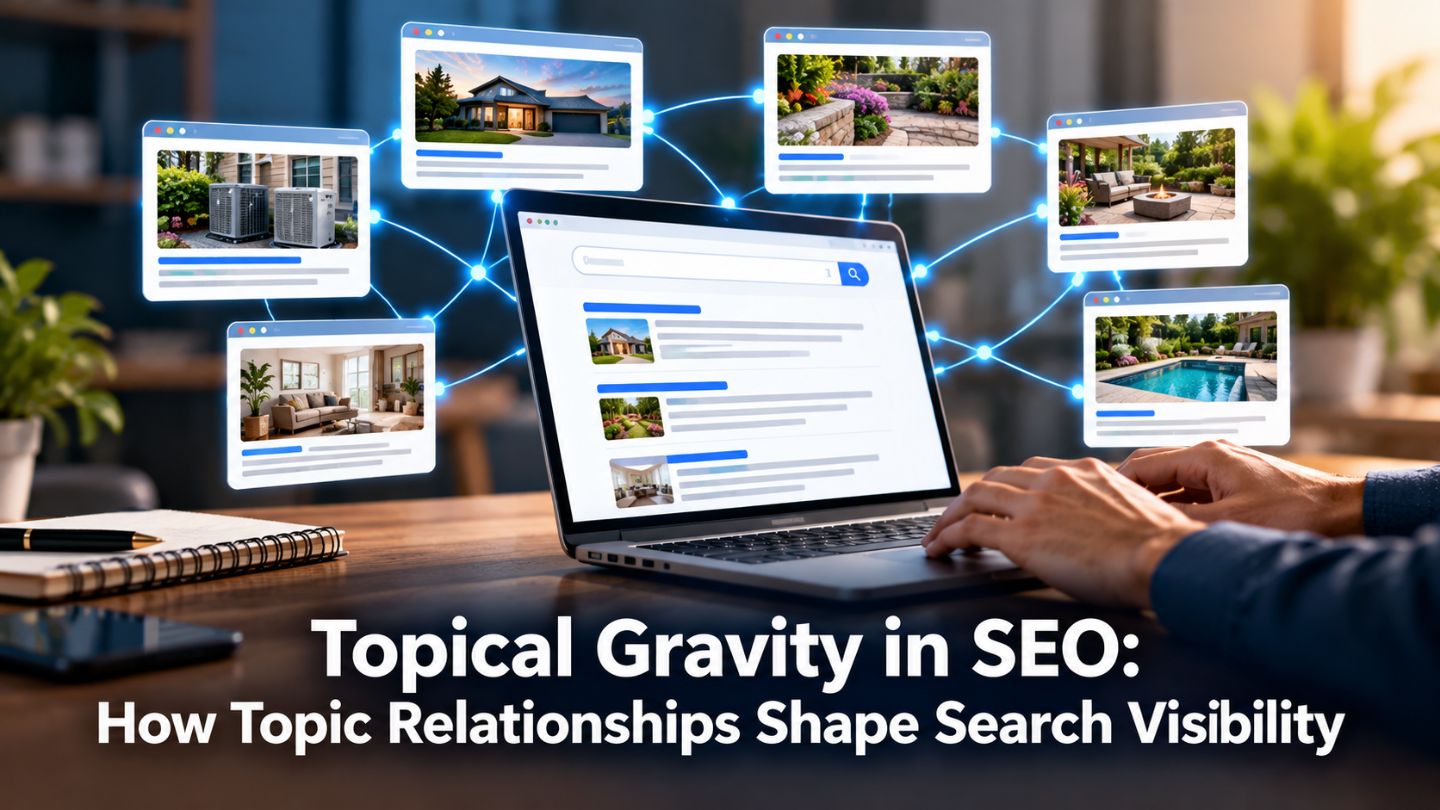

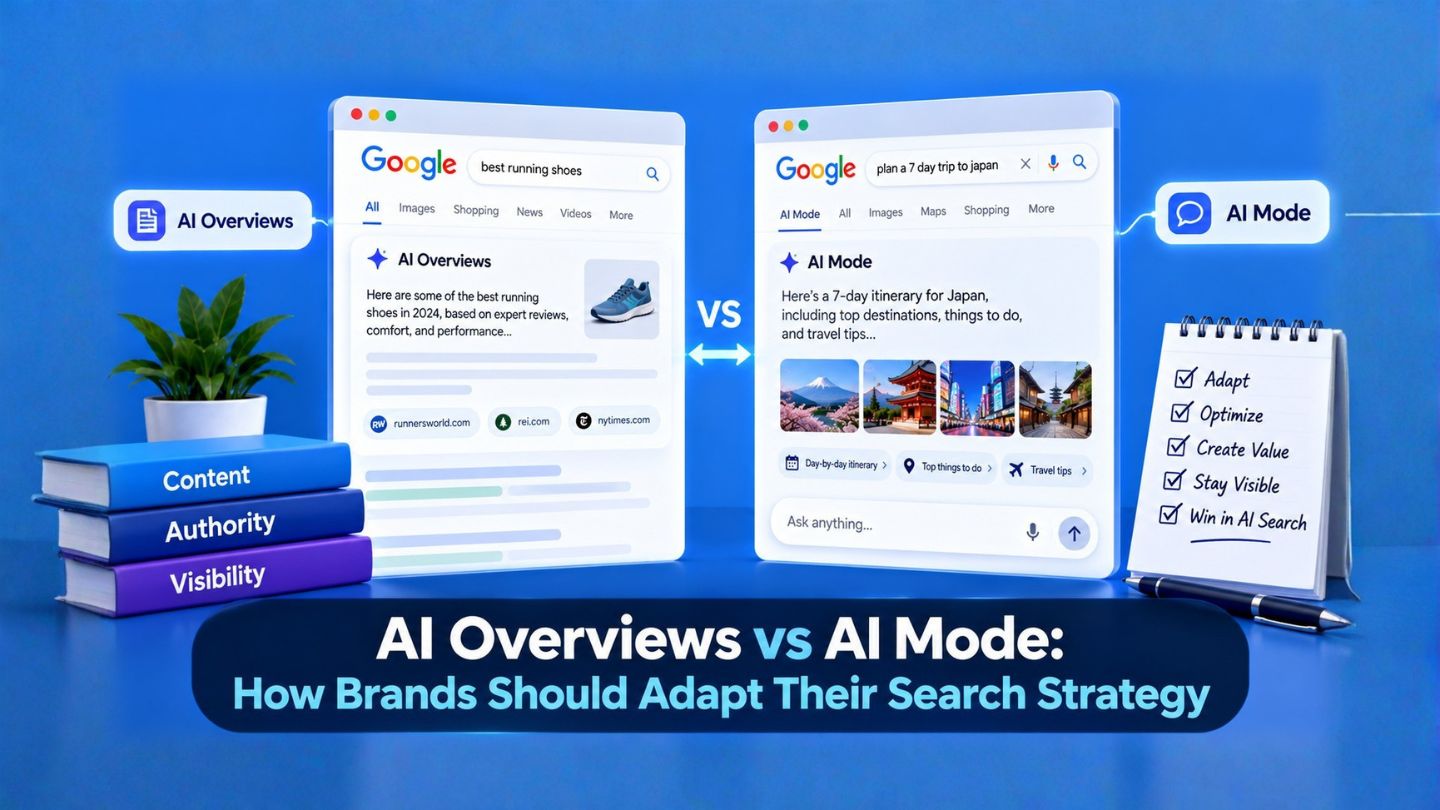
AI Overviews and AI Mode get discussed as though they were the same thing, and treating them that way leads to strategies that miss on both. One is a summary sitting above traditional results; the other is a conversational surface that replaces the results page structure entirely. They reward different things. This blog outlines what actually separates them, how each draws on your content, and what a brand should do differently for each rather than optimizing generically for "AI search."
Key Takeaways
- AI Overviews sit above traditional results; AI Mode replaces the results page.
- Overviews favor concise, extractable answers near the top of a page.
- AI Mode decomposes queries, rewarding depth across a topic cluster.
- Citation behavior and click-through differ sharply between the two.
- One content approach can serve both if it is structured deliberately.
The Structural Difference That Matters
An AI Overview is a summary appended to a familiar results page. The links are still there beneath it, the query is still a single query, and the summary is answering that one question. AI Mode is a different surface: the conversation continues, follow-up questions build on the previous answer, and the traditional list of ten links is not the organizing structure.
That distinction drives everything else. Optimizing for an Overview means being the source of a clean answer to one specific question. Optimizing for AI Mode means being consistently useful across a chain of related questions, because the system may pull from you at any point in a session rather than only at the first.
Formatting Choices That Help Extraction

Beyond front-loading answers, a few structural habits make passages easier to lift cleanly. Lists where content is genuinely parallel, short definitional sentences near the start of a section, and tables for comparisons all present information in shapes that summarize well.
The caution is not to over-apply this until content becomes a series of fragments. The goal is a page a person wants to read that also happens to contain cleanly extractable passages, not a page optimized into something no human would choose to work through. The balance point is what content chunking is really about: passages that stand alone without the page turning into fragments.
How Each One Reads Your Page
Overviews reward tight, self-contained passages that answer a question directly. A page that states its answer plainly under a clear heading is easy to summarize from; a page that builds to its point over four paragraphs is not. The mechanics here are unforgiving and fairly simple to work with once understood.
AI Mode adds another layer by breaking a query into sub-questions and assembling an answer from several sources. A page that covers one narrow piece of a topic exceptionally well can surface in results it would never have ranked for directly, which favors genuine topical depth over single-page optimization. Reviewing the ranking factors worth monitoring for AI Mode specifically is a reasonable starting point for that side.
What Gets Cited Is Not Always What Ranks
A page sitting outside the top ten can be cited in a summary while the page ranking first is not, because the selection is about which passage answers the question cleanly rather than which page earned the position. That decoupling is genuinely new, and it changes what a weak ranking means.
It also means traditional rank reporting can look flat while your actual visibility is changing in either direction. Checking citation presence separately, rather than inferring it from positions, is the only way to see that movement at all.
The Click-Through Reality
It is worth being blunt about what citation actually delivers. Being cited in an Overview produces far fewer clicks than a comparable traditional ranking, because the summary frequently satisfies the query outright. The citation still has value as a visibility and credibility signal, and expecting it to behave like a top-three ranking will lead to disappointment.
AI Mode shifts this further, since a session may involve several exchanges before anyone clicks anything. The useful mental model is that these surfaces build recognition and shortlist presence rather than delivering traffic directly. Understanding why AI Overview citations do not drive the clicks people expect prevents a lot of misdirected effort.
Judge Them on Different Metrics
Measuring an Overview citation by sessions will always look like failure. Branded search volume and shortlist presence are the honest indicators, and both move slowly.
Read More: How Zero-Click Searches Are Impacting SEO & How to Adapt
Where Bottom-Funnel Content Still Wins
Neither surface has meaningfully absorbed decision-stage queries. Someone comparing providers, checking pricing, or evaluating whether a specific business is credible still needs to visit sites, because a summary cannot complete that job. Those pages continue to earn clicks at close to historical rates.
What is genuinely exposed is the broad informational middle: definitions, basic how-tos, surface-level listicles. If a large share of your traffic came from that category, the productive response is reallocating effort toward decision-stage content rather than producing more of what is being summarized away.
The Technical Groundwork Both Depend On
Neither surface can use content it cannot reach. Pages depending on client-side rendering, buried several clicks deep, or blocked by directives nobody has reviewed are invisible regardless of how well written they are. This is the least interesting part of the work and the one that silently caps everything else.
A periodic check that key pages render without JavaScript executing perfectly, that headings reflect genuine document structure rather than styling choices, and that nothing important is hidden behind interaction, catches the problems that make good content unusable. It is also worth knowing how LLM crawlers actually reach your pages, since they do not all behave the way Googlebot does.
Building Content That Serves Both
The good news is that the two requirements are compatible. Front-load the direct answer under each heading, which serves Overviews. Cover the topic thoroughly across a connected set of pages, which serves AI Mode. Keep passages self-contained enough to survive being extracted out of context, which serves both.
What does not work is writing two versions of everything, or stripping personality out of content in the belief that machines prefer blandness. They prefer clarity, which is not the same thing. Approaches like writing for AI search without losing human readers hold up here because the underlying discipline is simply good structure.
How to Check Where You Actually Stand
Rank tracking answers almost none of this, since neither surface has a stable position to track. The practical method is manual: take the queries that matter most to your business, run them through both surfaces periodically, and record whether you appear, how you are characterized, and what specifically is being pulled from your content.
Doing this quarterly, with a short written record, reveals direction over time in a way any single check cannot. It is imprecise and considerably better than assuming traditional rankings describe your visibility on surfaces that no longer work like traditional rankings.
Where Brand Recognition Enters
Both surfaces favor sources they can identify confidently. A business referenced consistently across industry publications, communities, and comparisons is a safer citation than one with no external footprint, and that recognition accumulates slowly through activity that produces no immediate traffic.
This shifts some effort toward things that used to be filed under nice-to-have: being quoted in a roundup, publishing data worth referencing, participating where your industry actually talks. None of it spikes a dashboard, and it is increasingly what determines whether you get named at all.
Read More: Citation SEO: How to Become a Trusted Source in AI Search
Deciding How Much to Invest Right Now

It is reasonable to ask whether this deserves attention yet, given the traffic these surfaces currently return. For most businesses, the honest answer is that the structural work, clear answers, self-contained passages, and sound technical access pay off in conventional search too, which makes it low-risk regardless.
What is harder to justify is dedicated effort aimed only at these surfaces at the expense of channels currently producing revenue. Doing the work that serves both, and treating anything AI-specific as a secondary layer, keeps the investment proportionate to what it realistically returns today.
Adapting Without Overcorrecting
AI Overviews and AI Mode reward different things: one wants a clean, extractable answer to a single question, the other wants demonstrated depth across a topic that can be assembled into a conversation. A single well-structured content approach serves both, provided answers are front-loaded, passages stand alone, and topics are covered properly rather than in isolated posts. Expect recognition rather than traffic from citations, keep investing in decision-stage pages, and check your actual presence manually rather than inferring it from rank data.
At The Ocean Marketing, we build SEO strategies that account for how search surfaces actually behave now rather than how they behaved three years ago. Whether you need help restructuring content for extractability, auditing your presence across AI surfaces, or a free SEO audit to see where your site stands, our team can help. Contact us and let's work out where to focus.