
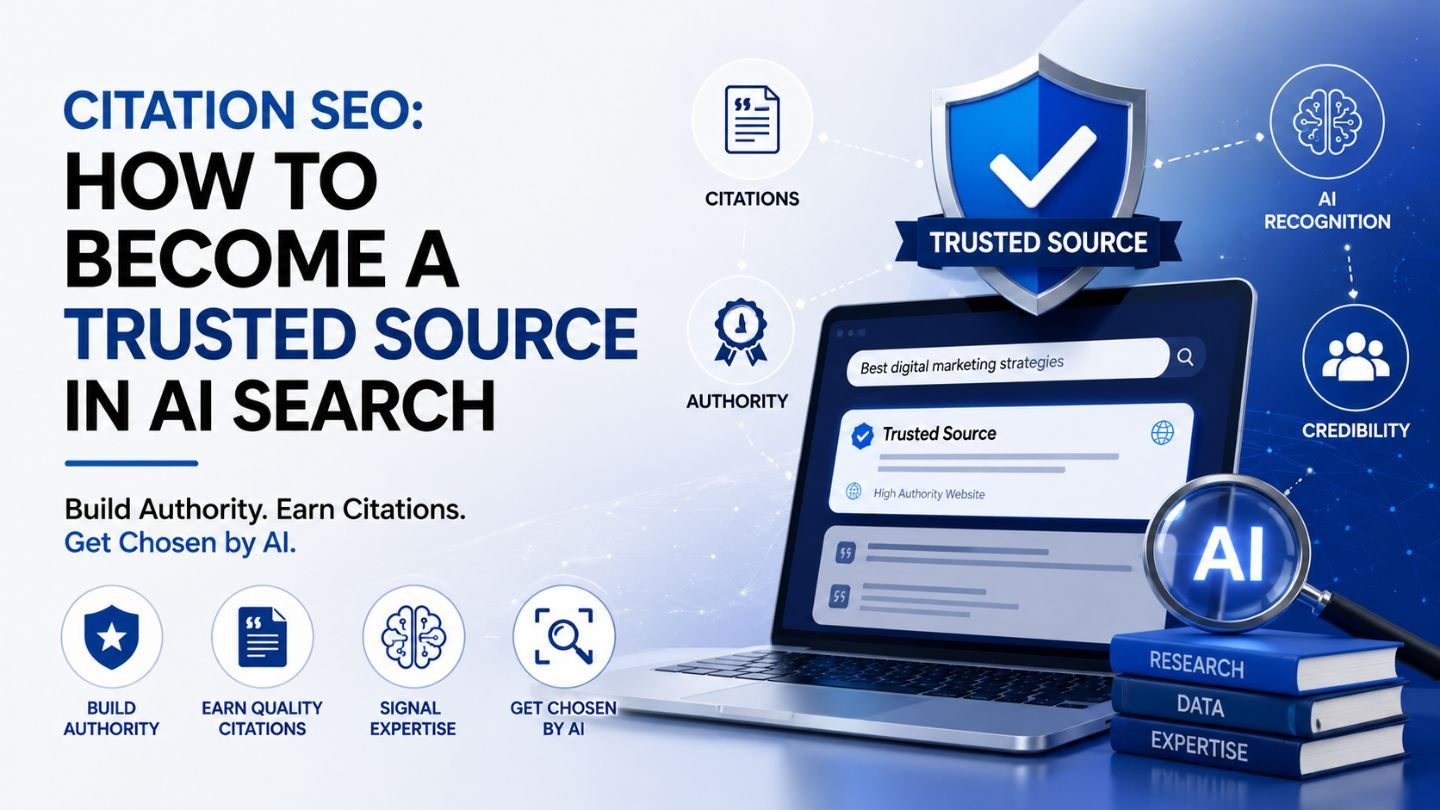
Search is changing rapidly. Instead of simply displaying a list of links, AI-powered search engines now generate answers by pulling information from sources they consider reliable and trustworthy. That means ranking well is no longer the only goal – being cited as a source is becoming just as important. Businesses that consistently provide accurate, helpful, and authoritative content are more likely to appear in AI-generated responses. This blog outlines how Citation SEO works, why it matters, and what you can do to increase your chances of becoming a trusted source in AI search results.
Key Takeaways
- AI search engines prioritize trustworthy and well-cited sources.
- Citation SEO focuses on earning mentions within AI-generated answers.
- Topical authority plays a major role in citation visibility.
- High-quality content is more important than content volume.
- Brand credibility helps improve AI search recognition.
- Consistent expertise increases long-term citation opportunities.
Why Citation SEO Matters More Than Traditional Rankings
For years, SEO strategies focused heavily on ranking positions. While rankings still matter, AI search platforms are introducing a new layer of competition. Users increasingly receive direct answers without needing to visit multiple websites, and those answers are often built from information gathered from trusted sources.
This shift means visibility now extends beyond traditional search results. If an AI system references your content while generating responses, your brand gains exposure, authority, and credibility. Being cited can influence how users perceive your expertise, even before they visit your website.
Understanding How AI Search Chooses Sources
AI search systems analyze enormous amounts of content to determine which sources deserve trust. They look for signals that suggest expertise, consistency, accuracy, and relevance. A website that regularly publishes useful information in a specific subject area is more likely to be cited. However, AI models are not simply looking for keyword-heavy pages.
They favor content that answers questions clearly, provides context, and demonstrates genuine subject matter expertise. The more helpful your content is to users, the more valuable it becomes for AI-generated responses. For a deeper look at how search systems evaluate and cite sources, understanding how Google chooses sources for AI results can help shape stronger content decisions.
Build Topical Authority Instead of Chasing Keywords
Many websites still create content around isolated keywords without developing broader expertise. Citation SEO rewards a different approach. AI systems tend to trust websites that cover a topic comprehensively rather than those producing disconnected articles for individual search terms. For example, a company specializing in digital marketing should create content covering SEO, content marketing, local search, technical optimization, analytics, and emerging trends.
This interconnected knowledge base signals authority and helps search systems recognize the site as a reliable information source. Creating content clusters around core topics also helps users navigate related information more effectively, strengthening both engagement and credibility.
Read More: Topical Authority vs Keyword Authority: Which Drives Rankings Faster?
Publish Original Insights Whenever Possible
One factor that separates highly cited sources from average websites is originality. AI systems encounter thousands of articles repeating similar information. Content that introduces unique insights, research findings, industry observations, or real-world experience often stands out. Original data can come from customer surveys, internal research, case studies, performance reports, or firsthand professional experience.
These types of resources provide information that cannot easily be duplicated elsewhere, making them more valuable as citation sources. Even small pieces of proprietary information can help establish authority and encourage references from both AI systems and human readers.
Focus on Expertise, Experience, Authority, and Trust
Google’s emphasis on Experience, Expertise, Authoritativeness, and Trustworthiness (E-E-A-T) continues to influence modern SEO practices. These signals are equally important in the era of AI search because they help establish content credibility.
Demonstrate Real Experience
Content written from practical experience often contains details that generic articles miss. Readers and AI systems alike can recognize the difference between firsthand knowledge and surface-level summaries. Including examples, lessons learned, case studies, and practical recommendations helps demonstrate authentic expertise while improving content quality.
Strengthen Author Credentials
Clear author information contributes to trust. Publishing content under identifiable experts, including professional backgrounds and qualifications where relevant, helps reinforce authority. When expertise is visible throughout a website, search systems gain additional confidence in the information being presented.
Make Your Content Easy for AI Systems to Understand
AI search tools process information differently from human readers. While engaging writing remains important, content should also be structured in ways that improve interpretation and extraction. Use clear headings, descriptive subheadings, concise explanations, and logical content organization.
Directly answering common questions can also increase the likelihood that specific information is selected for citations. Well-structured content reduces ambiguity and helps AI systems identify key points accurately. The easier it is to understand your information, the easier it becomes to reference.
Earn Mentions Beyond Your Own Website
Citation SEO extends beyond content published on your domain. Brand mentions across trusted websites, industry publications, news platforms, and authoritative resources contribute to your overall credibility. When respected sources reference your company, research, or expertise, those mentions create additional trust signals.
AI systems often evaluate broader digital footprints rather than relying solely on information found on a single website. Building relationships with industry publications, contributing expert commentary, and participating in relevant discussions can help strengthen external authority over time.
Create Content That Answers Real User Questions
Many AI-generated responses are triggered by user questions. As a result, websites that consistently answer genuine user concerns often perform better in citation-focused environments. Rather than focusing only on search volume, consider the questions your audience frequently asks. What problems are they trying to solve? What decisions are they making? What information do they need before taking action? Content built around user intent tends to be more useful, more engaging, and more likely to be selected as a trusted reference.
Keep Information Accurate and Updated
Trust can decline quickly when content becomes outdated. AI systems aim to provide current and reliable information, which means regularly updated content often has an advantage. Review important pages periodically to ensure statistics, recommendations, examples, and references remain accurate. Updating content also demonstrates an ongoing commitment to quality and relevance. A website that consistently maintains accurate information becomes a stronger candidate for future citations and references.
The Role of Brand Recognition in Citation SEO
Strong brands often enjoy an advantage in AI search because recognition contributes to trust. When a brand is consistently associated with expertise, quality content, and reliable information, AI systems may be more likely to consider it a credible source. Brand building and Citation SEO increasingly overlap. Investing in thought leadership, industry visibility, content quality, and audience engagement helps strengthen both. The goal is not only to rank but also to become a name that users and search systems recognize as dependable. As AI search continues evolving, brand authority will likely become even more influential in determining which sources receive citations.
Read More: How to Optimize Your Site for Google’s AI Overviews (AIO)
Measuring Citation SEO Success
Traditional SEO metrics such as rankings, traffic, and conversions remain valuable, but Citation SEO introduces additional indicators worth monitoring. Look for increases in branded searches, referral mentions, backlinks from authoritative sources, media citations, and visibility across AI-generated search experiences.
These signals can help identify whether your authority is growing within your industry. Success often develops gradually. Consistent expertise, helpful content, and trustworthy information tend to produce stronger citation opportunities over time than short-term optimization tactics.
Final Thoughts
Citation SEO represents a significant shift in how online visibility is earned. As AI-powered search becomes more common, businesses that focus on trust, authority, and genuine expertise will have a stronger chance of being referenced in generated answers. Rather than chasing rankings alone, organizations should focus on creating valuable resources that deserve to be cited. The websites that consistently educate, inform, and solve problems are likely to become the trusted sources AI systems rely on most.
At The Ocean Marketing, we help businesses adapt their SEO strategies for the evolving search landscape. Whether you’re looking to build authority, improve visibility, or position your brand as a trusted source in AI search, our team can help. Contact us today or request a free SEO audit to discover new opportunities for growth and long-term search success.