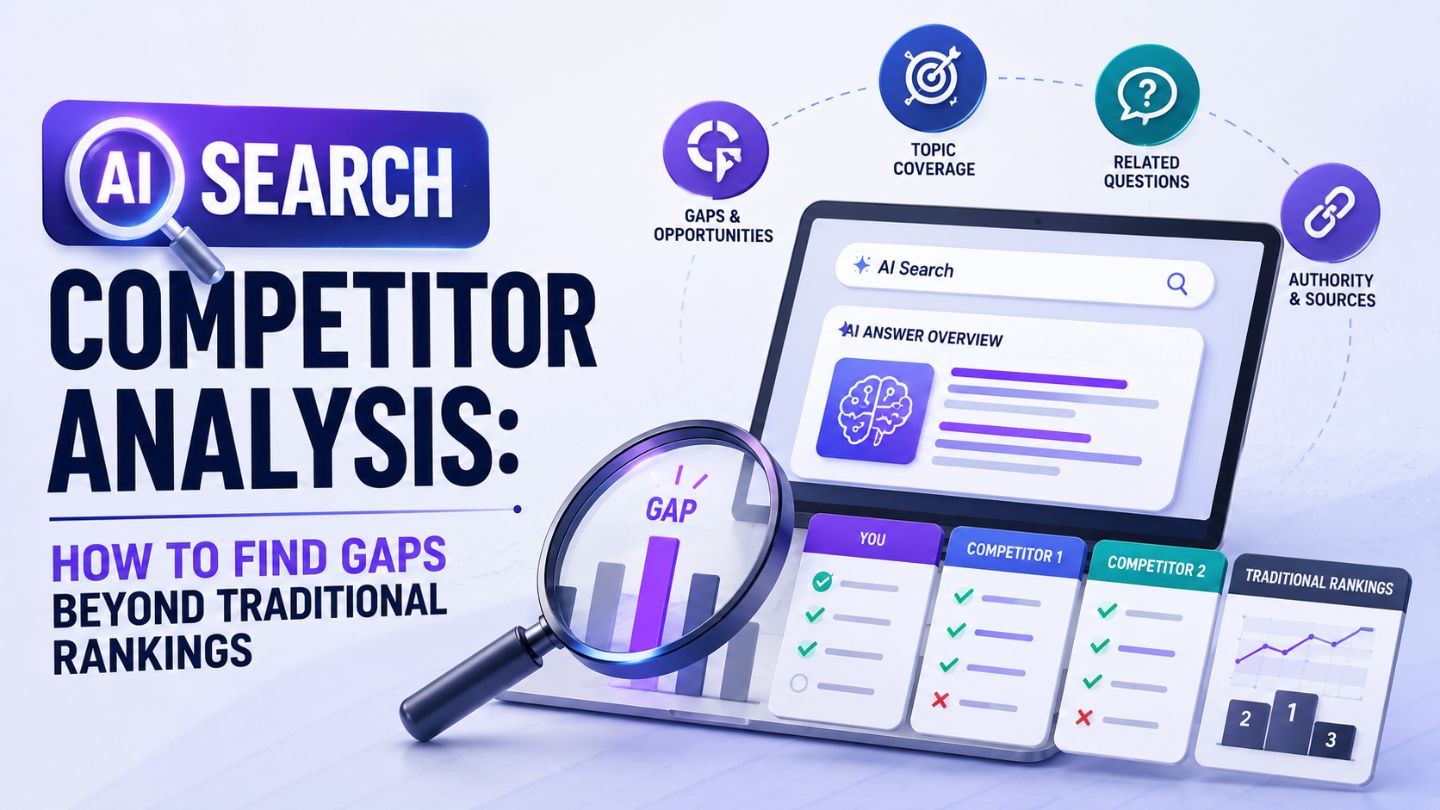

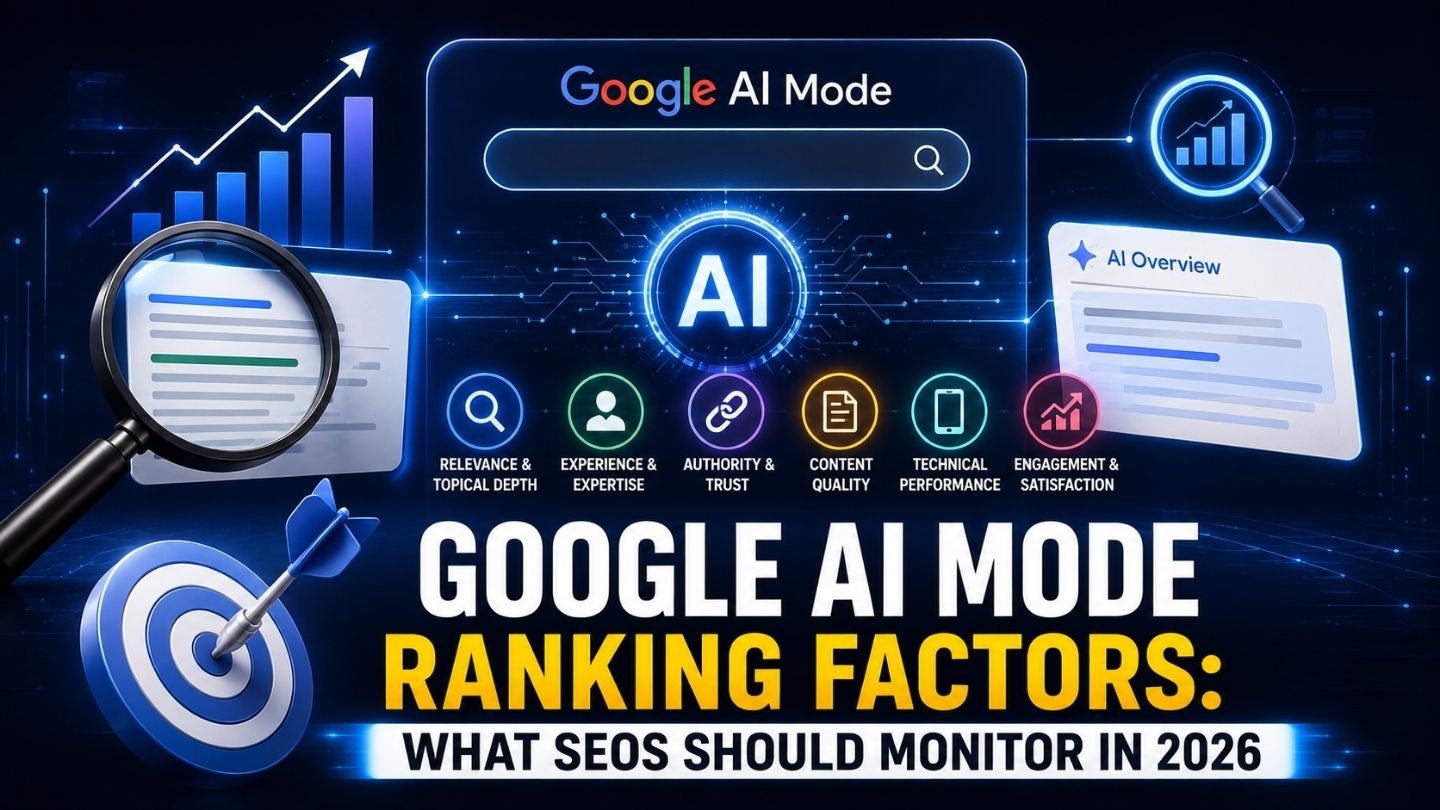
AI Mode doesn't rank pages the way traditional search does, and treating it as an extension of the same playbook has already cost some businesses visibility they didn't know they were losing. The signals that matter have shifted, some familiar factors carry more weight than before, others that used to matter less now matter more. This blog outlines the ranking factors worth monitoring specifically for AI Mode in 2026, what's changed from traditional ranking, and how to check whether your site is actually positioned for it.
Key Takeaways
- AI Mode weighs extractability and clarity more heavily than traditional ranking did.
- Brand and entity recognition now function as a genuine ranking input.
- Technical accessibility for AI crawlers deserves its own audit, separate from Googlebot.
- Traditional backlinks still matter but citation-style mentions are rising in importance.
- Monitoring AI visibility requires different tools than traditional rank tracking.
Extractability Has Become a Ranking Factor in Its Own Right
Traditional ranking rewarded a page for being the best comprehensive answer to a query, full stop. AI Mode adds a second requirement on top of that: can a specific passage be extracted cleanly and used to construct a direct answer. A page can be excellent and comprehensive while still performing poorly in AI Mode if its answers are buried in dense paragraphs that don't isolate cleanly.
Practically, this means structure now functions as a ranking factor rather than a readability nicety. Clear headings that match likely queries, direct answers in the first sentence or two under each heading, and self-contained paragraphs that make sense without the surrounding context all improve extractability. Sites that haven't audited for this specifically are often surprised at how much traditional ranking and AI Mode visibility diverge for the same page.
Why This Particularly Affects Newer or Smaller Businesses

An established business with years of consistent web presence has usually accumulated entity recognition somewhat by accident, simply from having existed and been referenced consistently over time. Newer or smaller businesses don't have that accumulated history to lean on, which means the deliberate entity work covered here matters disproportionately more for them; it's compensating for a history that hasn't had time to build up naturally.
This is worth keeping in mind when setting expectations for how quickly this kind of optimization will show results. A newer business investing in entity clarity is building from a genuinely lower baseline than an established one, and the initial improvement, while real, may take longer to become visible in actual AI citation behavior.
Entity Recognition Now Carries Real Weight
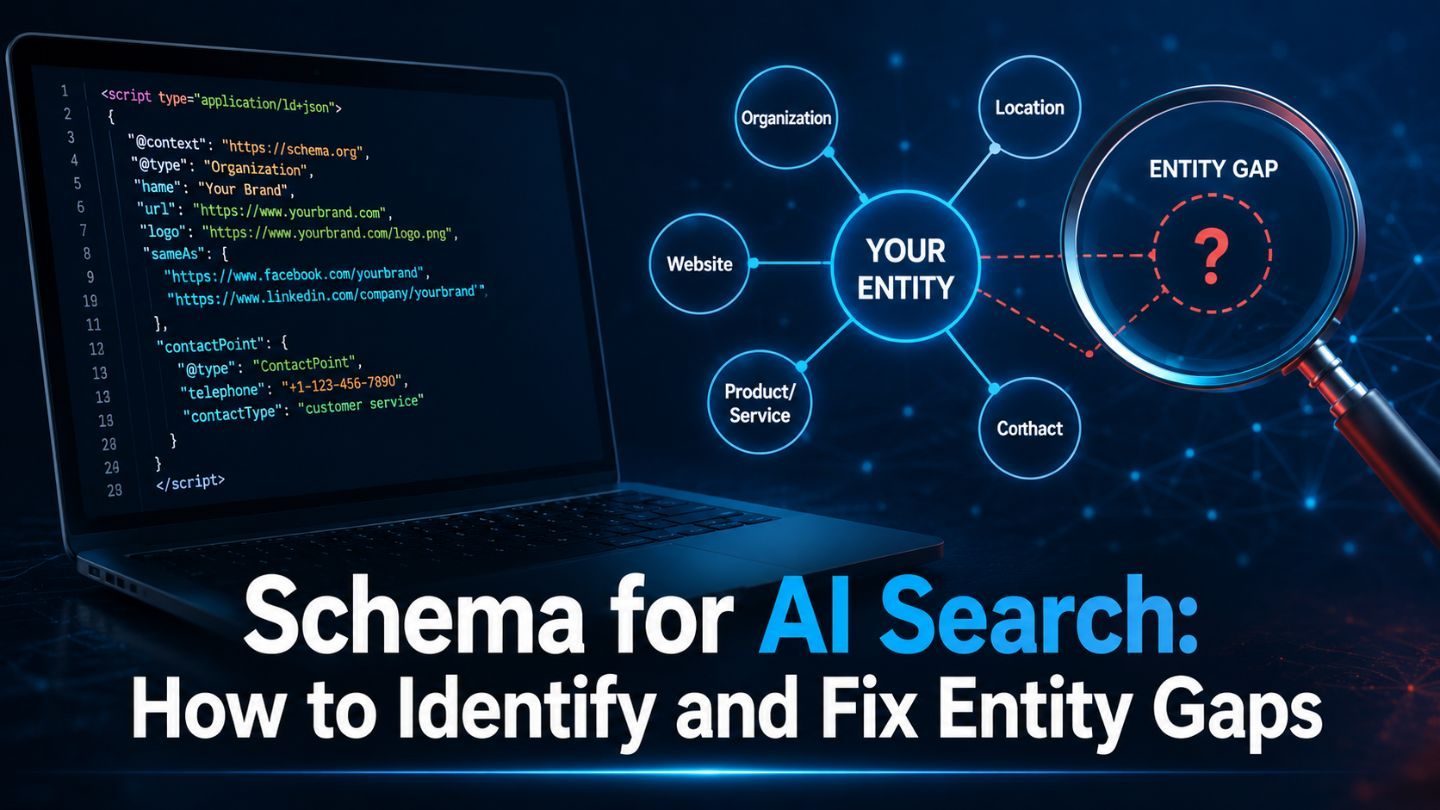
Whether AI Mode confidently knows who and what you are influences whether it's willing to cite you, in a way that's more pronounced than it was for traditional ranking. A page from a source the system can't clearly identify and verify is a riskier citation than one from a well-established, clearly identified entity, and the system's caution shows up as reduced visibility for ambiguous sources.
This is where structured data and consistent entity signals across the web genuinely move the needle, not as a minor technical checkbox but as a real input into whether you're trusted enough to be cited. Reviewing how schema and AI Overviews affect search visibility is a good starting point for auditing this specifically, since it covers the mechanics of establishing that recognition.
Why Traditional Ranking Signals Haven't Disappeared
None of this means backlinks, site speed, or traditional relevance signals stopped mattering; AI Mode is built on top of the same underlying index and crawling infrastructure that traditional search has always used, not a completely separate system starting from scratch. A page with weak fundamentals, thin content, poor technical health, and low authority isn't going to perform well in AI Mode regardless of how well it's structured for extractability.
The practical implication is that AI Mode factors are additive requirements layered on top of solid traditional search fundamentals, not a replacement for them. Sites still working through basic technical and content quality issues should address those first, since the AI-specific factors covered here matter most for sites that have already cleared that baseline and are looking for the next layer of optimization.
Technical Access for AI Crawlers Needs Its Own Check
It's tempting to assume that if Googlebot can crawl your site, AI systems can too, and that assumption is increasingly unsafe. Different AI crawlers, different rendering behavior, and different handling of JavaScript-heavy pages mean a site can be perfectly indexed traditionally while being poorly accessible to the specific systems powering AI Mode.
A dedicated technical check, verifying that your key pages render properly for the relevant AI user agents, checking robots.txt directives that might be blocking AI crawlers specifically, and confirming your content isn't hidden behind interactions that a crawler won't perform, catches gaps that a standard technical audit built around traditional search might miss entirely.
Check Robots.txt Specifically
Some sites have inadvertently blocked AI crawlers while permitting traditional search bots, often through rules added defensively without fully understanding which user agents they'd affect. This is worth checking directly rather than assuming.
Citations Are Joining Backlinks as a Trust Signal

Traditional backlinks remain genuinely important; that hasn't changed. What's shifting is that citation-style mentions, being referenced as a source within an AI-generated answer or within content that AI systems draw from, are becoming a parallel signal worth tracking separately. A site can be under-linked in the traditional sense while being frequently cited within AI answers, or vice versa, and the two metrics increasingly deserve independent attention.
This connects to work on E-E-A-T and building authority within your niche, since the underlying signals that build traditional authority and the signals that build AI citation trust overlap substantially, even though the measurement and the mechanics differ.
Monitoring Requires Different Tools Than Rank Tracking
A standard rank tracker tells you almost nothing about AI Mode visibility, because there's no single ranking position to track in the traditional sense. Monitoring this properly means periodically checking how your brand and content actually appear within AI-generated answers for your key topics, which is manual, imperfect, and still more informative than assuming traditional rankings tell the whole story. For the traditional side of this comparison, reviewing which Google ranking factors genuinely matter is still worth doing alongside any AI-specific monitoring.
Build a short list of the queries that matter most to your business and periodically check what AI Mode returns for them, noting whether you're cited, how you're characterized, and what's being pulled from your content versus a competitor's. It's not a perfect science yet, and doing it consistently beats not doing it at all, since the alternative is flying blind on a channel that's already meaningfully shaping how people find businesses.
Avoiding Over-Optimization for a Single System
With several AI search surfaces operating differently, optimizing exclusively for one system's current quirks risks leaving you poorly positioned as that system evolves or as market share shifts toward a competitor's platform. The underlying principles- clarity, extractability, and verifiable identity- tend to serve you across systems even as the specific mechanics of any one platform change.
Treat platform-specific tactics as a secondary layer on top of those fundamentals rather than the foundation itself. A site built around genuine clarity and credible identity adapts more easily to whatever the next platform shift brings than one narrowly tuned to satisfy one system's current specific preferences.
Positioning for a Moving Target
AI Mode's ranking factors will keep evolving, and treating this list as a fixed checklist rather than an ongoing area of attention will leave you optimizing for last year's system. What's stable underneath the specifics is the direction: clarity, extractability, verifiable identity, and genuine citation-worthy substance matter more now, and vague, unstructured, poorly-attributed content matters less. Build toward that direction rather than chasing individual factors as they shift.
At The Ocean Marketing, we help businesses build SEO strategies that account for how search is actually evolving rather than optimizing for a version of ranking that's already partially outdated. Whether you need an AI Mode visibility audit, help restructuring content for extractability, or a free SEO audit to see where your site currently stands, our team can help. Contact us and let's get your site positioned for where search is actually headed.