
Artificial intelligence is rapidly transforming the way online information is discovered, interpreted, and delivered to users. Traditional search engine optimization is no longer limited to search engines alone, as AI crawlers and large language model bots now play a major role in analyzing website content. Businesses must understand how these systems interact with webpages to maintain strong online visibility and authority. This blog outlines how LLM bots process website information, why semantic structure and content quality matter, and what businesses can do to adapt their digital strategies for the future of AI-driven search and evolving user behavior online.
Key Takeaways
- AI crawlers analyze content differently from traditional search engine bots.
- LLM bots prioritize context, structure, and semantic relevance on webpages.
- Website clarity and organized information improve AI interpretation.
- Technical optimization still matters for crawlability and accessibility.
- Human-focused content is becoming more important for AI-driven visibility.
- Structured data helps AI systems understand page intent and relationships.
- Fresh, trustworthy, and authoritative content improves AI discoverability.
- Websites that ignore AI crawling behavior may lose future organic reach.
Understanding the Rise of AI Crawlers
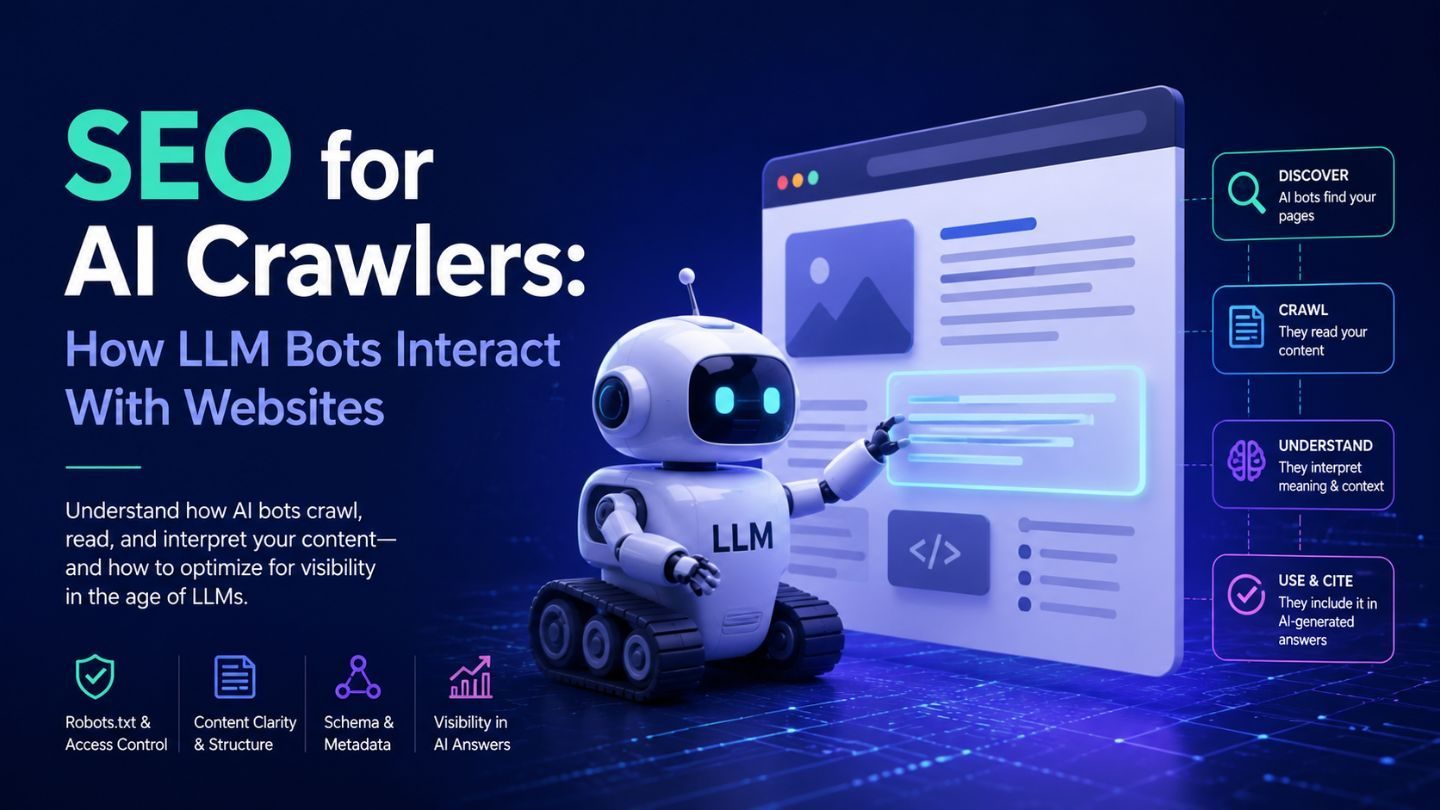
AI crawlers are automated systems designed to collect and interpret online content for large language models and AI assistants. Unlike traditional search engine crawlers that primarily index pages based on keywords and backlinks, AI crawlers focus heavily on understanding meaning, context, and user intent. These systems gather information from websites to generate summaries, answer questions, and support answer engine optimization for AI search as conversational search experiences become increasingly common for users.
The growth of AI-powered search tools has pushed businesses to rethink how they structure and publish online content. LLM bots often evaluate the readability, organization, and depth of information rather than simply scanning for exact-match keywords. This means websites need to provide comprehensive and logically connected content that machines can interpret naturally. As AI continues evolving, websites that align with these crawling behaviors are more likely to gain visibility across future search ecosystems.
How LLM Bots Read Website Content
Large language model bots process webpages differently from conventional crawlers because they attempt to interpret language in a human-like manner. Instead of focusing solely on metadata and keyword density, these systems analyze sentence relationships, topical depth, and contextual meaning. They attempt to understand whether the content genuinely answers a question, explains a process, or provides value that can support AI-generated responses and summaries.
This shift changes how websites should approach content creation and optimization. Thin pages filled with repetitive phrases are less effective because AI systems are increasingly capable of recognizing low-value material. Well-structured paragraphs, logical flow, and informative headings help LLM bots understand a page more efficiently. Websites that communicate expertise clearly and maintain consistency in messaging often perform better when AI systems extract information for conversational responses.
Why Website Structure Matters More Than Ever

A clean website structure helps both traditional search engines and AI crawlers navigate content effectively. AI bots rely on organized headings, internal links, and semantic relationships to understand how information connects across a website. Pages with clear hierarchies allow AI systems to interpret topic relevance faster, making the content easier to summarize or recommend during conversational search interactions.
Navigation simplicity also affects how efficiently AI systems crawl and process webpages. Websites with broken links, inconsistent formatting, or cluttered layouts can create confusion for bots trying to understand context. Clear menus, descriptive headings, and properly grouped topics improve accessibility for both users and machine-learning systems. Businesses that invest in logical site architecture often create stronger foundations for future AI search visibility and long-term organic growth.
The Role of Semantic Search in AI Crawling
Semantic search has become central to how AI systems interpret online information. Instead of relying only on direct keyword matches, AI crawlers evaluate the broader meaning behind phrases and topics. They analyze how ideas relate to each other within a page and across multiple pages. This allows AI tools to deliver more accurate and conversational answers based on deeper contextual understanding rather than isolated keyword signals.
Because of this shift, content creators must focus on topical relevance instead of excessive keyword repetition. Articles that naturally explore related concepts, user concerns, and supporting information tend to provide stronger semantic value. AI bots recognize when content genuinely covers a topic comprehensively, which increases the likelihood of inclusion in AI-generated summaries or search responses. Websites that build topical authority consistently are likely to benefit from this evolving search behavior.
Read More: Topical Authority vs Keyword Authority: Which Drives Rankings Faster?
Why Content Quality Influences AI Visibility
AI crawlers are increasingly sophisticated in evaluating content quality and reliability. They analyze whether a webpage provides accurate information, trustworthy insights, and meaningful explanations that users can depend on. Content that demonstrates expertise and clarity is more likely to be referenced or summarized by AI systems. This makes high-quality writing a critical component of long-term digital visibility in AI-driven search environments.
Shallow articles designed only to target search rankings may struggle as AI systems improve their understanding of content depth. Websites that publish original insights, practical guidance, and well-supported information create stronger signals of authority. Human-centered writing also matters because AI tools aim to deliver useful and engaging answers to users. Businesses that focus on valuable content rather than manipulative tactics often position themselves more effectively for future search trends.
Technical SEO Still Plays an Important Role
Although AI crawlers emphasize contextual understanding, technical optimization remains essential for discoverability. Fast-loading pages, mobile responsiveness, crawlable site structures, and secure connections help ensure AI bots can access and interpret website content efficiently. Technical barriers can prevent even valuable content from being processed properly, limiting visibility across AI-powered search experiences and recommendation systems.
Structured data is also becoming increasingly important because Google AI Overviews SEO strategies depend on clear relationships between topics, entities, and webpage components. Schema markup provides additional context that supports better interpretation of products, services, reviews, and organizational information. Websites with strong technical foundations create smoother crawling experiences for both traditional search engines and AI systems, increasing their chances of remaining competitive in a rapidly changing search environment.
How AI Bots Handle User Intent
Understanding user intent is one of the most significant differences between traditional crawlers and AI-driven systems. LLM bots attempt to determine why a user is searching for information and what kind of answer would best satisfy that need. This means websites should focus on creating content that directly addresses user concerns, questions, and decision-making processes rather than simply targeting broad search phrases.
Content that aligns closely with real user expectations tends to perform better in AI-driven search interactions. Informative articles, detailed guides, and practical explanations help AI systems identify valuable resources for conversational answers. Businesses that understand audience intent can create content that feels more useful and engaging while also improving visibility across evolving search technologies powered by artificial intelligence.
Read More: AI Answer Citations: How Google Chooses Sources for AI Results
The Growing Importance of E-E-A-T Signals
Experience, expertise, authoritativeness, and trustworthiness are becoming increasingly relevant in AI-powered search systems. LLM bots evaluate whether content appears reliable, credible, and written by knowledgeable sources. Websites that consistently demonstrate authority within their niche are more likely to gain recognition from AI systems seeking dependable information for summaries and responses.
Trust signals such as accurate sourcing, updated information, transparent business details, and professional presentation contribute to stronger credibility. AI systems aim to provide users with dependable information, so websites lacking trust indicators may struggle to maintain visibility. Brands that invest in authoritative content creation and consistent quality standards can strengthen their reputation with both users and AI-driven search technologies.
Preparing Websites for the Future of AI Search

The future of search is becoming increasingly conversational, and websites must adapt to remain competitive. AI assistants and large language models are changing how people access information online, making ChatGPT search optimization for website visibility more important as users rely less on traditional keyword-based searches. Businesses that understand these changes can position themselves ahead of competitors by creating content and website experiences designed for both human readers and intelligent AI systems.
Preparing for AI-driven search involves balancing technical optimization with meaningful content creation. Websites should prioritize clarity, structure, accessibility, and relevance while maintaining strong user experiences. Brands that embrace these evolving practices are more likely to remain discoverable as AI continues shaping the future of online information retrieval and digital engagement across industries.
Final Thoughts
AI crawlers and large language model bots are changing how websites are discovered, interpreted, and recommended online. Unlike traditional search engine bots, these systems focus heavily on context, semantic relevance, structured information, and user-focused content quality. Businesses that invest in organized website structures, technically optimized pages, and authoritative content are more likely to remain visible in AI-driven search environments. As conversational search and AI-generated answers continue growing, adapting digital strategies to align with evolving crawler behavior will become increasingly important for long-term online success and sustainable brand visibility.
At The Ocean Marketing, we help businesses strengthen their digital presence through advanced SEO strategies designed for both traditional search engines and emerging AI-powered platforms. Our team also provides a free SEO audit to identify opportunities for improving website structure, content performance, technical health, and overall search visibility. Reach out to our team today and let us help your business build a stronger and more future-ready online presence.