
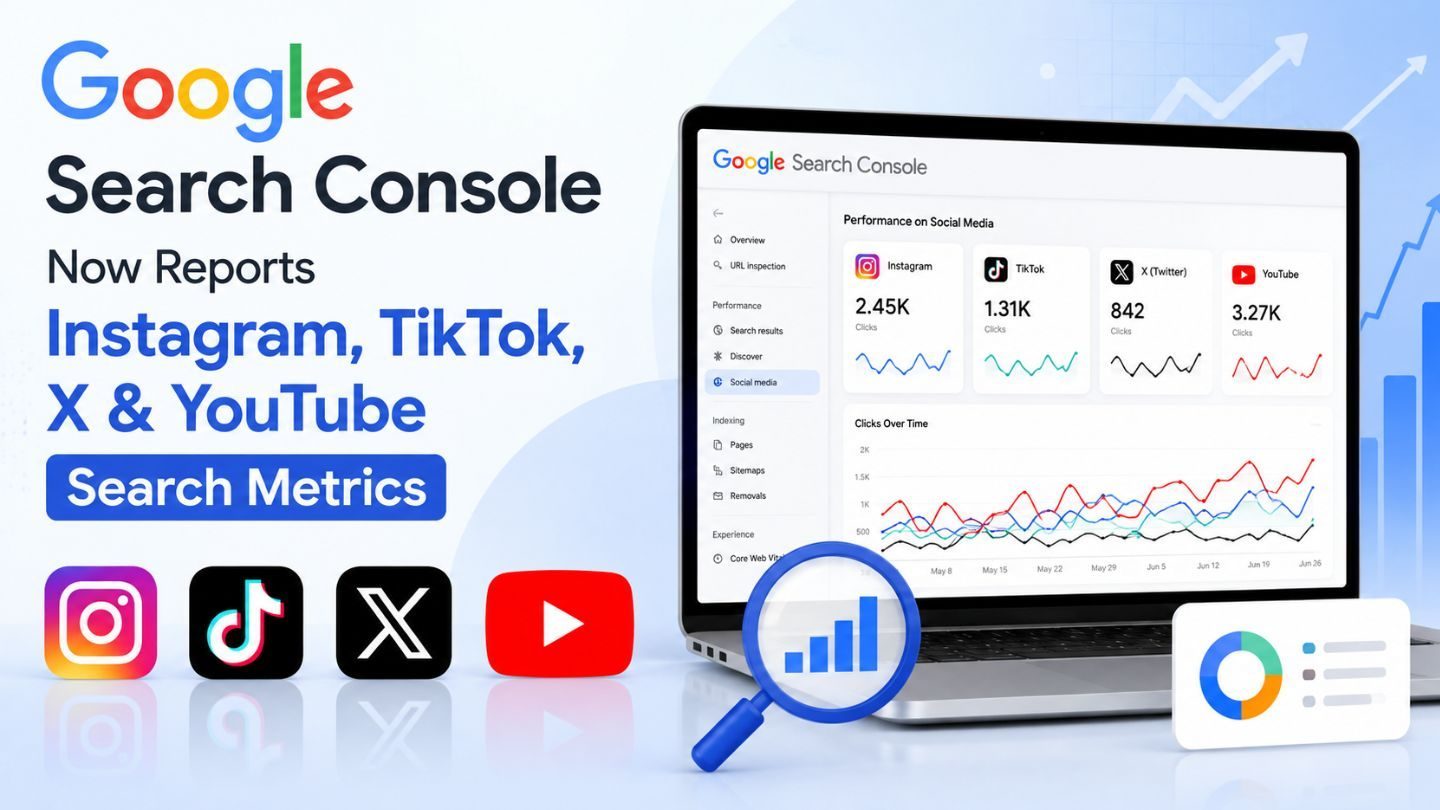
For years, measuring how people found your brand on social platforms meant living inside each platform's own dashboard, with no way to compare them or connect them to search behavior. Google Search Console changing that is a bigger deal than the announcement made it sound. Suddenly, Instagram, TikTok, X, and YouTube search metrics sit in the same place as your web data. This blog outlines what's actually being reported, why it matters for how you plan content, and how to use it without over-reading early numbers.
Key Takeaways
- Search Console now surfaces search metrics from major social platforms.
- Social profiles behave more like search destinations than feeds.
- Cross-platform data reveals where discovery actually starts.
- Profile and content optimization now affects search visibility directly.
- Early data needs cautious interpretation, not immediate strategy overhauls.
What This Reporting Change Actually Covers
The short version is that Search Console has expanded beyond traditional web results to include how your content surfaces in search on Instagram, TikTok, X, and YouTube. That means query-level visibility into what people typed before they found you on those platforms, rather than the aggregated engagement numbers each platform hands you in isolation.
Why that's significant becomes clear once you consider how people actually search now. A meaningful share of younger users start product research on TikTok or Instagram rather than Google, and businesses have no unified way to see that. Every platform reported on its own terms, with its own definitions, and none of them connected. Putting these signals in one interface means you can finally see the whole discovery picture instead of four disconnected fragments.
Social Platforms Became Search Engines Quietly
This shift didn't happen overnight; it happened while marketers were still treating social as a broadcast channel. People type queries into TikTok the way they type into Google, looking for reviews, tutorials, recommendations, and local options. Instagram search does the same work for anyone hunting a business, a location, or a service. The behavior changed before the measurement did.
That reframes what a profile is for. If people search within the platform, your profile and captions need to be findable, not just attractive. Keywords in your name field, descriptive captions, and clear content topics start functioning like on-page optimization. Businesses already thinking about how to rank social content on Google have a head start here, because the underlying logic is the same, just applied inside a different search box.
What You Can Actually Learn From It
The most useful signal is the intent difference across platforms. The same audience searches differently depending on where they are. Someone might type a specific technical question into Google, a visual comparison into Instagram, and a how-to into TikTok. Seeing those queries side by side tells you what each platform is genuinely for in your customers' minds, rather than what you assumed it was for.
The second useful thing is gap identification. If a query drives real volume on TikTok but you've never covered it on your site, that's a content opportunity nobody had visibility into before. Conversely, topics that perform on your blog but generate nothing on social might not suit those formats, which is equally worth knowing before you commit resources to repurposing everything.
Discovery Rarely Happens in One Place
Most purchase journeys touch several platforms. Someone sees a Reel, searches your name on Google, checks reviews, then converts. Unified data makes those chains visible instead of leaving each channel to claim credit for itself.
Read More: How Search Intent Changes During Different Buying Stages
How This Should Change Your Planning

The practical implication is that content planning stops being platform-by-platform and becomes query-driven across platforms. Instead of asking what to post on Instagram this week, you ask what people are searching for and which format answers it best. Some questions want a blog post, some want a sixty-second video, some want a carousel. The query tells you if you're looking.
It also raises the value of optimizing profiles and captions rather than treating them as afterthoughts. Descriptive, keyword-aware captions serve platform search the way title tags serve Google. Profile fields matter for the same reason. Teams that have been careful about why alternative search engines matter will recognize the pattern: discovery is fragmenting, and optimizing for one destination is no longer enough.
Reading the Data Without Overreacting
New data sets invite bad decisions, and this one will be no exception. Early numbers from any new reporting source tend to be incomplete, definitions differ between platforms, and what looks like a trend after two weeks is usually noise. Restructuring your content strategy around a fortnight of unfamiliar metrics is a reliable way to make things worse.
Give it a proper window, a few months at minimum, before drawing conclusions. Watch for patterns that repeat rather than spikes that don't. And keep asking whether the metric connects to anything that matters, because impressions on a platform search result mean nothing if none of those people ever become customers. Volume is not the same as value, and this data will tempt you to forget that.
Building One View Instead of Four
The practical work here is consolidation. Most teams have four dashboards, four definitions of a view, and four people who each believe their channel is the one driving growth. Unified reporting doesn't settle that argument automatically; it just makes settling it possible, provided someone agrees on what you're actually measuring before the debate starts.
Decide upfront which queries matter, which outcomes count, and how you'll treat a journey that touches three platforms before converting. Write those definitions down. Without that, the new data becomes another source everyone reads selectively to support what they already wanted to do, which is worse than having no data at all because it arrives with a Google logo attached.
What This Doesn't Change
Worth saying plainly: better measurement doesn't lower the bar for content. Being findable in TikTok search still requires content worth finding. A profile appearing in Instagram search still has to convince someone once they arrive. Visibility gets you the impression that everything after that is the same work it always was.
Nor does this make every platform worth your time. Data showing search volume on a channel where your customers don't buy is interesting rather than useful. The point of unified reporting is better decisions about where to invest, and sometimes the correct decision is to invest nowhere. Understanding how to perform a social media competitive analysis helps separate the platforms that matter for your business from the ones that merely produce numbers.
Attribution Gets Harder Before It Gets Easier
More data doesn't automatically mean clearer answers. Seeing search activity across four platforms alongside your web data means seeing the same customer journey fragmented into pieces that each claim credit. A person who found you on TikTok, searched your name on Google, and converted from an email will show up in three reports as three different origins.
That's not a flaw in the reporting; it's the reality the reporting is finally exposing. The trap is letting each channel argue for its own importance based on the touchpoint it can see. Unified data helps only if you resist that framing and look at sequences rather than sources, which requires more thought than reading a dashboard.
What to Do With Query Data From Platforms You Ignore

You'll likely find search demand on a platform you have no presence on, and the temptation will be to build one immediately. Sometimes that's correct. Frequently, it isn't, because volume on a channel where nobody buys is a distraction dressed up as an opportunity.
The question to ask is whether the searches represent your customers or just people. A cosmetics brand finding demand on TikTok has found something. A commercial roofing company finding the same volume has probably found teenagers. The data tells you what's being searched, not who's searching or whether they'd ever transact, and that gap is where a lot of wasted budget begins.
Building the Habit of Checking
New reporting features get explored enthusiastically for two weeks and then forgotten. The businesses that get value from this will be the ones that fold it into an existing routine rather than treating it as a special project. A monthly look at cross-platform query trends, added to whatever review you already do, is enough.
What you're watching for is drift, queries appearing that you don't cover, platforms gaining or losing share of your discovery, language changing in ways your content hasn't caught up with. None of that is visible in a single session, and all of it is obvious across six months, provided someone is actually looking on a schedule rather than when they remember.
Read More: What Are the Benefits of Regular Rank Tracking for SEO Growth?
Putting the New Numbers to Work
Search Console reporting on Instagram, TikTok, X, and YouTube metrics closes a gap marketers have complained about for years. For the first time, the way people discover you across search and social sits in one view, which makes it possible to plan around actual behavior rather than assumptions about each channel. Use it to find intent differences, spot content gaps, and understand journeys that span platforms. Just give the data time to settle before you rebuild anything around it.
At The Ocean Marketing, we help businesses turn this kind of cross-platform data into decisions that hold up. Whether you want to strengthen your SEO foundation, align content across search and social, or start with a free SEO audit to see where you currently stand, our team can help you read the numbers properly. Contact us and let's work out what your data is really telling you.