
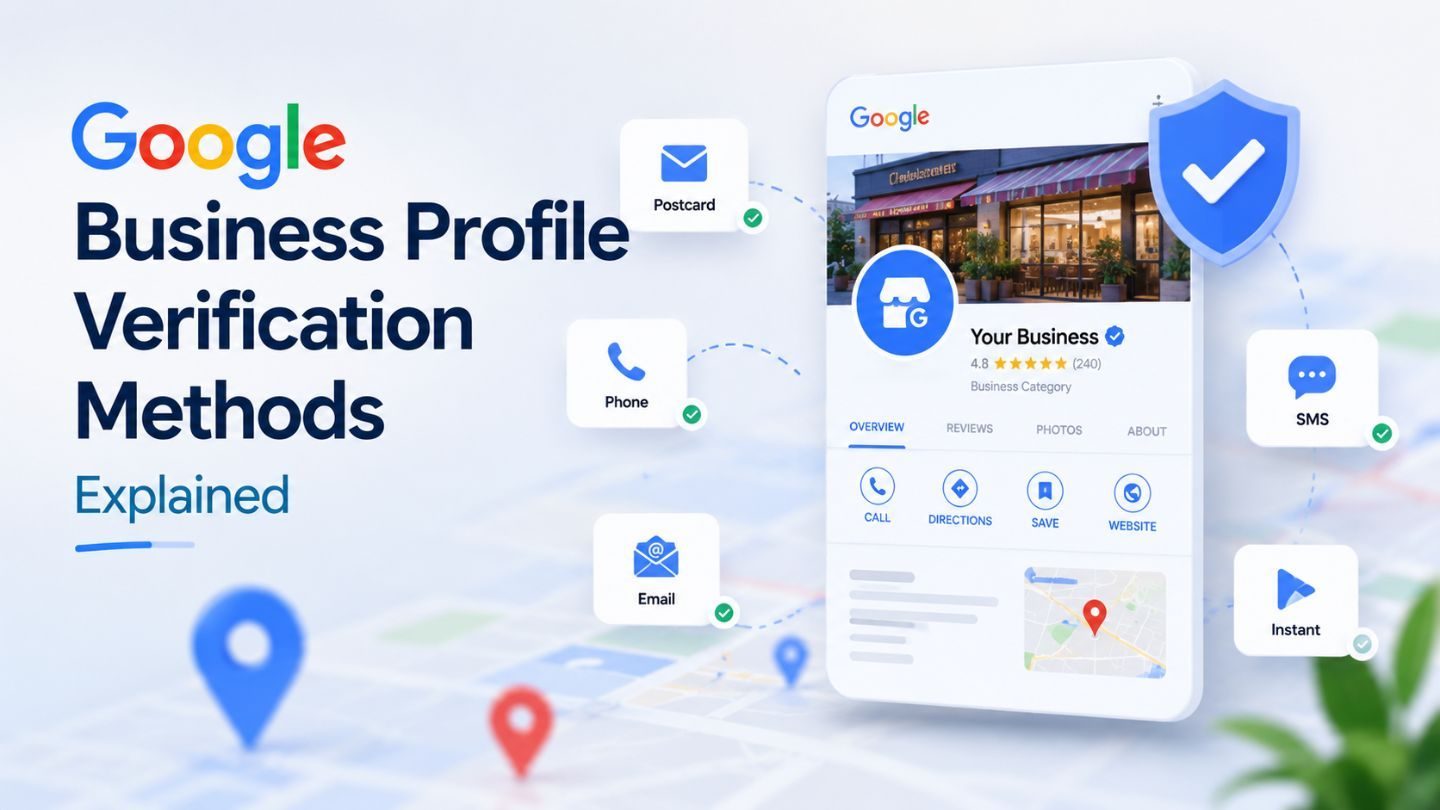
Google Business Profile verification plays a major role in helping businesses build trust and improve local online visibility. A verified profile allows customers to find accurate business details, reviews, and directions directly through Google Search and Maps. However, many businesses are unsure about the different verification methods and how the process actually works. This blog outlines the most common Google Business Profile verification methods, explains why verification is important for local search success, and highlights tips to avoid common issues during approval. Understanding these methods can help businesses create a stronger digital presence and improve their local search performance effectively.
Key Takeaways
- Google Business Profile verification confirms your business's legitimacy.
- Verification improves local visibility in Google Search and Maps.
- Different verification methods are available depending on business type.
- Video and phone verification are becoming more common.
- Incorrect business details can delay approval.
- A verified profile supports better customer trust and engagement.
- Businesses with optimized profiles perform better in local search rankings.
- Consistency in business information is critical for successful verification.
Why Google Business Profile Verification Matters
Google wants to ensure that every business appearing on its platform is genuine and operating at a real location. Verification acts as proof that a business owner or authorized representative controls the listing. Without verification, companies cannot fully manage their profile information, respond to reviews effectively, or access detailed performance insights. This process also helps Google reduce spam listings and fake businesses that could mislead users searching for local services. For businesses focused on local growth, verification directly affects visibility and credibility.
Customers often rely on Google Maps listings before making purchase decisions, especially when searching for nearby services. A verified business profile increases the chances of appearing in local search results and map packs, helping businesses attract more calls, visits, and inquiries. It also allows companies to showcase photos, operating hours, and updates that create a more professional online presence. Understanding how Google Maps rankings work can also help businesses see why verification, relevance, distance, and trust signals all play an important role in local visibility.
Understanding the Verification Process
The verification process starts when a business owner claims or creates a Google Business Profile. Google then reviews the information provided, including the business name, address, category, and contact details. Based on the type of business and available data, Google offers one or more verification methods. Some businesses may complete verification within minutes, while others may need several days, depending on the selected method. Accuracy plays a major role during verification. Even small inconsistencies between your website, directory listings, and Google profile can create delays or trigger manual reviews.
Businesses should ensure that their address, phone number, and business category match across all platforms before beginning the verification process. A well-prepared profile reduces complications and increases the likelihood of approval on the first attempt. Consistent business details across directories, websites, and listings also explain why local citation building matters when Google checks whether a company’s information is reliable.
Postcard Verification Method
Postcard verification has been one of Google’s most widely used methods for many years. In this process, Google sends a physical postcard containing a verification code to the business address listed in the profile. Once the postcard arrives, the business owner logs into the profile and enters the code to confirm ownership. This method is commonly used for storefront businesses with physical locations accessible to customers.
Although reliable, postcard verification can sometimes take longer than other methods. Delivery delays, incorrect addresses, or misplaced postcards may slow the process. Businesses should avoid editing important profile details while waiting for the postcard because changes can invalidate the verification request. Maintaining accurate address formatting and ensuring mail can be received at the listed location significantly improves success rates.
Phone Verification Explained

Phone verification is available for select businesses that Google already trusts based on existing online information. This method allows business owners to receive a verification code through a phone call or text message. It is usually one of the fastest verification options because businesses can complete the process almost immediately after requesting the code.
To qualify for phone verification, the phone number associated with the business must match public records and the information listed online. Businesses using virtual numbers or inconsistent contact details may not receive this option. Companies should also ensure that staff members answering the phone understand the verification process so the code is not missed or mishandled during the call.
Read More: Why Some Service Businesses Never Appear in Maps
Email Verification for Businesses
Some businesses may receive the option to verify through email. In this process, Google sends a verification link or code to an official business email address connected to the domain. Email verification is convenient because it eliminates the need to wait for physical mail and can often be completed within minutes.
However, Google usually offers email verification only when it has high confidence in the business information provided. Businesses should use professional domain-based email addresses rather than generic free email accounts whenever possible. This approach strengthens legitimacy and improves the chances of qualifying for simpler verification methods in the future.
Video Verification Becoming More Common
Video verification has become increasingly popular as Google continues improving fraud prevention measures. This method requires business owners to record and upload a video showing their business location, signage, equipment, or workspace. Google reviews the video to confirm that the business operates as described in the profile.
This method is especially common for service-area businesses or companies without traditional storefronts. The video may need to include branded vehicles, tools, office access, or proof of business operations. Preparing carefully before recording is important because incomplete videos often lead to rejection. Businesses should ensure that the video clearly demonstrates ownership and active operation without interruptions or poor visibility.
Live Video Call Verification
In some situations, Google may request a live video call with a representative. During the call, the business owner uses a mobile device to show the physical location, branding materials, equipment, or workspace in real time. A Google representative may guide the process and ask for specific details to verify authenticity.
Live video verification helps Google validate businesses that require additional scrutiny due to industry type or suspicious activity. Although it may feel more demanding than other methods, businesses that prepare documentation and organize their workspace beforehand usually complete the process smoothly. Transparency and clear communication during the call can help avoid delays or repeated requests.
Instant Verification for Trusted Businesses
Instant verification is one of the quickest methods available, but it is limited to businesses already connected to trusted Google services. Companies that have previously verified their website through Google Search Console may qualify automatically. This option allows businesses to verify their profile without additional steps or waiting periods.
While instant verification is highly convenient, it depends heavily on existing trust signals. Businesses should maintain consistent online branding, verified domains, and accurate business information across platforms to improve eligibility. Even if instant verification is unavailable initially, building a strong online presence can increase the chances of receiving it later.
Common Verification Problems Businesses Face
Many businesses experience issues during the verification process due to inconsistent or incomplete information. Incorrect addresses, keyword-stuffed business names, or mismatched contact details are among the most common reasons for rejection. Google prioritizes authenticity, so profiles that appear manipulated or misleading often face additional reviews. Verification issues often become more serious when duplicate, misleading, or fake listings impact rankings and create confusion for both Google and potential customers.
Another frequent issue involves repeated edits during the verification process. Businesses sometimes update addresses, categories, or phone numbers while waiting for approval, which can reset progress and trigger delays. It is usually best to finalize all profile details before starting verification. Patience and consistency are essential for completing the process successfully.
Read More: How Google Maps Handles Similar Business Names
Tips to Make Verification Easier
Businesses can improve their chances of smooth verification by preparing thoroughly before submitting their profile. The first step is ensuring that all business details are accurate and consistent across websites, directories, and social platforms. This consistency helps Google trust the information provided and reduces the need for additional checks.
It is also important to upload quality photos, maintain a professional website, and use a legitimate business email address. Businesses should avoid using PO boxes, virtual offices, or misleading categories because these practices can lead to suspensions or failed verification attempts. Staying transparent and following Google’s guidelines creates a stronger foundation for long-term profile management.
How Verification Supports Local Search Growth
Verification is not only about proving ownership; it also contributes significantly to local search performance. Verified profiles are more likely to appear in local map results, especially when paired with complete business information and active customer engagement. Businesses that regularly update their profiles with photos, posts, and responses often experience stronger visibility in competitive local markets.
Customer trust also improves when a business profile displays verified information. People searching for local services are more likely to contact companies with complete and credible listings. Reviews, accurate directions, and updated contact details create a better customer experience that encourages conversions and repeat business. A verified profile ultimately becomes a valuable digital asset for long-term growth.
Final Thoughts
Google Business Profile verification is an essential step for businesses that want to improve credibility, strengthen local visibility, and attract more customers online. From postcard and phone verification to video and instant approval methods, each option serves a different business need while helping Google confirm authenticity. Businesses that maintain accurate information, follow Google’s guidelines, and optimize their profiles properly are more likely to achieve stronger local rankings and customer trust. A verified and well-managed profile ultimately supports long-term growth by improving visibility in Google Search and Maps results.
At The Ocean Marketing, we help businesses build a stronger local presence through effective Google Maps SEO strategies designed to improve visibility, engagement, and customer reach. Our team also offers a free SEO audit to identify opportunities that can strengthen your local search performance and overall online presence. Contact us today to discover how the right digital strategy can help your business stand out in competitive local markets.