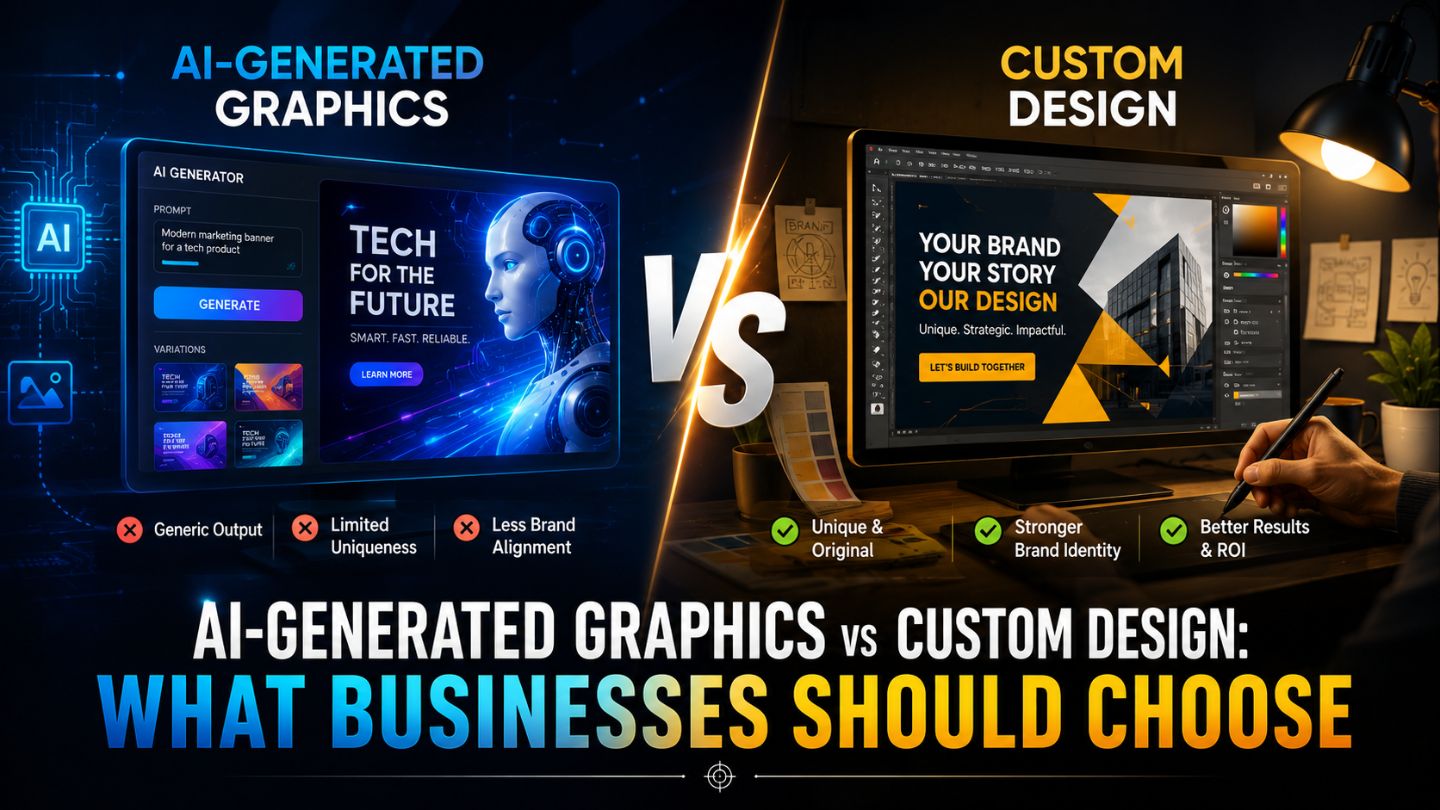

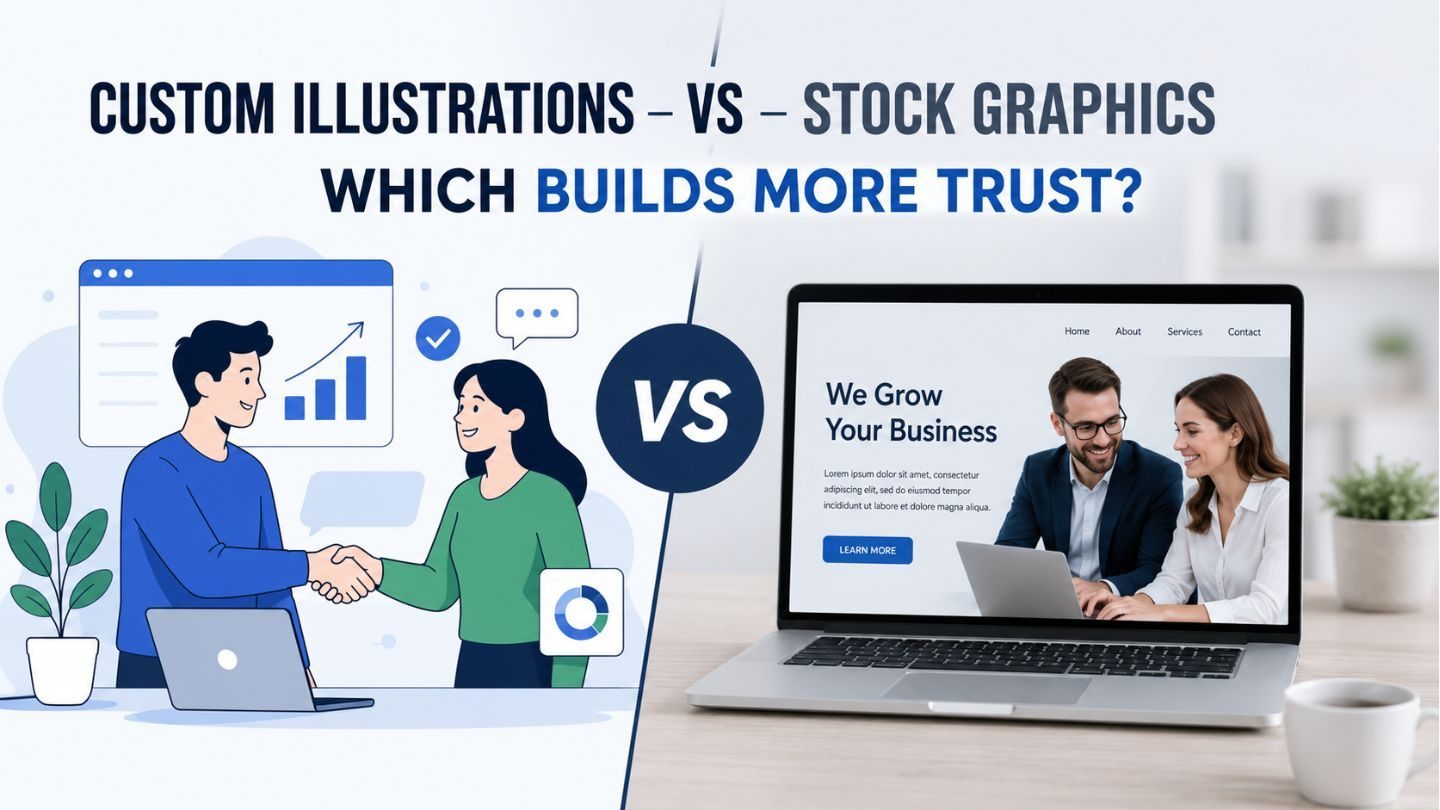
Stock photography is fast, cheap, and everywhere, which is exactly the problem. The same smiling team around the same laptop appears on your site, your competitor's site, and a dentist's homepage in another country. Custom illustration costs more and takes longer, but it belongs to you alone. So which one actually earns trust from the people you're trying to convince? This blog outlines what each option genuinely delivers, where stock still makes sense, when custom work pays for itself, and how to choose without guessing.
Key Takeaways
- Custom illustrations signal investment and reinforce brand recognition.
- Stock graphics work for speed, volume, and low-stakes placements.
- Overused stock imagery can quietly undermine credibility.
- Custom visuals explain complex ideas better than generic photos.
- Most businesses benefit from a hybrid approach rather than picking one.
Why Visuals Carry More Weight Than Copy
People judge a page before they read a word of it. Research on first impressions consistently lands in the fraction-of-a-second range, and in that window, the only things registering are layout, color, and imagery. Your carefully written value proposition hasn't been processed yet. The picture at the top has, and it has already suggested whether this business looks serious, established, and worth the next thirty seconds.
That impression sticks harder than most marketers expect. Visitors who form a positive first impression interpret ambiguous details charitably afterward, while a poor first impression makes them skeptical of everything that follows. Which is why visual choices aren't a decoration budget item; they're the frame everything else gets read through. Getting this right matters more than most teams' spend allocation suggests they believe.
The Real Cost of Generic Stock Imagery
Stock isn't inherently bad, but the popular stuff carries a hidden tax. When your homepage hero appears on hundreds of other sites, anyone who's spent time online recognizes it, even if they can't say where from. That flicker of familiarity registers as inauthenticity. It doesn't announce itself as a thought; it just leaves a faint sense that this business is like all the others.
There's a credibility problem too. A local firm showing a glossy photo of a boardroom that clearly isn't theirs, staffed by models who clearly don't work there, creates a small gap between claim and evidence. Visitors may not consciously object, but the effect accumulates. Understanding the importance of graphic design in digital marketing starts with recognizing that visuals make claims of their own, whether you intended them to or not.
What Custom Illustration Actually Buys You
Custom work delivers three things stock can't. Ownership, meaning nobody else has it and nobody can take it. Specificity, meaning it depicts your actual process, product, or idea rather than an approximation. And consistency, meaning a shared visual language across every asset that makes your brand recognizable before your logo is read.
That last point compounds in a way that's easy to underestimate. A distinct illustration style applied across your site, decks, social posts, and emails means people start recognizing your content in a feed without checking who published it. Stock can never produce that because your visual identity is shared with everyone else who licensed the same file. This is the practical mechanism behind why consistent brand design improves customer recognition rather than just looking tidier.
Illustration Explains What Photography Can't
Some things have no photograph. A workflow, an abstract concept, a comparison, a data relationship. Illustration handles those natively, showing exactly what matters and omitting everything that doesn't, which is a control photography simply doesn't offer.
Where Stock Still Earns Its Place

Being realistic about budget matters. Custom illustration for every blog post is not a sensible use of money for most businesses, and pretending otherwise helps nobody. Stock works well in supporting positions, blog headers, background textures, secondary sections, and internal documents, anywhere the image supports rather than represents.
The trick is choosing better stock. Skip the top results everyone else uses. Look for images that could plausibly be from your world rather than a generic corporate universe. Apply consistent treatment, a color overlay, a crop ratio, and a filter so the set looks intentional rather than assembled at random. Well-chosen and consistently treated stock beats mediocre custom work, and it's a legitimate strategy rather than a compromise.
Read More: Visual Hierarchy in Web Design: How to Guide Users Without Text
Deciding Where Custom Work Pays Off
The question isn't custom or stock; it's which pages justify custom. Anything that carries a decision deserves the investment: homepage hero, primary service pages, pricing, case studies, anything a prospect sees while deciding whether to trust you. These are the moments where a generic image costs you real money.
Lower-stakes placements can run on stock without harm. Blog imagery, internal pages, supporting sections, social posts with a short shelf life. Mapping your pages by decision weight, then allocating illustration budget to the top tier, gets you most of the benefit at a fraction of full-custom cost. Businesses weighing this often find the benefits of graphic design services become clearest exactly at these high-stakes touchpoints.
The Hybrid Approach Most Businesses Actually Need
In practice, the useful model isn't choosing a side; it's building a small custom core and letting everything else lean on it. Commission a handful of original assets for the pages that carry decisions, then establish the rules that make everything else look related to them: the palette, the crop style, the treatment applied to any stock you bring in.
That core does more work than its size suggests. Once you have five or six original illustrations and a defined treatment, stock imagery filtered through the same palette stops looking borrowed and starts looking like part of a system. You get most of the recognition benefit of full custom at a fraction of the cost, and the budget goes where it changes minds rather than where it fills space.
Signs Your Current Visuals Are Costing You
A few patterns give it away. Your images could be swapped with a competitor's, and nobody would notice. Your pages look assembled from different sources because they were. Sales conversations include questions your site should have answered visually. Your team avoids sharing certain pages because they look dated. None of these appear in analytics, and all of them affect outcomes.
There's a simple audit worth doing. Pull up your homepage next to three competitors, remove the logos, and ask whether anyone could tell which is which. If the answer is no, your visuals aren't working, regardless of how much you paid for them. That exercise tends to settle internal debates faster than any argument about design budget.
The Middle Path Most Businesses Miss
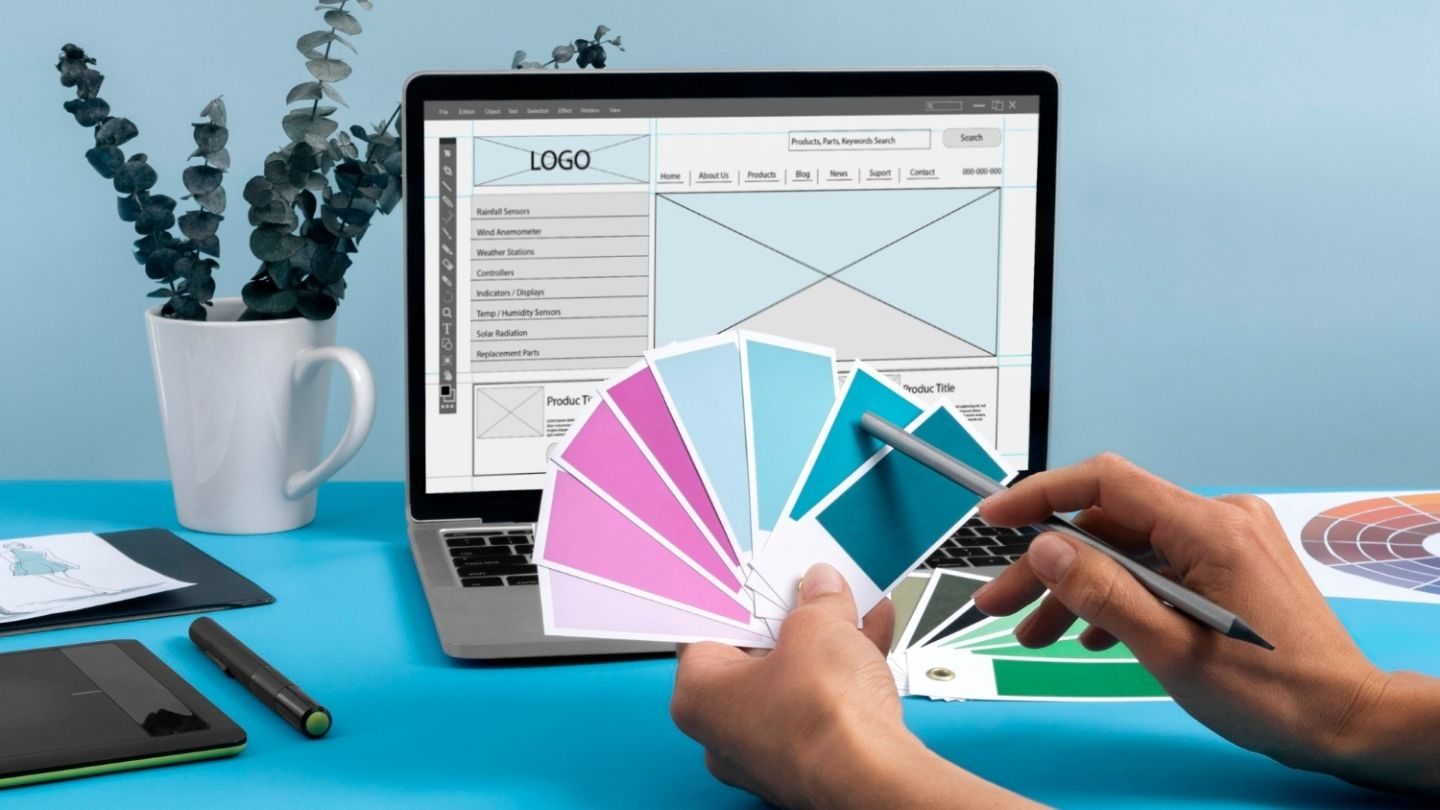
The debate gets framed as bespoke illustration versus royalty-free photography, and that framing hides the options in between. Commissioning a photographer for a half-day shoot of your actual team, premises, and work produces imagery nobody else has, at a fraction of a full illustration system. It's custom without being expensive.
Similarly, a modest custom icon set or a single distinctive illustration style applied to otherwise ordinary layouts gets you most of the recognition benefit for a fraction of the cost. The businesses that agonize between two extremes usually end up choosing stock by default, when a smaller custom investment applied to the right places would have served them far better.
What Your Competitors' Visuals Tell You
There's useful information sitting on your competitors' websites, and almost nobody looks at it systematically. Open five of them and note what kind of imagery they use. If all five run the same category of polished stock photography, you have an obvious differentiation opportunity that costs less than any campaign.
If instead they've all invested in distinctive custom work, that tells you something about the expectations in your market, and matching the baseline becomes defensive rather than optional. Either way, the decision stops being about taste and starts being about positioning. That's a much easier conversation to have internally than arguing about whether an illustration looks nice.
Read More: Image vs Illustration: Which Performs Better in Marketing?
Budgeting Without Overcommitting
The mistake businesses make is treating custom visuals as an all-or-nothing commitment. Full brand illustration systems are expensive, and most companies don't need one. What they need is a defined visual approach and custom assets for the handful of places that matter, built out gradually as budget allows.
Start with the homepage hero and your primary service page. Add case study imagery next. Expand into blog and social when the core is done. Each stage is a discrete cost with a visible return, which is easier to justify than a single large project, and it means you're never stuck with a half-finished system that looks worse than the stock you replaced.
Making the Right Visual Investment
Trust isn't built by choosing custom over stock as a blanket rule. It's built by making deliberate choices that match the stakes of each placement, treating your imagery as part of your argument rather than filler around it, and staying consistent enough that people start recognizing you. Custom illustration earns its cost where decisions get made and where nothing off the shelf can say what you need. Stock does honest work everywhere else, provided you choose it with the same care you'd apply to your copy.
At The Ocean Marketing, we help businesses build a visual identity that fits their brand rather than borrowing someone else's. Whether you need graphic design services for a site refresh, a consistent illustration system across your channels, or a free SEO audit to see how your pages perform overall, our team can help. Contact us and let's talk about what your visuals should be doing for you.