
In today’s visually driven digital world, the choice between images and illustrations can significantly impact how audiences perceive and engage with your brand. Marketers constantly debate which visual format performs better in campaigns, websites, and social media strategies. This blog contains a detailed comparison of images and illustrations, their strengths, limitations, and how each contributes to effective marketing outcomes. By understanding their unique roles, businesses can make informed decisions that align with branding goals, audience preferences, and conversion strategies.
Key Takeaways
- Images create realism and build trust through authenticity
- Illustrations offer flexibility and help simplify complex ideas
- The effectiveness depends on your target audience and brand identity
- Images perform better in product-driven campaigns
- Illustrations excel in storytelling and conceptual marketing
- A hybrid approach often delivers the strongest results
- Consistency in visual style is crucial for brand recognition
Understanding Images in Marketing
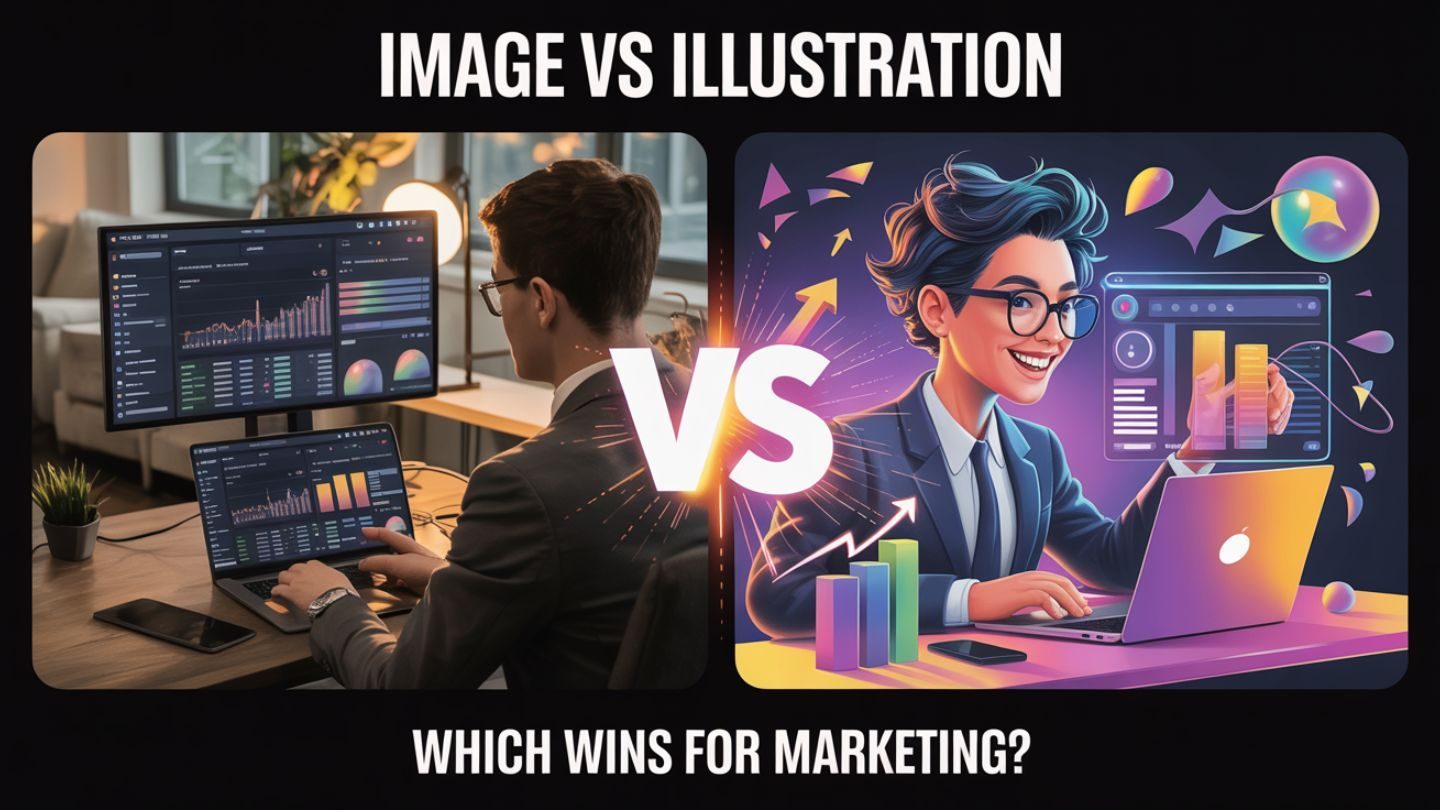
Images are real-life photographs or visuals captured through cameras, often used to represent products, people, or experiences in an authentic way. Their biggest advantage lies in their ability to create an immediate emotional connection with the audience. When users see a real person using a product or experiencing a service, it builds trust and relatability. This is particularly important in industries like eCommerce, hospitality, healthcare, and real estate, where customers rely heavily on visual proof before making decisions.
In marketing campaigns, images are often used to showcase product quality, highlight features, and provide context. For example, a high-resolution image of a product in use can significantly influence purchasing decisions. Additionally, images tend to perform well on platforms like Instagram, where authenticity and lifestyle representation dominate user expectations.
However, while images offer realism, they may sometimes lack uniqueness, especially when stock photos are overused. This can reduce brand differentiation if not handled carefully. This is especially true on social platforms, where well-crafted social media graphics can increase engagement, shape first impressions, improve content performance, and encourage stronger audience interaction without making the message feel overly promotional.
Understanding Illustrations in Marketing
Illustrations, on the other hand, are custom-created visuals that can range from simple icons to complex artistic designs. Unlike images, illustrations are not bound by reality, allowing brands to express abstract ideas, emotions, and concepts in a visually engaging way. This makes them particularly effective in industries such as technology, education, and SaaS, where complex ideas need to be simplified for better understanding.
One of the strongest advantages of illustrations is their ability to create a unique brand identity. Custom illustrations can be tailored to match a company’s tone, color palette, and messaging, making them highly distinctive. They also allow marketers to present scenarios that may not be easily captured through photography, such as futuristic concepts or imaginative storytelling.
However, illustrations may lack the authenticity that images provide, which can sometimes affect trust if not balanced correctly within the marketing strategy. In many campaigns, this creative flexibility becomes even more effective when supported by a broader understanding of marketing & advertising graphic design, where visuals are developed not just for appearance but for stronger communication, positioning, and audience response.
Performance Comparison: Images vs Illustrations

When it comes to performance, there is no one-size-fits-all answer. The effectiveness of images versus illustrations largely depends on the campaign objective, target audience, and platform being used. Images tend to outperform illustrations in campaigns focused on conversions, particularly when showcasing real products or services. Customers often prefer seeing what they are actually buying, making images a powerful tool for driving sales.
Illustrations, however, shine in awareness and engagement campaigns. They capture attention quickly and are often more memorable due to their creative nature. In content marketing, illustrations can break down complex information into digestible visuals, improving user comprehension and retention. For example, infographics and animated illustrations are widely used in blogs and presentations to enhance storytelling.
Another important factor to consider is brand positioning. Premium brands often rely on high-quality images to convey luxury and authenticity, while innovative or tech-driven brands lean towards illustrations to communicate creativity and forward-thinking ideas. Ultimately, performance should be measured based on specific KPIs such as engagement rate, click-through rate, and conversion rate.
When to Use Images
Images are most effective when your marketing strategy requires realism and emotional connection. They work exceptionally well in product-based industries where customers need to see the actual offering before making a purchase. For instance, fashion brands rely heavily on images to showcase clothing, textures, and fit, while restaurants use food photography to entice customers.
Additionally, images are ideal for building trust and credibility. Testimonials, team photos, and behind-the-scenes visuals help humanize a brand, making it more relatable. In digital advertising, real images often perform better because they feel more genuine and less promotional. However, it is essential to use high-quality, original images whenever possible, as poor visuals can negatively impact brand perception.
When to Use Illustrations
Illustrations are best suited for situations where creativity and storytelling take priority over realism. They are particularly useful in explaining complex concepts, making them a popular choice for tech companies, startups, and educational platforms. Illustrations can also add personality to a brand, helping it stand out in a crowded market.
Another advantage of illustrations is their adaptability. They can be easily modified to suit different campaigns, themes, or cultural contexts without the need for new photoshoots. This makes them a cost-effective solution in the long run. Moreover, illustrations can evoke emotions in a more controlled way, allowing brands to communicate specific messages without the limitations of real-world imagery.
The Power of Combining Both
Rather than choosing between images and illustrations, many successful brands are now adopting a hybrid approach. By combining both elements, businesses can leverage the strengths of each format while minimizing their limitations. For example, a website may use images for product displays and illustrations for storytelling or background elements.
This combination creates a balanced visual experience that appeals to both logic and emotion. Images provide authenticity, while illustrations add creativity and uniqueness. When used strategically, this approach can significantly enhance user engagement and brand recall. It also allows marketers to maintain consistency while experimenting with different visual styles across campaigns.
Impact on Branding and User Experience
Visual elements play a crucial role in shaping brand identity and user experience. Images and illustrations both contribute to how users perceive a brand, but they do so in different ways. Images reinforce reality and trust, making them essential for credibility-driven branding. Illustrations, however, help build a distinctive identity that sets a brand apart from competitors. This is why graphic design in digital marketing goes far beyond visual appeal: the right design choices influence how users interpret brand value, navigate content, and respond to messaging across channels.
From a user experience perspective, the choice between images and illustrations can influence how easily users navigate and understand content. Illustrations can simplify complex information, while images provide clarity and context. A well-balanced use of both ensures that users not only stay engaged but also find the information they need quickly and efficiently.
Future Trends in Visual Marketing

As technology continues to evolve, the line between images and illustrations is becoming increasingly blurred. With advancements in AI and digital design tools, marketers can now create highly realistic illustrations and stylized images that combine the best of both worlds. This opens up new possibilities for creative expression and personalized marketing.
Another emerging trend is the use of interactive visuals, where illustrations and images are combined with animations to create immersive experiences. These formats are particularly effective in capturing user attention and encouraging interaction. As competition in digital marketing grows, brands that invest in innovative visual strategies will have a significant advantage.
Final Thoughts
Choosing between images and illustrations ultimately comes down to your marketing goals, audience preferences, and brand identity. Images provide authenticity, helping build trust and drive conversions, especially in product-focused campaigns. Illustrations, on the other hand, offer creative freedom and are highly effective in storytelling and simplifying complex ideas. A well-balanced approach that combines both visuals often delivers the strongest results, enhancing engagement while maintaining consistency across your brand.
At The Ocean Marketing, we specialize in delivering high-quality graphic design services tailored to your business needs, along with a free SEO audit to ensure your visuals align with your overall digital strategy. If you’re ready to strengthen your brand presence and stand out in a competitive market, contact us today and let us help you achieve impactful results.