
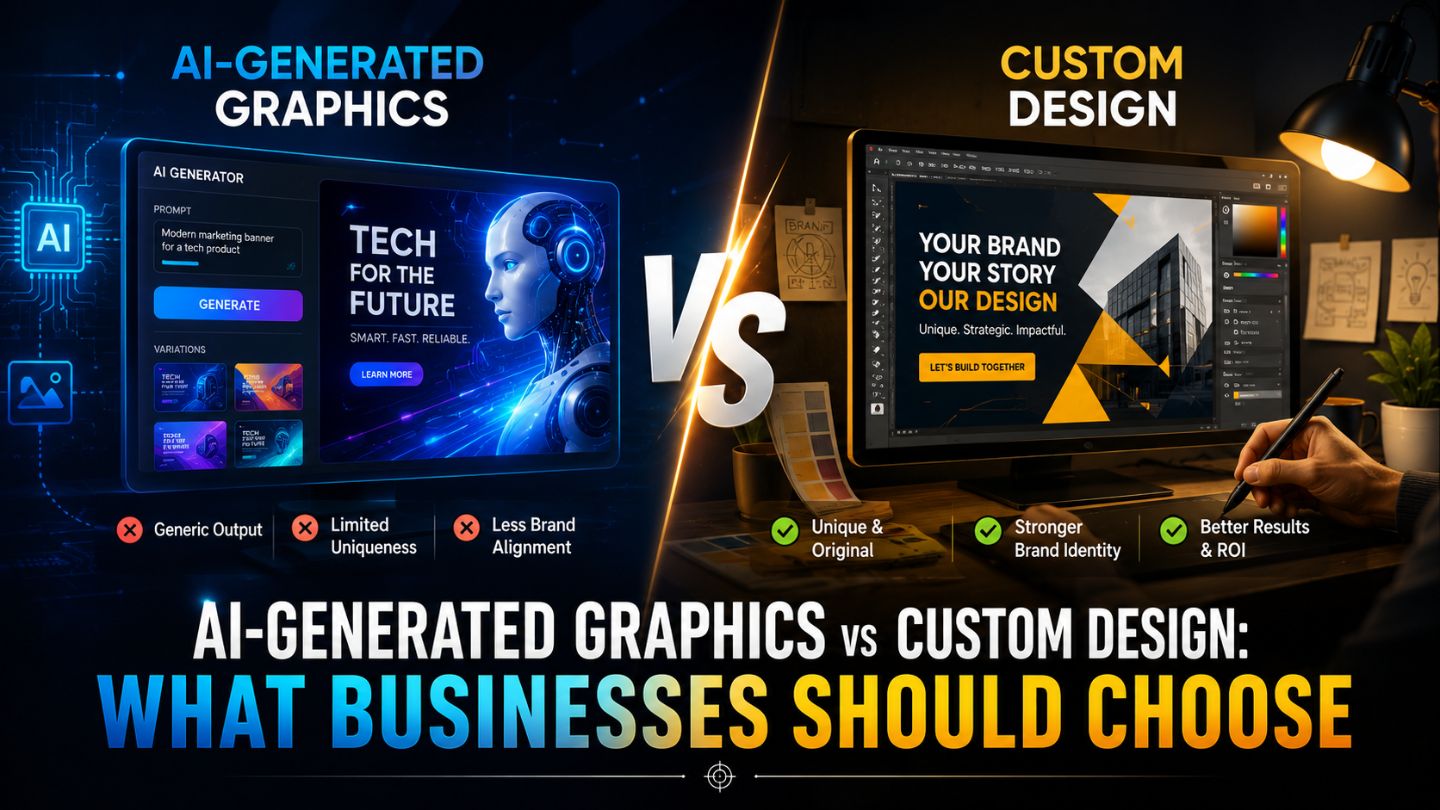
AI image generation has gotten good enough that the question isn't whether it can produce usable visuals anymore; it clearly can. The question is which visuals should come from it and which still need a human designer making deliberate choices. Treating this as an all-or-nothing decision wastes money in both directions. This blog covers what AI-generated graphics are genuinely good at, where they consistently fall short, and how to build a sensible line between the two rather than picking a side.
Key Takeaways
- AI-generated graphics excel at speed, iteration, and low-stakes volume.
- Custom design still wins on brand consistency and specific accuracy.
- AI output often carries subtle errors that undermine credibility if unreviewed.
- The right mix depends on the stakes of each individual placement.
- Legal and ownership questions around AI imagery remain genuinely unsettled.
Setting Expectations With Clients or Stakeholders
If you're producing visual work for internal stakeholders or external clients, it's worth setting explicit expectations upfront about which pieces used AI generation and which received full custom treatment, rather than leaving that distinction ambiguous. Stakeholders who later discover a customer-facing asset was AI-generated without review, particularly if it later surfaces a quality issue, tend to react more negatively than if the approach had been transparent from the start.
This transparency also protects the design process itself, making clear which budget and time savings came from AI-assisted work helps justify future use of the approach where it's genuinely appropriate, rather than the entire practice being viewed with suspicion after one poorly reviewed output causes a problem.
What AI Graphics Are Genuinely Good At
Speed is the real advantage, and it's a significant one. Generating a dozen visual directions for a concept in minutes, rather than commissioning a designer and waiting days for the first draft, changes how teams can explore ideas before committing budget to any single direction. For internal decks, quick social posts, and exploratory concept work, this speed alone justifies using the tools.
Volume is the second genuine strength. A business needing hundreds of similar but distinct visuals, product variations, seasonal templates, and background textures can generate them at a cost and speed no custom process matches. For placements where consistency matters more than distinctiveness, and where the stakes of any single image being slightly imperfect are low, AI generation is a legitimately better tool than commissioning custom work for every variant.
Reviewing Output Before It Ever Reaches a Customer
Whatever mix of AI generation and human design a team settles on, a final review step before anything customer-facing publishes catches the specific failure modes that make AI output risky: an odd anatomical detail, a physically implausible object, text that renders as gibberish. This review doesn't need to be elaborate; a second person looking specifically for these known failure patterns before publishing is usually enough to catch what a single creator working quickly might miss.
Building this review into the standard publishing workflow, rather than relying on the person who generated the image to also be the one who catches its own mistakes, adds a genuine safeguard for very little extra time. It's the kind of process step that feels unnecessary until the first time it catches something that would have been embarrassing to publish.
Where It Still Falls Short
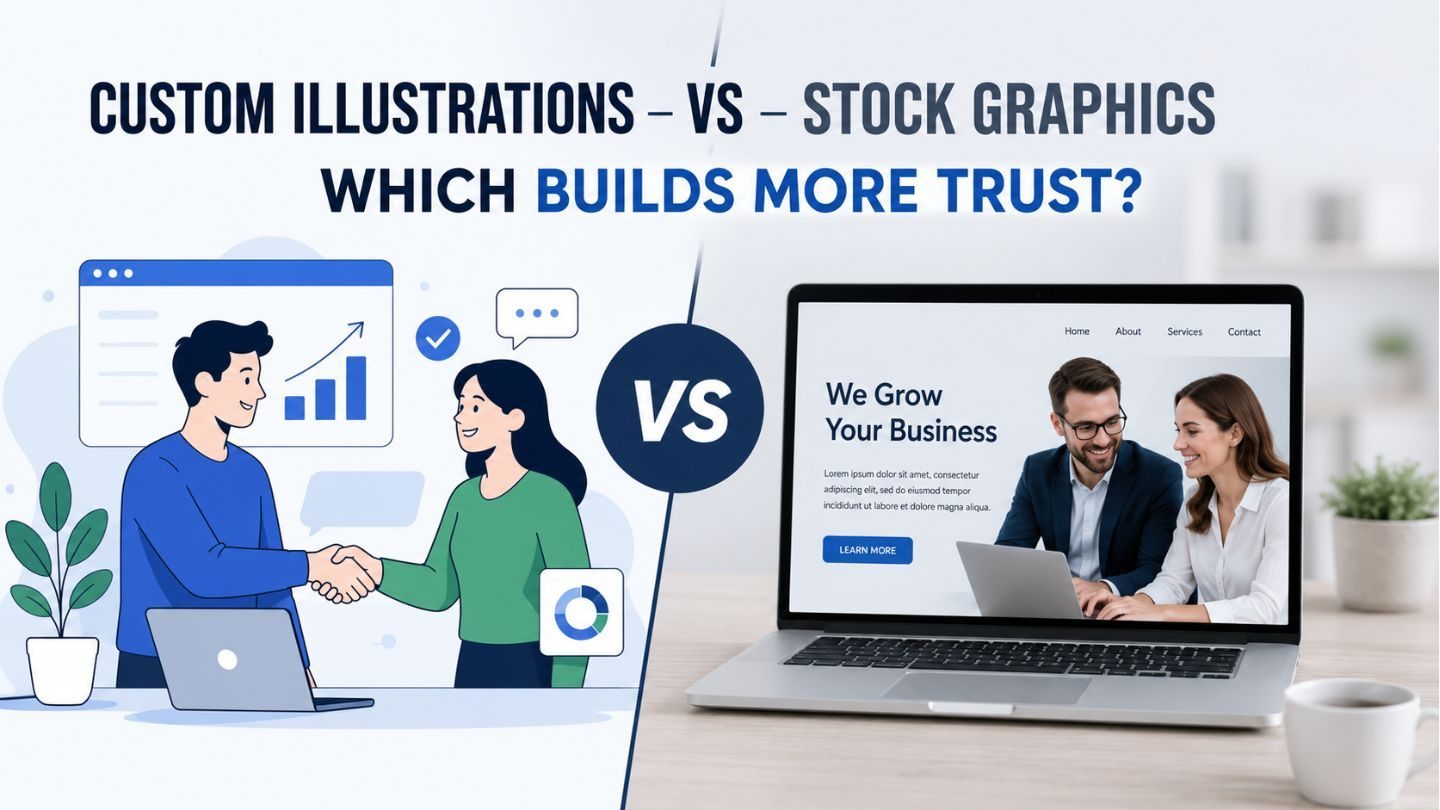
Brand consistency is the first casualty. AI models can follow brand references and style instructions, but maintaining exact consistency across a large set of generated assets still usually requires human oversight. A brand asset library generated this way rarely holds together as a coherent system without significant manual correction. This is the same tension explored in custom illustrations versus stock graphics: speed and volume against genuine brand-specific accuracy.
Accuracy is the second, more serious problem. AI-generated imagery can introduce subtle inaccuracies in products, processes, anatomy, labels, or other details that require factual precision. For anything representing your actual product or service, that risk outweighs the speed benefit unless someone reviews every output carefully.
Read More: AI vs Human-Created Social Media Content: Engagement Comparison
Text Inside Images Remains Unreliable
AI-generated text inside images has improved significantly, but important labels, numbers, signage, and customer-facing copy should still be checked carefully for accuracy. Any graphic requiring specific words, a sign, a label, or a chart with real numbers needs either careful post-editing or should be built conventionally instead.
The Legal Question Nobody's Fully Answered
Copyright and ownership treatment for AI-generated imagery varies by jurisdiction, the amount of human creative input involved, and the terms of the tool being used. Businesses creating important brand assets should review those factors before relying on AI output as something they expect to control exclusively. For low-stakes internal use, this ambiguity matters less. For anything you're building a long-term brand asset around, a logo element, packaging, something you'd want exclusive rights to defend, the uncertainty is a real business risk worth weighing before committing.
There's also a subtler risk around training data and similarity to existing copyrighted work, which occasionally surfaces in outputs that resemble specific existing art more closely than a business would want to discover after publishing. For important customer-facing assets, use a documented review process that checks originality concerns, licensing terms, factual accuracy, and brand compliance before publication.
Deciding by Stakes, Not by Trend
The useful framework isn't AI versus custom as a philosophy; it's matching the tool to what's actually riding on the image. Low-stakes, high-volume, exploratory: AI is often the better tool, and the custom alternative would be overkill. High-stakes, brand-defining, factually precise: custom work, or at minimum AI output heavily reviewed and refined by a human, remains the safer choice.
Map your visual needs by stakes before deciding by preference. A background texture for a blog post and a hero image for your homepage are not the same decision, even though both are technically "an image you need." Understanding the different roles within graphic design helps clarify which of those roles AI can genuinely substitute for and which still benefit from deliberate human judgment.
The Hybrid Workflow Most Teams Land On
In practice, the sustainable approach for most businesses isn't choosing one tool; it's using AI generation for rapid concepting and low-stakes volume, then having a human designer refine, correct, and bring anything customer-facing into line with an actual brand system. AI produces the raw material faster; a designer ensures it's accurate, consistent, and actually usable. Teams weighing tool choices more broadly may also find Canva versus Adobe for business design work useful context for where AI-assisted and traditional tools each fit.
This changes what a design process looks like more than it eliminates the need for one. The designer's time shifts from generating every option from scratch toward curating, correcting, and maintaining consistency across AI-assisted output, which is a different skill emphasis but not a smaller one. Teams that treat AI as replacing design judgment entirely tend to discover the gaps later, usually in a customer-facing placement where the mistake actually mattered.
Read More: Importance of Graphic Design in Today’s Digital Marketing Success
Setting a Simple Internal Policy

Without a written policy, decisions about when to use AI generation end up being made individually by whoever happens to need an image that day, with wildly inconsistent judgment about what counts as low enough stakes. A short internal guideline, even three or four lines, prevents a customer-facing product photo from being quietly generated by someone who didn't realize that placement deserved more scrutiny.
The policy doesn't need to be elaborate. Naming the specific placements that always require human-designed or human-reviewed imagery- homepage hero, product pages, anything in a paid ad- and leaving everything else to individual judgment covers most of the risk with very little overhead to maintain or enforce.
Choosing the Right Tool for Each Image
AI-generated graphics are a genuinely useful addition to a design process, particularly for speed and volume, and a genuinely poor substitute for brand consistency and factual precision without careful human review. The businesses getting real value aren't the ones that picked a side; they're the ones matching the tool to the stakes of each specific placement and keeping a designer's judgment in the loop wherever accuracy or brand coherence actually matters.
At The Ocean Marketing, we build Graphic Design Services that use the right tool for each job rather than defaulting to whichever is fastest. Whether you need help building a hybrid workflow, reviewing AI-assisted assets before they go live, or a free SEO audit to see how your site performs overall, our team can help. Contact us and let's figure out where each tool actually belongs in your process.