

When businesses plan a new website, they often use "designer" and "developer" as if they mean the same thing. They do not. A web designer shapes how a site looks and how people move through it, while a web developer turns that vision into working code. Confusing the two can lead to unclear expectations, missed tasks, and frustrating projects. This blog covers the roles and responsibilities of web designers and web developers, where their work overlaps, and how they collaborate to deliver websites that look great and work smoothly.
Key Takeaways
- Web designers focus on user experience, layout, and visual style.
- Web developers build the site's structure, features, and functionality.
- Front-end developers bridge design and code, while back-end developers handle servers and data.
- Clear handoffs and shared tools reduce errors and delays.
- Strong collaboration produces sites that look good and perform well.
What a Web Designer Does

A web designer is responsible for how a website looks and feels. That work usually starts with understanding the audience and the business goals, then mapping how visitors should move through the site. Designers create wireframes that outline page structure, followed by detailed mockups that define colors, typography, imagery, spacing, and interactive elements across desktop and mobile screens.
Good web design goes beyond appearance. Designers think about usability, accessibility, and conversion, deciding where calls to action belong, how navigation should work, and how content should be prioritized. Their work blends visual design with user experience thinking, and the distinction explained in the difference between UI and UX shows how both sides shape a designer's decisions.
What a Web Developer Does
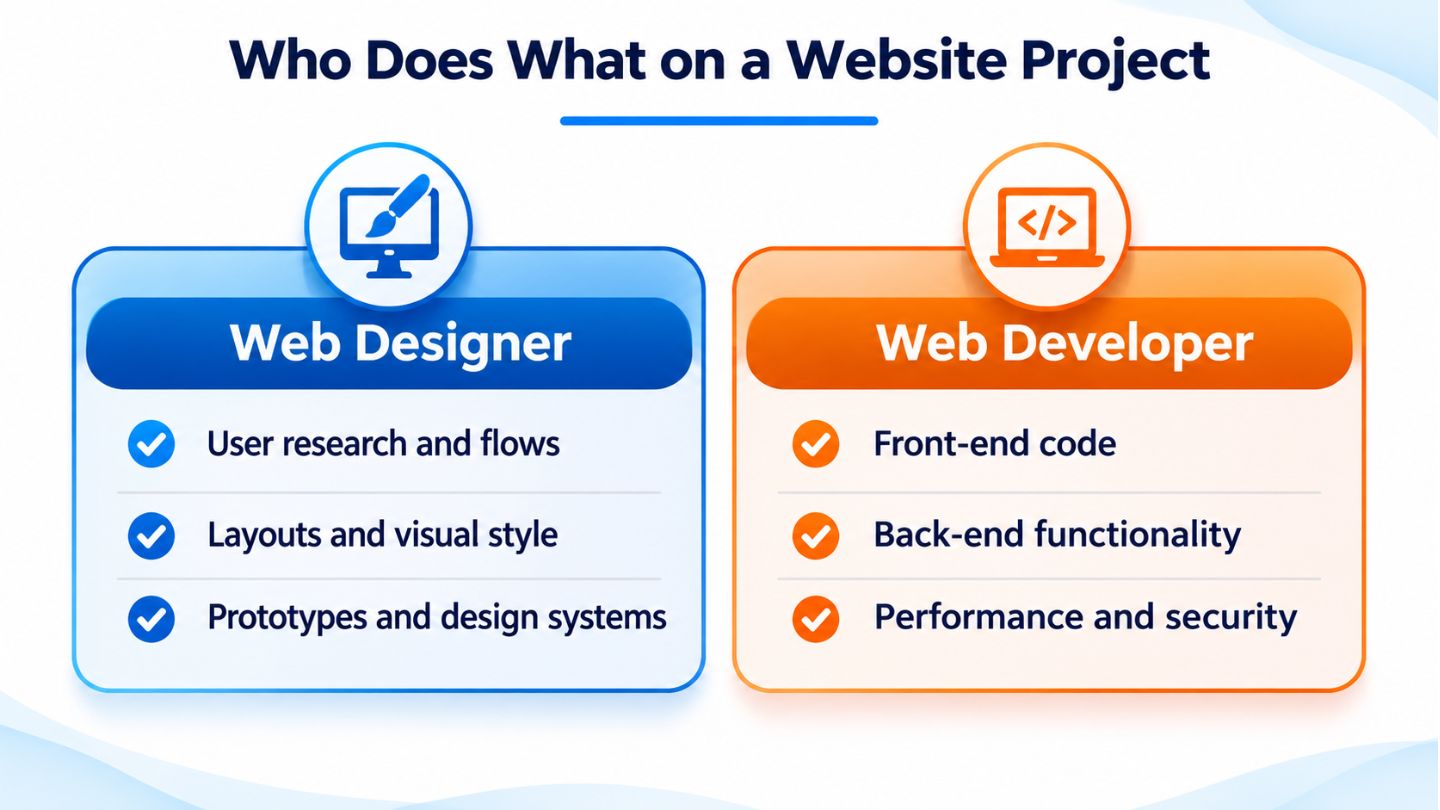
A web developer turns designs into a functioning website. Front-end developers write the HTML, CSS, and JavaScript that control what visitors see and interact with in the browser, making sure layouts adapt to different screen sizes and interactions behave as intended. Their work determines whether the finished site actually matches the approved design.
Back-end developers handle what happens behind the scenes. They manage servers, databases, content management systems, integrations, and features like user accounts, forms, payments, and search. They also focus on performance, security, and reliability, ensuring the site loads quickly, protects data, and keeps working as traffic and content grow over time.
Designers define the experience, developers bring it to life, and the best results come from working together.
Read More: Common Web Application Development Challenges: Security, Scalability, and Performance
Where the Two Roles Overlap
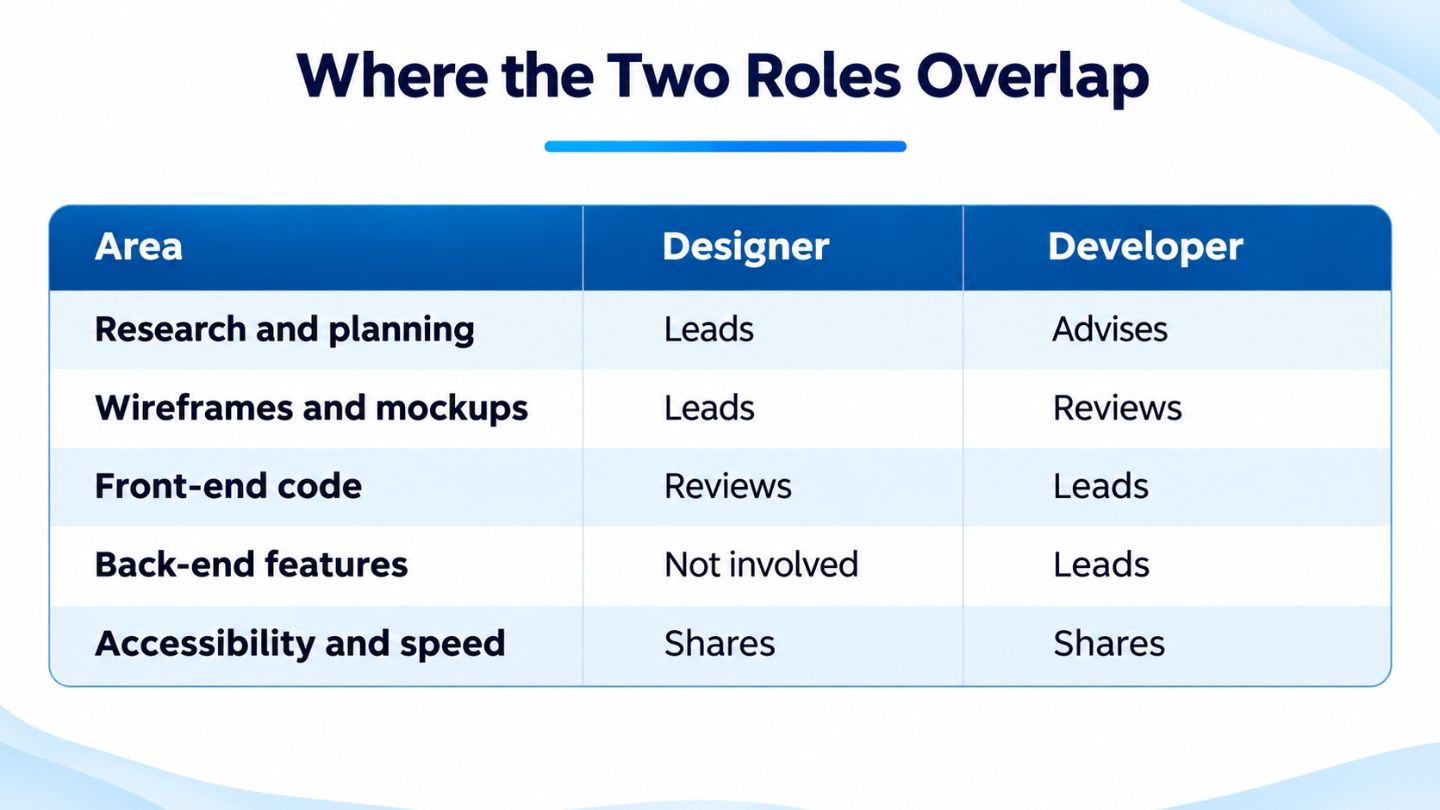
The line between design and development is not always sharp. Many designers understand basic code, and many front-end developers have a strong eye for design. Some professionals work across both areas, particularly on smaller projects, and website builders have blurred the lines further by letting designers create functional pages without writing code.
Even so, the core focus of each role remains different. Designers are primarily concerned with the user's experience and the brand's presentation, while developers are concerned with how things work under the hood. Recognizing that difference helps businesses hire the right skills and understand who is responsible for each part of a project.
- Designer: research, wireframes, mockups, and visual design.
- Front-end developer: responsive layouts and interactive behavior.
- Back-end developer: databases, integrations, and server logic.
- Shared: accessibility, performance, and user experience.
Clear ownership of each area keeps website projects moving smoothly.
Choosing the Right Mix for Your Project
The skills a project needs depend on its scope. A simple brochure site might be handled by a designer using a flexible website builder, while a site with custom features, integrations, or e-commerce needs dedicated development. Weighing AI website builders vs. professional web designers helps businesses understand where tools can help and where professional expertise matters most.
Custom requirements usually tip the balance toward a fuller team. Complex booking systems, membership areas, large product catalogs, and integrations with other business software all require development work beyond what templates offer. Deciding early which features are essential keeps budgets realistic and ensures the right people are involved from the start.
Read More: WordPress vs Webflow vs Wix: The SEO & Design Showdown
How Designers and Developers Work Together

Bring Developers in Early
The best projects involve developers early rather than handing them finished designs at the end. When developers review wireframes and early concepts, they can flag ideas that would be difficult, slow, or costly to build, and suggest alternatives that achieve the same goal. Designers, in turn, can explain the reasoning behind their choices so developers understand what matters most.
Share Tools and Specifications
Shared tools make collaboration smoother. Design files with clear specifications, reusable components, and documented styles reduce guesswork during development. Regular check-ins, shared project boards, and a single source of truth for feedback keep everyone aligned, so small questions get answered quickly instead of turning into delays later in the project.
Common Collaboration Problems to Avoid
Many website projects struggle because of poor handoffs. Designs that show only desktop layouts leave developers guessing about mobile behavior, while missing states for buttons, forms, and errors force last-minute decisions. Unclear feedback, frequent changes after development begins, and different expectations about timelines can all cause friction between teams.
Clear processes prevent most of these issues. Agreeing on deliverables, defining what "done" looks like, and setting a structured review schedule reduces surprises. When problems do arise, focusing on the shared goal of a site that works well for users helps teams find practical solutions instead of assigning blame.
Planning a Redesign With the Right Team
Redesign projects highlight the value of strong collaboration. Designers need to understand what is working on the current site, developers need to plan migrations and preserve important functionality, and both need to protect search visibility during the transition. Reviewing a website redesign checklist helps teams identify what truly needs to change before work begins.
Choices about platforms and templates matter too. Some businesses benefit from a fully custom build, while others do well with a carefully adapted template, and the trade-offs in custom website design vs templates affect cost, flexibility, and long-term maintenance. Making these decisions together keeps design ambitions and technical realities in balance.
Choosing Templates or Custom Builds Together
One of the most important early decisions in a website project is whether to start from a template or build a custom design. Templates speed up development and reduce cost, while custom designs offer more flexibility and a more distinctive brand experience. Designers and developers should weigh this choice together, since it affects both the visual possibilities and the technical work involved.
The trade-offs in custom website design vs templates affect performance, maintenance, and how easily the site can grow. A template that fits the business well can be a smart, efficient choice, while complex brands or unique features often justify the extra investment in a custom build.
Keeping the Partnership Going After Launch
A website is never truly finished at launch. New pages, features, and content need both design and development attention over time. Keeping designers and developers involved after launch helps maintain a consistent look, prevents layout problems when new content is added, and ensures updates follow the original design system.
Regular reviews of analytics and user feedback show where improvements are needed. Designers can refine layouts and calls to action, while developers handle performance, security, and new functionality. This ongoing collaboration keeps the website effective as the business and its customers evolve. Revisiting visual hierarchy in web design after launch often reveals simple layout changes that help visitors find what matters without adding more copy.
Building Better Websites Through Teamwork

Web designers and web developers play distinct but connected roles. Designers shape how a site looks and how people experience it, while developers build the structure and functionality that make it work. Understanding these responsibilities, involving both roles early, sharing clear specifications, and planning carefully for redesigns leads to websites that are attractive, usable, fast, and reliable.
At The Ocean Marketing, we bring design and development together to create websites that look great and perform well. Our graphic design services shape layouts, visuals, and brand experiences that developers can build on with confidence, and a free SEO audit can show how your current site performs. Contact us to talk about your next website project.
Frequently Asked Questions
What is the main difference between a web designer and a web developer?
A web designer focuses on how the website looks and how users interact with it, while a web developer writes the code that makes the site function.
Do I need both a designer and a developer for my website?
It depends on the project. Simple sites may need only a designer using a website builder, while custom features and integrations usually require a developer as well.
What is a front-end developer?
A front-end developer builds the parts of a website users see and interact with, turning designs into responsive, working pages using HTML, CSS, and JavaScript.