
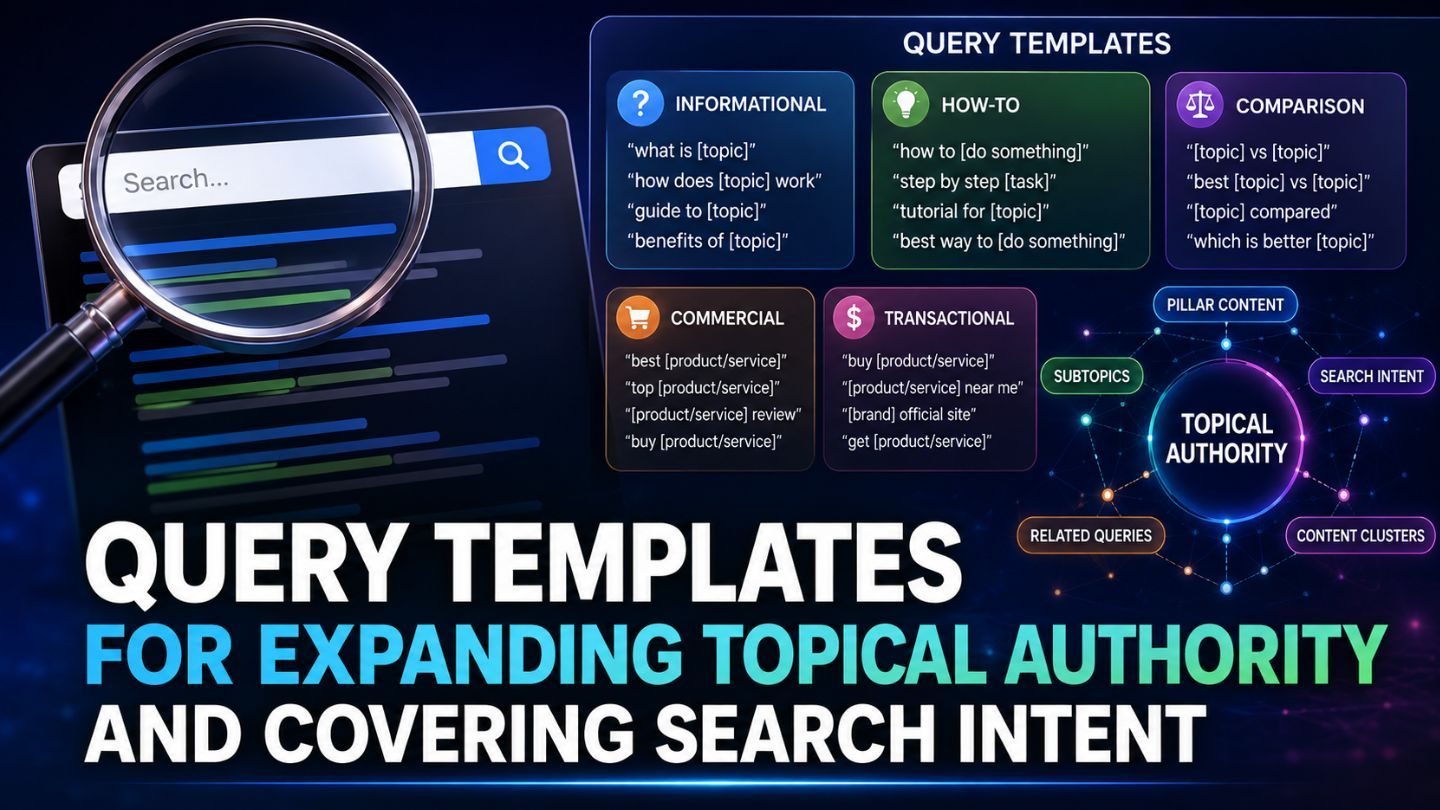
Most content plans start with a keyword list and end with a pile of disconnected articles that never quite cover a subject completely. Query templates fix that by working from the shape of how people actually ask about a topic- definitions, comparisons, processes, troubleshooting- rather than a flat list of phrases. Using them systematically is how you build genuine topical authority instead of a scattered blog. This blog outlines the core query templates, how to apply them to any subject, and how they connect back to search intent you might otherwise miss.
Key Takeaways
- Query templates map the shapes people ask questions in, not just the words.
- Applying templates systematically reveals content gaps keyword tools miss.
- Topical authority comes from coverage breadth, not individual page rankings.
- Different templates suit different funnel stages and different formats.
- A template-built content map prevents duplicate and thin coverage.
Where This Approach Runs Into Real Limits
Query templates work best for topics with genuine depth and a real range of related questions, and they work less well when applied mechanically to a narrow subject that simply doesn't have four distinct angles worth covering. Forcing a template onto a topic that only genuinely supports one or two of the four shapes produces the same thin, padded content the approach was meant to avoid.
Recognizing when a topic has been fully covered with two solid pieces, rather than continuing to force content into templates it doesn't naturally fit, is part of using this approach well. The goal was always genuine coverage, not template completion for its own sake, and knowing when to stop matters as much as knowing how to start.
Why Keyword Lists Miss the Shape of a Topic
A keyword list tells you what phrases people search, flattened into a single column with no structure. It doesn't tell you whether those phrases represent someone just learning about a subject or someone ready to buy, and it doesn't reveal what's missing until you've already published around the terms you found. Query templates work differently; they start from the type of question and generate the specific phrasing, which surfaces gaps a keyword export never will.
This distinction matters because strong topical authority depends on comprehensive, well-connected coverage rather than isolated keyword wins alone. A subject fully covered from definition through comparison through troubleshooting signals expertise in a way that ten disconnected articles targeting ten disconnected keywords never will, even if each of those ten technically ranks.
The Core Templates Worth Building From
Definitional queries ask what something is, plainly. "What is X" content establishes the foundation and often earns the most consistent, evergreen traffic because the question never stops being asked. Comparative queries ask how two things differ, "X vs Y," and these convert well because the searcher is actively deciding between options. This structured thinking is the same logic behind TOFU keywords and funnel-stage targeting discussed elsewhere, matching format to where someone sits in their research.
Process queries ask how to do something, step by step, and they're where a lot of genuine expertise gets demonstrated. Troubleshooting queries ask why something isn't working, and they're consistently underserved because they require admitting things go wrong, which businesses are sometimes reluctant to write about. Applying all four templates to a single core topic usually reveals at least one you haven't touched.
Don't Skip the Uncomfortable Template
Troubleshooting content, admitting what fails and why, builds more trust than polished success stories, precisely because it's rarer and more useful to someone in the middle of a real problem.
Read More: Tips To Write Good, High-quality Content
Applying Templates to a Real Subject

Take any core topic your business covers and run it through each template systematically. What is . versus the main alternative. How to do step by step. Why isn't working as expected. That's four distinct pieces from one subject, each serving a different moment in someone's research, rather than four variations of the same explainer.
Expand further with modifiers relevant to your audience, by use case, by experience level, by common constraint. The goal isn't infinite content; it's deliberate coverage. A content map built this way tends to be shorter than teams expect and more effective, because it prioritizes filling genuine gaps over publishing volume for its own sake.
Where This Connects to Search Intent
Query templates are really a structured way of mapping search intent, since each template shape correlates strongly with where someone sits in their decision process. Definitional and process queries tend to skew informational; comparative queries sit in the consideration stage, and troubleshooting queries often come from people who already own or use the thing and need it to work better.
Matching format to that intent matters as much as covering the topic at all. A comparative query answered with a single-option explainer frustrates the searcher regardless of how well-written it is, because it doesn't do the comparing they came for. Reviewing Google ranking factors that really matter helps calibrate which templates belong at which funnel stage before you start mapping content against them.
Where Design Decisions Enter the Picture
Different query templates often deserve different page structures, not just different words, and this is where content strategy and page design need to talk to each other. A comparison query wants a page built for scanning, tables, clear side-by-side sections, structure a reader can skim in seconds. A process query wants a linear, numbered flow. Forcing every template into the same generic article layout undersells the content regardless of how well it answers the underlying question. Getting the visual hierarchy right here overlaps with visual hierarchy in web design, since a comparison page and a process page should guide the eye differently.
This is where website design and content planning genuinely overlap. A troubleshooting page benefits from a symptom-first structure that lets someone jump straight to their specific problem, while a definitional page benefits from a simpler, more linear read. Planning the template alongside the layout, rather than writing first and formatting later, produces pages that actually serve the intent they were built for.
Avoiding Duplicate and Thin Coverage
The most common failure once teams start using templates is over-application, generating every possible combination regardless of whether real search demand exists for it. Not every modifier deserves its own page, and forcing thin, near-duplicate content to fill a template grid produces the cannibalization problem it was supposed to prevent.
Check real demand before committing a template to a page, using search data, customer questions, and sales team input alongside the template structure. The templates generate candidates, not commitments. A content map with twelve genuinely distinct, well-supported pages beats one with forty thin variations every time, both for the reader and for the authority you're trying to build.
Auditing an Existing Site Rather Than Starting From Zero

Most businesses aren't building topical coverage from a blank page, they already have years of content that grew organically without a template behind it. Running an existing content library through the four query templates retroactively is often more valuable than planning new content, because it reveals exactly which shape of question your site already answers well and which it's been silently skipping.
This audit typically surfaces a familiar pattern: strong definitional and process content, built up naturally over time because those are the easiest formats to write, and a real shortage of comparison and troubleshooting content, because those require more deliberate structuring. Knowing that gap precisely is worth more than another dozen definitional posts on adjacent subtopics.
Read More: Content Gap Analysis: A Complete Step-by-Step Guide
Building Coverage That Reads as Expertise
Query templates turn topic coverage from a guessing game into a systematic exercise, revealing what a subject actually requires, definitions, comparisons, processes, troubleshooting, rather than whatever a keyword tool happened to surface. Applied with restraint and matched to the right page structure for each intent, they produce a content set that reads as genuine expertise rather than a pile of loosely related posts. That's what builds topical authority, not the number of pages, but the completeness of what they cover together.
At The Ocean Marketing, we combine SEO strategy with Website Design planning that work together from the start. Whether you need help mapping topical coverage for your industry, restructuring pages to match search intent, or a free SEO audit to see where your current coverage stands, our team can help. Contact us and let's map out what your content is actually missing.