
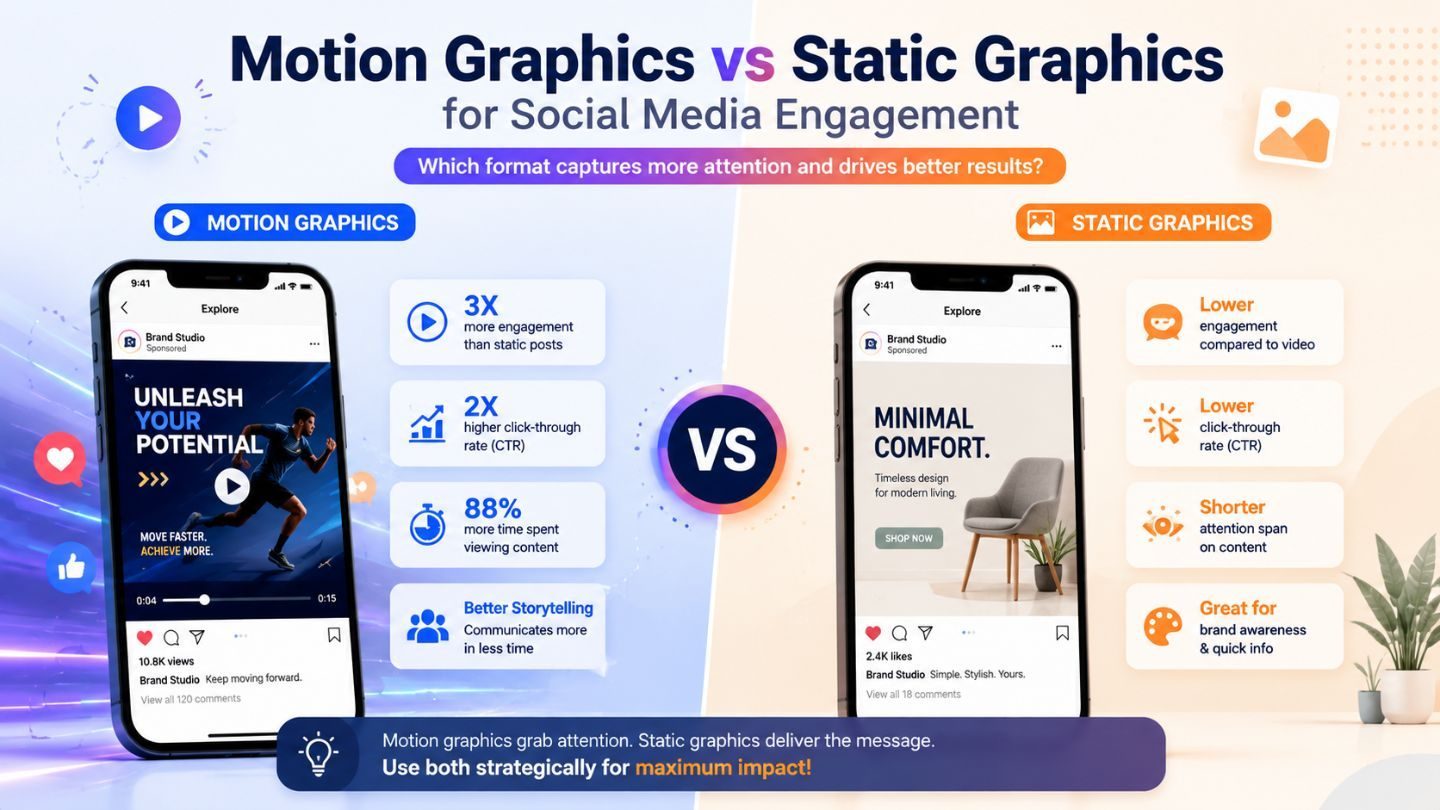
Social media platforms have become highly visual spaces where brands compete for attention within seconds. Businesses now rely on creative visuals to increase engagement, strengthen brand identity, and improve audience interaction. This blog outlines the major differences between motion graphics and static graphics, how each format influences social media performance, and when brands should use them for better results. From improving storytelling to encouraging audience retention, understanding the right visual strategy can help businesses create stronger campaigns. Choosing the right design style ultimately depends on business goals, audience behavior, platform trends, and the type of message brands want to communicate effectively.
Key Takeaways
- Motion graphics are highly effective for grabbing quick attention on social media feeds.
- Static graphics remain valuable for clear messaging and consistent branding.
- Different platforms respond differently to animated and still visuals.
- Motion graphics improve storytelling and viewer retention rates.
- Static graphics are easier to produce and ideal for informative content.
- A balanced combination of both formats often delivers the best engagement results.
- Brand goals and audience preferences should guide design decisions.
- Consistent visual identity is more important than choosing only one style.
- Professional design quality directly impacts social media credibility.
- Creative visuals help businesses improve conversions and audience interaction.
Understanding Motion Graphics in Social Media Marketing
Motion graphics combine animation, typography, transitions, and visual effects to create engaging content that moves on screen. These graphics are designed to capture attention quickly, which is important because social media users often scroll rapidly through their feeds. Motion graphics can explain concepts, showcase products, and communicate emotions in a more dynamic way compared to traditional visuals. Their movement naturally draws the eye, making them highly effective for platforms like Instagram Reels, TikTok, YouTube Shorts, and Facebook video ads, where visual competition is intense.
Businesses use motion graphics to create memorable brand experiences because animated visuals can deliver more information within a shorter timeframe. They help brands simplify complex ideas, improve storytelling, and encourage viewers to stay engaged for longer durations. Whether it is animated text, logo reveals, or short promotional videos, motion graphics create a stronger sensory experience that often increases audience retention. For brands focused on entertainment, product launches, tutorials, or awareness campaigns, motion graphics can significantly improve engagement metrics and overall social media performance.
What Makes Static Graphics Still Relevant
Despite the growing popularity of animated content, static graphics continue to play a major role in successful social media strategies. Static visuals provide simplicity, clarity, and quick readability, making them ideal for delivering concise information, especially when brands focus on designing social media graphics to increase engagement through clean layouts, readable text, and strong visual consistency. Infographics, promotional banners, quote posts, announcements, and branded designs still generate strong engagement because they are easier to consume instantly.
Many users prefer quick visual content that does not require sound, extended viewing time, or additional attention, which makes static graphics highly practical across multiple social media platforms. Static graphics are also easier and faster to produce, making them cost-effective for businesses that need consistent content output. Brands can maintain visual consistency through templates, typography, colors, and imagery without investing heavily in animation production.
These graphics are especially useful for educational posts, event promotions, testimonials, and carousel content where audiences can absorb information at their own pace. When designed professionally, static graphics create a polished appearance that strengthens credibility and improves brand recognition across social media channels.
How Motion Graphics Improve Engagement Rates
Motion graphics tend to generate higher engagement because movement naturally attracts human attention. Animated visuals interrupt scrolling behavior and encourage users to pause, which increases the likelihood of interaction. Social media algorithms also prioritize video-based content on many platforms, giving motion graphics greater visibility and reach. As a result, brands often experience better click-through rates, increased watch time, and stronger emotional engagement when using animated content in campaigns.
Another reason motion graphics perform well is their ability to tell stories in a compact and entertaining format. Through animation, transitions, and sound integration, brands can guide viewers through narratives more effectively than with still visuals alone. Product demonstrations, tutorials, service explainers, and promotional campaigns become more immersive and memorable when motion elements are included. This interactive experience encourages shares, comments, and saves, all of which contribute to stronger social media performance and broader audience exposure.
Why Static Graphics Continue to Drive Results
Static graphics remain highly effective because they allow audiences to absorb information quickly without distractions. In fast-paced digital environments, many users appreciate clean and visually appealing designs that communicate a message immediately. Promotional offers, event details, educational tips, and product highlights often perform well as static visuals because viewers can understand the content within seconds. This simplicity is especially useful on platforms where users consume large volumes of information throughout the day.
Another advantage of static graphics is their flexibility across different content formats and marketing goals. Businesses can easily repurpose still visuals for ads, stories, website banners, blog illustrations, and email campaigns while maintaining brand consistency. Static designs also load faster and require less production time, allowing brands to publish content more frequently. For companies with limited resources or tight deadlines, professionally designed static graphics provide an efficient way to maintain audience engagement while supporting long-term branding objectives.
Read More: Importance of Graphic Design in Today’s Digital Marketing Success
Choosing the Right Format for Different Platforms
Different social media platforms favor different types of content, which makes platform-specific strategy extremely important. Motion graphics tend to perform exceptionally well on video-focused platforms such as TikTok, Instagram Reels, and YouTube because users expect dynamic and entertaining content there, while understanding which drives more reach, video content or static posts helps brands choose the right format for each platform.
Animated visuals align naturally with these environments, helping brands increase visibility and maximize engagement opportunities. Short-form video content also benefits from algorithm preferences that prioritize watch time and interaction. On the other hand, static graphics still perform strongly on platforms like LinkedIn, Pinterest, Facebook, and Instagram carousel posts where informational content is common.
Audiences on these platforms often engage with educational visuals, promotional announcements, and branded designs that provide value quickly. Understanding audience behavior on each platform helps businesses determine whether animated or still visuals are more appropriate. A successful strategy usually involves adapting content styles to fit platform expectations rather than relying on only one visual format.
The Role of Storytelling in Visual Content
Storytelling has become one of the most powerful tools in social media marketing because audiences connect emotionally with relatable narratives. Motion graphics enhance storytelling by adding movement, pacing, sound, and transitions that guide viewers through a complete visual experience. Animated storytelling creates excitement and emotional depth, making it easier for brands to communicate personality, mission, and product benefits. This emotional connection often increases audience loyalty and encourages stronger engagement.
Static graphics also support storytelling when used strategically within broader content campaigns. Carousel posts, branded illustrations, and sequential graphics can communicate stories step by step while maintaining visual consistency. Businesses often combine multiple static visuals to create educational narratives, customer journeys, or campaign themes that audiences can follow easily. Whether animated or still, the effectiveness of visual storytelling depends heavily on design quality, message clarity, and audience relevance rather than simply the format itself.
Balancing Creativity and Brand Consistency
Creative visuals attract attention, but consistency is what builds long-term brand recognition. Businesses sometimes focus heavily on trendy animations or complex designs without maintaining a cohesive visual identity across platforms. Strong branding requires consistent typography, color schemes, logo placement, and messaging regardless of whether content is animated or static, which is why marketing and advertising graphic design plays an important role in keeping every visual aligned with the brand’s message. Audiences should immediately recognize a brand’s content even before reading the caption or watching the entire visual.
Motion graphics offer opportunities for highly creative storytelling, but excessive movement or visual effects can sometimes distract from the main message. Similarly, static graphics can appear outdated if designs lack originality or modern styling. The most successful brands maintain a balance between creativity and consistency by using visuals that align with their identity while remaining visually engaging. This balance helps businesses establish professionalism, improve audience trust, and create memorable social media experiences that support long-term marketing goals.
Read More: Image vs Illustration: Which Performs Better in Marketing?
Combining Motion and Static Graphics for Better Results
Brands do not necessarily need to choose between motion graphics and static graphics because both formats can work together effectively within a single strategy. Many successful campaigns use motion graphics for awareness and engagement while relying on static visuals for detailed information and consistent branding. This combination allows businesses to capture attention initially and then provide audiences with clear, easy-to-digest content that reinforces the campaign message.
Using both styles also helps businesses diversify their content calendar and maintain audience interest over time. Motion graphics can support product launches, seasonal promotions, and storytelling campaigns, while static visuals handle educational posts, announcements, and community engagement content. A balanced visual strategy prevents content fatigue and keeps social media feeds visually dynamic. By understanding the strengths of each format, brands can create campaigns that maximize engagement while supporting broader marketing objectives and audience preferences.
Final Thoughts
Motion graphics and static graphics both play valuable roles in social media engagement, but their effectiveness depends on how brands use them strategically. Motion graphics excel at capturing attention, improving storytelling, and increasing interaction, while static graphics remain essential for clarity, consistency, and quick communication. Businesses that understand platform behavior, audience preferences, and campaign goals can use both formats together to create stronger social media strategies. A balanced visual approach helps brands maintain engagement, improve recognition, and deliver memorable experiences that support long-term growth.
At The Ocean Marketing, we help businesses create impactful visual strategies through professional graphic design services that improve branding, audience engagement, and overall digital performance. Our team also offers a free SEO audit to identify opportunities that can strengthen your online visibility and marketing results. Contact us today to discuss how we can help your brand create more engaging and effective social media campaigns.