
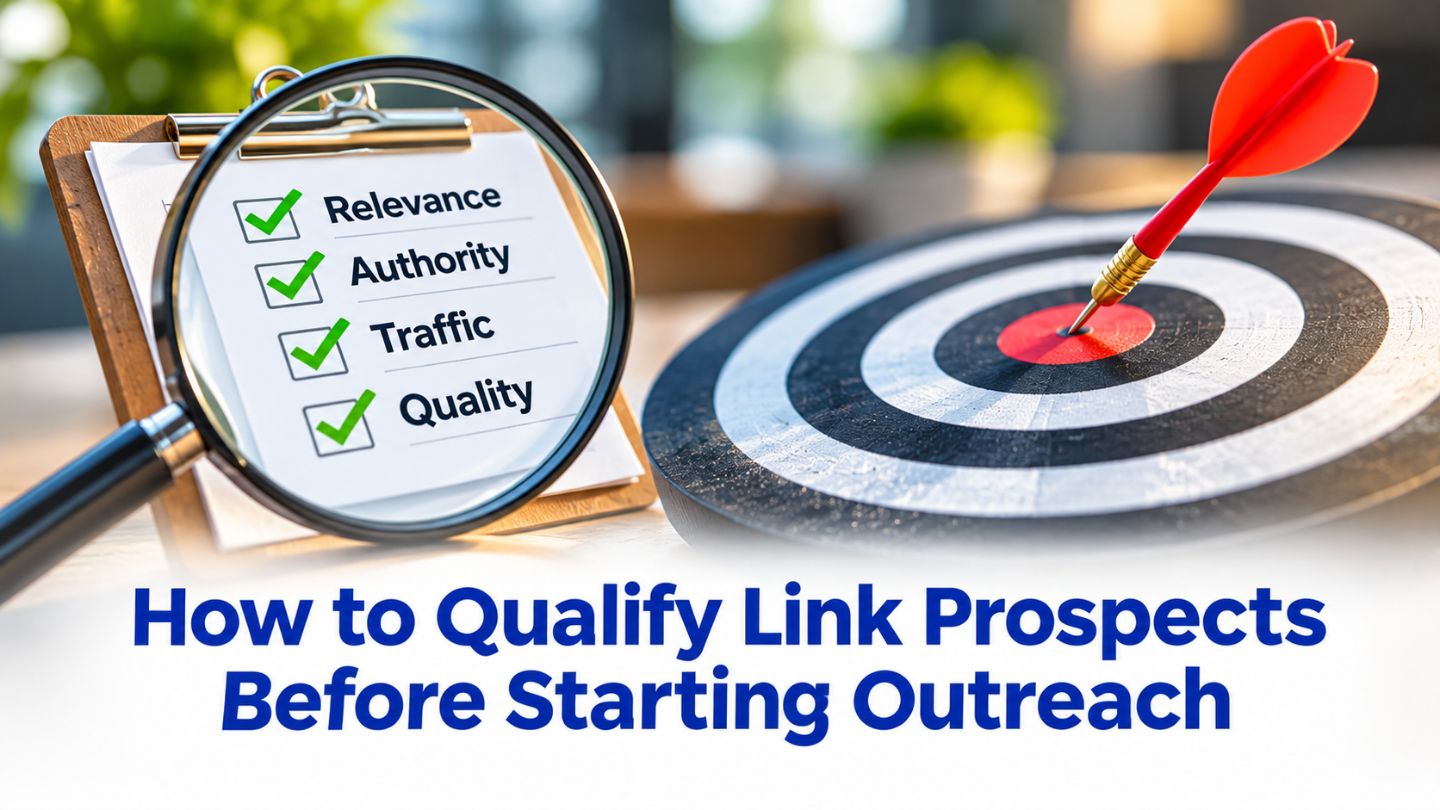
Outreach takes time, and much of it gets wasted on the wrong websites. Sending hundreds of emails to sites that are irrelevant, low quality, or unlikely to respond produces few links, and sometimes ones that do more harm than good. The difference between a frustrating campaign and a productive one often comes down to what happens before the first email goes out. This blog covers how to qualify link prospects, including the criteria that matter most, the warning signs to avoid, and a simple scoring approach that keeps outreach focused.
Key Takeaways
- Qualifying prospects before outreach saves time and improves results.
- Topical relevance matters more than authority metrics alone.
- Real traffic and engaged audiences signal valuable linking sites.
- Spam signals and paid link patterns are clear reasons to walk away.
- A simple scoring system keeps prospect lists consistent and prioritized.
Why Prospect Qualification Matters
It is tempting to build the biggest list possible and email everyone on it. But outreach response rates are modest even for strong campaigns, and every unqualified prospect drags them lower. Time spent pitching a site that would never link, or one that should not link, is time taken away from opportunities that could genuinely strengthen a website and its visibility.
Quality also protects the site. Links from spammy, irrelevant, or manipulative sources add little value and can create risk. Qualifying prospects upfront ensures that every link earned is one the business is happy to have, while making outreach messages more relevant and personal, because the team understands each site before getting in touch.
Start With Topical Relevance
Relevance is the first and most important filter. A prospect should cover topics that connect naturally to your business, products, or expertise, so a link makes sense to its readers. A home improvement blog linking to a roofing company is logical, while a gaming site linking to the same company raises questions. Check the site's main topics, recent articles, and the specific pages where your link might appear.
Context within the page matters too. Links placed inside relevant, editorial content carry more weight than links buried in footers, sidebars, or generic lists. The difference between editorial links and directory links shows why prospects that publish thoughtful content in your niche are usually worth more than sites that list businesses with little or no editorial review.
Evaluate Authority and Real Traffic
Authority metrics offer a quick sense of a site's strength, but they should never be the only measure. Third-party scores estimate link strength, and comparisons of domain authority and page authority are useful when ranking prospects, yet both can be inflated or misleading. Treat these scores as one signal among many rather than a strict pass or fail threshold.
Real organic traffic is often a better indicator. A site that ranks for relevant keywords and attracts steady visitors is more likely to be trusted by search engines and to send referral traffic of its own. Look at traffic trends over time, the countries visitors come from, and whether the pages that would host your link actually receive visits.
Key Qualification Criteria
- Topical relevance to your business and audience.
- Steady organic traffic and rankings.
- Editorial standards and genuine content quality.
- An active site that publishes and updates regularly.
Read More: How to Use Link Intersect to Find Competitors' Backlinks
Check Content Quality and Editorial Standards

Read a few articles before adding any site to the list. Well-written, original content with clear authorship and accurate information signals a site that cares about its readers. Thin articles, spun text, excessive ads, or posts that exist mainly to host outbound links suggest a site that search engines are unlikely to value, no matter what its metrics say.
Activity matters as well. Sites that publish regularly, update older content, and engage with readers are more likely to respond to outreach and keep links live over time. These traits line up closely with the signals used to recognize high-quality backlinks, which makes content review one of the most reliable ways to separate strong prospects from weak ones.
Spot the Red Flags Early
Some warning signs should remove a prospect immediately. Pages that openly advertise paid links or sponsored posts without disclosure, sites covering wildly unrelated topics, and pages filled with outbound links to casinos, pills, or loan offers are clear signals to walk away. Sudden traffic drops may point to penalties, while expired domains repurposed into link farms are another common trap.
Links from these sources can do more harm than good. Search engines ignore or devalue many manipulative links, and a pattern of them can draw unwanted attention. Recognizing what toxic backlinks look like makes risky prospects easier to spot during qualification, rather than discovering the problem months later during a backlink audit.
A few minutes of review separates prospects worth pitching from sites that add risk instead of value.
Score and Prioritize Your Prospect List
- Building a Simple Scoring Sheet
A simple scoring system brings consistency to qualification. Rate each prospect on a few criteria, such as relevance, traffic, content quality, and likelihood of linking, using a short scale like one to five. Adding the scores creates an overall rating that helps the team decide quickly which sites deserve personalized outreach and which can be set aside for now.
- Matching Effort to Priority
Prioritization lets the best opportunities receive the most effort. Top-tier prospects deserve carefully researched, personalized pitches, while mid-tier sites may suit a lighter approach. Recording notes about each site, including the right contact, recent articles, and the angle that fits, makes outreach faster and far more relevant when the time comes.
Scoring every prospect the same way keeps outreach lists consistent.
Find the Right Contact and Angle
Qualification is not complete until you know who to contact and why they would care. Identify the editor, author, or site owner responsible for the relevant content, rather than sending messages to a generic inbox. Review their recent work to understand what they publish and what might genuinely help their readers, so the pitch speaks to their actual interests.
The best angle connects your resource to the prospect's goals. That might be data that supports an article they wrote, a guide that fills a gap on a resource page, or expert input for an upcoming piece. When qualification is done properly, outreach messages almost write themselves, because the fit between the site and your content is already clear. Where the angle is expert input for an upcoming piece, HARO link building is the channel built for exactly that.
Tools and Habits That Speed Up Qualification
Qualification does not have to be slow. Backlink and keyword tools can surface traffic estimates, ranking keywords, and linking patterns in seconds, while a browser extension that shows basic site metrics speeds up first impressions. The key is using tools to filter, not to decide, since a quick manual review still catches problems that numbers miss.
Consistent habits make the process faster over time. Reviewing prospects in batches, using the same scoring sheet, and saving notes in one shared place help the team build familiarity with a niche. As the list grows, patterns become obvious, such as which publications reliably accept contributions and which sites never respond, making each new round of qualification quicker.
Keeping Prospect Lists Fresh
Prospect lists age quickly. Sites change ownership, stop publishing, shift topics, or start selling links, and a prospect that qualified six months ago may no longer meet the standard. Re-checking key details before each campaign, especially traffic, topic focus, and content quality, keeps outreach aimed at sites that still deserve it.
Tracking outcomes also improves future qualification. Note which prospects responded, which linked, and which links stayed live. Over time, this history reveals the traits that predict success for your business, allowing the team to refine its scoring criteria and focus on the kinds of sites most likely to become lasting partners.
Read More: Backlink Audit Checklist: How to Analyze Your Links
Building Outreach on a Stronger Foundation

Qualifying link prospects before outreach turns a numbers game into a focused strategy. Checking relevance first, looking beyond authority scores to real traffic, reviewing content quality, avoiding red flags, scoring prospects consistently, and finding the right contact and angle lets teams spend their time on the opportunities most likely to produce valuable, lasting links.
At The Ocean Marketing, we help businesses earn links from relevant, trusted websites through careful research and personalized outreach. Our Link Building team qualifies every prospect before reaching out, and a free SEO audit can show the current health of your backlink profile. Contact us to start earning links that genuinely strengthen your site.
Frequently Asked Questions
What makes a good link prospect?
A good prospect is topically relevant, has real organic traffic, publishes quality content with editorial standards, and is likely to link to resources that help its readers.
Should I rely on domain authority when qualifying prospects?
Use it as one signal, not the only one. Authority scores can be inflated, so combine them with traffic, relevance, and content quality checks.
How many link prospects should I contact?
Focus on quality rather than volume. A smaller list of well-qualified, carefully researched prospects usually produces more links than a large untargeted list.