
When conversions need to increase and the budget will not, the instinct is to squeeze the bidding strategy. That is rarely where the gains are. Most accounts have meaningful waste in search terms, landing page mismatch, and conversion definitions that were set once and never revisited, all of which can be fixed without spending another pound. This blog covers where those gains actually sit and how to work through them in a sensible order.
Key Takeaways
- Wasted spend on irrelevant terms is the fastest recoverable gain.
- Landing page mismatch suppresses conversion regardless of bid strategy.
- Conversion definitions often measure the wrong event entirely.
- Audience exclusions recover budget being spent on the wrong people.
- Fix the foundation before adjusting bids, not after.
Start With the Search Terms Report
Nothing recovers budget faster than finding out what people actually typed. Broad and phrase match consistently produce interpretations of your keywords that you would never have chosen, and every irrelevant click is money that could have funded a relevant one.
Work through the last ninety days looking for patterns rather than individual terms. If several irrelevant queries share a modifier, that modifier belongs in a shared negative list rather than being excluded one at a time. This is the same discipline described in using a negative keyword strategy to scale campaigns, applied specifically to freeing up spend you already have.
Check What You Are Actually Counting

Conversion definitions get configured during setup and then trusted indefinitely. It is worth confirming that what you are counting is genuinely what you want more of. Counting page views on a thank-you page that also loads for other reasons, or counting form starts rather than completions, quietly corrupts every optimization decision built on top.
This matters more with automated bidding, because the system optimizes hard toward whatever you told it success looks like. A poorly defined conversion does not produce random results; it produces excellent performance against the wrong target. Verifying the definition costs an hour and can change what the whole account is chasing.
Ad Copy Is Cheaper to Test Than Bids
Rewriting an ad costs nothing and can shift click-through and conversion together. Ads that state a specific benefit, a real differentiator, or an actual number outperform generic category language, and most accounts are still running copy written when the campaign launched.
Testing one variable at a time- headline, offer, or call to action- produces knowledge you can apply across the account rather than a single improvement. It is the cheapest optimization available, and the one most often skipped in favor of adjusting bids. The same craft applies on the organic side, where SERP copywriting decides whether a listing earns the click at all.
Landing Page Mismatch Costs More Than Bids
If the ad promises one thing and the page delivers something broader, a share of visitors leaves before reading anything. That loss is invisible in the ads interface, which reports the click as successful, and it is frequently larger than anything a bid adjustment would recover.
The fix is unglamorous: each ad group should point to a page that confirms the specific promise made in the ad, above the fold, in similar language. Sending everything to a homepage is the most common version of this problem and the most expensive. Reviewing the landing page factors that genuinely affect performance is the right next step once the mismatch is identified.
Open Your Own Ad on a Phone
Click through your own campaign on cellular data and complete the form as a stranger would. Ninety seconds of that surfaces more usable problems than an hour in the interface.
Read More: Web Form Placement: Above or Below the Fold?
Exclude the Audiences You Are Paying to Reach Twice
Many accounts spend a meaningful share of budget re-acquiring people who already converted, or reaching segments that never do. Existing customer lists, past converters, and job applicants are all commonly left unexcluded simply because nobody set them up.
Adding those exclusions frees budget immediately without touching bids. It is one of the least glamorous optimizations available and among the most reliable, which is why audience exclusions get described as the most overlooked paid search optimization. Most accounts have at least one obvious exclusion sitting unconfigured.
Match Types and Where Budget Leaks
Broad match with weak negatives is the most common cause of spend going somewhere useless. It is not that broad match is wrong; it is that it requires active management, and accounts that set it once and left it are usually funding queries nobody would have chosen.
Reviewing which match types are carrying which spend, and tightening where the search terms report shows drift, recovers budget without reducing genuine reach. It is worth checking this before making any changes, since match type is where most unmanaged spend quietly escapes. Deciding where each type belongs starts with exact match versus broad match and what each one is genuinely for.
Tighten the Offer Before the Targeting
Sometimes the page is fast, relevant, and honest, and the conversion still does not happen, because what is being asked for is disproportionate to where the visitor is. Demanding a phone consultation from someone who wanted a price is a mismatch that no amount of targeting fixes.
Offering something proportionate, a price range, a comparison, a low-commitment next step, frequently lifts conversion more than any account-level change. This does not cost budget, and it does require a decision about what you are willing to give away before someone commits, which is a business question rather than an advertising one.
Device and Location Are Cheap Wins
Segmenting performance by device and location frequently reveals that a share of spend is going somewhere that never converts. A campaign performing acceptably in aggregate can be subsidizing a device or region that has never produced a customer.
Adjusting or excluding on that basis recovers budget without touching anything else, and it takes minutes to check. It is one of the few optimizations where the data is unambiguous, and the action follows directly from it.
A Sensible Order of Work
Search terms first, since the waste is immediate and recoverable. Then conversion definitions, because everything downstream depends on them being correct. Then landing page match, then audience exclusions, then the offer itself. Bid strategy comes last, once the account is optimizing against clean data.
Working in this order matters. Adjusting bids while the conversion definition is wrong, or while a third of spend goes to irrelevant queries, produces improvements that evaporate the moment the underlying problem is corrected. Fix the foundation and the same budget simply works harder.
Knowing When the Account Is Not the Problem
Sometimes everything in the account is correct, and conversion is still weak, because the offer is uncompetitive, the price is wrong for the market, or the follow-up after a lead arrives is too slow. None of that is fixable inside an ads interface.
Checking how quickly leads actually get contacted is worth doing before assuming the campaign is at fault. A lead responded to within minutes converts at a dramatically different rate than one contacted two days later, and that gap frequently explains performance that looked like an advertising problem.
Reviewing Often Enough to Catch Drift

Every improvement here degrades without maintenance. New irrelevant search terms appear, landing pages get edited, conversion tracking breaks quietly after a site change, and audience lists go stale. An account optimized once and left alone returns to leaking within months.
A short recurring check- search terms, conversion recording, a click through your own ad- catches most of it in twenty minutes. The discipline matters more than the depth, since the problems are cheap to fix early and expensive to discover in a quarterly report.
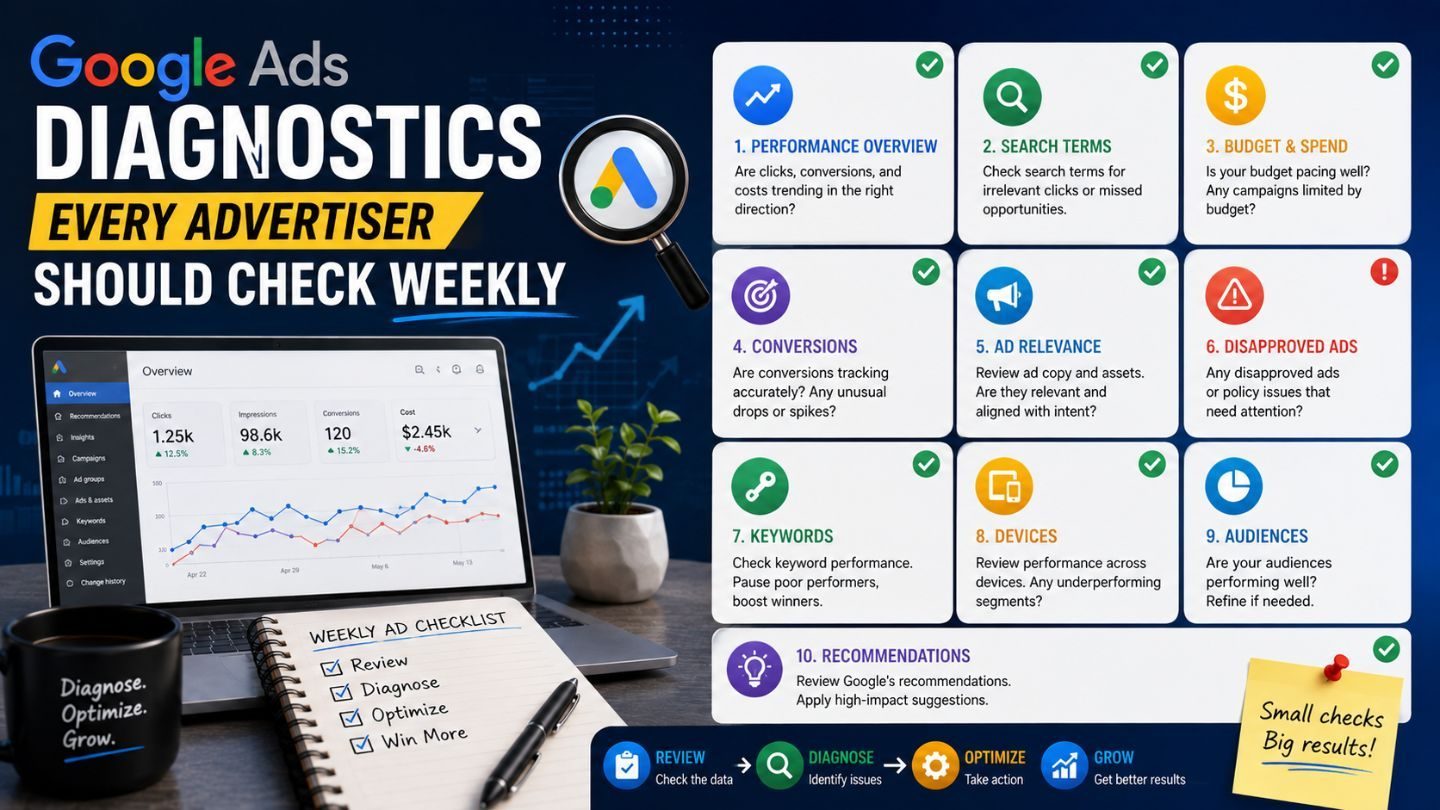
Read More: Google Ads Diagnostics Every Advertiser Should Check Weekly
Getting More From the Same Spend
Conversion gains without extra budget almost always come from removing waste rather than optimizing bids: irrelevant search terms, conversion definitions measuring the wrong event, landing pages that break the promise the ad made, and audiences you are paying to reach who were never going to buy. None of it is glamorous; all of it is recoverable, and working through it in order usually produces more improvement than the budget increase you were going to ask for.
At The Ocean Marketing, we manage PPC accounts by fixing the foundation before touching the bidding. Whether you need an audit of where spend is leaking, help aligning pages to campaigns, or a free SEO audit to see how your paid and organic efforts fit together, our team can help. Contact us and let's find out what your current budget could be doing.