
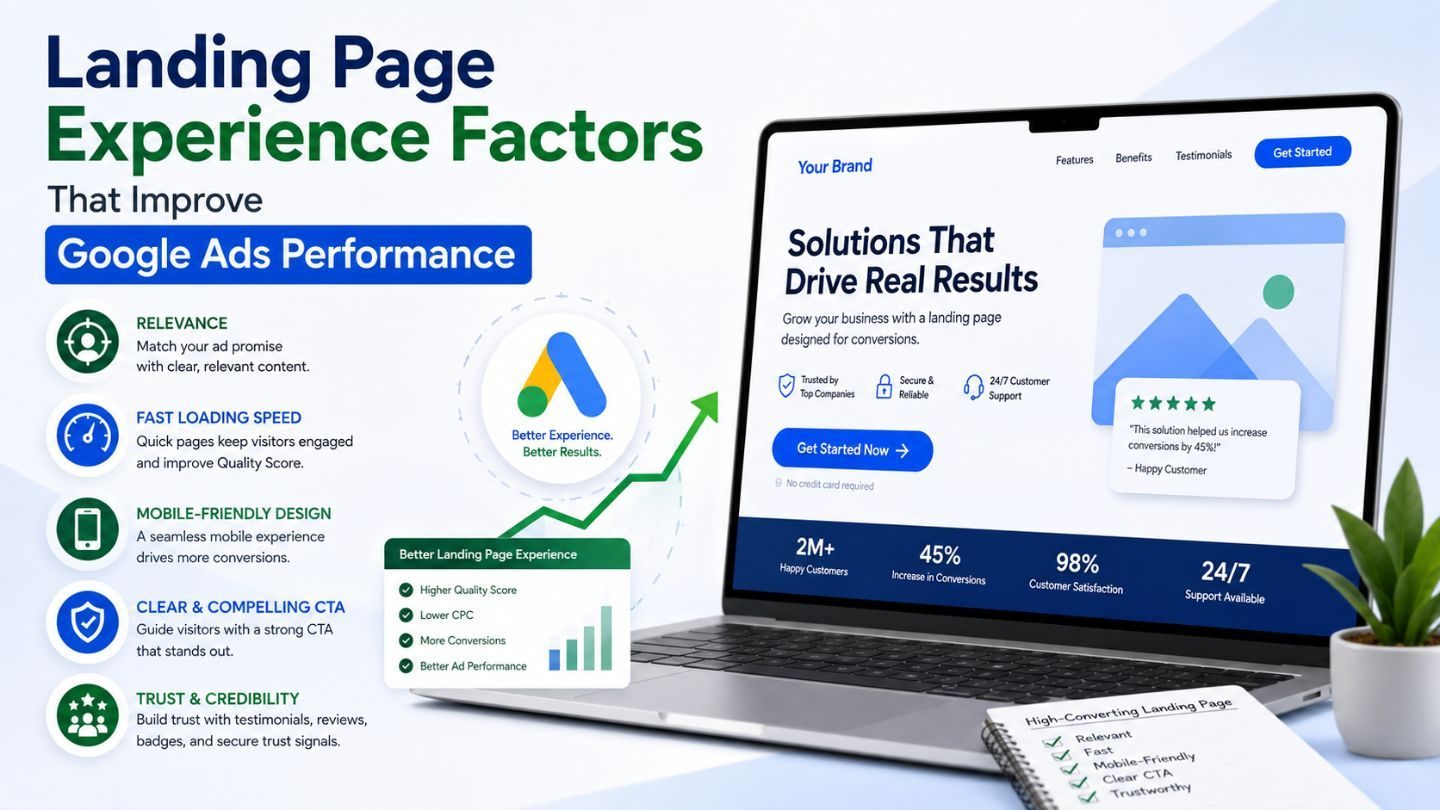
Advertisers spend weeks perfecting keywords and ad copy, then send the click to a page nobody optimized. Google notices. Landing page experience feeds directly into Quality Score, which shapes what you pay per click and whether your ads show at all. Two competitors bidding identically can end up with wildly different costs purely because one page respects the visitor and the other doesn't. This blog outlines what Google actually evaluates, which factors move the needle most, and how to fix the problems that quietly inflate your cost per click.
Key Takeaways
- Landing page experience directly influences Quality Score and cost per click.
- Message match between ad and page matters more than design polish.
- Page speed on mobile is a common and expensive failure point.
- Sending all traffic to a homepage wastes budget systematically.
- Small friction points compound into large conversion losses.
What Google Is Actually Measuring
Google's stated criteria are relevance, transparency, and navigability. Translated into practice, that means the page delivers what the ad promised, it's honest about who you are and what you're offering, and a visitor can find what they need without hunting. None of that is exotic, and most underperforming pages fail on the first point alone.
The financial consequence is what makes this worth caring about. A below-average landing page experience raises your cost per click, sometimes substantially, while a strong one lowers it. You can be outbid by a competitor spending less simply because Google trusts their page more than yours. Understanding what factors influence paid campaign success starts with recognizing that the auction doesn't end when the click happens.
Message Match Is the Biggest Lever
If your ad promises emergency plumbing repairs and the click lands on a general home services page, you've broken the promise before the visitor reads a word. They have to work out whether they're in the right place, and a meaningful percentage won't bother. That's not a design problem; it's a relevance problem, and it's the single most common cause of poor landing page experience.
The fix is unglamorous. The headline should echo the language of the ad. The offer should be the offer, visible without scrolling. If the ad mentions a specific service, price, or location, the page confirms it immediately. This is why homepage traffic performs so poorly for paid; a homepage is designed to serve everyone, which means it serves no specific searcher particularly well.
One Ad Group, One Page
Every distinct intent deserves a distinct destination. The effort of building more pages is repaid in lower costs and higher conversion rates, and the alternative is paying a premium for mismatch indefinitely.
Read More: Types of Landing Pages: Examples & When to Use Each
Speed Is Not a Technicality
Most of your paid traffic is on a phone, frequently on a mediocre connection, and often mid-task. A page taking five seconds to become usable loses a large share of those visitors before they see anything you wrote. They don't complain, they just leave, and you paid for every one of them.
The usual culprits are predictable: oversized hero images, a stack of tracking scripts, fonts blocking render, and a chat widget loading before the content. None of them are hard to fix, and all of them survive for years because nobody tests the page on a real phone. Diagnosing this properly overlaps with broader technical SEO auditing on a budget, since the same tools surface the same problems.
Transparency Costs Nothing and Earns Trust

Google explicitly evaluates whether a page is honest about the business behind it. That means real contact details, a visible privacy policy, clear terms if you're collecting data, and no ambiguity about what happens after someone submits a form. Pages that hide this feel like a trap, and both visitors and Google read them that way.
It matters more than teams assume for conversion, too. Someone about to hand over a phone number is quietly assessing risk. A page with a physical address, a real phone number, and clear language about what you'll do with their details removes that hesitation. A page with a form and nothing else invites it, and the cost shows up in your conversion rate rather than your Quality Score.
Friction You Stopped Noticing
Every extra form field costs you conversions. Every required piece of information a visitor doesn't want to give costs more. Asking for a phone number when email would do, demanding a company name from a consumer, requesting a budget range before you've earned any trust, each one loses a percentage of people who were otherwise ready.
The same applies to navigation. A landing page with a full site menu invites people to wander off before converting. A page with competing calls to action forces a decision instead of an action. Strip the page to the single thing you want the visitor to do, remove everything that isn't helping them do it, and the numbers usually improve immediately. Reviewing where web forms should sit on the page is a cheap test that often surfaces easy gains.
The Offer Is Part of the Page Experience
Sometimes the page is fast, relevant, and honest, and it still doesn't convert. At that point, the problem isn't the page; it's what the page is asking for. A form demanding a phone call as the only next step, when the visitor wanted a price. A quote request from someone still comparing options. A commitment that's simply too large for where they are.
This gets misdiagnosed as a design failure and treated with button colors. The real fix is offering something proportionate to the visitor's readiness, a price range, a comparison, a low-commitment next step that keeps the conversation open. Google's landing page criteria won't flag this; your conversion rate will, and no amount of speed optimization fixes an offer nobody wanted. This is the point where SEO and CRO stop being separate projects and start being the same one.
How to Diagnose Your Own Pages
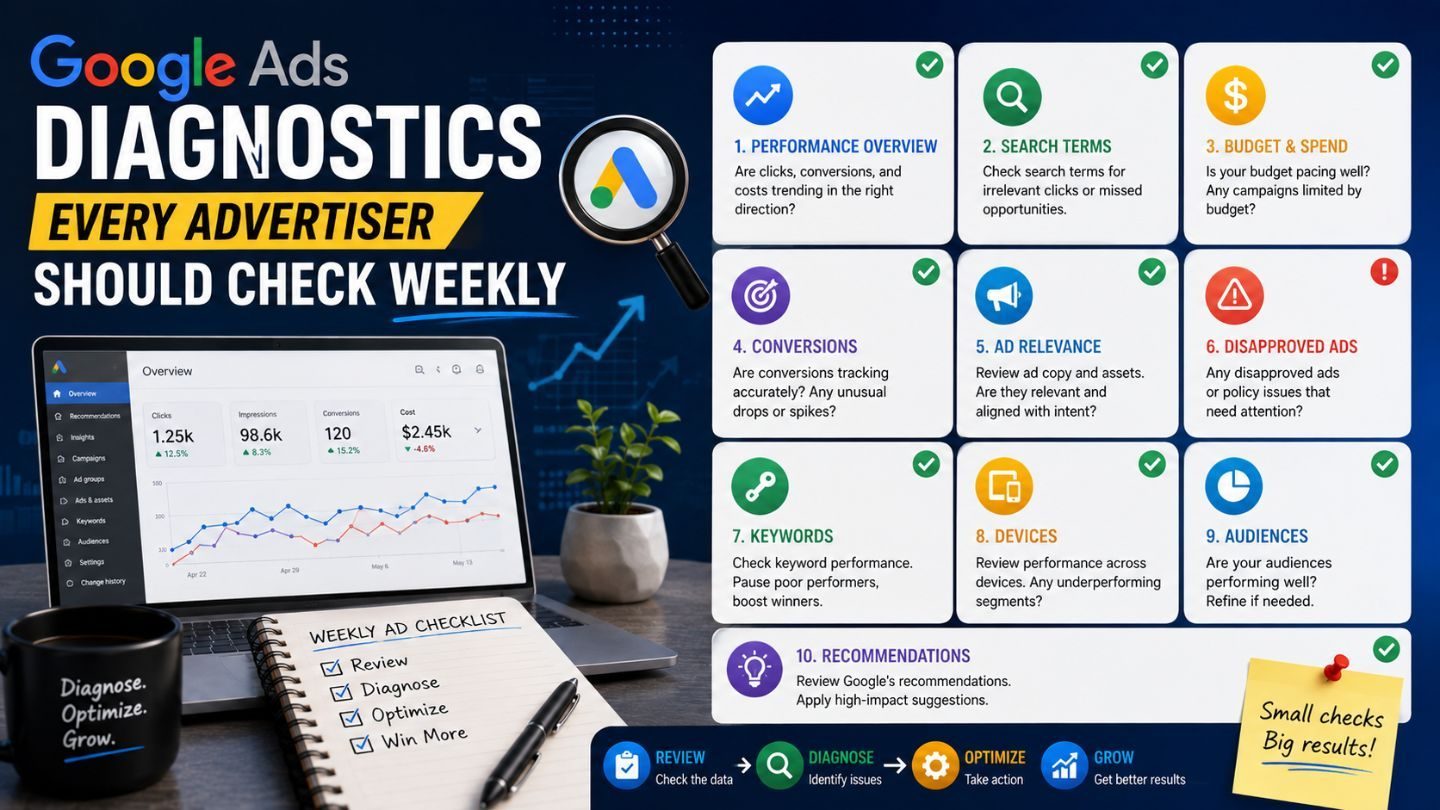
Start where Google tells you. The landing page experience column in Google Ads flags below-average pages directly, and that list is your priority order. Cross-reference it with conversion rate by landing page, and you'll see quickly whether the problem is relevance, speed, or the offer itself.
Then do the thing nobody does: open your own ad on your own phone, on cellular data, and go through the whole flow as a stranger would. The delays, the mismatches, the form that's awkward to fill with a thumb, they become obvious in ninety seconds. Session recordings tell you the same story with more evidence, but the manual test costs nothing and usually finds the biggest problem first.
Why Homepages Are the Most Expensive Shortcut
Sending paid traffic to a homepage feels efficient because the page already exists and someone already approved it. It is the single most expensive shortcut in paid search because a homepage is designed to serve every visitor and therefore addresses none of them specifically.
The cost is doubled. Quality Score suffers because relevance is weak, so you pay more per click. Then the conversion rate suffers because the visitor has to navigate to what they wanted, so you convert fewer of the clicks you overpaid for. Building dedicated pages takes effort once and saves money continuously, which is a trade most accounts refuse for reasons that have more to do with internal workload than economics. If the homepage genuinely has to carry paid traffic, conversion-focused homepage design is the minimum bar it needs to clear.
Mobile Is the Default, Not the Edge Case

Teams still design landing pages on a desktop and check the mobile view afterward, which is exactly backward for paid traffic. Most of your clicks arrive on a phone, often on cellular data, frequently while the person is doing something else. That's the primary case, not the exception.
Designing for it changes things. Forms need to be thumb-friendly. Copy needs to work in a narrow column. The call to action needs to be reachable without a scroll marathon. And the whole thing needs to be usable within two seconds on an average connection. A page that meets that bar works fine on desktop too. The reverse is not remotely true.
Read More: Mobile SEO: Why It Matters More Than Ever
Testing Without Fooling Yourself
Landing page testing goes wrong in predictable ways. Tests were called after two days because the numbers looked good. Tests where three things changed at once. Tests run on traffic volumes too small to distinguish a result from a coincidence. Each produces a confident conclusion that's essentially a guess.
Run one meaningful change at a time, on enough traffic to matter, for long enough to cover a full weekly cycle. That's slower, and it produces answers you can rely on. The alternative is a series of changes based on noise, each one justified by a test that proved nothing, gradually moving your page somewhere nobody intended it to go.
Turning Clicks Into Conversions
Landing page experience isn't a checkbox Google added to make life harder. It's a proxy for whether you're wasting people's time, and it prices your ads accordingly. Match the page to the promise in the ad, make it load fast on a phone, be honest about who you are, and remove every element that isn't helping the visitor take the one action you want. Do those four things and Quality Score improves, costs drop, and conversion rates rise, usually without touching your bids at all.
At The Ocean Marketing, we build PPC programs where the landing page gets the same attention as the campaign structure, because that's where most of the budget quietly leaks. Whether you need help diagnosing underperforming pages, restructuring campaigns around better destinations, or want a free SEO audit to see how your site performs overall, our team can help. Contact us and let's find out what your clicks are actually landing on.