
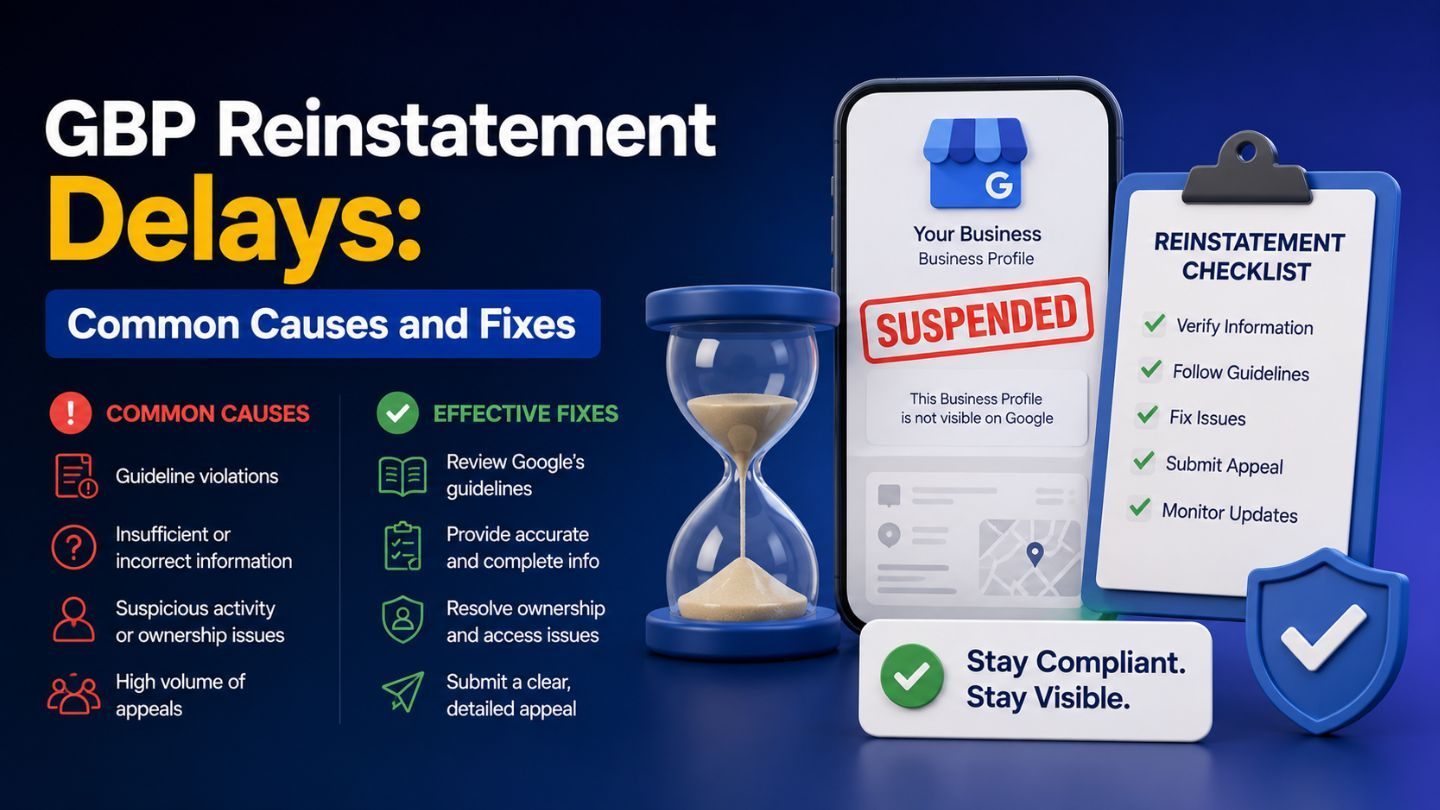
A suspended Google Business Profile can disrupt local visibility, reduce customer trust, and impact lead generation for any business. Delays in the reinstatement process often create confusion because many business owners are unsure about the exact reason behind the suspension or the steps needed to resolve it. This blog outlines the most common causes of GBP reinstatement delays, practical fixes that improve approval chances, and ways businesses can avoid repeated suspensions in the future. Understanding the reinstatement process can help businesses restore their online presence faster and maintain consistent visibility across local search and Google Maps results.
Key Takeaways
- Incomplete or inaccurate business information is one of the leading causes of reinstatement delays.
- Violations of Google Business Profile guidelines can trigger longer review periods.
- Multiple edits during the review process may slow down reinstatement approval.
- Verification issues and missing documents often create unnecessary setbacks.
- Businesses can reduce future suspensions by maintaining profile consistency and compliance.
- Professional profile optimization improves local visibility and long-term ranking stability.
Why GBP Reinstatement Delays Matter for Businesses

When a Google Business Profile is suspended, businesses immediately lose visibility in local search results and Google Maps. Customers may struggle to find accurate contact information, directions, or service details, which can reduce inquiries and revenue opportunities. Since many consumers rely on Google listings before making purchasing decisions, even a short disruption can affect credibility and customer trust.
Reinstatement delays become even more challenging when businesses depend heavily on local search traffic for leads. Companies operating in competitive industries often notice ranking drops that continue even after reinstatement. The longer the delay lasts, the harder it becomes to maintain consistent engagement and customer retention. Understanding the reasons behind these delays allows businesses to respond more effectively and avoid repeating the same issues.
Inaccurate Business Information and Profile Mismatches
One of the most common reasons for delayed reinstatement is inconsistent business information across online platforms. Google expects businesses to maintain accurate details such as business name, address, phone number, and website URL. Even small inconsistencies between the Google Business Profile and external directories can trigger manual reviews or extended verification checks.
Businesses sometimes unintentionally violate guidelines by adding unnecessary keywords to their business name or changing categories too frequently. These adjustments may appear manipulative to Google’s system and increase the chances of suspension reviews taking longer. Keeping all information aligned across directories and avoiding excessive edits during the reinstatement period helps create a smoother recovery process.
Read More: How Google Business Categories Impact Map Visibility
Violations of Google Business Profile Guidelines
Google has strict guidelines regarding eligibility, representation, and business practices on its platform. Profiles suspended for guideline violations often require detailed reviews before reinstatement approval is granted. Common issues include using virtual offices as physical addresses, creating duplicate listings, or selecting misleading service categories that do not accurately represent the business. These issues are often related to the same compliance following reasons Google Business Profile might get suspended, especially when profile details do not meet Google’s business eligibility rules.
Businesses that repeatedly violate guidelines may face extended reinstatement timelines because Google performs additional checks to confirm legitimacy. Many owners submit reinstatement requests without correcting the original issue, which leads to repeated denials or longer waiting periods. Carefully reviewing Google’s policies before submitting a request significantly improves the chances of faster approval.
Delays Caused by Missing Verification Documents
Verification documents play a major role in the reinstatement process, especially when Google requests proof of business legitimacy. Missing, outdated, or unclear documents often result in delayed responses from the support team. Businesses may need to provide utility bills, business licenses, tax certificates, or storefront signage that clearly matches the information displayed on the profile.
Poor-quality uploads can also slow down verification reviews. Blurry images, mismatched addresses, or documents with different business names create confusion during manual assessments. Preparing high-quality and updated documentation before submitting the reinstatement form helps businesses avoid unnecessary back-and-forth communication with support representatives.
Frequent Profile Changes During the Review Process
Many businesses make the mistake of repeatedly editing their profile while waiting for reinstatement approval. Although these updates may seem harmless, frequent modifications can trigger additional reviews and reset parts of the verification process. Changes to categories, addresses, service areas, or business names often signal unusual activity to Google’s automated systems.
Maintaining stability during the review period is essential for a faster resolution. Once a reinstatement request is submitted, businesses should avoid making unnecessary edits unless specifically instructed by Google support. Allowing the review process to proceed without interruptions increases the likelihood of timely reinstatement and reduces the chances of additional suspensions.
The Impact of Duplicate Listings on Reinstatement
Duplicate Google Business Profiles create confusion for both users and Google’s algorithm. When multiple listings exist for the same business location, Google may suspend one or all profiles until ownership and legitimacy are confirmed. Duplicate profiles often happen when businesses relocate, rebrand, or unintentionally create multiple listings over time.
Resolving duplicate listing issues requires careful management rather than deleting profiles immediately. Businesses should identify the correct listing, request merges where appropriate, and ensure all information remains consistent across platforms. Ignoring duplicate profiles can prolong reinstatement delays and weaken local search visibility even after the suspension is resolved.
Read More: How to Remove Duplicate Google Listings You Don’t Own
Service Area Businesses and Verification Challenges
Service area businesses often experience additional complications during reinstatement because they may not operate from publicly visible storefronts. Google requires these businesses to clearly define service areas without displaying inaccurate physical addresses. Businesses using residential addresses incorrectly or listing virtual locations may face repeated verification issues.
Providing clear documentation that demonstrates operational legitimacy is especially important for service area businesses. This may include vehicle branding, business registration records, invoices, or service-related documentation. Following Google’s guidelines carefully helps service area businesses avoid unnecessary delays and maintain compliance during future profile updates.
Slow Support Responses and Manual Review Backlogs
Google support teams manage a large volume of reinstatement requests daily, which can contribute to delayed responses. Profiles flagged for manual reviews often take longer because support agents need to verify multiple aspects of the business before restoring visibility. Industries with higher spam risks, such as locksmiths, contractors, and marketing agencies, may experience additional scrutiny.
Although businesses cannot directly control support queue times, submitting accurate and complete information can reduce unnecessary delays. Following up excessively or submitting multiple reinstatement requests may actually slow the process further. Patience combined with properly organized documentation usually results in better outcomes than repeated resubmissions.
How Businesses Can Prevent Future Suspensions

Preventing future suspensions starts with maintaining profile accuracy and following Google’s policies consistently. Businesses should regularly review their listing details to ensure all information matches their website, social media accounts, and local directories. Avoiding keyword stuffing, fake reviews, and misleading categories also helps reduce suspension risks. Strong citation consistency can also reduce suspension risks because local citation building for Google Map rankings helps keep business information accurate across trusted online platforms.
Long-term profile management is equally important after reinstatement approval. Businesses that monitor updates carefully, maintain strong customer engagement, and keep documentation accessible are less likely to face recurring problems. Establishing a compliant and trustworthy online presence supports stronger local rankings and creates greater stability in Google Maps visibility.
Strengthening Local Visibility After Reinstatement
Once a profile is reinstated, businesses should focus on rebuilding visibility and customer trust. Updating photos, responding to reviews, publishing accurate service information, and maintaining consistent activity can help restore rankings over time. Reinstated profiles may temporarily experience reduced visibility, making optimization efforts even more important during recovery. Businesses dealing with ownership conflicts may also face delays when resolving duplicate Google listings they don’t own, especially if the incorrect listing continues to display outdated information.
Improving local SEO strategies alongside profile optimization helps businesses recover faster from suspensions. Consistent citation management, quality content creation, and customer engagement all contribute to a stronger local authority. Businesses that invest in long-term optimization typically experience better ranking stability and improved visibility in competitive local markets.
Final Thoughts
GBP reinstatement delays can happen for several reasons, including inaccurate business information, guideline violations, duplicate listings, missing verification documents, and excessive profile edits during reviews. Understanding these common issues allows businesses to respond more effectively and improve their chances of faster reinstatement approval. Maintaining profile consistency, following Google’s guidelines carefully, and preparing proper documentation are essential steps toward reducing future suspension risks and protecting long-term local visibility.
At The Ocean Marketing, we help businesses strengthen their local presence through professional Google Maps SEO strategies designed to improve visibility, ranking stability, and customer engagement. We also offer a free SEO audit to identify optimization opportunities and profile issues that may affect local performance. Contact us today to improve your local search presence and build a stronger digital foundation for your business.