

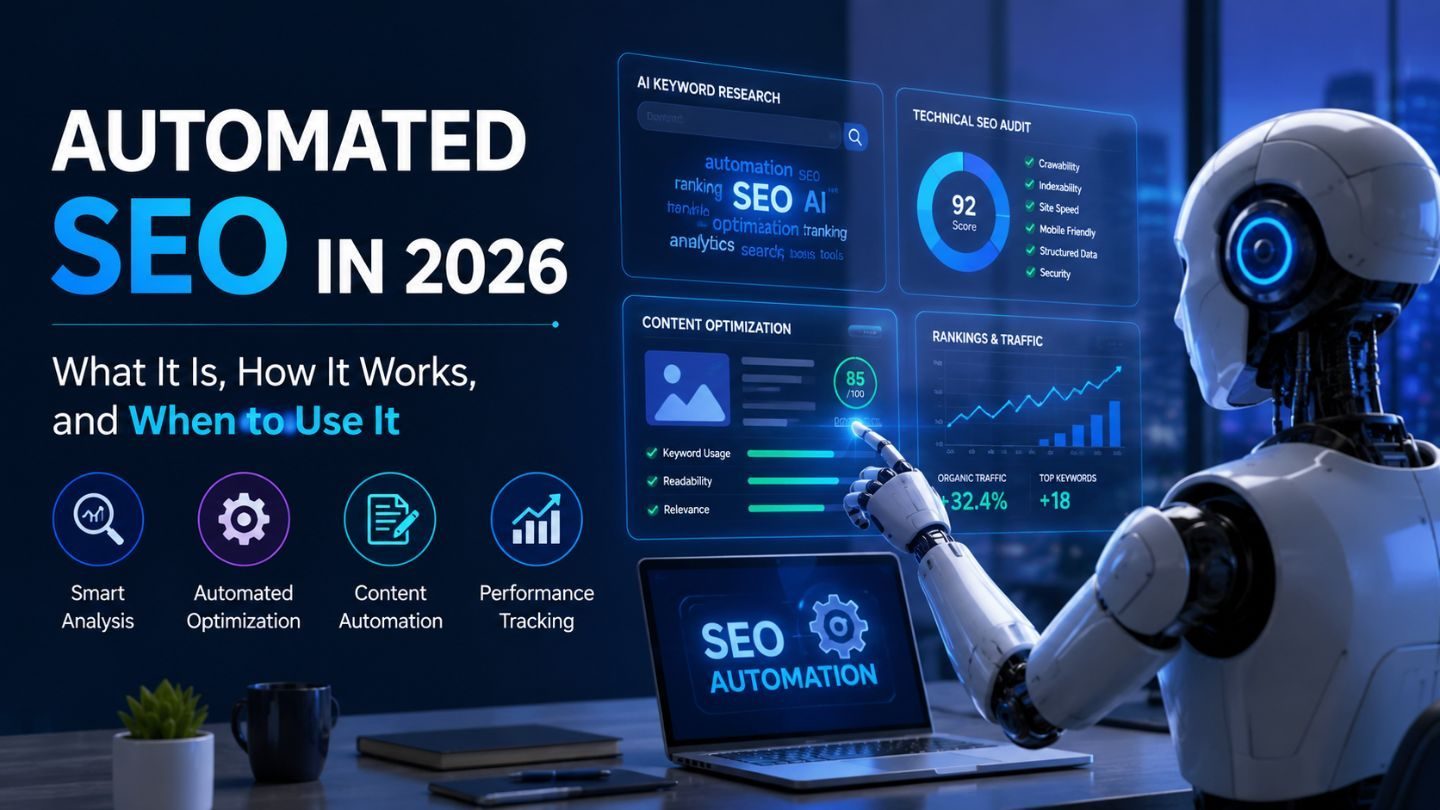
SEO has become more complex than ever. Businesses now manage hundreds or even thousands of pages, monitor constant search engine updates, and compete in increasingly crowded markets. Keeping up manually can be difficult, which is why automated SEO has become a major focus in 2026. Automated SEO helps streamline repetitive optimization tasks while improving efficiency, consistency, and scalability. From technical audits to content recommendations and performance tracking, automation is changing how businesses approach search visibility. In this blog, we’ll discuss what automated SEO is, how it works, where it delivers the most value, and when businesses should consider using it as part of their digital marketing strategy.
Key Takeaways
- Automated SEO uses software and AI to handle repetitive optimization tasks.
- It improves efficiency, consistency, and scalability across websites.
- Automation works best when combined with human expertise and strategy.
- Technical SEO and data analysis are among the biggest areas for automation.
- Businesses with large websites often benefit the most from automated SEO.
- Human oversight remains essential for quality control and decision-making.
What Automated SEO Actually Means in 2026
Automated SEO refers to the use of software, artificial intelligence, machine learning, and workflow tools to perform SEO-related tasks with minimal manual involvement. While automation has existed for years, modern platforms have become significantly more advanced. They can analyze websites, identify issues, generate recommendations, monitor rankings, and even assist with content optimization in real time.
The goal is not to replace SEO professionals. Instead, automation helps reduce the amount of time spent on repetitive tasks so teams can focus on strategy, creativity, and business growth. Rather than manually checking thousands of pages for errors or tracking endless data points, marketers can use automation to handle much of the heavy lifting.
Why Automated SEO Is Becoming More Popular
The volume of SEO data has increased dramatically. Search engines continue refining algorithms, websites continue expanding, and businesses are expected to make faster decisions based on performance insights. Managing all of this manually can become overwhelming. Automation provides a practical solution by helping organizations process large amounts of information quickly and accurately. It reduces the risk of human error while allowing teams to react faster to opportunities and problems. As AI technology improves, automated SEO tools are becoming more accessible, making them attractive for businesses of all sizes.
How Automated SEO Works Behind the Scenes

Automated SEO platforms typically collect information from websites, search engines, analytics platforms, and other data sources. The system then analyzes that information using predefined rules, machine learning models, or AI-driven processes to identify trends, opportunities, and potential issues. Once the analysis is complete, the platform can trigger actions automatically or provide recommendations for review.
For example, a tool might detect broken links, flag missing metadata, identify crawl errors, or suggest internal linking opportunities. Some advanced systems can even automate reporting, performance monitoring, and content optimization workflows. This also connects closely with modern AI keyword research in SEO, where automation helps uncover search intent, keyword gaps, and content opportunities faster.
Common Technologies Powering SEO Automation
Several technologies work together to make modern SEO automation possible. These tools help businesses process large amounts of SEO data efficiently while reducing the time spent on manual analysis and repetitive tasks:
- Artificial intelligence for content analysis and recommendations
- Machine learning for pattern recognition and forecasting
- Web crawlers for technical site audits
- Data analytics platforms for performance tracking
- Workflow automation tools for task management
- API integrations that connect multiple marketing systems
These technologies help businesses manage SEO activities more efficiently while maintaining visibility into performance.
Read More: SEO for AI Crawlers: How LLM Bots Interact With Websites
The SEO Tasks That Benefit Most from Automation
Not every SEO activity should be automated, but many repetitive tasks are excellent candidates. Technical SEO is one of the biggest areas where automation creates value. Automated crawlers can scan thousands of pages, identify technical issues, and prioritize fixes much faster than manual reviews. Reporting and data analysis also benefit significantly from automation. Instead of spending hours creating spreadsheets and gathering information from multiple platforms, marketers can receive automated reports that highlight important trends, traffic changes, and ranking movements. This allows teams to spend more time acting on insights rather than collecting them.
Content-Related SEO Automation
Content workflows are increasingly supported by automation tools. These platforms can help identify keyword opportunities, analyze competitor content, suggest content structures, and evaluate optimization gaps. Some systems can even recommend updates to existing pages based on changing search trends. For content teams, writing content that matches AI prompts is becoming especially important as search behavior shifts toward conversational and AI-assisted results. However, content creation still benefits from human involvement. While AI-generated recommendations can improve efficiency, businesses often achieve better results when experienced writers, editors, and SEO specialists review and refine content to ensure quality, originality, and relevance.
Where Human Expertise Still Matters
Despite impressive advancements, automated SEO is not a complete replacement for human judgment. Search intent, audience understanding, brand positioning, and creative decision-making still require expertise that software cannot fully replicate. Successful SEO strategies involve balancing automation with professional oversight. Tools can identify patterns and opportunities, but people determine priorities, evaluate context, and make strategic decisions. Human input is especially important when developing content strategies, interpreting market changes, and responding to unique business challenges.
When Automated SEO Makes the Most Sense
Automation can be valuable for nearly any business, but certain situations make it especially beneficial. Large websites with hundreds or thousands of pages often gain significant advantages because automation reduces the workload required to manage technical health and content performance. Companies experiencing rapid growth also benefit from automation. As websites expand, manual processes become harder to maintain. Automated systems provide scalability, allowing businesses to manage increasing complexity without dramatically increasing resources or staffing requirements.
Businesses That Commonly Benefit
Automated SEO is often particularly useful for a wide range of organizations that manage large amounts of content, products, or website pages. It helps streamline ongoing optimization efforts while reducing the time spent on repetitive SEO tasks.
Automated SEO is often particularly useful for:
- E-commerce websites with large product catalogs
- Multi-location businesses managing numerous local pages
- Publishers producing large volumes of content
- SaaS companies with extensive resource libraries
- Enterprise organizations operating multiple websites
- Marketing agencies managing multiple client accounts
In these environments, automation helps maintain consistency while reducing administrative workload.
Potential Risks of Over-Automation
While automation offers substantial benefits, relying on it too heavily can create problems. Some businesses make the mistake of treating automation as a complete SEO strategy rather than a supporting tool. This approach can lead to generic content, missed opportunities, or poor decision-making when human review is absent.
Another risk involves blindly following automated recommendations without considering broader business objectives. SEO success depends on context. Recommendations that make sense for one website may not align with another company’s goals, audience, or industry. Human oversight remains critical to ensure automation supports the overall strategy rather than driving it.
Read More: AI vs. Content Marketers: What Still Requires a Human Touch?
What the Future of Automated SEO Looks Like

As AI technology continues advancing, automated SEO tools will likely become even more intelligent and predictive. Instead of simply identifying existing problems, future systems may anticipate ranking fluctuations, forecast content opportunities, and recommend proactive optimization strategies before issues emerge. This shift also makes optimizing websites for Google AI Overviews more important as businesses compete for visibility in AI-powered search experiences.
At the same time, search engines are placing greater emphasis on quality, expertise, and user experience. This means businesses will need a balanced approach. Automation will continue handling repetitive and data-heavy processes, while experienced SEO professionals focus on strategy, creativity, and delivering value to users.
Final Thoughts
Automated SEO is no longer a future concept - it is an essential part of modern search optimization. By streamlining repetitive tasks, improving efficiency, and providing faster insights, automation allows businesses to manage SEO more effectively at scale. The most successful organizations are not replacing people with automation; they are using technology to support smarter decision-making and stronger long-term strategies.
If you're looking to improve your SEO performance while identifying opportunities for growth, The Ocean Marketing can help. Our team combines advanced SEO strategies with practical expertise to create solutions tailored to your business goals. Contact us today or request a free SEO audit to discover how we can help strengthen your online visibility and search performance.