
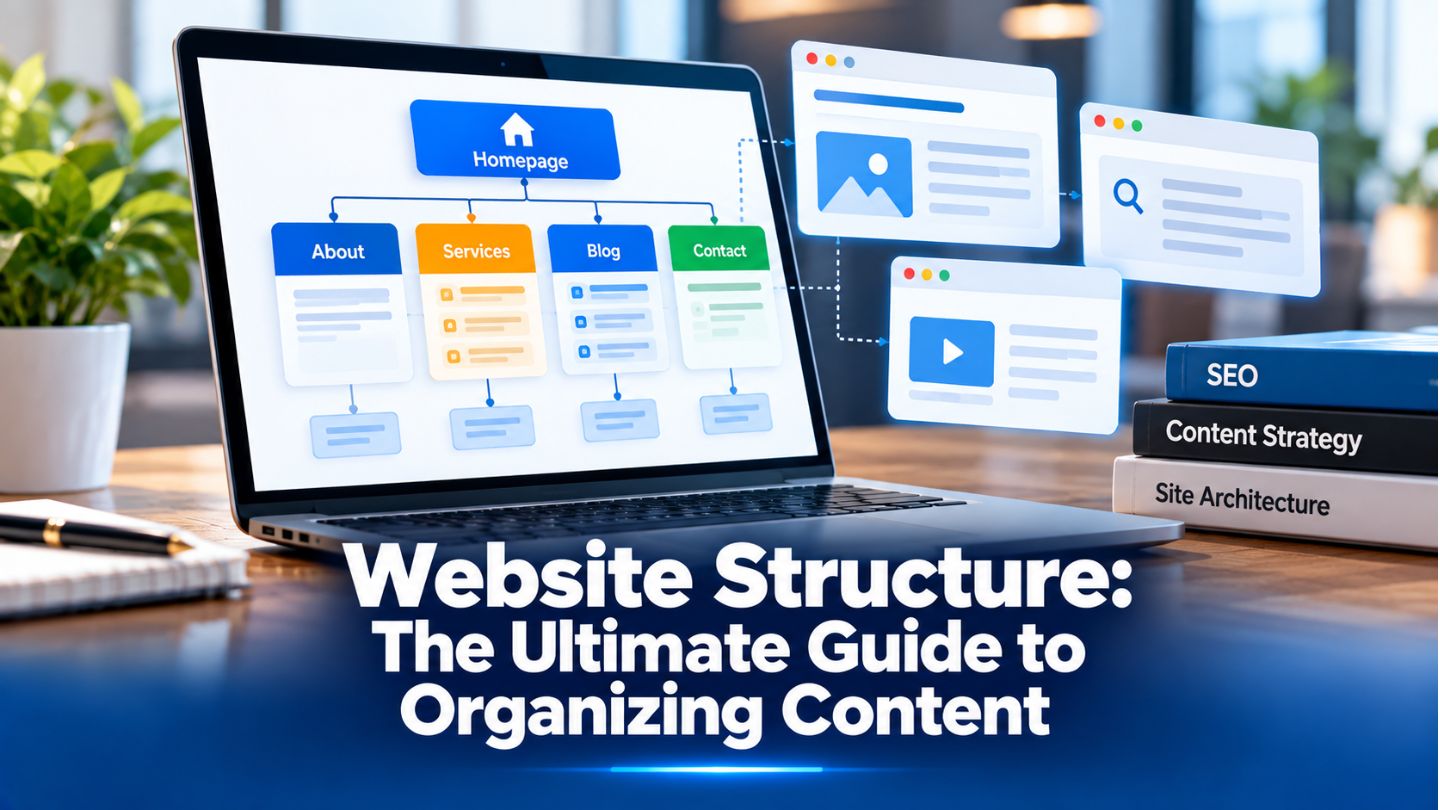
How a website organizes its content shapes almost everything that follows: whether visitors find what they need, whether search engines understand the site, and whether the whole thing can grow without becoming a mess. Website structure is the architecture underneath the design, and getting it right early saves enormous pain later. This guide covers what structure actually means, the principles of organizing content well, and how a sound structure serves both people and search engines at once.
Key Takeaways
- Structure is how content is organized, not how it looks.
- Good structure helps users and search engines in the same ways.
- A clear hierarchy, from general to specific, makes content findable and scalable.
- Internal linking turns separate pages into a connected whole.
- Planning structure early prevents expensive reorganization later.
What Does Website Structure Actually Mean?

Website structure is the way your content is organized and connected: the hierarchy of pages, how they group into sections, and how they link to one another. It is distinct from design, which is how the site looks, because structure is about organization rather than appearance. A beautiful site can have terrible structure, and a plain one can have excellent structure.
This matters because structure is the foundation everything else sits on. Visitors navigate it, search engines crawl it, and new content has to fit into it, so a sound structure quietly supports the whole site while a poor one undermines everything built on top. Getting it right is less visible than design and often more consequential, since it determines whether the site works rather than just how it looks.
Why Does Hierarchy Matter So Much?
Hierarchy matters because it mirrors how people and search engines both move through information, from general to specific. Good structure starts with broad topics at the top and more specific content nesting beneath them in a logical order, which makes content findable because the path to any page follows an understandable logic rather than requiring guesswork.
A useful principle is that any page should be reachable in a few clicks from the homepage, with each click a sensible step deeper into a topic. When the hierarchy is clear, both visitors and search engines understand where they are and what relates to what, which is also what lets the site scale, and it connects directly to choosing between an SEO silo structure and topic clusters.
General at the Top, Specific Below
Organize from broad to narrow. Broad topics at the top, specifics nested beneath, so any page sits in an obvious, findable place.
Why Does Structure Serve Users and Search Engines Together?
Structure serves both because what helps a visitor find content and what helps a search engine crawl it are largely the same thing. A clear hierarchy that makes content easy for a person to find also makes it easy for a search engine to understand, so you are not trading one against the other. Good structure is good for both at once.
This alignment is why structure is such a high-leverage thing to get right. The pages relate to each other in ways that make sense, and that coherence is read as genuine authority on a subject, the way topical gravity and topic relationships shape search visibility.
How Does Internal Linking Tie It Together?
Internal linking ties the structure together by connecting content across the site, turning a collection of separate pages into a genuinely connected whole. Links between related pages help visitors discover more and help search engines understand how your content relates, reinforcing the structure the hierarchy establishes.
Without deliberate internal linking, even a well-organized site can leave its pages isolated, each sitting in its section with little connecting it to related content elsewhere. Building those connections intentionally is what makes the structure function rather than just exist, since internal linking boosts SEO and site authority while guiding readers to related content at the same time.
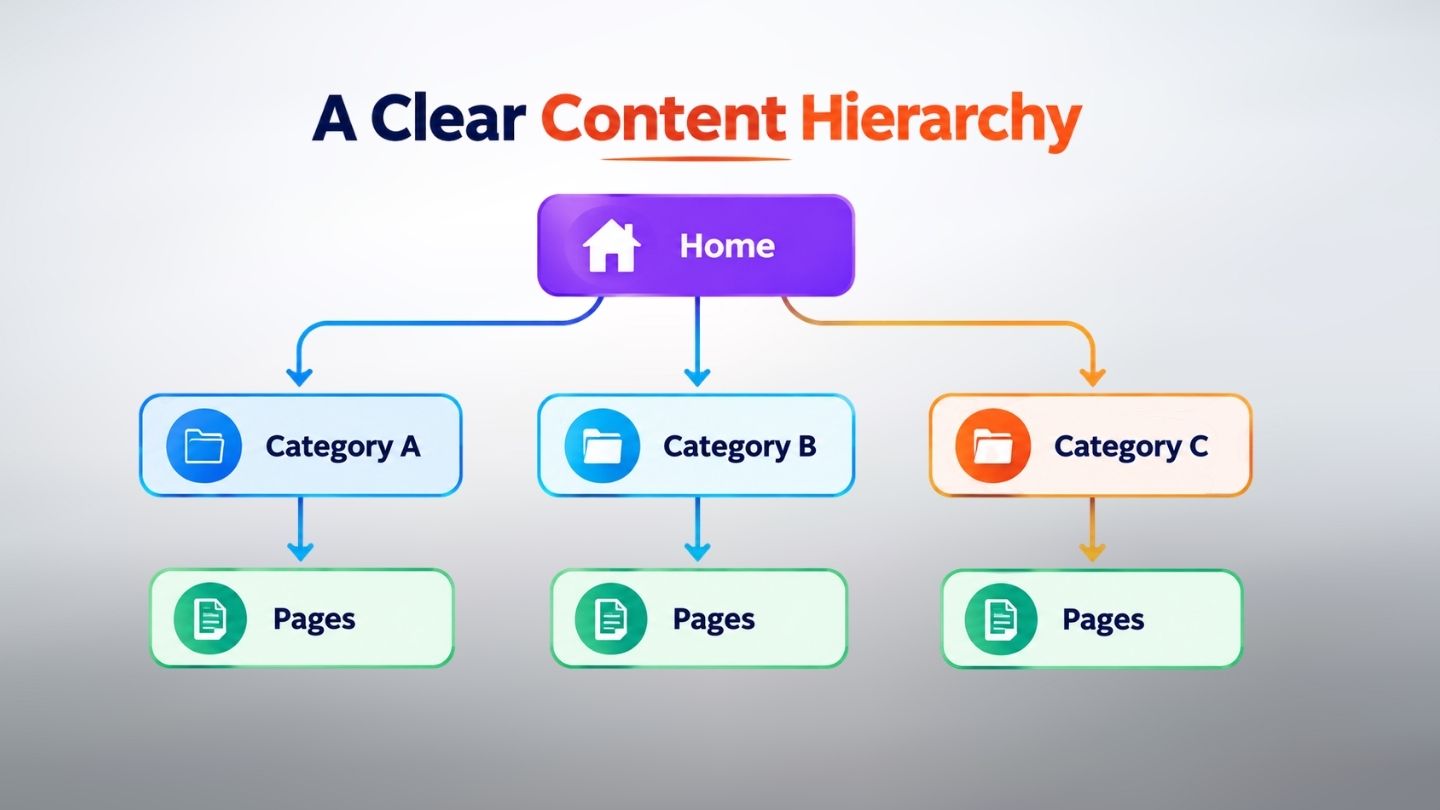
A logical hierarchy keeps every page a few clicks from the homepage and makes relationships clear to users and crawlers.
How Do You Plan Structure for Growth?
You plan for growth by designing categories broad enough to hold future content while specific enough to be meaningful, so new pages have an obvious home. A structure that works for a small site can break as it grows, and a hierarchy that only fits the content you have today forces painful reorganization later when you add more.
Reorganizing a large site after the fact is genuinely costly, risking both user confusion and lost search visibility, which makes thoughtful early planning one of the better investments you can make. Clean, logical URLs reinforce that structure, and whether URL depth still makes a difference in modern SEO is worth settling as you plan the hierarchy rather than after it is built.
Building a Structure That Lasts
Website structure is the organization underneath the design, and it determines whether visitors can find what they need, whether search engines can understand your site, and whether it can grow without becoming a mess. A clear hierarchy from general to specific, internal linking that connects related content, and planning that leaves room for growth are what make a structure serve both people and search engines at once. It is less visible than design and frequently more consequential, so getting it right early is one of the soundest investments in a site that keeps working as it grows.
At The Ocean Marketing, our Website Design Services start with the structure that makes a site work, not just the design that makes it look good. Whether you need a growing site organized, a structure planned to scale, or a free SEO audit to see how your current site performs, our team can help. Contact us and let's build a site organized to last.
Frequently Asked Questions
What is the difference between website structure and design?
Structure is how content is organized, the hierarchy, grouping, and linking of pages. Design is how the site looks. A site can look great and be poorly structured, or look plain and be excellently structured. Structure determines whether the site works; design determines how it appears.
How deep should a website's structure be?
Deep enough to organize content logically and shallow enough that any page is reachable in a few clicks from the homepage. The goal is a clear path from general to specific, not the fewest possible levels or the most. Logical grouping matters more than a fixed number of clicks.
Does site structure actually affect SEO?
Yes. A clear structure helps search engines crawl and understand your content and how pages relate, which supports visibility. The same organization that helps a visitor find content helps a search engine understand it, so good structure serves both at once.