


An XML sitemap tells search engines which pages on your site you want them to know about, and a clean, well-maintained one helps them crawl efficiently. A neglected sitemap full of errors does the opposite, sending mixed signals and wasting the crawl attention your important pages need. This article covers what sitemap hygiene means, the common problems that creep into sitemaps over time, why a messy sitemap hurts, and how to keep yours clean.
Key Takeaways
- An XML sitemap lists the pages you want search engines to know about.
- A clean sitemap contains only valid, indexable pages.
- Common problems include dead URLs, redirects, and non-indexable pages.
- A messy sitemap sends mixed signals and wastes crawl attention.
- Regular maintenance keeps the sitemap helping rather than hindering.
What Does Sitemap Hygiene Mean?

Sitemap hygiene is the practice of keeping your XML sitemap clean, meaning it contains only the valid, indexable pages you actually want search engines to know about. A clean sitemap is an accurate, current list of your important pages, while a dirty one is cluttered with URLs that should not be there, sending confusing signals.
The reason this matters is that the sitemap is a signal to search engines about what you consider important and want crawled. When that signal is clean and accurate, it helps them crawl efficiently; when it is full of errors, it undermines its own purpose. XML sitemaps earn their place in SEO only when they stay clean, which is the whole point of maintaining one.
Why Include Only Pages You Want Indexed?
You include only pages you want indexed because the sitemap should be a curated list rather than a dump of every URL that exists. The valid, canonical, indexable pages that matter belong in it; pages you do not want indexed, pages blocked from indexing, or non-canonical pages do not, because including them sends a contradictory signal about what you actually want.
A page set not to be indexed but appearing in the sitemap tells search engines two opposite things at once, which is exactly the kind of mixed signal to avoid. Keeping the sitemap to only the pages you want found keeps the signal clear, and avoiding the clutter of pages that should not be indexed connects to managing index bloat and how to fix it.
A Curated List, Not a Dump
The sitemap should list only pages you want indexed. If a page does not belong in search results, it does not belong in the sitemap.
What Are the Common Sitemap Problems?
The common problems are consistent: dead URLs pointing to pages that no longer exist, URLs that redirect elsewhere rather than resolving directly, non-indexable pages that should not be listed, and pages blocked by other directives. These creep in as content is added, moved, and removed without the sitemap being updated to match.
Each of these sends a signal that works against the sitemap's purpose, telling search engines to pay attention to pages that are gone, moved, or should not be indexed. Finding and removing them is the heart of sitemap hygiene, and distinguishing which pages genuinely should be indexed rests on understanding the difference between crawling and indexing.
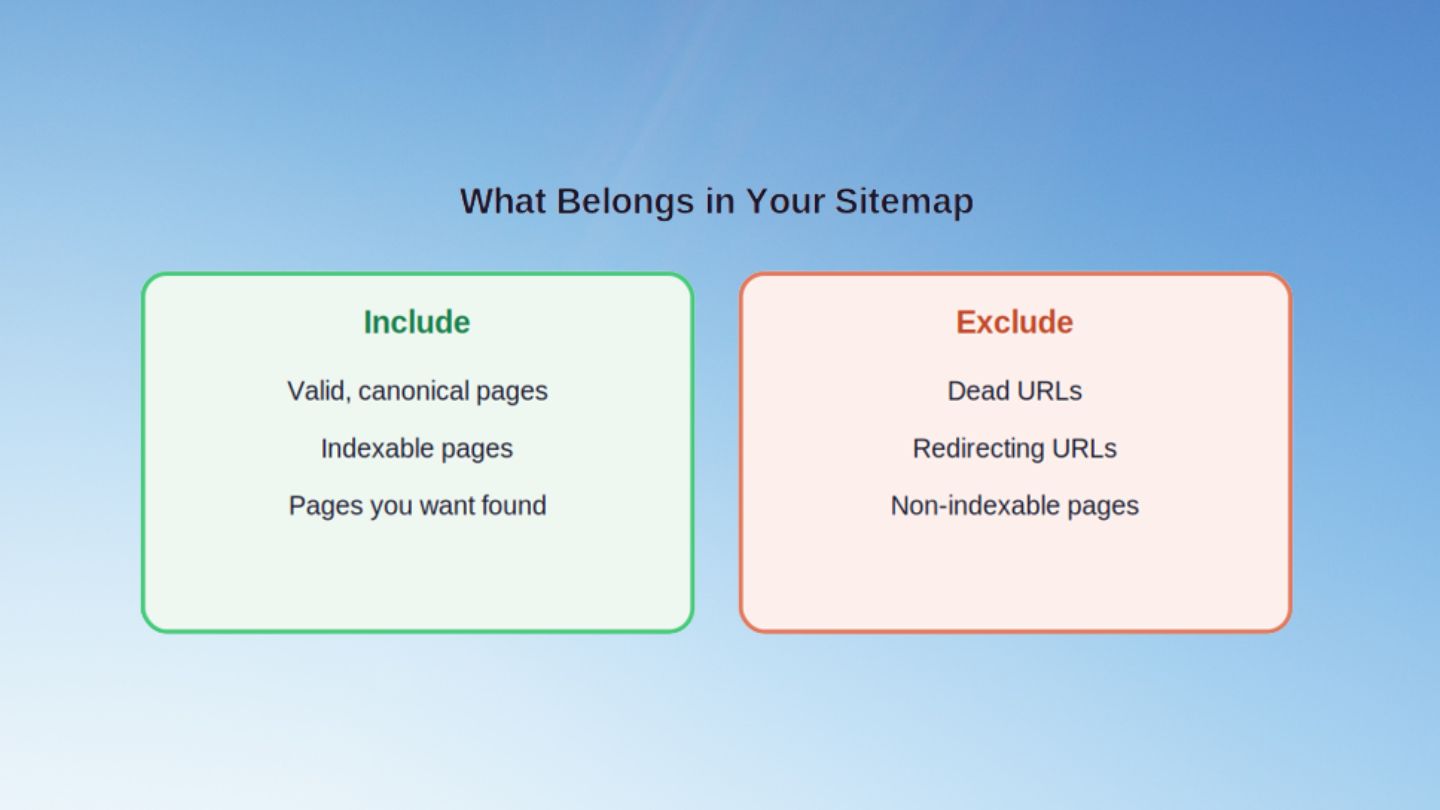
A clean sitemap is a curated list of pages you want indexed, with the clutter removed.
Why Does a Messy Sitemap Hurt?
A messy sitemap hurts because it does active harm rather than being merely untidy. Sending search engines to dead or redirecting URLs wastes the crawl attention that could have gone to your important pages, and listing non-indexable pages sends contradictory signals that muddy their understanding of your site.
This matters most for larger sites where crawl attention is a real constraint, since every wasted crawl on a bad URL is attention not spent on a page that matters. Even for smaller sites, a clean sitemap presents a clearer, more trustworthy picture, which is why its upkeep deserves attention alongside broader URL inspection and diagnosing indexing problems.
How Do You Keep a Sitemap Clean Over Time?
You keep it clean through regular review, because sites change constantly and the sitemap drifts out of accuracy as they do. Pages get added, moved, and removed, and without maintenance the sitemap gradually fills with dead URLs, redirects, and outdated entries that undermine it.
The practical approach is checking the sitemap periodically to confirm it still contains only valid, indexable pages, and correcting it when it does not. For sites that change often, ensuring the sitemap updates accurately as content changes, whether automatically or through regular review, keeps it reliable. Submitting it through Google Search Console lets you monitor how it is processed and catch errors that have crept in.
Keeping Your Sitemap Search-Engine Friendly
XML sitemap hygiene means keeping your sitemap a clean, accurate list of only the valid, indexable pages you want search engines to know about. Common problems- dead URLs, redirects, non-indexable pages, and creep as sites change- and a messy sitemap waste crawl attention and send mixed signals rather than helping. Keeping it clean through regular maintenance ensures the sitemap does its job of helping search engines crawl your important pages efficiently. It is modest, ongoing work that keeps a useful tool useful rather than letting it quietly turn into a liability.
At The Ocean Marketing, we help businesses get the technical SEO fundamentals right, including the sitemap and crawl signals that shape how search engines understand a site. Whether you need a neglected sitemap cleaned up, crawl and indexing issues diagnosed, or a free SEO audit to see where your site currently stands, our team can help. Contact us and let's keep your site's signals clean.
Frequently Asked Questions
What should an XML sitemap include?
Only the valid, canonical, indexable pages you want search engines to know about. It should be a curated list of your important pages, not a dump of every URL. Pages you do not want indexed, blocked pages, and non-canonical pages do not belong in it.
Can a bad sitemap hurt SEO?
Yes. A sitemap full of dead URLs, redirects, and non-indexable pages wastes crawl attention on pages that do not matter and sends mixed signals about what you want indexed. That works against the sitemap's purpose, which is to help search engines crawl your important pages efficiently.
How often should I update my XML sitemap?
Often enough that it stays accurate as your content changes. For frequently changing sites, that means automatic updates or regular review; for stable sites, a periodic check is enough. The goal is a sitemap that always reflects only the pages you currently want indexed.