
In the ever-evolving world of Search Engine Optimization (SEO), title tags remain a fundamental element for enhancing visibility and click-through rates (CTR) in search engine results pages (SERPs). However, with Google's continuous updates and the integration of AI-generated Overviews, it's crucial to stay informed about the optimal title tag length in 2026.
Understanding Title Tags and Their Importance
A title tag is an HTML element that specifies the title of a webpage. It appears as the clickable headline in SERPs and is displayed in browser tabs. Title tags serve as a concise summary of a webpage's content, helping both users and search engines understand the page's relevance to a particular query. In 2026, title tags continue to play a significant role in SEO. They influence rankings, CTR, and user engagement. Additionally, they now serve as a primary "anchor" for Google’s AI agents to determine if your content should be cited as a source in automated answers.
A well-optimized title tag should include primary keywords, maintain readability, and align with search intent to attract qualified traffic and improve overall visibility. Therefore, crafting an effective title tag is essential for any successful SEO strategy. While CTR is still a primary goal, 2026 has introduced the Zero-Click Reality. With Gemini providing answers directly in the SERP, your title tag now serves as a Source Citation Anchor. Even if a user doesn't click, appearing as the authoritative "source" in an AI Overview builds brand trust and "mindshare" that influences the user's next search.
The Evolution of Title Tag Length Guidelines

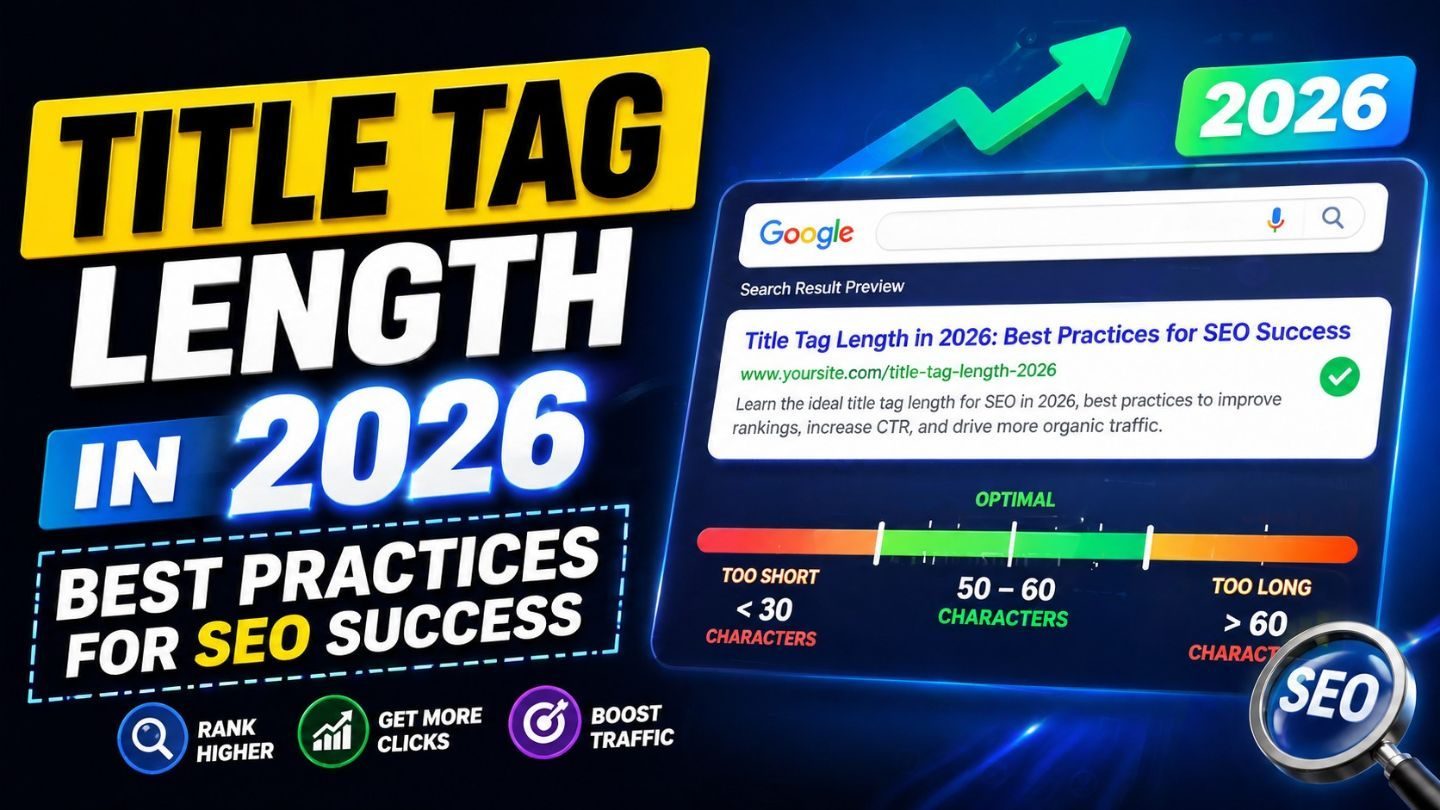
Historically, SEO experts recommended keeping title tags between 50 and 60 characters to ensure they fit within the display limits of most search engines. However, in 2026, the standard has shifted from character counts to pixel-based width. Because search engines display titles in a fixed container (roughly 580 to 600 pixels on desktop), wide characters like 'W' or 'M' take up more space than narrow ones like 'i' or 'l'.
Recent studies and analyses suggest that title tags up to 70 characters can be effective on mobile; the safe zone for universal display is now under 580 pixels. The key is to ensure that the title tag is concise, descriptive, and aligned with the user's search intent. Additionally, focusing on primary keywords near the beginning, maintaining readability, and ensuring brand consistency can further improve performance. Dynamic titles tailored for SERP variations also enhance click-through rates and overall visibility.
Google's Approach to Title Tags in 2026
Google's algorithms have become more sophisticated, and the way it handles title tags has evolved. In August 2021, Google introduced changes that led to more frequent rewriting of title tags in SERPs. Factors influencing this include:
- Pixel Width: Title tags exceeding 580 pixels may be truncated or rewritten with an ellipsis (...) by Google's display algorithm.
- Keyword Stuffing: Overuse of keywords can lead to unnatural titles, prompting Google to modify them.
- Boilerplate Language: Generic phrases, such as "Home" for homepage titles, may be replaced by more descriptive content.
- H1 Alignment: If your title tag differs significantly from your page's H1 header, Google is now more likely to ignore your meta title and display your H1 instead to ensure transparency for the user
Despite these changes, Google still considers the original title tag for ranking purposes. Therefore, it's crucial to craft title tags that are both user-friendly and optimized for search engines.
Read more: Google Ranking Factors That Really Matter
Best Practices for Crafting Effective Title Tags

To ensure your title tags are effective in 2026, consider the following best practices:
- Pixel-Perfect Length: Aim for title tags between 50 and 60 characters, but always verify they stay under 580 pixels. This ensures your full message is visible across all devices.
- Keyword Placement: Place primary keywords towards the beginning of the title tag to align with user search intent and improve relevance.
- Clarity and Relevance: Ensure the title accurately reflects the content of the page and addresses the user's query. Avoid vague or misleading titles.
- Avoid Keyword Stuffing: Use keywords naturally within the title. Overloading the title with keywords can lead to penalties and reduced CTR.
- Unique Titles: Each page on your website should have a unique title tag to prevent internal competition and improve content differentiation.
- Branding & Site Names: With Google now displaying Site Names prominently above the title on mobile, avoid wasting space by repeating your brand name if it is already identified as your site name.
- AI-Ready Hooks: Use "How-to" or "Data-driven" phrasing that makes your title attractive to Google’s AI Overviews, increasing the chance of being featured in the top AI snippet.
- Forensic Consistency (H1 to Meta Alignment): To minimize "Zero-Click" abandonment, ensure your Title Tag and H1 are nearly identical. In 2026, Google’s AI agents perform a "transparency check." If your title promises one thing and the H1 delivers another, the AI will likely skip citing your page as a source in the Gemini overview.
Owning the "Zero-Click" Real Estate
In 2026, over half of search journeys end without a click because the AI provides the answer. A forensic approach to title tags ensures you aren't just "fighting for the click," but owning the answer.
- Semantic Precision: Use your title tag to define the Entity clearly (e.g., instead of "SEO Tips," use "SEO Strategy: 2026 AI-First Framework").
- The Citation Bonus: Brands cited in AI Overviews see a 35% lift in trust-based direct traffic later in the conversion funnel. Your title tag is the "business card" the AI shows to the user.
Tools to Optimize Title Tags
Utilizing tools can help optimize your title tags for better performance:
- Pixel-Based Previewers: Tools like Zyppy or Conductor are now standard. In 2026, we no longer rely on character counts alone; these tools show you exactly where the 580-pixel cutoff occurs so your primary "hook" is never truncated.
- AI Insight Tools: Platforms like SurgeGraph or Gemini for Workspace are game changers this year. They can analyze your title to predict its "source-worthiness"- essentially telling you if your title is clear enough for Google to cite it in an AI Overview.
- Google Search Console (GSC): This remains your most powerful "truth" tool. In 2026, you should specifically monitor your Performance Report for pages with high impressions but low Click-Through Rates (CTR). If you rank well but aren't getting clicks, your title tag likely needs a more compelling, intent-driven hook to compete with AI summaries.
- SERP Preview Tools: Specialized tools like Meta Length Checker allow you to visualize your title and meta description together, ensuring your branding doesn't clash with the new Site Name display feature on mobile.
- Pixel Width Checkers: Tools like Cloudinary or Portent allow you to preview your title in pixels rather than just character counts.
Conclusion
In 2026, optimizing title tags remains a vital component of a successful SEO strategy. While the ideal title tag length may vary depending on specific circumstances, following best practices- such as prioritizing pixel width over character counts and optimizing for AI-driven SERPs- can greatly improve your website’s visibility and click-through rates in search results. Additionally, avoiding keyword stuffing and crafting unique, relevant titles for each page will ensure your content stands out while aligning with search engine guidelines.
If you're looking to elevate your SEO strategy and drive more organic traffic in this AI-driven era, working with a professional SEO agency like The Ocean Marketing can provide the forensic audits and data-driven strategies needed to succeed. Our expert team specializes in SEO services that boost rankings, enhance user engagement, and ultimately support your business's digital growth. To get started on improving your site's SEO performance, contact us today and let us help you achieve your online goals.