

The H1 tag is the main heading of a page, and despite being one of the most basic on-page elements, it is frequently misunderstood or misused. Getting it right is simple once you know the principles, and getting it wrong quietly undermines both clarity for readers and understanding for search engines. This article covers what the H1 is, the best practices for using it well, how it differs from the title tag, and the common mistakes to avoid.
Key Takeaways
- The H1 is the main heading that tells readers and search engines the page topic.
- Use one clear, descriptive H1 per page.
- The H1 should reflect the page's actual content and primary topic.
- It works alongside the title tag but is not the same thing.
- Common mistakes include multiple H1s and vague, generic headings.
What Is the H1 Tag?

The H1 tag is the main heading of a page, the most prominent heading that tells both visitors and search engines what the page is about. It sits at the top of the content hierarchy, above subheadings like H2 and H3, and it is usually the first thing a reader sees that frames what they are about to read.
Its job is clarity: a good H1 immediately communicates the page's primary topic to a person and signals it clearly to a search engine. Because it carries this framing role, it is one of the elements search engines look at to understand a page, and it is distinct from the title tag, so knowing what a title tag is and how to optimize your SEO titles helps you use each in its proper place.
Why Use Only One H1 Per Page?
You use one H1 per page because a single clear heading establishes the page's main topic unambiguously. Multiple H1s muddy that signal by suggesting the page has several competing main topics, which confuses the hierarchy for both readers and search engines, while one descriptive H1 frames the page cleanly.
That single H1 should be descriptive enough that someone reading only it understands what the page covers. A vague or generic H1 wastes the opportunity to frame the page, while a specific one does real work in setting expectations and signaling the topic. The principle is simple: one H1, clear and descriptive, reflecting what the page is genuinely about.
One Page, One Main Heading
A page has one main topic, so it should have one H1. Multiple H1s split the signal and confuse the hierarchy.
Why Should the H1 Match the Actual Content?
The H1 should match the content because a heading that oversells or misrepresents the page creates a mismatch between expectation and reality, which frustrates readers and undermines trust. An H1 should accurately reflect what the page actually contains, not promise something the content does not deliver.
When the H1 and content align closely, readers get what they expected, and search engines find that the content confirms what the heading promised, reinforcing understanding of the page. This alignment is part of the broader clarity behind entity SEO and how Google understands content context, where a page that clearly signals its subject is easier to place correctly.
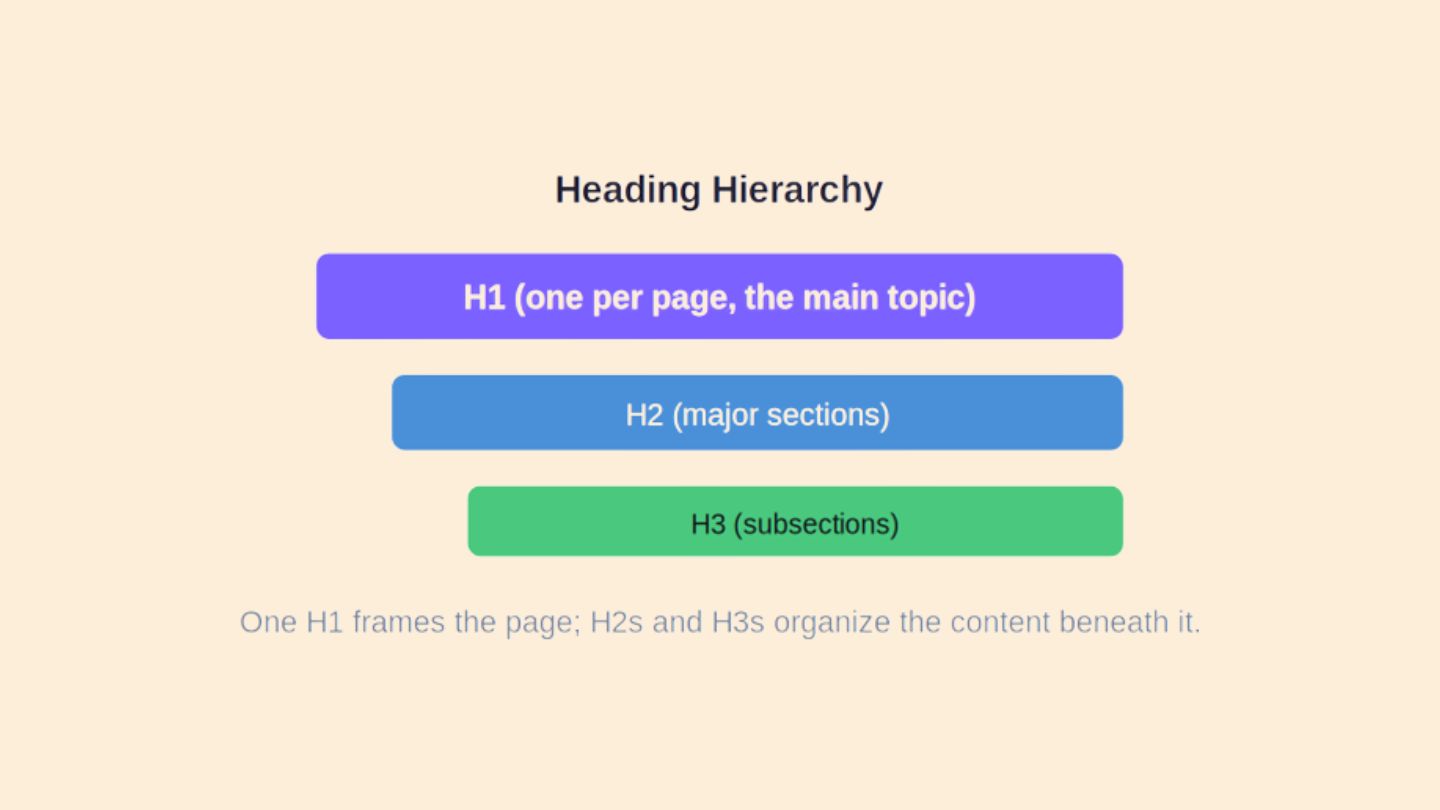
The H1 is the top of a genuine hierarchy, not just the biggest text on the page.
How Does the H1 Relate to the Title Tag?
The H1 and the title tag are related but distinct, and confusing them is common. The title tag is what appears in search results and browser tabs, while the H1 is the heading on the page itself. They can be similar, and they serve different contexts, one for the search result listing and one for the page experience.
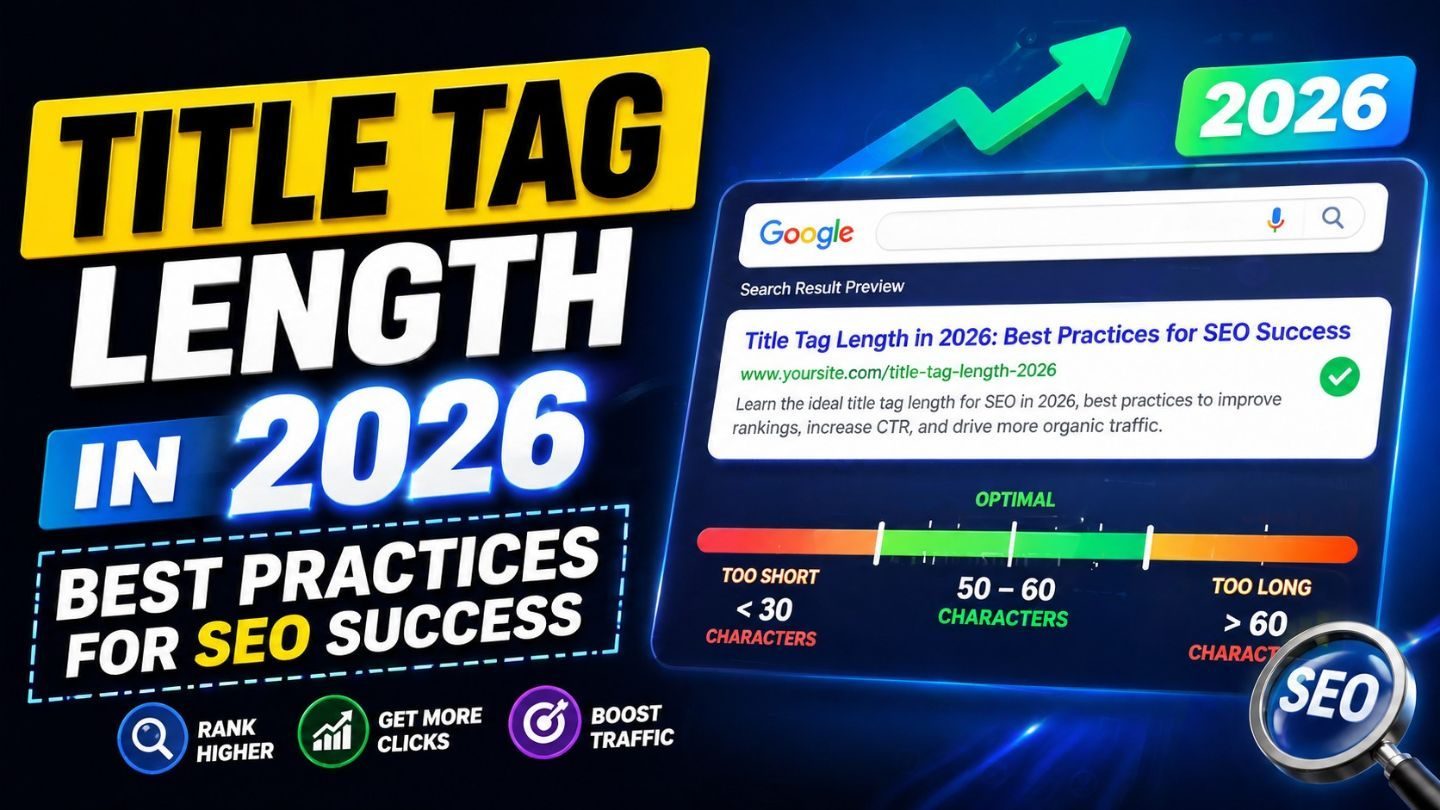
Because they serve different purposes, they do not have to be identical, and there is often good reason for them to differ slightly, each optimized for its context. The title tag has its own constraints, and title tag length and best practices cover what changes when a title has to fit a search result.
What Are the Common H1 Mistakes to Avoid?
The common mistakes are straightforward to avoid once you know them: using multiple H1s, which splits the topic signal; using a vague or generic H1, which wastes the chance to frame the page; skipping the H1 entirely, which leaves the page without a clear main heading; and stuffing the H1 with keywords, which reads badly and helps nothing.
The through-line in all these mistakes is losing the H1's core purpose, which is to clearly and naturally communicate the page's main topic. A single, clear, descriptive, natural H1 that reflects the content avoids all of them at once, and keeping that purpose in mind makes the best practices obvious rather than a list of rules to memorize.
Getting a Simple Element Right
The H1 tag is the main heading that frames a page for both readers and search engines, and getting it right is simple: use one clear, descriptive H1 per page that accurately reflects the actual content. Understand that it works alongside the title tag but serves a different context, and avoid the common mistakes of multiple H1s, vague headings, or keyword stuffing. It is one of the most basic on-page elements, and it does real work, so the small amount of care it requires is worth it on every page you publish.
At The Ocean Marketing, we help businesses get the SEO fundamentals right, including the on-page basics that quietly shape how well a site performs. Whether you need your on-page elements audited, issues across your pages fixed, or a free SEO audit to see where your site currently stands, our team can help. Contact us and let's get the fundamentals working for you.
Frequently Asked Questions
Can a page have more than one H1?
It is best to use one. A single H1 clearly establishes the page's main topic, while multiple H1s suggest competing topics and muddy the signal for readers and search engines. If you need more headings, use H2 and H3 for sections and subsections beneath the single H1.
Should the H1 and title tag be the same?
They can be similar, and they do not have to be identical. The title tag appears in search results and browser tabs; the H1 is the heading on the page. Because they serve different contexts, there is often good reason to optimize each slightly differently.
Does the H1 tag still matter for SEO?
Yes. The H1 is one of the elements search engines use to understand what a page is about, and it frames the page for readers too. It is a basic element that does real work, so a single clear, descriptive H1 is worth getting right on every page.