
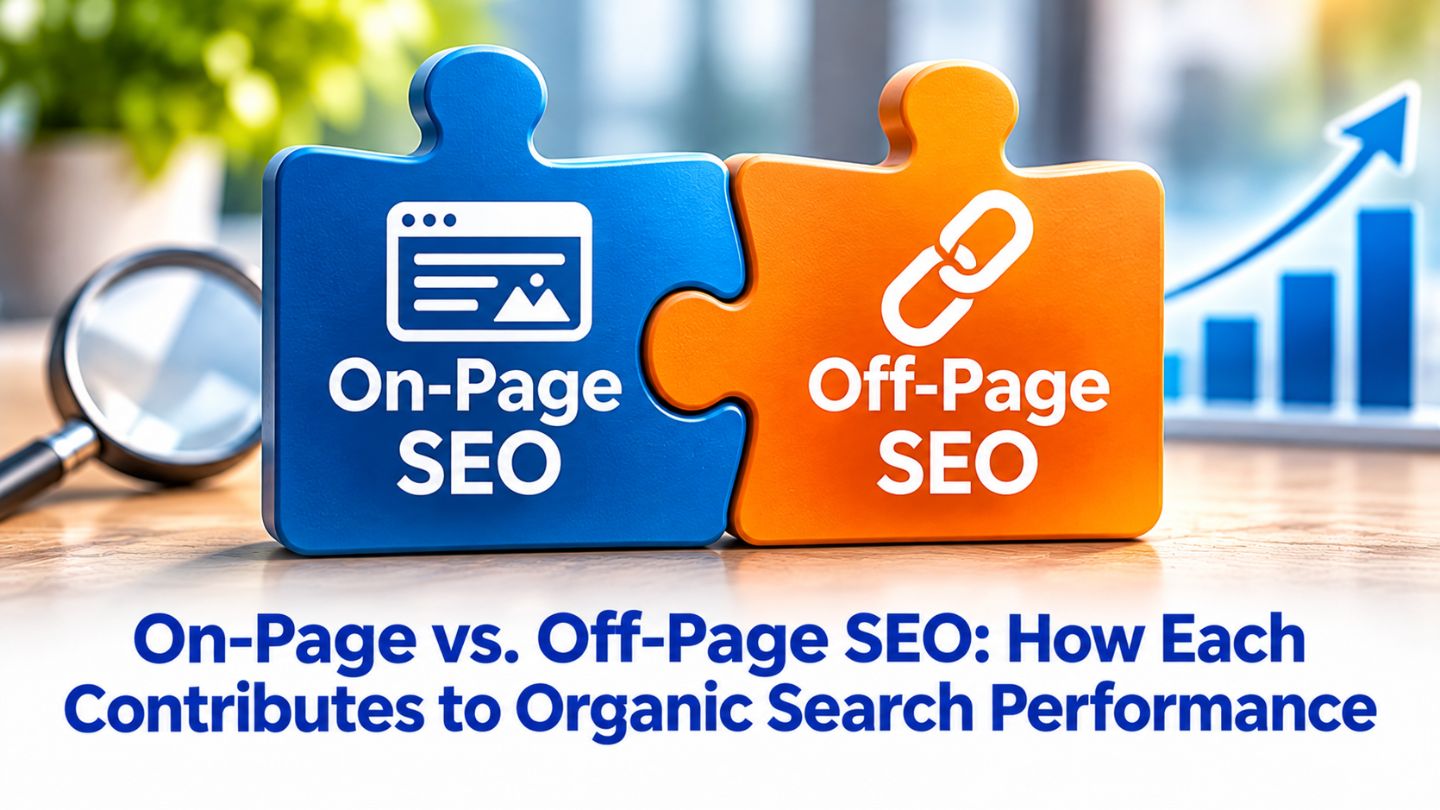
Organic search performance rarely comes down to one tactic. Some of the work happens on your own pages, where content, structure, and technical details tell search engines what each page is about. The rest happens elsewhere on the web, where links, mentions, and reviews show how others view your business. Both matter, and they work best together. In this blog, we'll discuss the difference between on-page and off-page optimization, what each one includes, how each influences rankings, and how to balance them for steady organic growth.
Key Takeaways
- On-page optimization covers everything you control on your own website.
- Off-page optimization includes links, mentions, and signals from other sites.
- On-page work helps search engines understand relevance.
- Off-page signals help establish authority and trust.
- The strongest results come from balancing both over time.
What On-Page Optimization Covers
On-page optimization includes every element on a page that you can directly control. That starts with content: answering the searcher's question clearly, covering the topic thoroughly, and using the language people actually search with. Headings organize the information, while images, examples, and formatting make the page easier to read, more useful, and more likely to keep visitors engaged.
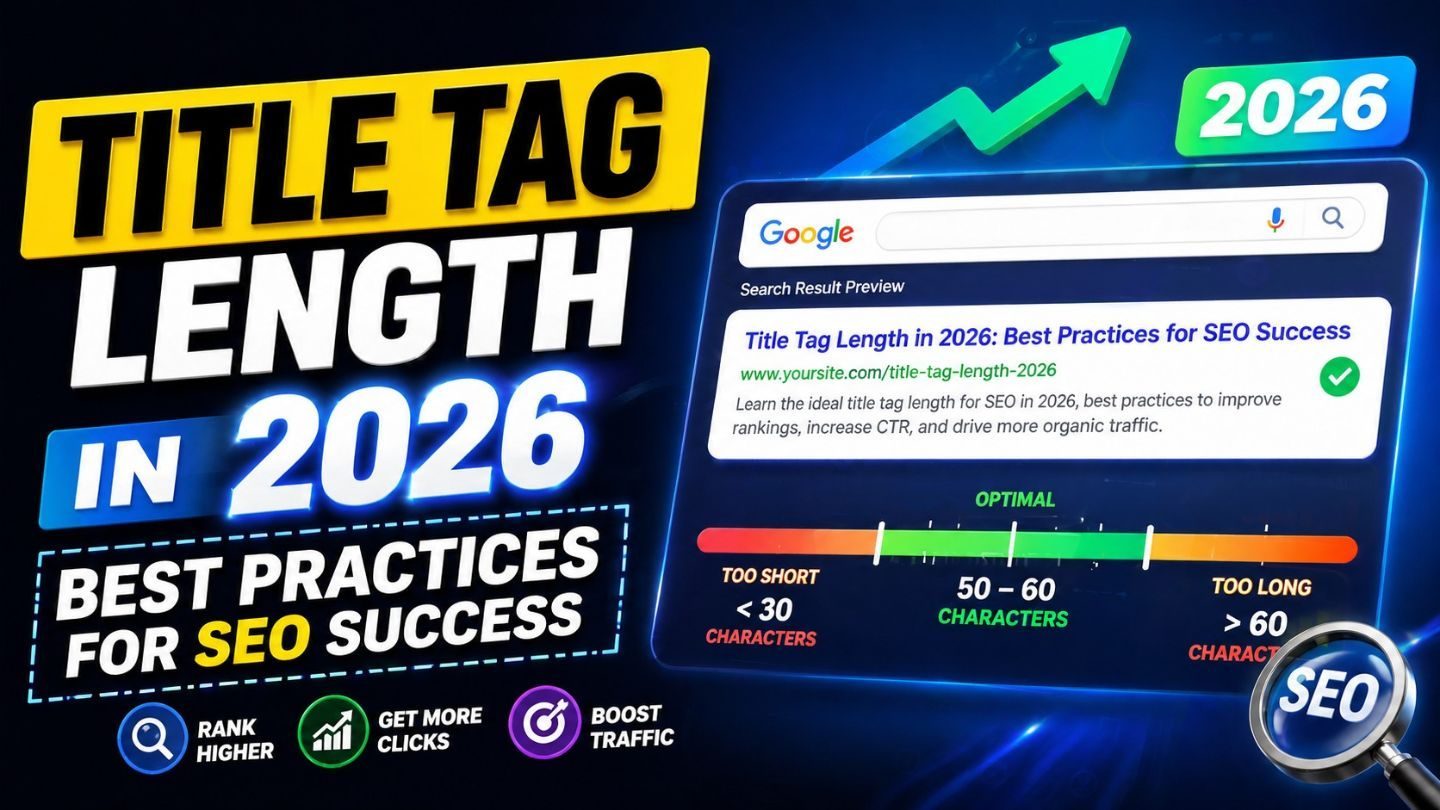
Behind the visible content sit other important signals. Title tags and meta descriptions shape how a page appears in search results, and a solid title tag guide helps each title reflect the page's main topic clearly. Clean URLs, descriptive image alt text, structured data, and fast loading times all help search engines understand and trust the page.
What Off-Page Optimization Covers
Off-page optimization refers to signals that come from outside your website. Backlinks are the best known, since links from relevant, trusted sites act like votes of confidence. Brand mentions, reviews, local citations, and coverage in industry publications also shape how both people and search engines perceive a business and its expertise.
Not all links pass the same value. Links marked with attributes like nofollow or sponsored are treated differently from standard editorial links, and the distinction between DoFollow and NoFollow backlinks explains why a natural mix of both is normal for healthy websites. The focus should always be on earning links that make sense for readers, not on manipulating numbers.
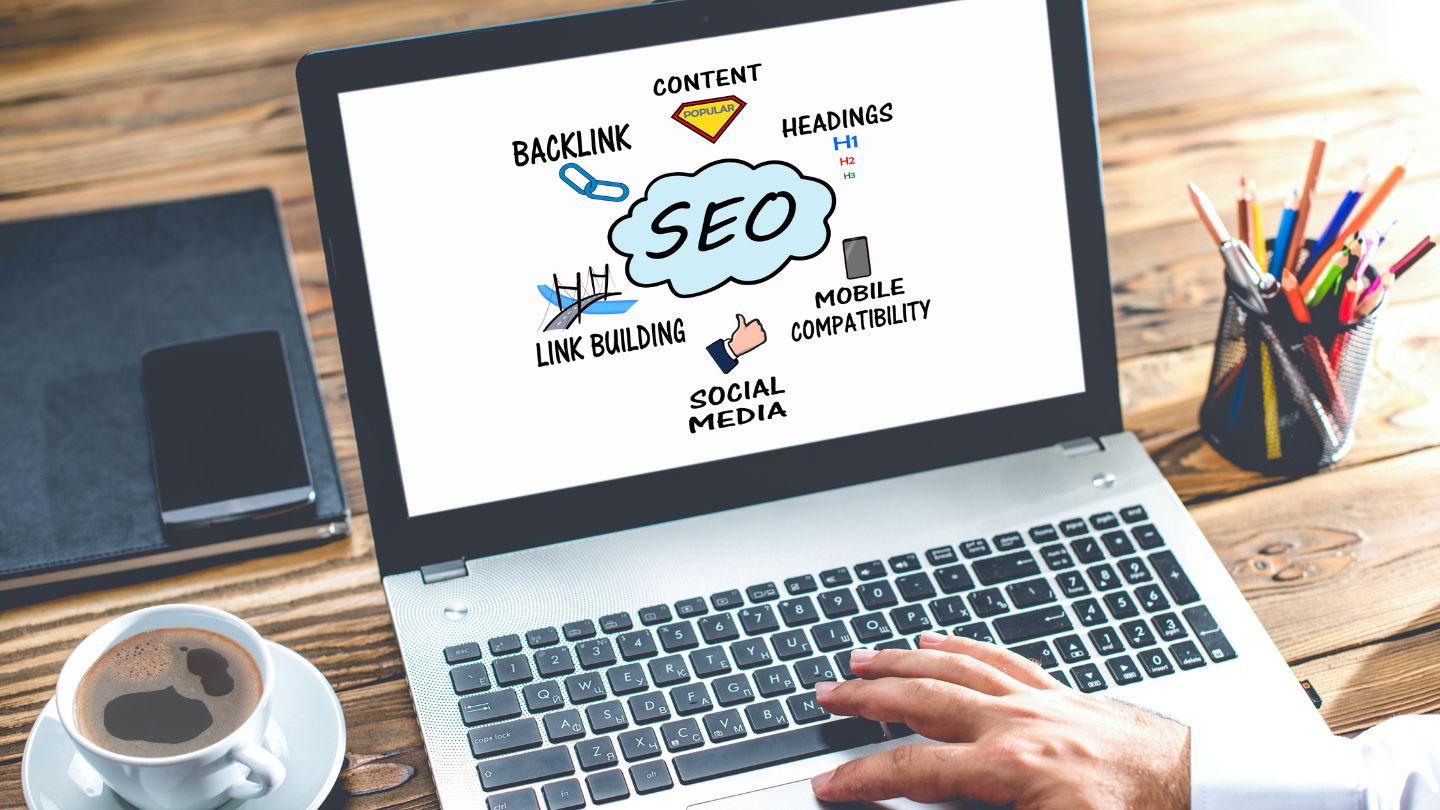
- On-page: content, headings, title tags, internal links, and page speed.
- Off-page: backlinks, brand mentions, reviews, and digital PR.
- Both: aim to match searcher intent and earn trust.
On-page work builds relevance, while off-page signals build authority and trust.
Read More: What Is Search Intent and Why Is It Important for SEO?
How On-Page Work Builds Relevance
Search engines need to understand what a page is about before they can rank it. On-page optimization provides that understanding by aligning content with search intent, using clear topic signals in titles and headings, and covering related questions that searchers commonly ask. A page that clearly answers the query gives search engines confidence that it deserves to be shown.
Internal links strengthen relevance across the whole site. Linking related pages together helps search engines discover content, understand topic relationships, and share authority between pages. That is how internal linking boosts authority within a website, turning individual pages into a connected resource rather than isolated articles competing on their own.
How Off-Page Signals Build Authority
Relevance alone is not always enough to rank in competitive spaces. When many pages cover the same topic well, off-page signals help search engines decide which sources are most trustworthy. A page with links from respected sites in its industry often has an advantage over a similar page that has earned no outside recognition at all.
Authority also extends beyond links. Mentions of a brand in news articles, industry roundups, and online discussions signal that a business is known and relevant, which is why brand mentions matter for visibility. Reviews and local citations play a similar role for local businesses, reinforcing trust with both customers and search engines.
Where Technical Health Fits In
Technical factors are often grouped with on-page work because they happen on your own site, though some teams treat them as a separate category. Crawlability, indexing, mobile usability, page speed, secure connections, and clean site architecture all determine whether search engines can access and evaluate pages properly. Without a sound technical foundation, both on-page and off-page efforts lose much of their impact.
Technical problems can quietly undo good work. A well-optimized page that is blocked from indexing, slow to load, or buried deep in the site structure may never perform as expected. Regular technical reviews catch these issues early, ensuring that content improvements and earned links translate into actual visibility rather than wasted effort. Much of this rests on the difference between crawling and indexing, since a page has to be reached before it can be evaluated.
Balancing Both for Stronger Organic Performance
The right balance depends on where a site stands. New websites often need strong on-page foundations first, since earned links will not help pages that fail to match search intent. Established sites with solid content but limited authority may gain more from off-page efforts, especially in competitive industries where many pages already cover the same topics well.
In practice, the two support each other. Great content earns links more easily, and authority helps that content reach more people. Reviewing rankings, traffic, and backlink growth on a regular basis shows which side needs more attention, allowing teams to shift focus as the site matures instead of relying on a single tactic.
The right focus depends on how your content and authority compare.
Common Mistakes on Both Sides
On-page mistakes are often simple but costly. Thin pages that barely answer the question, duplicate titles across many pages, keyword-stuffed headings, and important pages buried several clicks deep all make it harder for search engines to understand and value a site. Fixing these basics usually delivers faster gains than chasing advanced tactics.
Off-page mistakes tend to involve shortcuts. Buying links, joining link schemes, or chasing large numbers of low-quality directory listings can lead to devalued links or penalties. A slower approach built on genuinely useful content, real relationships, and earned mentions takes more patience but produces authority that lasts.
Read More: Toxic Backlinks: How to Find and Remove Them
How to Prioritize Your Next Steps

Deciding where to start is easier with a quick review of both sides. Check whether key pages clearly match search intent, have unique titles, and load quickly, then compare your backlink profile with competitors that outrank you. If competitors have similar content but far stronger authority, off-page work deserves attention. If your pages lag behind in depth or clarity, on-page improvements come first.
A simple plan keeps progress steady. Improve a handful of important pages each month, fix technical issues as they appear, and pursue a consistent stream of earned links and mentions. Tracking results over several months shows which actions move the needle, helping you adjust the balance between on-page and off-page work as the site grows.
Measuring Progress on Both Fronts
Each side of optimization has its own signals of progress. On-page improvements often show up as better rankings for target keywords, higher click-through rates from search results, and longer engagement on updated pages. Tracking these numbers before and after changes helps confirm which updates are working and which pages need another look.
Off-page progress is measured through the growth and quality of referring domains, brand mentions, and reviews. Rankings on competitive terms often improve gradually as authority builds, so patience matters. Looking at both sets of metrics together gives a fuller picture of organic performance than either one could provide on its own.
Bringing On-Page and Off-Page Together

On-page optimization shapes what your pages say and how they are built, helping search engines understand relevance. Off-page optimization shows how the rest of the web views your business, building authority and trust. Supported by a healthy technical foundation, the two work together, and balancing them based on your site's needs leads to steadier, more sustainable organic search performance.
At The Ocean Marketing, we help businesses strengthen both their on-site foundations and their reputation across the web. Our SEO team handles content optimization, technical improvements, and authority building, and a free SEO audit can show where your site stands today. Contact us to build a balanced strategy for long-term organic growth.
Frequently Asked Questions
Which is more important, on-page or off-page optimization?
Both matter. On-page work helps search engines understand relevance, while off-page signals build authority. The right focus depends on your site's current strengths and competition.
Is technical optimization part of on-page work?
It is often grouped with on-page efforts since it happens on your website, though some treat it as a separate category covering crawlability, speed, and indexing.
How long do on-page and off-page efforts take to show results?
On-page changes can show effects within weeks once pages are recrawled, while off-page authority usually builds gradually over months.