
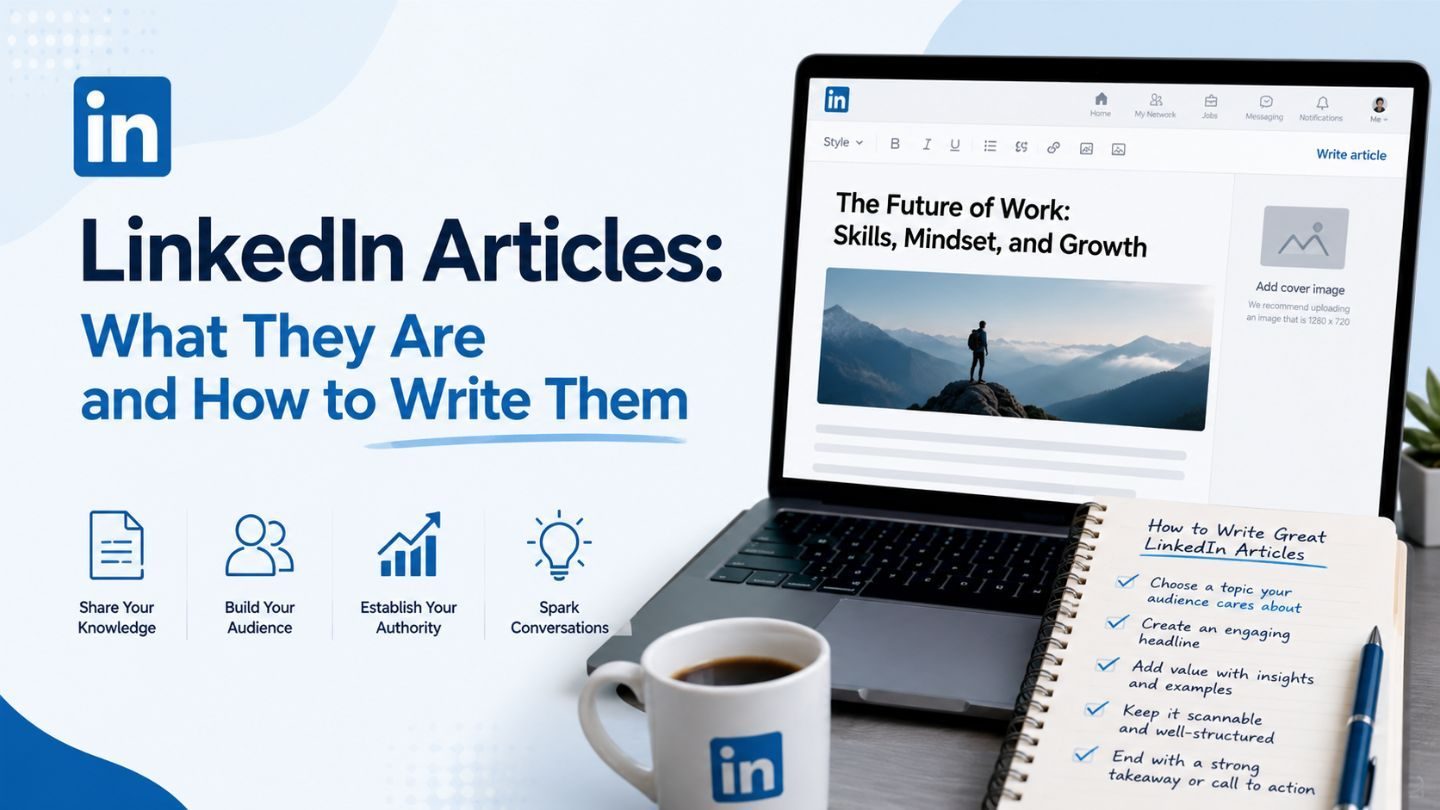
LinkedIn is no longer just a platform for networking and job searching. It has evolved into a powerful content hub where professionals, business owners, and marketers can share ideas, build credibility, and reach a targeted audience. One of the most valuable content formats available on the platform is LinkedIn Articles. Unlike regular posts, articles allow you to explore topics in greater depth and position yourself as a trusted voice in your industry. In this blog, we’ll discuss what LinkedIn Articles are, why they matter, and how to create articles that engage readers and strengthen your professional presence.
Key Takeaways
- LinkedIn Articles are long-form content pieces published directly on LinkedIn.
- They help establish authority and showcase expertise.
- Well-structured articles can increase visibility and engagement.
- Choosing relevant topics is essential for attracting the right audience.
- Clear formatting and valuable insights improve readability.
- Consistency can help build a stronger professional brand over time.
What Makes LinkedIn Articles Different From Regular Posts?
LinkedIn offers several content formats, but articles stand apart because they allow for detailed storytelling and thought leadership. While standard posts are ideal for quick updates, announcements, or brief opinions, articles give you the space to explain concepts, share experiences, and provide meaningful insights. They function more like blog posts and can include headings, images, links, and rich formatting.
Another advantage is longevity. Regular posts often disappear from feeds quickly, while articles can continue attracting views long after publication. This makes them particularly useful for professionals who want to create evergreen content that supports their personal brand or business objectives.
Why LinkedIn Articles Matter for Professionals and Businesses?

Publishing articles on LinkedIn can help you build credibility within your industry. When readers consistently see valuable content from you, they begin to associate your profile with expertise and trustworthiness. This can lead to stronger professional relationships, networking opportunities, and increased visibility among decision-makers.
For businesses, LinkedIn Articles provide an opportunity to educate prospects rather than directly sell to them. Sharing useful information can demonstrate industry knowledge, answer common questions, and encourage readers to learn more about your products or services. Over time, this approach helps establish authority and encourages meaningful engagement.
Benefits of Publishing LinkedIn Articles
LinkedIn Articles offer several advantages beyond simple content creation. They can support both personal branding and broader marketing goals when used strategically.
Some key benefits include:
- Increased professional visibility
- Improved industry authority
- Better audience engagement
- Opportunities for networking
- Long-term content value
- Enhanced profile credibility
These benefits become even more significant when articles are published consistently and aligned with the interests of your target audience. Consistent publishing also helps you stay visible in your professional network and build stronger audience trust over time.
Read More: Content Velocity: How Publishing Speed Impacts SEO
Choosing Topics People Actually Want to Read
The success of a LinkedIn Article often begins with topic selection. Writing about subjects that matter to your audience increases the chances of attracting readers and generating engagement. Instead of focusing solely on what you want to say, think about what your audience wants to learn, solve, or understand better. Start by identifying common industry challenges, emerging trends, practical tips, or lessons learned from personal experience. Articles that offer real value tend to perform better because readers appreciate content that helps them make decisions, improve skills, or gain new perspectives.
Topic Ideas That Work Well on LinkedIn
Certain types of content consistently resonate with professional audiences because they offer practical value, fresh perspectives, or actionable insights. Some of the most effective LinkedIn Article topics include:
- Industry trends and predictions
- Career development advice
- Leadership insights
- Marketing and business strategies
- Case studies and success stories
- Lessons learned from experience
The key is ensuring the topic aligns with your expertise and audience interests rather than simply following popular trends. When your content reflects genuine knowledge and addresses real audience concerns, it is far more likely to generate meaningful engagement.
How to Structure a LinkedIn Article for Better Engagement
A well-organized article keeps readers interested from beginning to end. Most professionals scan content before deciding whether to read it fully, so structure plays an important role in maintaining attention. Clear headings, logical flow, and concise sections make content easier to digest. A strong article also depends on content sequencing that keeps readers moving smoothly from one idea to the next.
Begin with a compelling introduction that explains why the topic matters. Follow with informative sections that deliver value and support your main points. Use subheadings where appropriate to break up content and guide readers through the article. A strong conclusion should reinforce the main message and encourage further thought or discussion.
Writing an Introduction That Grabs Attention
Your introduction determines whether readers continue or move on. Rather than starting with broad statements, focus on a challenge, trend, question, or insight that immediately connects with your audience. This creates relevance and encourages readers to keep going. Effective introductions are usually concise but impactful. They establish context, explain the importance of the topic, and set expectations for what readers will learn. A strong opening creates momentum that carries through the rest of the article. For a deeper look at opening sections, writers can improve results by learning how to write intro sections that reduce bounce rate without making the content feel forced.
Keep the Content Valuable and Easy to Read
One of the most common mistakes in LinkedIn Articles is making content unnecessarily complicated. Readers appreciate clear explanations and practical insights more than technical jargon or lengthy explanations. Focus on delivering information in a straightforward and conversational manner. Short paragraphs, clear language, and real-world examples improve readability.
Whenever possible, support your ideas with personal experiences, data, or observations that make the content more relatable and credible. Readers are more likely to engage with content that feels authentic and useful. This is where skimmable content that boosts engagement and conversions can make LinkedIn Articles easier to read and more useful for busy professionals.
Using Visual Elements to Improve Readability
Large blocks of text can be intimidating, even when the content is valuable. Including visual elements helps break up the page and creates a more enjoyable reading experience. LinkedIn allows authors to incorporate images, graphics, and other media within articles. Visuals should support the content rather than distract from it. Charts, screenshots, diagrams, and relevant images can help explain concepts more effectively and maintain reader interest throughout the article. A balanced combination of text and visuals often produces stronger engagement.
Optimize Articles for Search and Discovery
Although LinkedIn Articles are designed for people, basic optimization techniques can help improve discoverability. Including relevant keywords naturally within headings and body content can increase the likelihood of appearing in LinkedIn searches and external search engine results. Avoid keyword stuffing or forcing phrases into the content. Instead, focus on naturally incorporating terms your audience might use when searching for information on the topic. Clear headlines, descriptive subheadings, and informative content contribute to both user experience and visibility.
Encourage Engagement After Publishing

Publishing the article is only part of the process. To maximize reach, share it with your network and encourage discussion. Engagement signals such as comments, reactions, and shares can increase visibility and help your content reach a wider audience. Responding to comments is equally important. Meaningful interactions show that you value reader input and can help strengthen relationships within your professional community. Over time, consistent engagement can help build a loyal audience that actively follows your content.
Common Mistakes to Avoid
Many LinkedIn Articles fail to gain traction because they overlook basic content principles. Understanding common mistakes can help improve the quality and effectiveness of your articles.
Some issues to avoid include:
- Writing overly promotional content
- Using weak or generic headlines
- Creating long blocks of text
- Ignoring audience needs
- Publishing without proofreading
- Failing to promote the article afterward
Avoiding these mistakes can significantly improve reader experience and increase the impact of your content. Taking the time to refine your writing, focus on audience needs, and present information clearly can make a noticeable difference in how readers respond. Even small improvements in structure, readability, and promotion can help your articles reach more people and generate stronger engagement over time.
Read More: Content Chunking 101: How to Break Down Your Content for Better Engagement
Final Thoughts
LinkedIn Articles provide an excellent opportunity to share knowledge, demonstrate expertise, and build meaningful professional connections. When combined with valuable insights, strong structure, and a clear understanding of your audience, they can become a powerful part of your content strategy. Whether you're a business owner, marketer, consultant, or industry professional, investing time in thoughtful article creation can deliver long-term benefits.
At The Ocean Marketing, we understand the impact that high-quality content writing can have on visibility, engagement, and brand growth. If you'd like to strengthen your content strategy and uncover new opportunities to improve your online presence, take advantage of our free SEO audit. Contact us today to learn how we can help create content that supports your business goals and attracts the right audience.