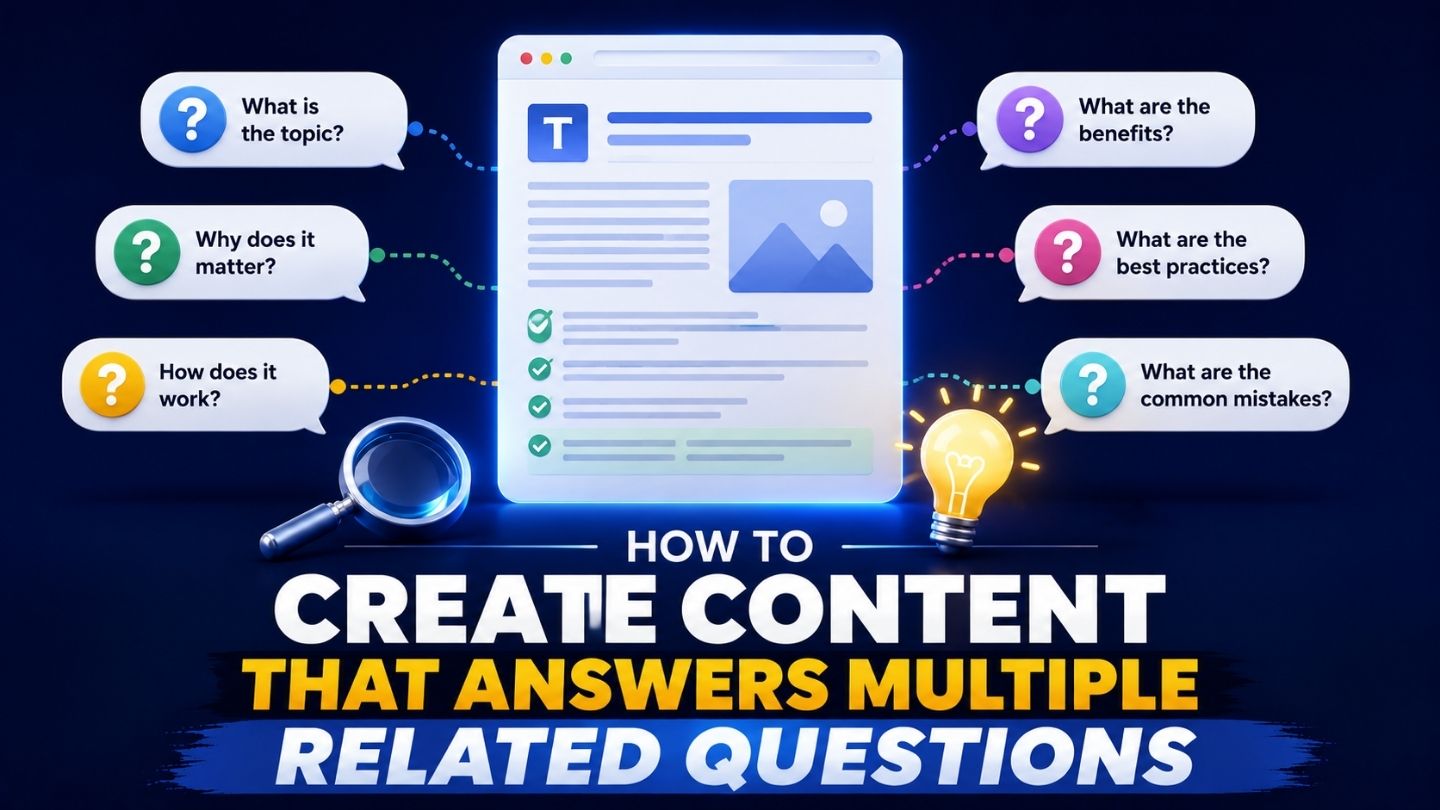


AI can draft an article in seconds, and that speed is exactly what tempts teams into publishing content that is fluent, generic, and forgettable. The tool is not the problem; using it without a process is. Used well, AI accelerates genuinely good writing rather than replacing the thinking that makes writing worth reading. The difference between the two outcomes is entirely a matter of the process wrapped around the tool, and that process is what this article lays out.
Key Takeaways
- AI speeds up drafting, and it does not supply the substance that makes content worth reading.
- Generic output is almost always the product of a generic brief and no editing.
- Real expertise, examples, and a point of view have to be added by a human.
- Fact-checking is non-negotiable, because AI states wrong things as confidently as right ones.
- The process, not the tool, decides whether the content is any good.
Why Does AI Content Get a Bad Name?
AI content gets a bad name because of how it is usually produced, not because of the tool itself. Content generated from a vague prompt and published without editing reads as exactly what it is: the average of everything the model learned, with no specific expertise, no original insight, and no reason to exist over the dozen similar pages already ranking for the same thing.
That outcome is a process failure rather than an inevitability. The same tool, used with a strong brief and genuine editing, produces something very different. Understanding that distinction is the whole point, because AI content is not inherently bad for SEO and can support rankings when it is produced with care rather than churned out at volume.
How Do You Write a Brief That Produces Good Output?
You write a brief specific enough that generic output is not an option. The quality of what AI produces tracks closely with the quality of what you give it, so a prompt that says write an article about a topic produces generic content because generic is all the instruction supports. A brief that specifies the exact angle, the points that must be made, the evidence to include, and the audience produces something far more useful.
This front-loads the thinking into the brief rather than hoping it emerges in the draft. The specific claim the article should make, the examples only you have, and the position you want to take all belong in the instruction, because the model will not invent them for you, and whether a piece should lean toward content depth or clarity to improve rankings is a decision the brief should settle rather than the draft.
Vague In, Vague Out
If the brief could have been written by someone who knows nothing about the topic, the article will read that way too. Specificity in equals specificity out.
Why Human Expertise Still Decides Quality
AI can produce a competent structure and clear prose, and it cannot supply the genuine expertise that makes content authoritative. The examples from your actual work, the nuances only experience reveals, and the opinions that come from having done the thing have to be added by a human who knows the subject, which is what separates content that ranks from content that merely exists.
Treating the AI draft as a foundation to build expertise onto, rather than a finished product, is the mindset that works. This is where editing AI content properly for SEO and conversions turns a generic draft into something that performs.
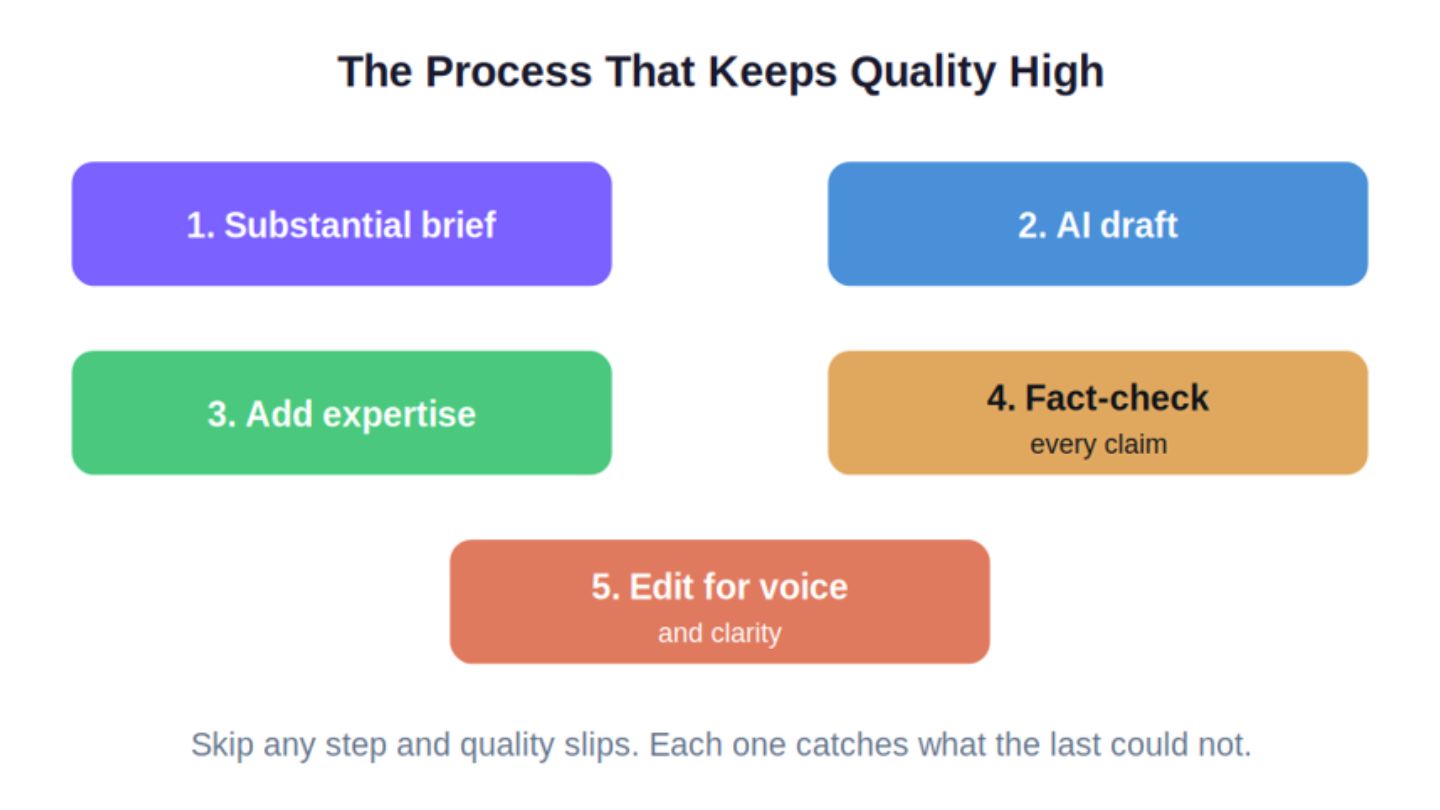
A repeatable process keeps the human judgment in the loop while AI handles the parts it genuinely speeds up.
Why Fact-Checking Is Non-Negotiable
AI states incorrect information with the same confidence it states correct information, which makes unverified AI content a genuine risk. A plausible-sounding statistic, date, or claim that turns out to be wrong damages credibility, and in regulated fields it can do worse than that. Fluency is not accuracy, and the two are easy to confuse when the writing reads smoothly.
Every factual claim in AI-assisted content needs human verification before publishing, treated as unconfirmed until checked. For claims that carry real weight, verifying against a primary source matters, and for official data, that often means going straight to a government source such as the U.S. Census Bureau rather than trusting a figure the model produced from memory. This step is tedious, and it is non-negotiable, because the cost of publishing confident misinformation is far higher than the time verification takes.
How Do You Keep a Human Voice?
You keep a human voice by editing for personality as well as accuracy, cutting the generic phrasing and adding the specificity that makes content feel written rather than generated. Unedited AI output drifts toward a flat, averaged voice that reads as interchangeable even when it is accurate, and that sameness is part of why it underperforms.
The aim is work that serves the reader and sounds like a person who knows the subject, which is the same discipline behind writing for AI search without sacrificing human readers. Clarity for machines and character for people are not in conflict; the best content has both, and a human edit is what adds the character a model cannot.
Building a Repeatable Process

The teams that use AI well have a process rather than a habit of pasting prompts and publishing results. A workable one runs: a substantial brief, an AI draft, a human pass that adds expertise and examples, a fact-check, and an edit for voice and clarity. Each step catches what the previous one could not, and skipping any of them is where quality slips. Applying a content quality checklist editors should actually use as the final gate ensures nothing generic or unverified reaches publication.
Using the Speed Without Losing the Substance
AI is a genuine accelerator for article writing when it is wrapped in a process that keeps the substance human. Start with a brief specific enough to rule out generic output, layer in the real expertise and examples the model cannot supply, fact-check every claim because confidence is not accuracy, and edit for a voice that reads as written rather than generated. The low-quality content AI gets blamed for comes from skipping these steps, not from the tool itself.
At The Ocean Marketing, we build Content Writing processes that use AI where it genuinely helps while keeping the expertise and judgment that make content worth reading. Whether you need a workflow that scales without going generic, a tighter version of the process you already have, or a free SEO audit to see how your content performs, our team can help. Contact us and let's make AI work for your content rather than against it.
Frequently Asked Questions
Does Google penalize AI-generated content?
Google judges content by whether it is helpful and high quality, not by the tool used to produce it. What gets penalized is unhelpful, thin content, which can be produced by a human or a machine. AI content edited to genuine quality is treated the same as any other quality content.
How much editing does AI content actually need?
Enough to add real expertise, verify every factual claim, and give it a human voice. In practice, that means treating the AI output as a first draft rather than a finished piece. The exact amount varies, and the steps- add expertise, fact-check, edit for voice- do not.
Can AI writing tools do research reliably?
They can gather and summarize quickly, and they can also state wrong things confidently, so anything factual needs verification against a real source. AI is useful for accelerating research, not for replacing the check that the facts are actually correct.