
Introduction
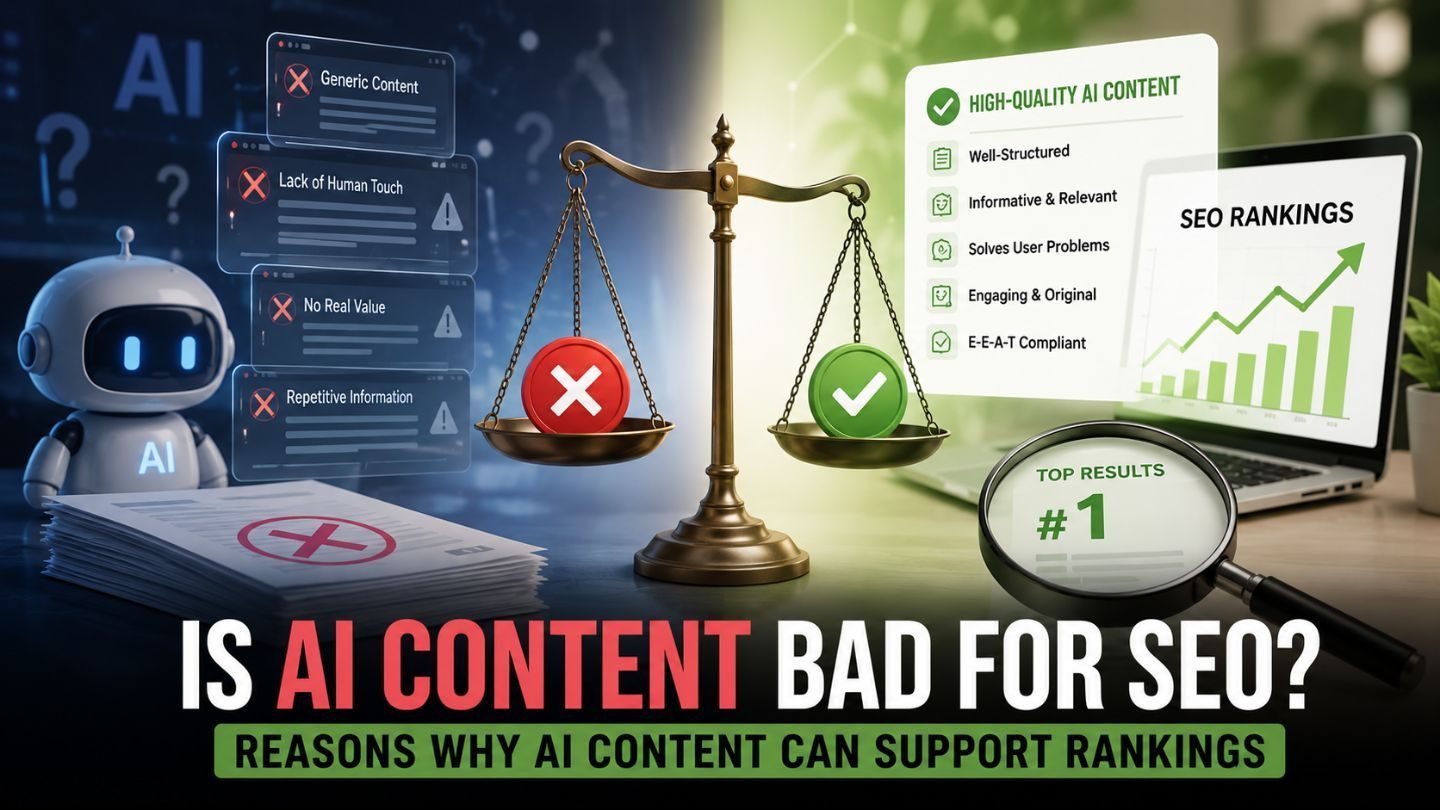
AI-generated content has become one of the biggest talking points in digital marketing. Some businesses worry that using AI will hurt their search rankings, while others rely on it to create content more efficiently. The truth is far more balanced than the myths circulating online. When used responsibly, AI can be a valuable tool rather than an SEO risk. In this blog, we'll discuss whether AI content is actually bad for SEO and explore the reasons why well-crafted AI-assisted content can support better search rankings while still delivering value to readers.
Key Takeaways
- Google prioritizes helpful, high-quality content over how it was created.
- AI works best as a writing assistant, not a replacement for human expertise.
- Original insights and careful editing help AI-assisted content perform better.
- Content quality, relevance, and user experience remain the biggest ranking factors.
- Combining AI with human creativity leads to stronger SEO results.
Why the Debate Around AI Content Exists
AI writing tools have made content creation faster than ever before, allowing businesses to publish blogs, product descriptions, and landing pages in a fraction of the usual time. As these tools became more common, many marketers began questioning whether search engines could detect AI-generated content and whether using it would automatically lead to lower rankings.
The concern largely comes from the early days of AI writing, when many articles sounded repetitive, lacked depth, and offered little value to readers. Since search engines aim to reward useful information, low-quality AI content naturally performed poorly. That created the misconception that AI itself was the problem, when in reality the issue was the quality of the content rather than the technology behind it.
What Google Actually Says About AI Content
Google has consistently emphasized that its focus is on helpful, reliable, and people-first content. It does not automatically penalize content simply because artificial intelligence was involved in creating it. Instead, Google's systems evaluate whether the content satisfies search intent, provides useful information, and demonstrates experience, expertise, authority, and trustworthiness.
This means businesses can safely use AI as part of their content creation process if the final result genuinely benefits readers. Articles that answer questions clearly, include accurate information, and provide unique perspectives are far more likely to perform well than content created solely to manipulate rankings.
AI Helps Content Teams Work More Efficiently

One of AI's greatest strengths is improving productivity. Instead of spending hours creating outlines, brainstorming ideas, or overcoming writer's block, content teams can use AI to handle repetitive tasks and focus more attention on research, strategy, and refining the final piece. Still, businesses should remember that neither AI nor content marketers is a replacement debate, because strategy, tone, and trust still need human direction.
This efficiency allows businesses to publish content more consistently without sacrificing quality. Writers can dedicate more time to fact-checking, improving readability, adding industry expertise, and creating a better overall experience for readers instead of starting every article from a blank page.
AI Speeds Up Research and Planning
AI tools can quickly organize information, suggest article structures, identify related topics, and generate headline ideas. While these suggestions still require human review, they significantly reduce planning time and help content creators build comprehensive articles that address multiple user questions within a single piece.
Read More: How to Edit AI Content So It Ranks and Converts
High-Quality AI Content Can Match Search Intent
Successful SEO starts with understanding what users actually want when they search. AI tools are capable of identifying common search patterns, related questions, and relevant subtopics that should be covered within an article. This makes it easier to create content that aligns with user intent. However, matching search intent doesn't mean stuffing articles with keywords.
Instead, it involves providing complete, relevant answers in a natural way. Human editors remain essential for ensuring the content feels conversational, includes practical insights, and addresses readers' concerns with clarity. To make that alignment stronger, businesses should understand why search intent is important for SEO before deciding what an AI-assisted article should cover.
Human Editing Makes the Difference
The strongest AI-assisted content almost always includes significant human involvement. AI can produce a solid first draft, but experienced writers improve it by adding examples, industry knowledge, personal observations, and a tone that resonates with the intended audience. Human editors also catch factual inaccuracies, awkward wording, repetitive phrasing, and missing context.
This editing process transforms generic AI output into content that feels authentic, trustworthy, and genuinely useful, which are all qualities search engines increasingly reward.
Originality Still Matters
Search engines value content that contributes something new to the conversation. Simply generating articles that repeat information already available across hundreds of websites rarely leads to long-term SEO success. Businesses should use AI to support creativity rather than replace it. Including original case studies, customer experiences, expert opinions, proprietary data, or unique recommendations helps content stand out. These additions create real value that AI alone cannot replicate.
AI Can Improve Content Consistency
Maintaining a consistent publishing schedule is challenging for many businesses. AI helps streamline workflows, making it easier to produce blogs, service pages, FAQs, and supporting content on a regular basis without overwhelming internal teams. Consistency sends positive signals over time by keeping websites fresh and expanding topical coverage. More importantly, regular publishing allows businesses to answer a wider range of customer questions, increasing opportunities to appear in relevant search results.
Consistency Supports Topical Authority
Publishing multiple high-quality articles around related topics helps demonstrate expertise within a specific industry. AI can assist with content planning and topic generation, while human writers ensure every piece delivers accurate, valuable information that strengthens overall topical authority.
Common Mistakes That Hurt AI Content Performance

AI itself is rarely responsible for poor rankings. Instead, problems usually arise when businesses rely on automation without proper oversight. Publishing content without reviewing facts, adding unique insights, or considering the reader's experience often results in thin, generic articles.
Some common mistakes include:
- Publishing AI drafts without editing
- Overusing keywords unnaturally
- Creating duplicate or repetitive content
- Ignoring factual verification
- Failing to address user search intent
- Writing solely for search engines instead of real people
Avoiding these mistakes helps AI-assisted content remain informative, engaging, and valuable for both users and search engines.
Read More: AI vs. Content Marketers: What Still Requires a Human Touch?
Best Practices for Using AI in Your SEO Strategy
AI should be viewed as one part of a larger content strategy rather than a complete solution. Businesses achieve the best results by combining technology with experienced writers, editors, and SEO professionals who understand audience needs and search behavior. A balanced workflow often includes AI for brainstorming, outlining, and drafting, followed by human research, editing, optimization, and quality assurance. This collaborative approach produces content that is efficient to create while maintaining the originality and expertise readers expect.
Final Thoughts
AI content is not inherently bad for SEO. What ultimately determines search performance is whether the content is accurate, helpful, engaging, and relevant to the audience. When businesses use AI responsibly alongside human expertise, they can create content that satisfies search intent, builds trust, and supports sustainable organic growth. Rather than replacing skilled writers, AI works best as a tool that enhances creativity, speeds up production, and allows content teams to focus on delivering greater value.
At The Ocean Marketing, we combine AI-powered efficiency with professional SEO and Content Writing expertise to create content that supports long-term search performance and meaningful engagement. If you'd like to strengthen your content strategy, contact us or request a free SEO audit today