
Instagram has changed dramatically over the past few years. What once worked for reach and discovery doesn’t always deliver the same results today. Many creators, brands, and businesses still wonder whether hashtags are the key to visibility or if keywords have become the smarter strategy. Understanding how Instagram now indexes and recommends content can make a significant difference in your reach and engagement. In this blog, we’ll discuss how hashtags and keywords work on Instagram today, where each one fits into your strategy, and how to use them effectively for better results.
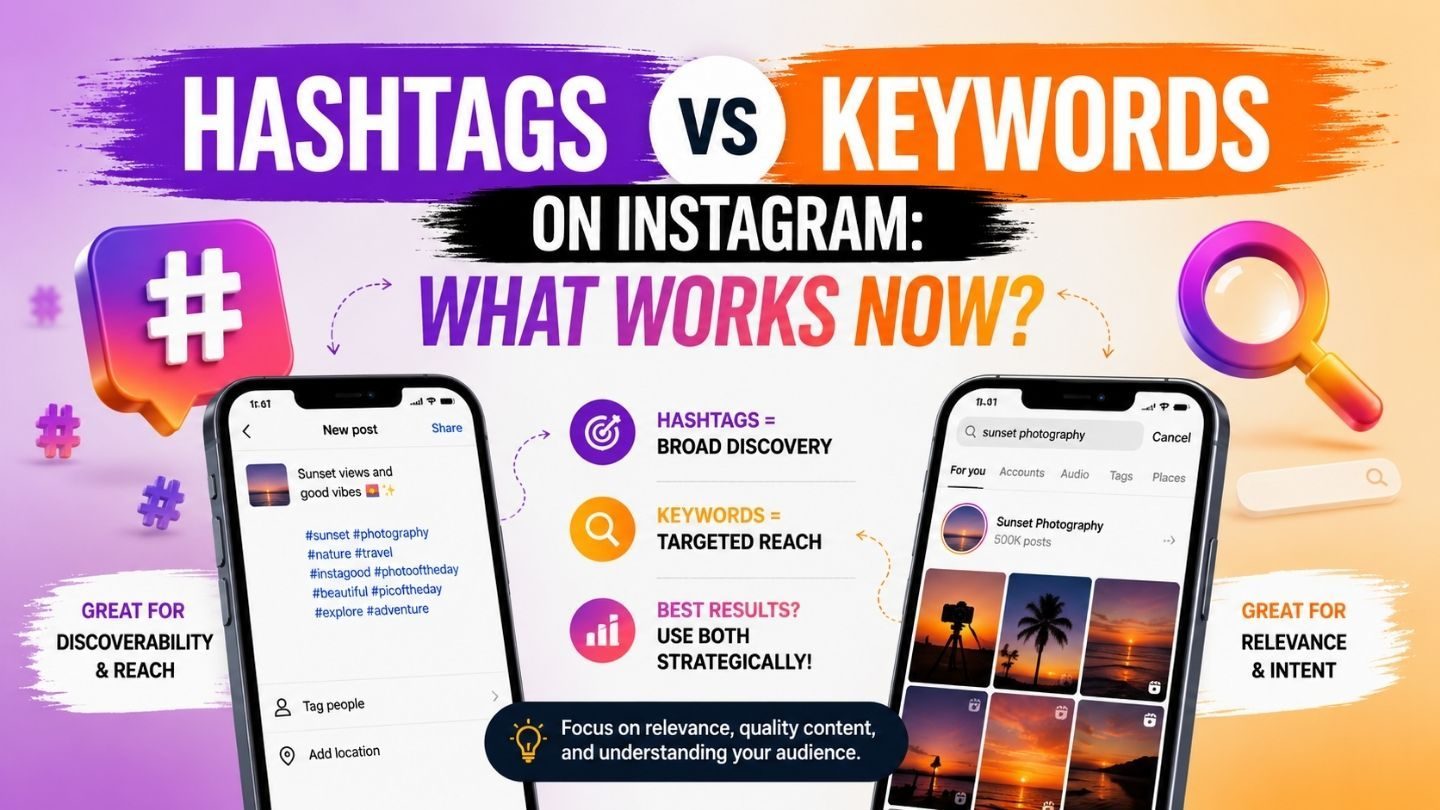
Instagram keywords are the plain words that describe your business or a post's subject, such as “wedding photographer in Mumbai.” Hashtags label a topic with a tag, such as #WeddingPhotography. Instagram search reads both, but keywords now do more of the work.
Key Takeaways
- Keywords now play a larger role in Instagram content discovery.
- Hashtags still have value but are no longer the primary growth tactic.
- Instagram’s search function relies heavily on text signals.
- Captions, profile information, and on-screen text influence visibility.
- A balanced approach using both hashtags and keywords works best.
- Content relevance remains more important than hashtag quantity.
Instagram Discovery Has Evolved
There was a time when adding 20 to 30 hashtags to a post was considered a growth strategy. Many accounts relied almost entirely on hashtag reach to attract new followers and increase engagement. While hashtags can still help categorize content, Instagram’s algorithm has become much more sophisticated than it was a few years ago.
Today, Instagram behaves more like a search engine. Users actively search for topics, services, tutorials, products, and recommendations through the platform’s search bar. Because of this shift, Instagram now pays closer attention to the words used in captions, profile descriptions, usernames, and even video text when deciding what content to show.
Why Keywords Matter More Than Before

Instagram has invested heavily in improving its search capabilities. When someone searches for terms like “fitness coach,” “digital marketing tips,” or “home decor ideas,” Instagram scans relevant text across profiles and posts to identify the best matches. This means your content becomes easier to discover when it contains clear, relevant keywords that describe the topic naturally.
Instead of relying solely on hashtags, creators can improve visibility by including important search terms directly within captions, video descriptions, and profile sections. This is why understanding how social media SEO helps content rank beyond the Instagram feed matters for brands that want stronger visibility.
How Instagram Uses Keywords
Instagram looks for context signals across different content elements. The platform analyzes what your content is about and matches it with user interests and search intent. This allows relevant posts to appear even if users never search for a specific hashtag. For example, a post about healthy meal planning that naturally includes phrases such as “meal prep ideas,” “healthy recipes,” and “weekly nutrition tips” may rank better for related searches than a post that relies only on hashtags.
Are Hashtags Still Relevant?
Despite the growing importance of keywords, hashtags have not completely disappeared from Instagram marketing. They still provide context and can help Instagram understand the general category of your content. However, hashtags no longer carry the same weight they once did. Simply adding dozens of trending hashtags is unlikely to generate significant reach if the content itself lacks relevance or quality.
Instagram has become much better at understanding content beyond hashtag signals. Instead of treating hashtags as a growth shortcut, businesses should view them as supporting elements within a broader content strategy. A small group of relevant hashtags often performs better than a long list of unrelated or overly competitive tags.
Read More: Viral Content Strategy: How to Create Social Media Posts That Go Viral
The Biggest Mistake Businesses Still Make
One of the most common mistakes is focusing on hashtags while ignoring keyword optimization. Many brands spend time researching hashtag lists but overlook the words used in captions, profile bios, and video text. As Instagram search behavior continues to grow, users increasingly discover content through topic-based searches rather than hashtag browsing.
If your content lacks relevant keywords, you may miss opportunities to appear in search results even if you use popular hashtags. A better approach is to create content around the exact topics your audience is searching for. Then support those topics with a few targeted hashtags that reinforce the content category.
Where to Place Keywords for Better Visibility
Using keywords effectively involves more than inserting them into captions. Instagram gathers signals from several content elements when determining relevance. The more clearly your content communicates its topic, the easier it is for Instagram to categorize and recommend it.
Important places to include keywords include:
- Instagram profile name
- Username when appropriate
- Bio description
- Post captions
- Reel captions
- On-screen text in videos
- Alt text (describe the image for people using screen readers, not a keyword list).
- Image descriptions where applicable
When keywords appear naturally across multiple areas, Instagram gains a stronger understanding of your content topic, improving its ability to recommend your posts to interested users.
Instagram Keywords and Hashtags: A Practical Example
Start with what your customer is trying to find. For a wedding photographer in Mumbai, useful keywords for Instagram might be “Mumbai wedding photographer,” “candid wedding photography” or “small wedding photography.” Treat these as phrases to test, not proven high-volume searches.
A keyword-rich caption could read: “Candid wedding photography from an intimate Mumbai ceremony. Here are three ways we help couples feel relaxed in front of the camera.” It tells readers and Instagram exactly what the post is about.
Then add three to five hashtags that describe the same post, such as #MumbaiWedding and #CandidWeddingPhotography. Skip popular tags that have nothing to do with the content.
To choose keywords for Instagram:
- List the products or services you actually offer.
- Add locations and the problems customers mention.
- Type each phrase into Instagram search and note the suggestions.
- Look at which profiles and posts appear for each phrase.
- Use the phrase on comparable posts and track profile visits, website taps and inquiries.
For a field-by-field guide, see where to add Instagram SEO keywords.
Hashtags vs Keywords: Which Drives More Reach?

The answer depends on how users discover content. Keywords are often more effective for search-based discovery because they align with how people actively look for information on Instagram. Hashtags still contribute to discoverability, especially in niche communities where users follow specific tags. However, keywords tend to have a broader influence because they support Instagram’s recommendation systems, search results, and content categorization processes.
For most businesses and creators today, keywords generally offer greater long-term value. They help content remain discoverable beyond the initial posting period and connect more directly with user intent. Strong keyword signals can also support how content gets featured on the Instagram explore page, especially when posts match user interests.
A Simple Comparison
While both hashtags and keywords contribute to Instagram visibility, they serve different purposes. Keywords help Instagram understand the context of your content and improve search discoverability, whereas hashtags act as supporting signals that categorize posts and connect them to relevant topics. Understanding how each works can help you build a more effective Instagram strategy.
| Factor | Keywords | Hashtags |
|---|---|---|
| Search Visibility | High | Moderate |
| Content Context | Strong | Limited |
| Long-Term Discovery | High | Moderate |
| User Search Behavior | High Alignment | Lower Alignment |
| Algorithm Understanding | Strong | Supporting Role |
Ratings reflect general practice, not Instagram-published data.
The Best Strategy Is Not Choosing One
Many marketers approach this topic as an either-or decision, but that’s not how Instagram works. Keywords and hashtags serve different purposes and perform best when used together strategically. Keywords help Instagram understand what your content is about, while hashtags provide additional categorization signals. Combining both creates a stronger foundation for discoverability without relying too heavily on one tactic. For example, a social media marketing post could naturally include relevant keywords throughout the caption while also using a handful of focused hashtags related to marketing, business growth, and content strategy.
How to Build a Modern Instagram SEO Strategy
Instagram SEO has become an essential part of social media growth. Optimizing content for search helps increase visibility among users actively looking for information related to your niche. Start by identifying the phrases your audience searches for. Incorporate those terms naturally into your captions, profile, and content.
Focus on answering questions, solving problems, and creating content around specific topics rather than chasing trending hashtags. At the same time, continue using relevant hashtags in moderation. Choose tags that genuinely reflect the content rather than selecting them solely based on popularity. This balanced approach supports both search visibility and content categorization.
Read More: How Instagram Tests Your Content Before Pushing It Viral
What Instagram Experts Recommend Today

Most social media professionals now recommend prioritizing keyword optimization while maintaining a smaller, more targeted hashtag strategy. This reflects how Instagram’s algorithm has evolved toward contextual understanding and search relevance. When reach drops, the issue is often bigger than hashtags, which is why brands should understand why Instagram content may not reach followers consistently.
The emphasis has shifted from quantity to quality. Well-written captions, clear content topics, and audience-focused messaging often produce stronger results than long hashtag lists. As Instagram continues improving search functionality, keyword optimization will likely become even more important for content discovery.
Final Thoughts
Instagram is no longer a platform where hashtags alone can drive consistent growth. While hashtags still provide value, keywords have become a much stronger signal for search visibility and content discovery. Businesses, creators, and marketers who understand this shift can position their content more effectively and reach audiences through both search and recommendations. Rather than choosing one over the other, the smartest strategy is to use keywords and hashtags together in a way that supports content relevance.
If you're looking to improve your Instagram strategy alongside broader social media marketing efforts, The Ocean Marketing can help. From content optimization to audience growth strategies, our team focuses on practical results that support long-term visibility. Contact us today to learn more about our services or request a free SEO audit to identify new opportunities for growth.