
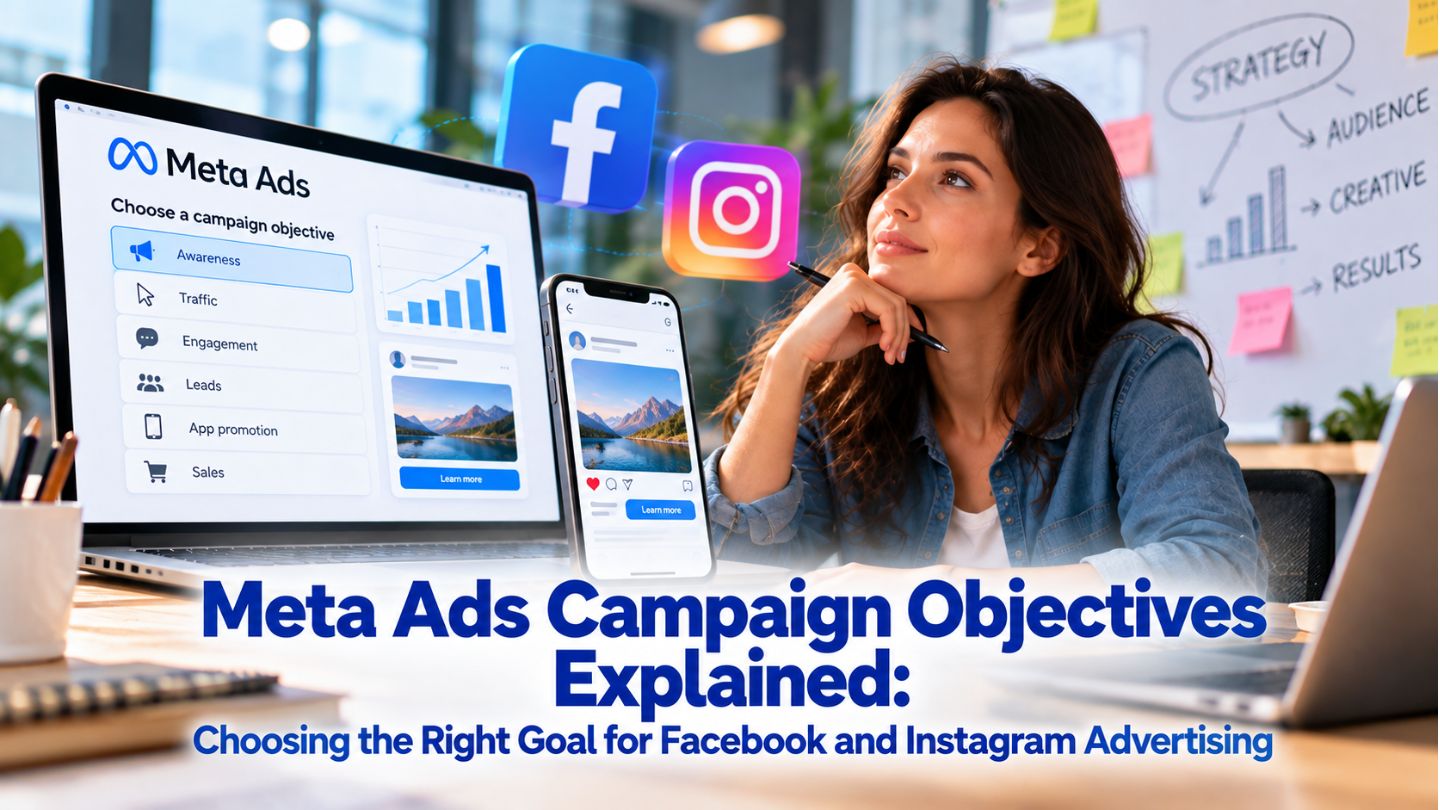
Every Meta Ads campaign starts with one decision that quietly shapes everything after it: the campaign objective. Pick the wrong one, and even a strong ad with a healthy budget can bring clicks that never convert or reach that never turns into sales. Pick the right one, and Meta knows exactly what kind of results to look for. This blog covers the six Meta Ads campaign objectives, what each one is designed to do, and how to match the right goal to your business stage, budget, and the action you want people to take.
Key Takeaways
- The campaign objective tells Meta which people and actions to optimize for.
- Meta offers six objectives: Awareness, Traffic, Engagement, Leads, App Promotion, and Sales.
- The right objective depends on what you want people to do, not what looks good in a report.
- Solid tracking with the Meta Pixel and Conversions API improves lead and sales results.
- Testing and funnel thinking help objectives work together over time.
Why the Campaign Objective Matters So Much
The objective is not just a label for organizing campaigns in Ads Manager. It is an instruction to Meta's delivery system about which outcome to chase. Choose Traffic, and Meta looks for people likely to click. Choose Sales, and it looks for people likely to buy. The same ad shown to these two groups can produce very different results, because the people in each group behave differently once they see it.
This is why many advertisers feel disappointed after running a campaign that technically succeeded. A traffic campaign might deliver thousands of cheap clicks, but if those visitors leave without taking any action, the campaign did what it was asked to do rather than what the business needed. Matching the objective to the real goal is the first and most important step toward results that actually matter. It is one of several factors that influence PPC campaign success before a single ad goes live.
The Six Meta Ads Objectives at a Glance
Meta simplified its campaign setup into six objectives that cover the full customer journey. Awareness campaigns focus on showing ads to as many relevant people as possible and building brand recall. Traffic campaigns send people to a destination such as a website, app, or profile. Engagement campaigns encourage interactions like messages, video views, post engagement, or event responses from people who are already paying attention. Knowing what each one is built for makes the setup screen far less confusing.
Leads campaigns collect contact details through instant forms, messaging, calls, or website forms. App Promotion campaigns focus on installs and actions inside an app. Sales campaigns aim for purchases or other high-value conversions on a website, in an app, or through a product catalog. Each objective unlocks different optimization options, so the choice affects bidding, delivery, and the type of results you can report on later.
Matching Objectives to Your Business Goals
The simplest way to choose is to start with the action you want people to take. A new local business trying to get noticed may begin with Awareness or Engagement. A service business that needs consultations should usually choose Leads. An online store with conversion tracking in place will typically see the best return from Sales. The objective should reflect the outcome that matters to the business, not the metric that looks most impressive.
Funnel stage matters too. People who have never heard of a brand rarely buy from the first ad they see, so colder audiences often respond better to awareness and engagement content, while warmer audiences are ready for lead and sales offers. Campaigns work better when advertisers align ads with funnel stages, guiding people step by step instead of asking for too much too soon.
Quick Guide to Choosing an Objective
- Want more people to know your brand? Choose Awareness.
- Want visits to a page or profile? Choose Traffic.
- Want messages, video views, or interactions? Choose Engagement.
- Want inquiries or bookings? Choose Leads.
- Want purchases or high-value conversions? Choose Sales.
Read More: How Search Intent Changes During Different Buying Stages
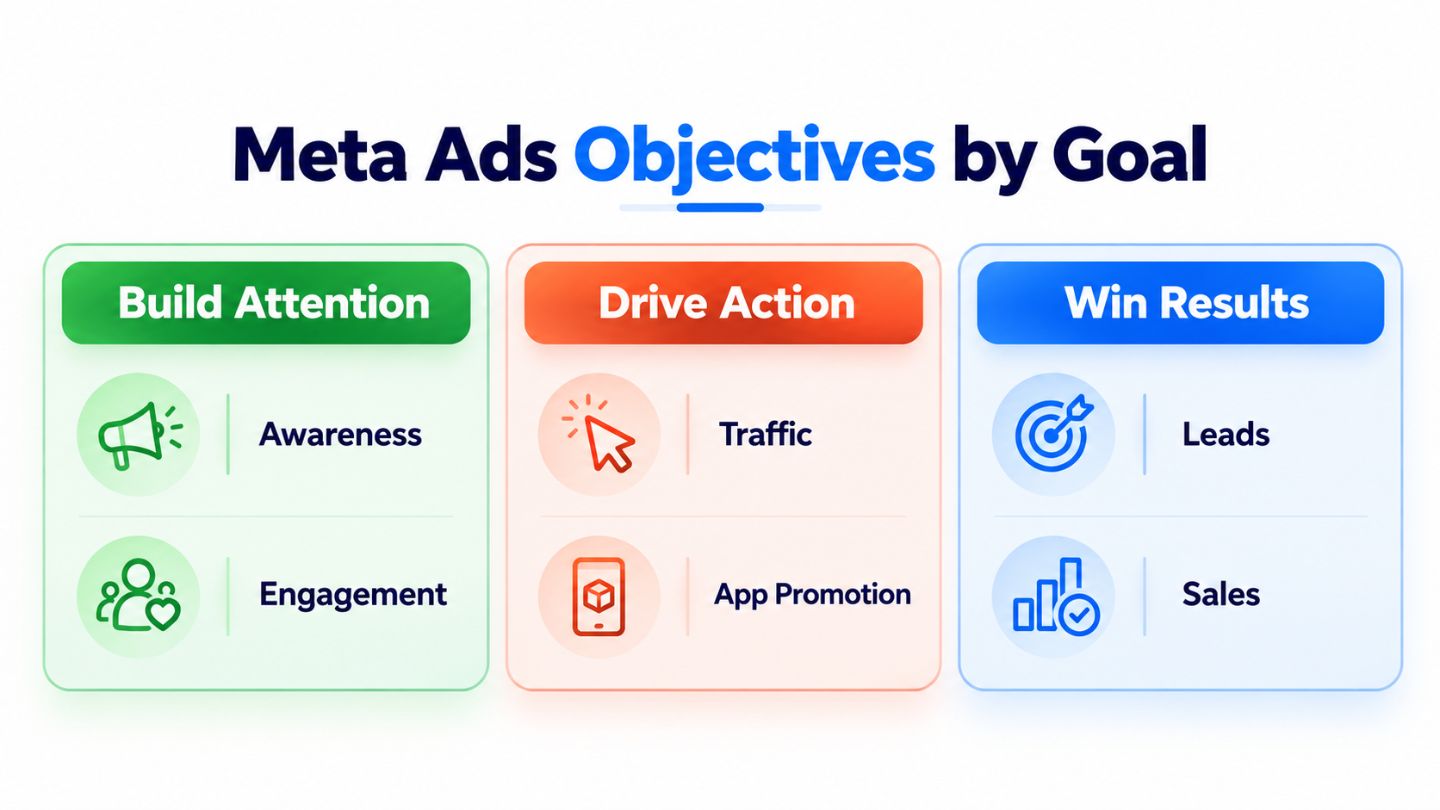
Grouping objectives by goal makes it easier to match each campaign to the right stage of the customer journey.
Tracking Makes or Breaks Lead and Sales Campaigns
Leads and Sales objectives depend on data. Meta needs to see conversions happening so it can learn which people are most likely to complete them. Installing the Meta Pixel on your website and connecting the Conversions API sends that information more reliably, even when browser restrictions limit tracking. Without a proper setup, the system has very little to learn from, and results can swing unpredictably from week to week. Good data is what turns a promising campaign into a consistently profitable one.
Clear measurement also helps you judge success fairly. Some campaigns should be evaluated by cost per lead or sale, while others are better judged by revenue versus spend. Choosing between cost per acquisition and return on ad spend as the main measure keeps reporting aligned with the objective, so you never judge a lead campaign like an ecommerce campaign, or vice versa.
Common Objective Mistakes to Avoid
One of the most frequent mistakes is choosing Traffic when the real goal is leads or sales. It feels safer because clicks cost less, but cheaper clicks rarely mean better customers. Another common error is switching objectives too often, which restarts the learning process and makes it hard to tell what is working. Running too many small campaigns with tiny budgets can also stop any of them from gathering enough data to improve.
Overlooking past visitors is another missed opportunity. People who have already visited your website or interacted with your content are often the most likely to convert, and they deserve campaigns built around that warmer intent. A thoughtful Facebook retargeting strategy to re-engage website visitors pairs naturally with Leads or Sales objectives and often produces some of the strongest returns in an account.
How Budget and Audience Size Affect Your Choice
Budget plays a bigger role in objective selection than many advertisers expect. Lower-funnel goals like Sales and Leads need enough conversions each week for Meta to learn who is most likely to act, and very small budgets may not produce enough data to get there. In those cases, starting with a broader objective, such as Engagement or Traffic, can help build an audience of interested people that later campaigns can target with stronger offers.
Audience size matters too. Very narrow targeting combined with a conversion objective can leave the system with too few people to test, which drives up costs and slows learning. Broader audiences give Meta more room to find the right people, especially when your creative and offer are strong. Balancing budget, audience size, and objective together leads to steadier, more predictable results from every campaign you run.
Read More: Audience Exclusions: The Most Overlooked PPC Optimization
Testing and Refining Over Time
No objective choice has to be permanent. As a business grows, its advertising needs shift, and campaigns should evolve with them. Running controlled tests, such as comparing a Leads campaign using instant forms against one that sends people to a website form, shows which approach brings better quality results for your specific audience rather than relying on general advice that may not fit.
Give each test enough time and budget to move past the learning phase before drawing conclusions. Look beyond the headline metric to see what happened afterward, such as whether leads booked appointments or customers came back to buy again. Over time, these insights build a clear picture of which objectives deliver real value at each stage of your growth. That read is also what tells you when to pause or optimize underperforming ad campaigns rather than waiting them out.
Setting Every Campaign Up for the Right Results

The campaign objective is the foundation of every Meta Ads campaign because it tells the system who to reach and which actions to pursue. Awareness, Traffic, Engagement, Leads, App Promotion, and Sales each serve a different purpose, and the best choice depends on the outcome your business needs most. Pairing the right objective with solid tracking, funnel thinking, and regular testing turns ad spend into results you can measure.
At The Ocean Marketing, we help businesses plan and manage paid campaigns built around clear goals and accurate tracking. Our PPC team sets up Facebook and Instagram campaigns with the right objectives from the start, and a free SEO audit can show how your paid and organic efforts can support each other. Contact us to talk through the goals behind your next campaign.
Frequently Asked Questions
What is the best Meta Ads objective for small businesses?
It depends on the goal. Service businesses often see the best results from Leads, while online stores with proper tracking usually benefit from Sales. Awareness and Engagement work well for building recognition with new audiences.
Can I change the objective of an existing Meta Ads campaign?
In most cases, the objective cannot be changed once a campaign is published. You would need to create or duplicate a campaign with the new objective, which also restarts the learning phase.
Should an online store choose Traffic or Sales?
If conversion tracking is set up correctly, Sales usually performs better because Meta optimizes for people likely to purchase. Traffic can bring cheaper clicks, but those visitors are generally less likely to buy.