
Search behavior is changing fast as AI-powered search engines become more common across Google, Bing, and other platforms. Users are no longer typing short, robotic phrases into search bars. Instead, they’re asking detailed questions, using conversational language, and expecting instant answers. That shift is having a major impact on long-tail keywords and how websites attract traffic online. In this blog, we’ll discuss how long-tail keyword trends are evolving after AI search expansion, why businesses should pay attention, and what content strategies are working right now for sustainable SEO growth.
Key Takeaways
- AI search is increasing the importance of conversational long-tail keywords
- Search queries are becoming more specific and intent-driven
- Informational content now needs stronger context and depth
- User behavior is shifting from keyword matching to question-based searching
- Natural language optimization is becoming more valuable for SEO
- Brands that adapt content strategy early can gain long-term visibility
Why AI Search Is Changing Keyword Behavior
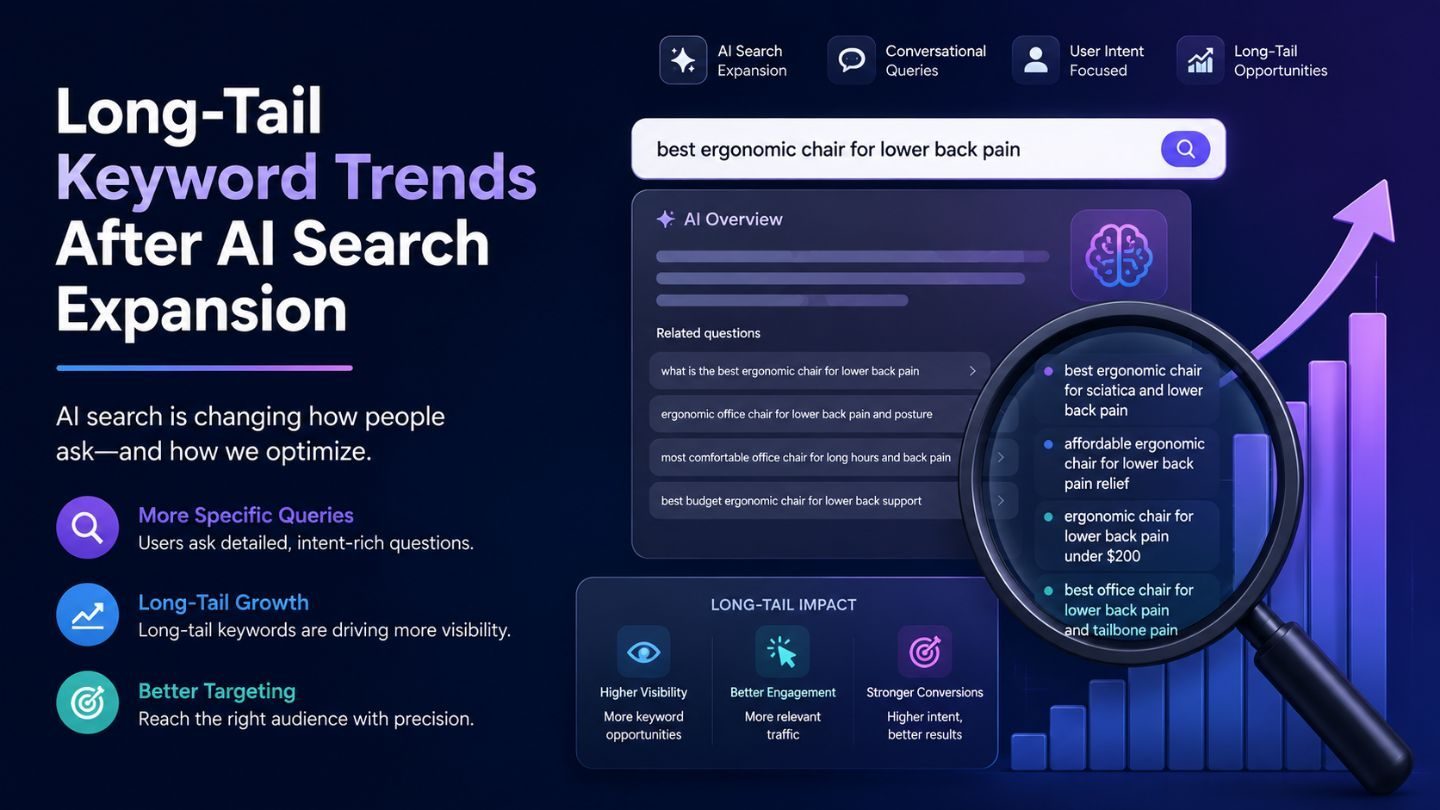
AI-powered search tools are reshaping the way users interact with search engines. Instead of typing “best running shoes,” people now search with phrases like “what are the best running shoes for flat feet and long-distance training?” These searches are longer, more natural, and often reflect real conversations. AI systems are designed to understand intent better, which means exact-match keyword stuffing is becoming less effective than before.
This shift matters because long-tail keywords often reveal clearer user intent. Someone using a detailed search query is usually closer to making a decision or finding a specific answer. As AI search expands, search engines are rewarding content that responds naturally to these nuanced questions. Websites that still rely heavily on outdated keyword tactics may notice traffic becoming less stable over time.
Conversational Queries Are Becoming the New Standard
One of the biggest trends after AI search expansion is the rise of conversational search behavior. People now interact with search engines almost the same way they speak to another person. Voice search, AI assistants, and chatbot-driven search experiences are all contributing to this change. The result is a major increase in question-based and context-heavy search terms. This shift also connects closely with prompt-based SEO, where content is shaped around how people naturally ask questions in AI search tools.
This doesn’t mean short keywords are disappearing completely, but they’re no longer enough on their own. Businesses now need content that mirrors real human language patterns. Articles, FAQs, and landing pages that sound natural tend to perform better because AI systems can connect them more effectively to user intent. Content that feels overly optimized or robotic is easier for both users and algorithms to ignore.
Search Intent Is More Important Than Search Volume
For years, many SEO strategies focused mainly on high-volume keywords. While search volume still matters, AI search is pushing intent to the forefront. A lower-volume long-tail keyword with strong intent can now outperform a broader keyword that attracts less qualified traffic. That’s especially true for service-based businesses and niche industries.
For example, someone searching “how to improve local SEO for dentists in small towns” has a much clearer goal than someone simply searching “SEO tips.” AI-driven search systems are better at understanding the difference. Because of this, content creators are seeing more value in highly targeted topics that directly solve specific problems instead of trying to rank for broad, highly competitive phrases.
AI Search Rewards Context, Not Just Keywords

Search engines powered by AI are becoming better at understanding relationships between topics, phrases, and concepts. That means websites can no longer rely on repeating the same keyword multiple times across a page. Instead, content needs to provide a complete context around a subject. Semantic relevance is playing a much larger role than simple keyword frequency. As search moves toward direct answers, answer engine optimization helps brands structure content for AI-driven results and conversational search experiences.
Read More: Why Semantic SEO Is Replacing Old SEO Tactics
Related Topics Matter More Than Exact Matches
Modern SEO content benefits from covering connected ideas naturally within the same article. For instance, a page about email marketing may also mention automation, segmentation, deliverability, personalization, and analytics. AI systems use these contextual signals to better understand the page’s expertise and relevance.
This is one reason long-tail keyword strategies are evolving. Instead of creating dozens of thin pages targeting slight keyword variations, many brands are building deeper, more comprehensive content hubs. These pages answer multiple related questions in one place while still maintaining readability and user engagement.
Zero-Click Search Is Influencing Long-Tail Traffic
AI-generated summaries and featured snippets are increasing the number of zero-click searches. In many cases, users get partial answers directly on the search results page without clicking through to a website. This has created new challenges for publishers and marketers trying to maintain organic traffic.
At the same time, highly specific long-tail keywords still create opportunities because detailed searches often require deeper answers. Users searching for nuanced information are more likely to visit full articles, compare sources, or explore additional insights. That means content creators should focus less on generic definitions and more on practical, experience-driven information that AI summaries can’t fully replace.
Long-Tail Keywords Are Becoming More Personalized
Another noticeable trend is personalization in search behavior. AI systems analyze user preferences, search history, and context more effectively than traditional search algorithms. Because of this, people are using increasingly personalized queries. Searches now include location, experience level, budget range, industry type, or unique use cases.
A simple keyword like “marketing software” may turn into “best affordable marketing software for small ecommerce brands.” These detailed searches create valuable opportunities for websites that produce highly targeted content. Businesses that understand their audience’s real questions can build stronger visibility even in competitive industries.
Content Depth Is Now a Competitive Advantage
As AI search becomes more advanced, shallow content is losing effectiveness. Pages that briefly touch on a topic without meaningful detail are struggling to stand out. Search engines now prioritize usefulness, clarity, and depth more consistently. Long-tail keyword optimization works best when combined with informative, genuinely helpful content.
That doesn’t mean every article needs to be extremely long. What matters more is whether the content fully addresses the topic and answers likely follow-up questions. Readers want practical insights, examples, comparisons, and actionable guidance. AI systems are increasingly rewarding pages that keep users engaged and satisfied instead of pages written mainly for algorithms.
The Rise of Question-Based SEO Content
Question-focused content is becoming a major part of modern SEO strategies. Since AI search often interprets conversational queries as direct questions, content built around real user questions has stronger visibility potential. This includes blog sections, FAQ pages, comparison articles, and educational guides. This is especially important because voice search SEO depends on long-tail and question-based keywords that match natural speaking patterns.
Natural Formatting Helps Readability
Well-structured content makes it easier for both users and AI systems to understand information quickly. Clear headings, logical flow, concise explanations, and readable formatting all contribute to stronger performance. Readers are more likely to stay engaged when content feels approachable instead of overly technical or stuffed with keywords.
This is also why conversational writing styles are becoming more effective in SEO. Readers prefer content that sounds human and direct. Brands that combine optimization with authentic communication often see better engagement metrics, which can positively influence search visibility over time.
Topical Authority Is Replacing Isolated Keyword Targeting
AI search systems are paying closer attention to overall expertise rather than single-page optimization. Websites that consistently publish high-quality content around related topics tend to build stronger topical authority. This makes it easier for them to rank for long-tail searches across an entire niche.
Instead of treating keywords as isolated targets, businesses are starting to think in terms of topic ecosystems. A company covering multiple connected subjects thoroughly is more likely to gain visibility than a website publishing disconnected articles for random keyword opportunities. Long-tail SEO now works best as part of a broader content strategy focused on expertise and trust.
Read More: Topical Authority vs Keyword Authority: Which Drives Rankings Faster?
How Businesses Should Adapt Moving Forward

Businesses that want to stay competitive after AI search expansion need to rethink how they create content. The focus should shift toward understanding audience intent, answering real questions, and building genuinely useful resources. Keyword research still matters, but it should support content quality instead of controlling it completely.
It’s also becoming important to monitor changing search patterns more regularly. AI-driven search behavior evolves quickly, and new conversational phrases appear constantly. Brands that stay flexible with their SEO strategy can adjust faster and discover emerging long-tail opportunities before competitors fully recognize them.
Final Thoughts
Long-tail keyword trends are evolving rapidly as AI search changes how people find information online. Search queries are becoming more conversational, personalized, and intent-focused, which means content strategies also need to evolve. Businesses that prioritize natural language, topic depth, and audience-focused content are in a stronger position to maintain visibility as AI-powered search continues expanding across the digital landscape.
At The Ocean Marketing, we understand how AI-driven search trends are reshaping SEO and content visibility for businesses across different industries. Keeping up with long-tail keyword changes and evolving search intent is increasingly important, which is why we also offer a free SEO audit to help businesses better understand their current online performance and growth opportunities. If you’re looking to stay ahead in the changing digital landscape, contact us today and let our team help you move in the right direction with confidence.