Skip to content
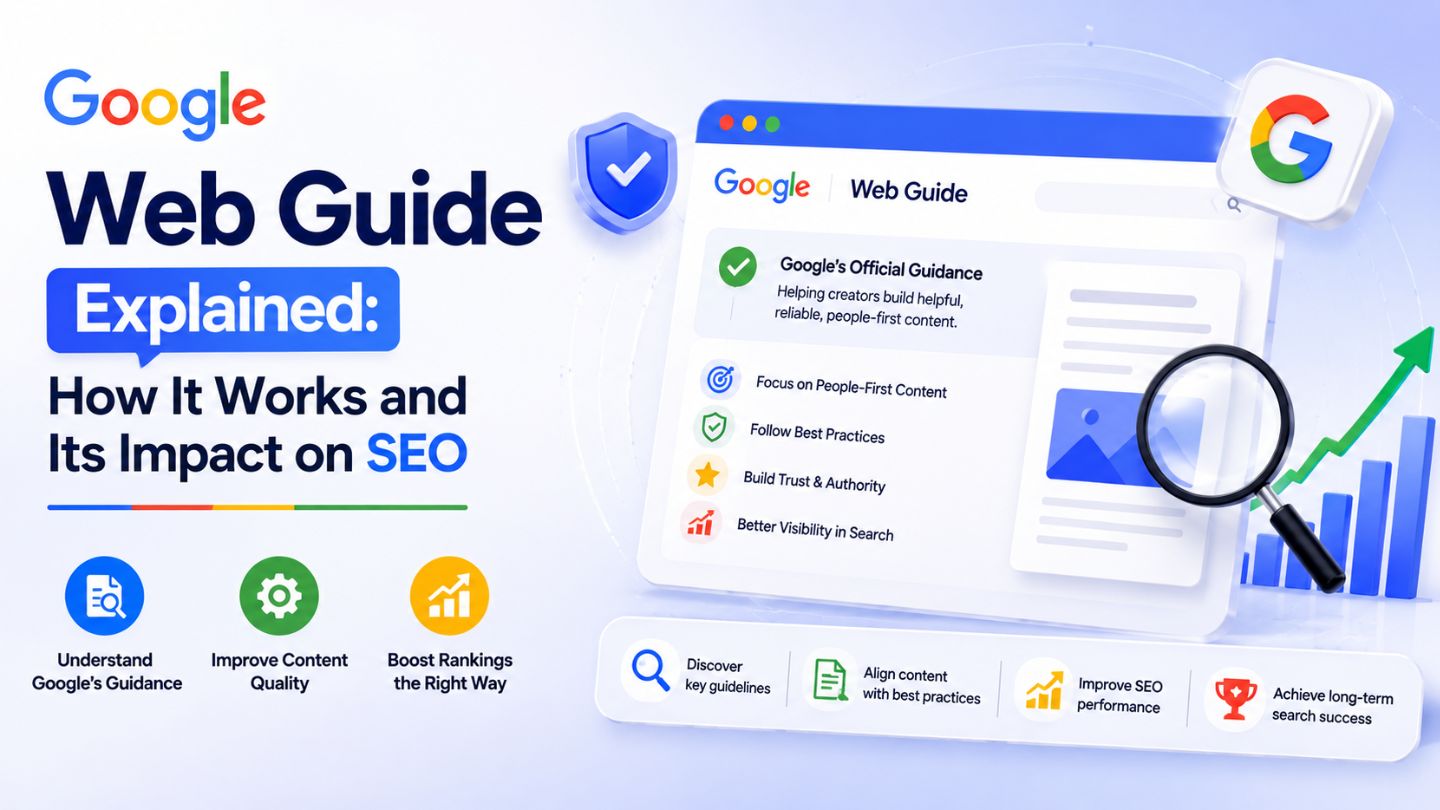
Search is changing faster than ever, and Google’s latest experiment, Google Web Guide, is another sign of where things are heading. Instead of presenting traditional search results in a simple ranked list, Google Web Guide aims to organize information into helpful topic-based sections, making it easier for users to discover relevant content. This shift could influence how websites gain visibility and how users interact with search results. For businesses, marketers, and content creators, understanding these changes is becoming increasingly important. This blog outlines what Google Web Guide is, how it works, and what its potential impact on SEO could be moving forward.
Key Takeaways
- Google Web Guide organizes search results into topic-based categories.
- It uses AI to better understand search intent and content relevance.
- Traditional ranking factors still matter, but content organization becomes more important.
- User experience and topical authority may gain greater SEO value.
- Websites with comprehensive, well-structured content could benefit from this approach.
- The feature reflects Google’s ongoing move toward AI-enhanced search experiences.
What Is Google Web Guide?
Google Web Guide is an experimental search feature designed to improve how users navigate search results. Rather than displaying a straightforward list of pages ranked by relevance, it groups content into categories related to the user’s query. This creates a more guided search experience that helps users explore different aspects of a topic.
The feature relies heavily on Google’s AI capabilities to understand search intent and identify relationships between pieces of content. Instead of focusing solely on keyword matching, it attempts to recognize broader themes and organize information accordingly. This makes search results feel more structured and easier to explore, especially for complex or research-oriented queries.
Why Google Introduced Web Guide

Search behavior has evolved significantly over the years. Users often ask longer, more detailed questions and expect search engines to understand context rather than just keywords. Google Web Guide appears to be a response to these changing expectations.
By grouping information into meaningful sections, Google can help users find answers faster while reducing the need to refine searches repeatedly. This approach also aligns with Google’s broader investment in artificial intelligence, where understanding intent and delivering contextual information are becoming key priorities.
How Google Web Guide Actually Works
At its core, Google Web Guide uses advanced AI models to analyze a search query and identify the various topics, subtopics, and intents associated with it. The system then organizes relevant web pages into categories that reflect those different information needs. For example, if someone searches for a topic like digital marketing, Web Guide may separate results into sections such as SEO, paid advertising, social media marketing, content strategy, and analytics.
Rather than presenting everything in a single list, the search experience becomes more structured and easier to navigate. This organization process depends on Google’s ability to understand relationships between content pieces, evaluate topical relevance, and determine which pages best fit each category. As a result, content quality and contextual relevance become increasingly important factors.
The Role of Artificial Intelligence in Web Guide
AI is the foundation that powers Web Guide. Google’s machine learning systems evaluate both search intent and content meaning to create a more useful search experience. Instead of simply identifying exact keywords, AI attempts to understand what users are actually looking for. This allows Google to recognize different interpretations of a query and surface content that addresses various user needs.
The technology can also identify content clusters, making it easier to organize search results around broader themes rather than individual keywords. This shift also connects closely with how Google chooses sources for AI-powered search answers, where clarity, authority, and relevance influence which pages earn visibility.
Understanding User Intent More Effectively
One of the biggest advantages of an AI-driven search organization is improved intent recognition. A single search query may contain multiple goals, and Web Guide helps separate those goals into distinct categories. For users, this reduces frustration and improves content discovery. For website owners, it means content must clearly demonstrate relevance to specific topics and user needs rather than relying solely on keyword optimization.
Read More: How Search Intent Changes During Different Buying Stages
How Web Guide Differs from Traditional Search Results
Traditional search results focus heavily on ranking pages from most relevant to least relevant. While relevance remains important, Web Guide introduces an additional layer of organization that changes how users interact with search pages. Instead of competing only for a top ranking position, websites may also compete for visibility within specific topic categories.
This could potentially create more opportunities for high-quality content that addresses niche aspects of a subject. Another major difference is the emphasis on topical relationships. Rather than evaluating pages in isolation, Google’s systems can better understand how content fits into a larger knowledge framework.
What This Means for SEO Professionals
For SEO professionals, Google Web Guide reinforces several trends that have been developing for years. The importance of topical authority, comprehensive content, and user-focused optimization continues to grow. Content strategies built around isolated keywords may become less effective if Google increasingly organizes information by themes and user intent.
Instead, creating content ecosystems that thoroughly cover a subject could provide stronger long-term visibility. SEO efforts may need to focus more on helping Google understand content relationships and expertise across entire topic areas rather than optimizing individual pages in isolation.
The Growing Importance of Topical Authority
Topical authority refers to a website’s ability to demonstrate expertise and depth within a particular subject area. Google Web Guide appears well-positioned to reward websites that provide comprehensive coverage of related topics. When a website contains interconnected content that addresses multiple aspects of a subject, Google’s systems can more easily recognize its expertise. This may increase the likelihood of appearing across multiple Web Guide categories.
This is why brands should understand how topical authority compares with keyword authority in SEO, especially as search engines evaluate broader expertise across connected content. Businesses that consistently publish high-quality content within their niche could gain an advantage as search engines continue emphasizing authority and contextual relevance.
Content Structure Becomes Even More Important
Content organization has always mattered for user experience, but Web Guide may elevate its importance even further. Clear headings, logical content flow, and strong topical relevance help both users and search engines understand a page’s purpose. Strong structure also supports semantic SEO as it replaces older keyword-focused SEO tactics, especially when pages cover related ideas in a clear, organized way.
Well-structured content makes it easier for Google’s AI systems to identify key themes and determine where a page belongs within broader topic categories. This can improve visibility for searches that involve multiple user intents or complex subjects. Some best practices include:
- Using descriptive headings and subheadings
- Covering topics thoroughly without unnecessary repetition
- Creating logical internal linking structures
- Addressing related questions and subtopics
- Maintaining clear topical focus throughout content
Could Web Guide Change Keyword Strategy?
Keywords are unlikely to disappear from SEO, but their role may continue evolving. Google’s AI systems are becoming increasingly effective at understanding context, meaning, and user intent beyond exact keyword matches. This means marketers may need to focus more on topic coverage rather than targeting individual keyword variations. Content should naturally address the questions, concerns, and information needs users have around a subject. A broader content strategy that combines keyword research with topic mapping may become increasingly valuable as search evolves toward intent-based organization.
User Experience and Engagement May Matter More

Google has consistently emphasized user satisfaction as a core objective, and the web guide appears to support that goal. Websites that provide clear, valuable, and engaging experiences are more likely to align with the type of content Google wants to surface. When users quickly find useful information and continue engaging with a website, it sends positive signals about content quality. While ranking factors remain complex, improving user experience remains one of the most sustainable SEO investments. This includes optimizing page speed, mobile usability, readability, navigation, and content quality to ensure visitors can easily find what they need.
Read More: How Skimmable Content Boosts Engagement & Conversions
Preparing Your Website for the Future of Search
Although Google Web Guide is still an evolving feature, businesses can take practical steps today to align with its direction. Many of these recommendations are already considered SEO best practices, which makes preparation more accessible. Focus on building topic authority, creating helpful content, and organizing information in ways that support both users and search engines.
A strong content strategy that prioritizes expertise and relevance is likely to remain valuable regardless of how search interfaces continue to evolve. Staying informed about Google’s AI-driven developments can also help businesses adapt more quickly as new search features become widely adopted.
Final Thoughts
Google Web Guide represents another step toward a more intelligent and user-focused search experience. By organizing information into meaningful topic categories, Google is making it easier for users to discover relevant content while encouraging websites to build deeper expertise and stronger content ecosystems. As AI continues shaping search, businesses that prioritize quality, relevance, and topical authority will likely be better positioned for long-term success.
At The Ocean Marketing, we help businesses adapt to evolving search trends and strengthen their SEO strategies for sustainable growth. If you’d like to understand how your website is performing and identify opportunities for improvement, request our free SEO audit. Contact us today to learn how we can help your website stay competitive in the future of search.