
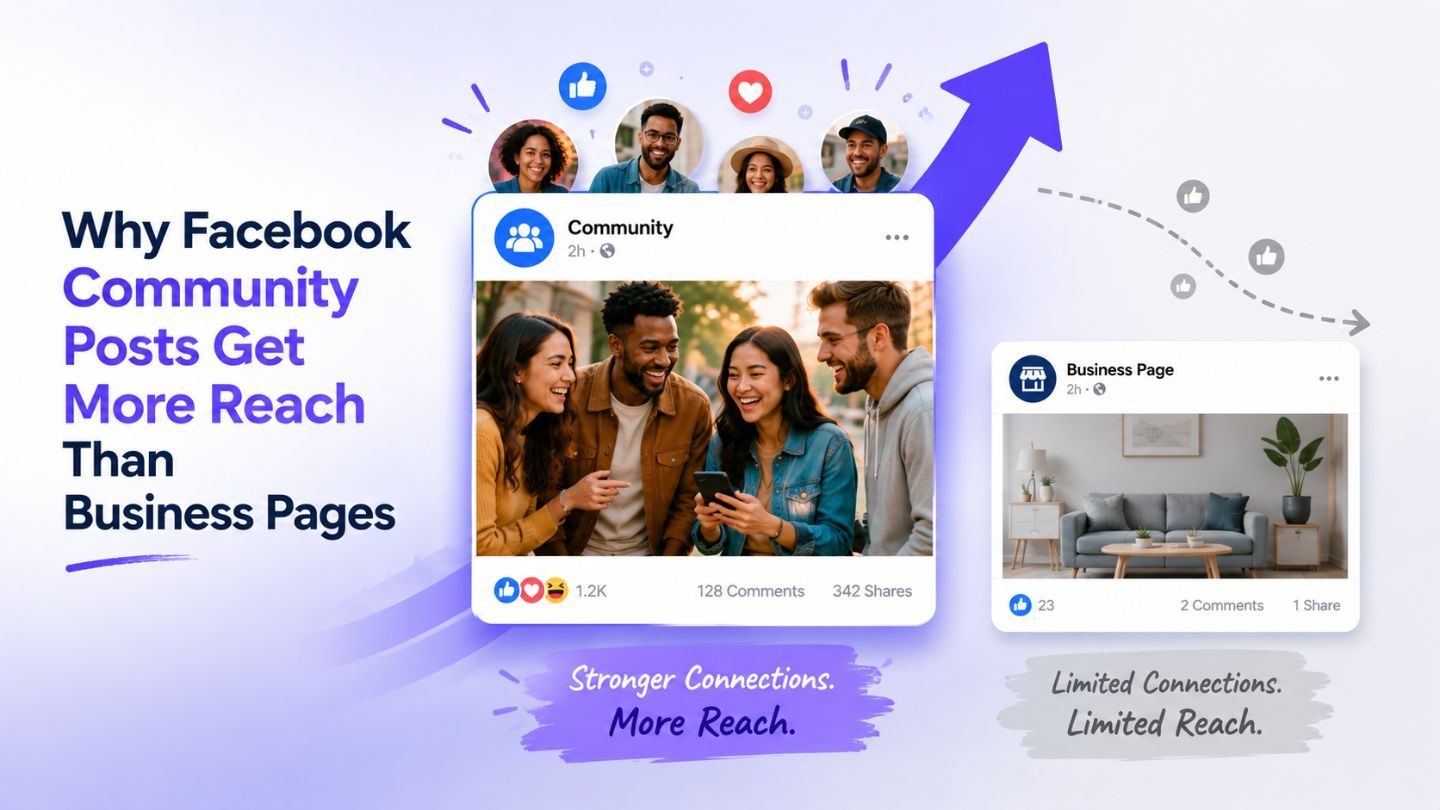
Facebook has evolved from a simple networking platform into a highly engagement-driven community space where meaningful conversations matter more than promotional content. While many businesses still rely heavily on Facebook Business Pages, community posts inside groups are now generating significantly higher organic reach and interaction. Users are more likely to engage with discussions that feel authentic, relatable, and valuable rather than direct brand promotions. This blog outlines why Facebook community posts outperform business pages, how the platform’s algorithm favors engagement-focused content, and what businesses can do to improve their visibility through smarter community-driven strategies and audience interaction.
Key Takeaways
- Facebook prioritizes meaningful interactions over promotional content
- Community posts encourage conversations and higher engagement
- Facebook Groups create stronger trust among members
- Business Pages face stronger competition in the feed algorithm
- Community-driven discussions increase organic visibility
- Users spend more time interacting inside niche groups
- Authentic conversations outperform direct sales messaging
- Brands can improve reach by combining groups with page strategies
- Engagement quality matters more than follower count
- Consistent value-based posting increases audience retention
Facebook’s Algorithm Prefers Conversations Over Promotions
Facebook’s current algorithm is designed to keep users engaged for longer periods, which means the platform promotes content that generates conversations rather than content that feels promotional. Community posts, especially those inside Facebook Groups, naturally encourage discussions, reactions, and comments because users feel like they are participating in a shared space. These interactions send strong engagement signals to Facebook, increasing the chances of posts appearing in more feeds organically.
Business Pages, on the other hand, often publish content that feels transactional or sales-focused. Even when businesses share useful updates, Facebook may still categorize those posts as promotional content, limiting their reach. Since thousands of brands compete for visibility every day, the algorithm becomes selective and prioritizes posts that keep users actively communicating rather than passively scrolling through advertisements or branded messages.
Facebook Groups Create a Sense of Community
One major reason community posts perform better is that Facebook Groups are built around shared interests and common goals. Members join groups because they genuinely care about the topic being discussed, which creates a stronger emotional connection between participants. Whether the group focuses on fitness, business growth, parenting, or local communities, users feel more comfortable engaging in discussions because the environment feels personal and interactive.
Business Pages rarely achieve the same level of intimacy because followers often see them as formal brand channels instead of discussion spaces. While users may like a business page for updates or promotions, they are less likely to participate in meaningful conversations there. Community groups remove that barrier and make people feel like their opinions matter, which increases participation and boosts post visibility naturally.
Engagement Rates Are Higher in Community Posts
Community posts typically receive more comments, reactions, and shares because they invite participation rather than simply broadcasting information. Questions, opinions, recommendations, and user-generated discussions encourage members to interact with one another, creating continuous engagement. The more active a conversation becomes, the more Facebook recognizes the content as valuable and relevant to users. Business Page posts often struggle to maintain that level of engagement because many brands focus heavily on polished marketing content instead of interaction-driven communication.
Users today respond better to authenticity and relatable discussions than overly curated promotional updates. Community-based content feels more natural and less like advertising, which is why audiences are more willing to engage with it consistently. Community discussions also work better when brands understand what makes content easy to share. A strong viral content strategy to create social media posts helps businesses shape posts around emotion, relatability, and audience participation, which are the same qualities that make Facebook community posts perform well.
People Trust Peer Discussions More Than Brand Messaging
Trust plays a major role in how users interact with content online. Community discussions often involve real experiences, recommendations, and opinions from actual users, making the information feel more reliable and unbiased. When members share feedback or discuss a topic openly, other users are more likely to participate because the conversation appears genuine and transparent.
Business Pages face a trust challenge because users understand that brands are ultimately promoting themselves. Even when businesses provide valuable insights, audiences may still perceive the content as marketing-driven. Community posts remove that skepticism by allowing conversations to happen organically among users, which increases credibility and encourages stronger interaction rates.
Facebook Notifications Help Groups Stay Active
Facebook actively sends notifications to users when there is new activity in groups they follow. These alerts encourage members to revisit the group regularly and participate in ongoing conversations. Since group notifications are often personalized based on user activity, members are more likely to return and engage with fresh posts or trending discussions.
Business Pages do not receive the same notification advantage unless users manually enable updates, which many people never do. As a result, even high-quality page content can go unnoticed in crowded news feeds. Groups maintain stronger engagement because Facebook continuously reminds users about active discussions, making community posts more visible and interactive over time.
Community Posts Encourage Longer User Sessions
Facebook benefits when users spend more time on the platform, and community discussions naturally support that goal. A single community post can lead users into long comment threads, debates, recommendations, and follow-up conversations that keep them engaged for extended periods. These lengthy interactions signal valuable content to Facebook’s algorithm, which then promotes the post to more users.
Business Page posts are often consumed quickly because they focus on announcements, promotions, or short-form updates. Users may react briefly before continuing to scroll. Since Facebook rewards content that increases session duration and interaction depth, community-driven discussions gain a stronger advantage in organic reach and feed placement.
Authenticity Performs Better Than Corporate Branding
Modern social media audiences are highly responsive to authentic communication. Community posts often include personal stories, honest opinions, and casual conversations that feel relatable to users. This authenticity helps build stronger emotional connections and encourages users to participate without feeling pressured by marketing intentions.
Business Pages sometimes struggle because their content can appear too polished or overly branded. Even visually appealing posts may fail to create meaningful engagement if audiences perceive them as advertisements. Community interactions feel spontaneous and real, which aligns more closely with what users expect from social media platforms today.
Niche Communities Deliver Better Targeting
Facebook Groups are usually centered around specific interests, industries, or local communities, which creates highly targeted audiences. This means that posts inside these groups are naturally relevant to the people viewing them. Since users already care about the subject matter, engagement rates increase without requiring aggressive promotional tactics. Business Pages often attract broader audiences with varying interests, making it harder to create content that resonates equally with everyone.
Community-based environments allow businesses to focus on specific conversations and provide value directly to interested users. This targeted interaction improves visibility while also building stronger relationships with potential customers. Targeted community engagement becomes even more valuable when it connects to a clear customer journey. A well-planned social media funnel strategy to turn views into leads helps businesses move users from casual group interactions toward stronger trust, inquiries, and conversions.
Businesses Can Still Benefit From Facebook Pages

Although Facebook Groups currently receive stronger organic reach, Business Pages still play an important role in brand visibility and credibility. Pages act as official brand hubs where businesses can share company information, run advertisements, showcase products, and maintain professional communication with customers. Paid formats, such as a dark post on social media, can also help brands test targeted messages without overcrowding their public page content. The key is understanding that pages alone may no longer deliver consistent organic performance without a strong engagement strategy.
Businesses that combine community interaction with business page management often achieve the best results. By participating in discussions, sharing valuable insights, and encouraging audience interaction, brands can create a balanced approach that supports both visibility and trust. Instead of relying entirely on promotional content, businesses should focus on creating conversations that genuinely interest their audience.
The Future of Facebook Marketing Is Community Driven
Social media platforms are increasingly prioritizing relationship-based interactions instead of one-way marketing communication. Facebook’s shift toward communities reflects changing user behavior, where people value connection, authenticity, and meaningful discussions more than traditional advertising. Businesses that adapt to this shift will have a stronger chance of maintaining visibility and audience engagement over the long term.
Community-driven strategies are not about abandoning business pages entirely but about understanding how audiences now prefer to interact online. Brands that participate in conversations, provide genuine value, and build trust within communities will continue to perform better than those relying solely on promotional posts. The future of Facebook marketing belongs to businesses that focus on engagement rather than simple visibility.
Final Thoughts
Facebook community posts continue to gain more organic reach than Business Pages because they encourage meaningful conversations, authentic engagement, and stronger audience participation. Facebook’s algorithm now prioritizes content that creates interactions between users rather than content that feels overly promotional. From niche group discussions to user-driven recommendations, community-focused content helps businesses build trust, improve visibility, and maintain long-term engagement. Brands that combine valuable conversations with strategic content planning are more likely to succeed in today’s competitive social media environment.
At The Ocean Marketing, we help businesses create effective social media marketing strategies that improve engagement, strengthen audience relationships, and increase online visibility. Our team also offers a free SEO audit to identify opportunities that can improve your digital performance and help your brand grow across multiple online platforms. Contact us today to discover how we can help your business build stronger online communities and achieve lasting marketing success.