
Most LinkedIn company pages are set up once, filled in halfway, and then used as a place to repost announcements nobody reads. That wastes a page that can genuinely surface in search, support recruiting, and give prospects a reason to take a first meeting. This blog covers the specific fields that affect visibility, what actually earns reach on the platform now, and the mistakes that leave a page technically complete and practically dormant.
Key Takeaways
- The tagline and About section are indexed and most often neglected.
- Employee engagement drives page reach more than page followers do.
- Consistent posting matters less than posting things worth responding to.
- Complete pages surface in more searches, both on and off platform.
- A dormant-looking page actively costs credibility with prospects.
The Fields That Affect Whether You Are Found
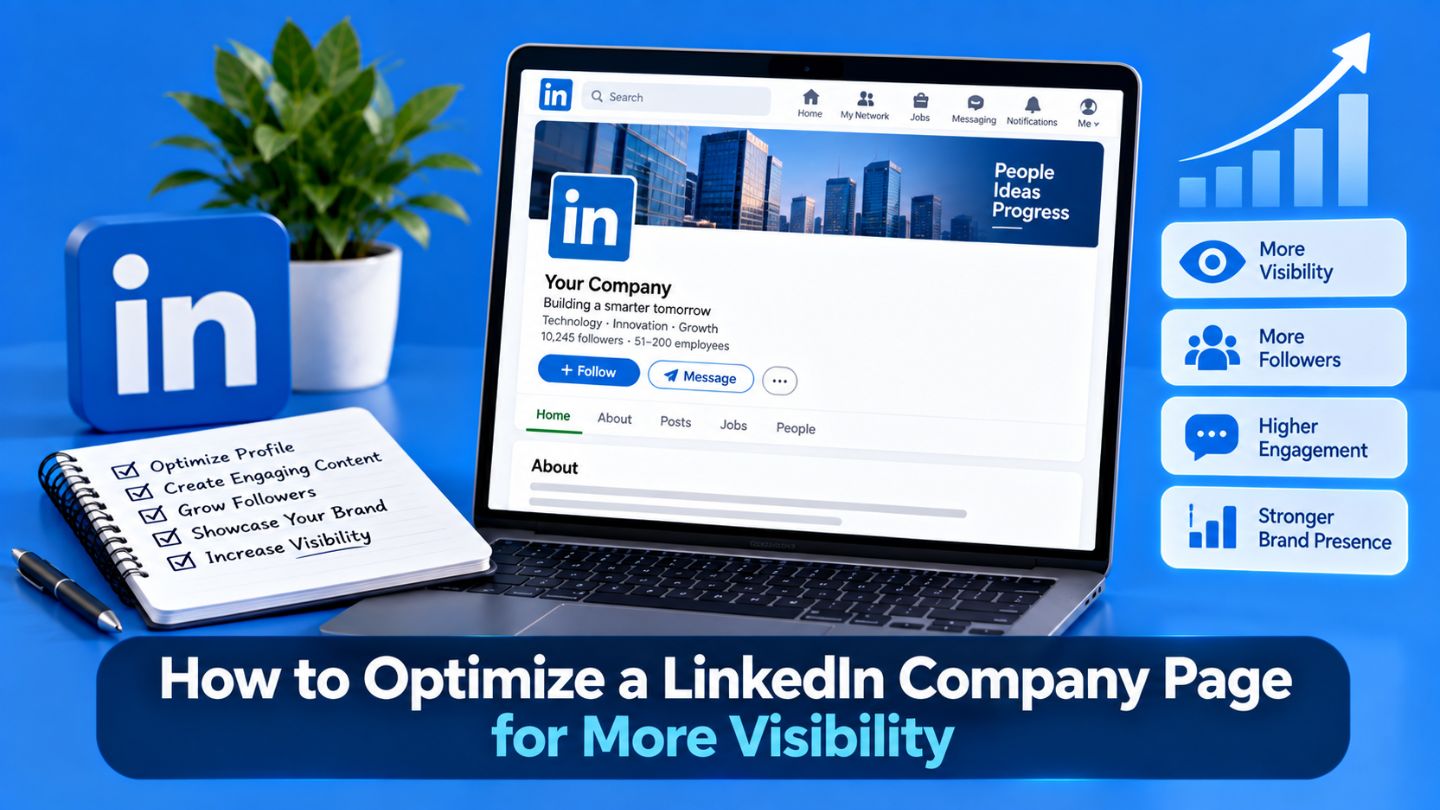
LinkedIn's own search reads your page name, tagline, and About section, and so do external search engines that index company pages. The tagline is the highest-leverage field and the one most often filled with something aspirational rather than descriptive, which means it communicates nothing searchable.
Describing what you actually do, for whom, in plain terms beats a slogan every time. Specialties, industry, location, and company size all feed matching as well, and leaving them blank narrows the set of searches you can appear in. This is unglamorous completeness work that takes under an hour and is skipped almost universally. The same fields feed external results too, which is where social media SEO starts mattering to a company page.
Employees Carry More Reach Than the Page
A company page has a follower count; an employee base has a network several multiples larger, and LinkedIn's distribution favors personal accounts over brand accounts. That means the same content reaches considerably further when a person publishes or engages with it than when the page posts alone.
The practical implication is that page strategy and employee participation are the same project. A post that nobody at the company engages with in the first hour is largely finished, regardless of quality. This is the mechanic behind why carousels and text posts perform differently on LinkedIn; format affects the early engagement window that determines everything after it.
Posting Cadence That Teams Can Actually Sustain

The realistic question is not what cadence is optimal but what cadence you can hold for a year without quality dropping. Two solid posts a month, sustained, outperforms a burst of daily activity followed by six months of silence, because the silence is what visitors actually see when they check.
Building a small buffer helps more than a rigid schedule. Having two or three posts ready removes the pressure that produces filler, and filler is what erodes engagement rates and, through them, the reach of everything that follows.
What Actually Earns Engagement
Announcement posts perform badly because they ask for attention without offering anything. Posts that do well tend to share something specific and useful: a lesson from a project, a number from your own work, a clear opinion on something contested in your industry, or an explanation of a problem your customers actually have.
Length works differently here than on other platforms. Substantial posts that make a complete point outperform short teasers pushing people off-platform, since LinkedIn suppresses content that routes traffic away. Where a longer format genuinely fits, publishing as a LinkedIn article rather than a post is worth considering for durable topics.
Put the Link in the Comment
Outbound links in the post body reliably reduce reach. Making the post complete on its own and placing the link in the first comment preserves distribution without hiding the destination.
Read More: How to Turn Instagram Profile Visits Into Website Traffic
Comments Do More Than Reactions
A reaction is a single tap; a comment is a genuine interaction that both signals value and keeps the post circulating. Posts that ask a real question, or take a position people want to respond to, consistently outperform ones designed only to be agreed with.
Replying to those comments extends the effect, since each reply is another interaction inside the window that determines distribution- the same early-traction dynamic behind how to get content onto the Instagram Explore page. Publishing and leaving wastes the engagement a post did earn, which is a common and entirely avoidable loss.
Why a Dormant Page Costs More Than No Page
Prospects and candidates check LinkedIn during evaluation, and a page whose last post is fourteen months old reads as a business that may not still be operating. That impression forms in seconds and is difficult to correct with anything else on the page.
This is why irregular bursts of activity followed by long silences are worse than a modest steady cadence. Two thoughtful posts a month, sustained, signal an active business; twelve posts in one week followed by nothing signal a campaign that ended. The bar is lower than most teams assume, and consistency matters more than volume.
The Page as a Recruiting Asset
For most businesses, a meaningful share of company page visits come from candidates rather than customers, and the page is rarely written with that audience in mind. What the work is actually like, who they would join, and why people stay are questions the page can answer and usually does not.
This matters commercially as well, since prospects frequently look at a company's people to judge whether it is substantial. A page showing real employees engaging publicly reads as a functioning business; one showing a logo and three announcements does not.
The Elements Nobody Fills In
Custom buttons pointing at a genuinely relevant destination, a cover image that says what you do rather than repeating the logo, a complete Products or Services section, and Life pages where recruiting matters, all sit unused on most pages. Each is a small addition that gives a visitor a reason to take a next step.
Featured content is similarly underused. Pinning your strongest piece, a case study, a genuinely useful guide, means first-time visitors see your best work rather than whatever happened to be posted most recently. Given that most page visits are from people evaluating you, that ordering matters more than it appears to.
Measuring Whether Any of It Works
Follower count is the least useful number available. Page views, unique visitors, and custom button clicks tell you whether people are arriving and acting. Engagement rate relative to impressions tells you whether content is landing with the audience you already have.
The more telling check is qualitative: ask your sales team whether prospects mention the page, and check whether candidates reference it in interviews. Those signals reveal whether the page is doing the credibility job it exists for, which is not something a follower number will ever capture. Mapping those signals against a proper social media funnel makes it clearer which ones are worth reporting.
Common Mistakes Worth Avoiding
The recurring ones are predictable: posting only company announcements, sharing links with no context, using the page as a press release channel, and letting the About section describe an ambition rather than the business. Each treats the page as a broadcast surface rather than a place people evaluate you.
The other frequent error is measuring success by follower growth. Followers who never engage do nothing for reach and nothing for credibility, and chasing that number tends to produce content optimized for a metric that was never connected to an outcome.
Getting Employees Involved Without Mandating It

Requiring staff to share company posts produces reluctant engagement that audiences recognize and algorithms discount. What works better is making participation easy and worthwhile: notifying people when something relevant is published, and giving them material they would genuinely want their own network to see.
The strongest version is employees posting their own perspective rather than resharing corporate copy. That reaches further, reads as authentic, and builds the individual credibility that eventually reflects back on the company more effectively than any page-level activity.
Read More: Creator vs Brand Content: What Audiences Trust More
Making the Page Earn Its Place
A LinkedIn company page becomes useful when it is complete enough to be found, active enough to look alive, and specific enough to give a visitor a reason to care. Fill the indexed fields with descriptive language rather than slogans, get employees engaging early because their networks carry the reach, post things worth responding to rather than announcements, and keep a modest cadence rather than sporadic bursts. Most of the work is unglamorous, and it is also mostly undone by competitors.
At The Ocean Marketing, we build social media marketing that supports real business outcomes rather than follower counts. Whether you need a page audit, help building a posting approach your team will actually sustain, or a free SEO audit to see how your wider presence performs, our team can help. Contact us and let's get your page working.