
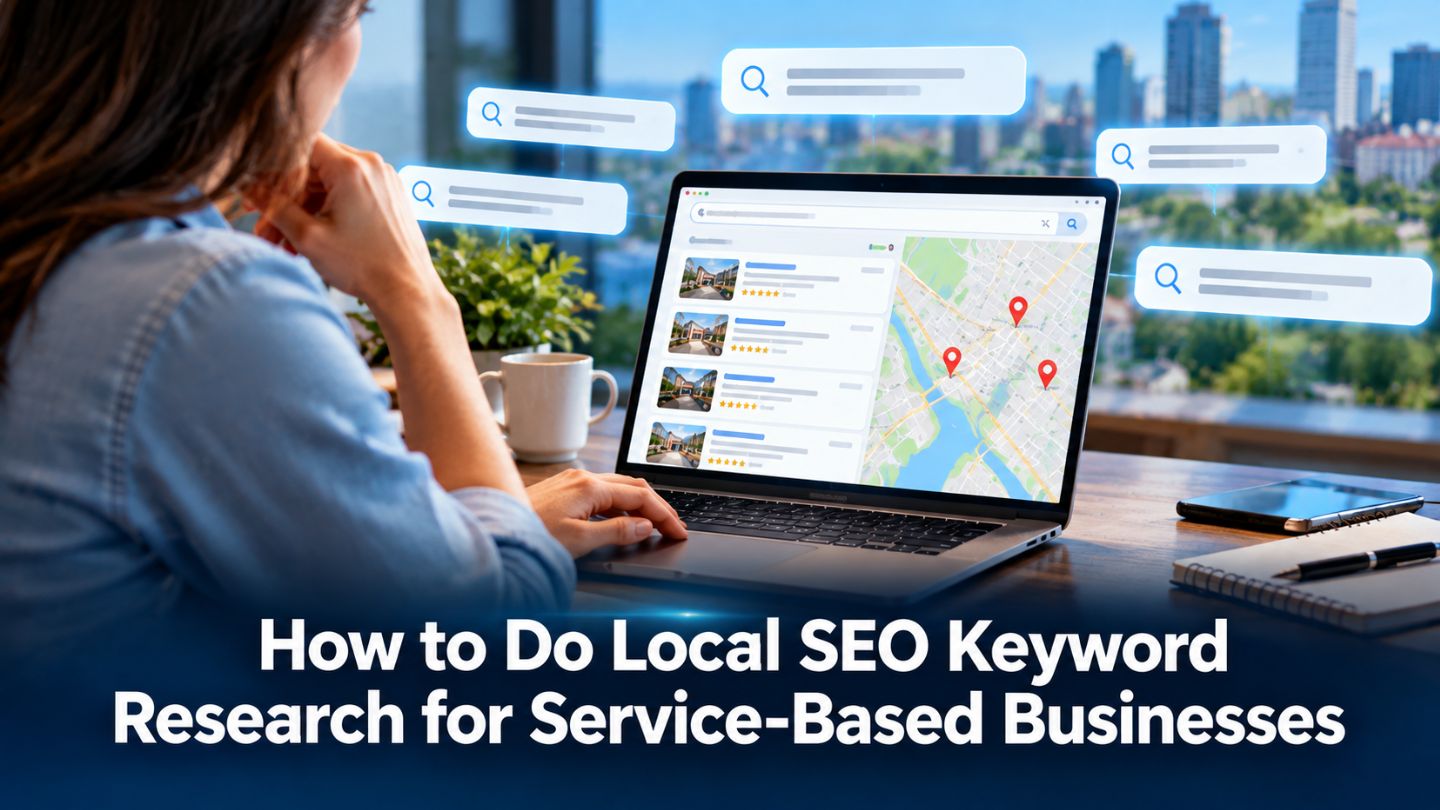
Keyword research for a local service business works differently than for a national one, because the intent that matters is tied to place, and the highest-value searches are often lower in volume than a broad national tool would flag. Getting this right means understanding how people actually search for services near them, not just plugging your service into a keyword tool. This blog covers how to do local keyword research properly, the intent signals that matter for service businesses, and the common mistakes that surface the wrong terms.
Key Takeaways
- Local intent matters more than raw search volume.
- Service plus location terms carry high commercial intent.
- The way people describe a service locally may differ from industry terms.
- Low-volume local terms often convert better than high-volume broad ones.
- Real customer language beats keyword tool suggestions.
Why Local Keyword Research Is Different
For a national business, volume and broad relevance drive keyword choices. For a local service business, the searcher's location and intent matter far more, because a high-volume national term is worthless if the people searching it are nowhere near you. The relevant question is not how many people search a term overall, but how many nearby people with genuine intent do.
This flips the usual priority. A term with modest national volume but strong local, commercial intent- someone searching for your specific service in your specific area- is worth more than a high-volume broad term that attracts people who will never become customers. Understanding how proximity, relevance, and prominence work in Google Maps SEO explains why local intent outweighs raw volume here.
The Service-Plus-Location Pattern
The workhorse of local keyword research is the combination of a service and a location, the phrasing someone uses when they need a specific service near them. These terms carry high commercial intent because someone searching them is usually looking to hire, not just to learn, which makes them far more valuable per search than informational terms.
Mapping out the services you offer against the locations you serve produces the core of a local keyword strategy. The nuance is that people search in varied ways, sometimes by neighbourhood, sometimes by city, sometimes by broader region, and capturing that range matters. This is the local application of thinking about search the way people actually phrase it, which connects to the value of how Reddit helps you find low-competition SEO keywords.
Volume Is a Poor First Filter
A local term with low reported volume can drive real business, because the searchers are exactly the customers you want. Filtering by volume first discards your best opportunities.
Read More: Search Demand vs Search Volume: Which Metric Should You Trust
How People Actually Describe Services

Businesses often think in industry terminology, and customers often do not. The technical name for a service, the one you and your competitors use internally, may not be what a customer types when they need it. Local keyword research has to capture the customer's language, which can differ meaningfully from the industry standard term.
This gap is a common source of missed opportunity. A business optimizing entirely for the industry term may be invisible for the everyday phrase customers actually search. Listening to how customers describe what they need, in their own words, surfaces terms that keyword tools built around industry vocabulary miss entirely, which is why real customer language is such a valuable input.
Why Low-Volume Terms Often Win
The instinct to chase the highest-volume term backfires in local search. A broad, high-volume term is more competitive, less specific in intent, and often attracts people outside your service area or outside your actual offering. A lower-volume, highly specific local term attracts exactly the people you want, with clear intent to hire.
This means local keyword research should be weight intent and specificity over volume. A handful of low-volume terms that describe your exact service in your exact area, searched by people ready to hire, can drive more business than a high-volume term that scatters across a wide audience with mixed intent. Quality of intent beats quantity of searches, particularly for service businesses where each customer is worth real money. These are usually long-tail terms, and the way people phrase them has shifted since AI search arrived.
The Sources That Actually Help
Beyond keyword tools, the most useful local research sources are ones grounded in real behaviour. The questions customers actually ask, the terms that appear in your existing search data, the language competitors use to describe the same services, and the way people in your area discuss what they need all surface terms a tool alone would miss.
Your own Search Console data is particularly valuable, since it shows the actual terms already bringing people to your site, including local variations you might not have targeted deliberately. Combining that real data with an understanding of your service area and customer language produces a keyword picture that reflects reality rather than a tool's national-scale assumptions. A proper technical SEO audit with free tools surfaces much of this.
Avoiding the Common Mistakes
The recurring errors are consistent: choosing terms by volume rather than local intent, optimizing for industry jargon instead of customer language, ignoring the range of ways people specify location, and overlooking the real terms already in your own search data. Each of these surfaces the wrong keywords, which then shape content and optimization around searches that do not convert.
The correction is to keep the research grounded in the actual customer, their location, their language, their intent to hire, rather than in a tool's abstract volume figures. Local keyword research done well reflects how real people in your area actually search for what you offer, which is a different and more useful picture than a national keyword tool produces by default.
Mapping Terms to the Pages They Fit
Finding the right local terms is only useful if they map to pages that can actually serve them, which means thinking about structure alongside research. A service-plus-location term needs a page genuinely about that service in that area, not a generic services page that mentions everything. The research and the site structure have to work together, or the terms surface pages that do not match the intent behind them.
This is where local keyword research connects to how the site is built. Businesses serving multiple areas or offering multiple services need a structure that lets each important service-plus-location combination have a page that genuinely addresses it. Matching the research to the structure, rather than treating them separately, is what turns a good keyword list into pages that actually rank and convert for the terms you found.
Read More: How to Boost Local SEO with Strategic Service Area Pages
The Seasonality Local Businesses Face

Many local service businesses have genuine seasonal patterns, and local keyword research that ignores them misses part of the picture. The terms people search, and how often, can shift substantially through the year for services tied to weather, holidays, or seasonal needs, and a keyword strategy built on a single snapshot may misjudge what matters when.
Accounting for this means understanding not just which terms have intent but when that intent peaks, so content and effort can be timed to match. A service in high demand at a particular time of year deserves attention before that period rather than during it, since ranking takes time to build. Reading the seasonal rhythm of your local demand, rather than treating search volume as constant, is part of doing local research that reflects reality. Checking the shape of that demand in Google Trends shows when each term actually peaks.
Finding the Terms That Bring Customers
Local keyword research for a service business is about intent and place, not raw volume. The service-plus-location terms that carry genuine commercial intent, phrased in the language customers actually use, are worth more than high-volume broad terms that attract people who will never hire you. Weight specificity and intent over search counts, capture the customer's real language rather than industry jargon, and lean on your own search data and customer conversations over tool defaults. Done that way, the research surfaces the terms that actually bring in local customers.
At The Ocean Marketing, we build SEO strategies grounded in how local customers actually search rather than national volume figures. Whether you need help finding the terms that bring genuine local business, capturing the language your customers use, or a free SEO audit to see where your site currently stands, our team can help. Contact us and let's find the keywords that actually convert.