
A sudden drop in search rankings can be alarming, especially when it affects traffic, leads, and revenue. In many cases, the issue may be linked to a Google Search Console manual action - a penalty applied when a website violates Google's spam policies or webmaster guidelines. Unlike algorithm updates, manual actions involve direct human review and can significantly impact visibility in search results. This blog outlines what manual actions are, why they occur, how to identify them, and the steps required to recover. In this blog, we'll discuss common causes, practical fixes, and strategies to prevent future penalties.
Key Takeaways
- Manual actions are penalties applied by Google's review team for policy violations.
- Unnatural links, spam content, and deceptive practices are common triggers.
- Google Search Console provides details about detected manual actions.
- Fixing the root cause is essential before requesting reconsideration.
- Recovery timelines vary depending on the issue and Google's review process.
- Ongoing SEO best practices help prevent future manual actions.
What Is a Google Search Console Manual Action?
A manual action occurs when Google's webspam team determines that a website or specific pages violate Google's search quality guidelines. When this happens, Google may reduce rankings, remove pages from search results, or in severe cases, deindex an entire website. Unlike algorithmic ranking changes, manual actions involve a human reviewer assessing a site. Website owners are typically notified through Google Search Console, making it easier to identify the issue. The notification usually explains the violation and whether it affects the whole website or only certain pages.
Why Manual Actions Can Hurt Your SEO Performance
Manual actions can quickly impact organic visibility. A site that previously ranked well may experience significant traffic declines almost overnight. For businesses that rely on search traffic, this can lead to reduced inquiries, lower sales, and missed opportunities. The effects often extend beyond rankings. A manual action can damage user trust, slow growth efforts, and require extensive cleanup work. The longer the issue remains unresolved, the harder it can become to regain lost visibility and rebuild search performance.
Common Reasons Google Issues Manual Actions

Google applies manual actions when it identifies practices intended to manipulate search rankings or provide a poor user experience. Some violations are intentional, while others occur because of outdated SEO tactics or a lack of website oversight.
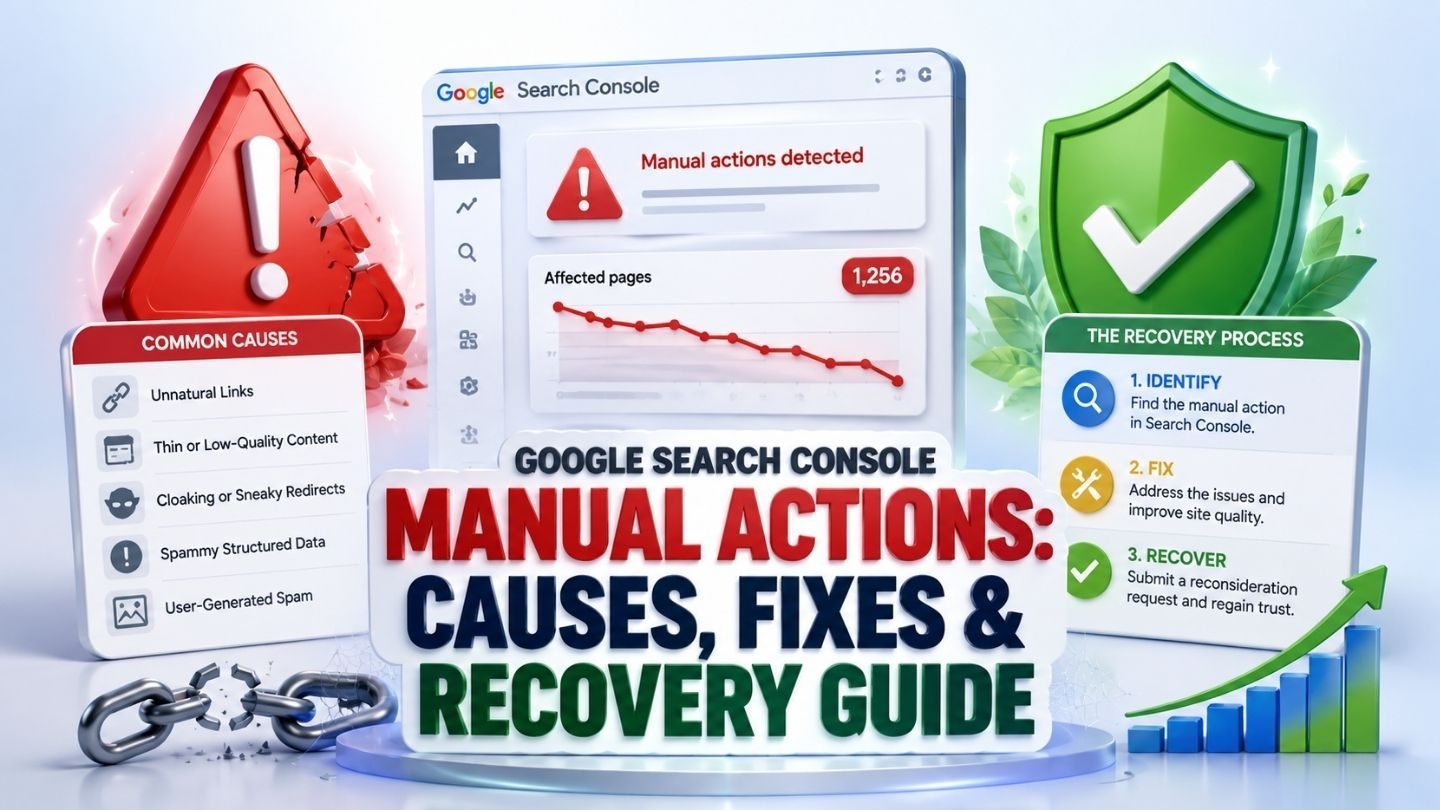
Common causes include:
- Unnatural inbound links
- Unnatural outbound links
- Thin or low-quality content
- User-generated spam
- Cloaking and sneaky redirects
- Keyword stuffing
- Hidden text or hidden links
- Structured data abuse
- Pure spam techniques
- Hacked website content
Even websites with good intentions can face manual actions if they inherit poor SEO practices from previous campaigns or third-party contributors. This is especially common when a site has undergone multiple redesigns, ownership changes, or outsourced SEO efforts over time. Regular audits can help uncover these hidden issues before they lead to ranking losses or penalties.
Unnatural Links: One of the Most Frequent Violations
Link-related penalties remain among the most common manual actions. Google expects links to be earned naturally through valuable content and genuine recommendations. When links are purchased, exchanged excessively, or created solely to manipulate rankings, they can trigger a penalty. Unnatural link issues may involve backlinks pointing to your website or links placed on your website pointing elsewhere.
If Google determines that link schemes are influencing rankings, affected pages can lose visibility until the issue is resolved. Regular backlink audits help identify potentially harmful links before they become a larger problem. If suspicious links are part of the issue, understanding toxic backlinks and how to find and remove them can make the cleanup process more focused.
Thin Content and Spam Issues That Raise Red Flags
Content quality plays a major role in Google's evaluation process. Pages that provide little value, duplicate information, or exist only to rank for keywords may be considered thin content. This becomes especially problematic when large portions of a website contain low-quality pages. Spam-related issues can also trigger manual actions.
User-generated content areas such as forums, blog comments, and community sections often become targets for spam links and irrelevant content. Without proper moderation, these sections can create compliance issues that affect overall site performance. A deeper review of why Google penalizes thin content and how to avoid it can also help site owners understand when low-value pages become a bigger SEO risk.
How to Check for Manual Actions in Google Search Console
Google Search Console makes it relatively straightforward to determine whether a website has received a manual action. Inside the platform, navigate to the "Manual Actions" section under Security & Manual Actions.
If Google has identified a violation, you'll see a detailed message outlining:
- The type of violation
- Affected pages or site sections
- Whether the action is site-wide or partial
- Recommended steps for correction
If no manual actions exist, Search Console will display a confirmation message indicating that no issues have been detected. Even if no penalties are present, it's still a good idea to review Search Console regularly for warnings, indexing issues, or other signals that could affect search performance.
Fixing a Manual Action: Where to Start
The first step is understanding exactly what caused the penalty. Many website owners rush into submitting reconsideration requests before resolving the underlying issue, which often leads to rejection. Begin by reviewing Google's notification carefully. Then conduct a thorough audit of affected pages, backlinks, content, and technical elements. Document every issue you find and create a clear action plan. A systematic approach helps ensure nothing is overlooked during the cleanup process.
Read More: Technical SEO Audits with Free Tools: How to Do a Deep Audit on a Budget
How to Remove Unnatural Link Penalties
When dealing with link-related manual actions, identifying problematic links is critical. Start by reviewing backlink data from Google Search Console and other SEO tools. Look for paid links, spammy directories, irrelevant websites, and suspicious link networks.
After identifying problematic links:
- Contact website owners and request removal
- Remove unnatural outbound links under your control
- Document outreach efforts
- Use Google's Disavow Tool when necessary
- Maintain records of corrective actions
Google wants to see genuine efforts to resolve the problem rather than quick fixes or shortcuts. Keeping detailed records of link removals, outreach attempts, and corrective actions can strengthen your case during the review process. This documentation helps demonstrate that meaningful steps were taken to bring the website back into compliance with Google's guidelines.
Cleaning Up Content-Related Manual Actions

If the issue involves content quality, focus on improving or removing problematic pages. Thin pages should be expanded with useful information, while duplicate or low-value pages may need consolidation or deletion. For websites with overlapping pages, learning how to find and fix duplicate content issues can support a cleaner recovery plan.
Content cleanup should prioritize user experience rather than simply satisfying search engines. Ask whether each page provides meaningful information, answers user questions, and supports the overall purpose of the website. Pages that exist only to attract traffic without offering value often require significant revision.
Handling User-Generated Spam
User-generated spam requires ongoing monitoring and moderation. Remove spam comments, suspicious user profiles, irrelevant links, and automatically generated content. Strengthening moderation processes can prevent future issues from developing.
Consider implementing measures such as:
- Comment moderation
- CAPTCHA protection
- User verification systems
- Automated spam filters
- Regular content reviews
These safeguards help maintain content quality and reduce future risks. They also make it easier to identify suspicious activity before it affects your site's reputation or search visibility. Consistent monitoring can go a long way in preventing recurring spam-related issues.
Submitting a Reconsideration Request
Once all violations have been addressed, it's time to submit a reconsideration request through Google Search Console. This request allows Google's review team to evaluate the corrective actions taken. A strong reconsideration request should clearly explain what caused the issue, the specific steps taken to fix it, the evidence supporting those corrective actions, and the measures implemented to prevent the problem from happening again. Transparency is important. If mistakes were made, acknowledge them and clearly demonstrate how the website now complies with Google's guidelines.
How Long Does Recovery Take?

Recovery timelines vary depending on the severity of the violation and Google's review workload. Some reconsideration requests receive responses within days, while others may take several weeks. Even after a manual action is removed, rankings may not return immediately. Search engines often need time to recrawl, reprocess, and reassess website signals. Recovery can be gradual, especially if the website relied heavily on tactics that violated Google's policies.
Read More: What Is Negative SEO and How to Prevent, Detect, and Recover From It
Preventing Future Manual Actions
Preventing manual actions is far easier than recovering from them. Consistent SEO best practices help reduce risk while supporting long-term search visibility.
Focus on the following key areas:
- Creating high-quality content
- Building natural backlinks
- Monitoring user-generated content
- Performing regular SEO audits
- Following Google's spam policies
- Reviewing technical SEO health
Search optimization should always prioritize users first. Sustainable SEO strategies typically align closely with Google's quality expectations.
Final Thoughts
Google Search Console manual actions can have a serious impact on website performance, but they are not permanent when handled correctly. Understanding the cause, conducting a thorough cleanup, and submitting a well-documented reconsideration request can help restore visibility and protect long-term search success. The key is addressing the root problem rather than applying temporary fixes.
If your website has experienced ranking losses or you're unsure whether technical or compliance issues are affecting performance, The Ocean Marketing can help. Our team specializes in SEO, penalty recovery, and sustainable optimization strategies. You can also request a free SEO audit to identify potential issues and opportunities. Contact us to learn how we can support your website's growth and search visibility.