
In today’s fast-evolving digital space, content quality has become a defining factor in how websites perform on search engines like Google. Businesses and content creators can no longer rely on surface-level writing to achieve visibility, as search algorithms now prioritize value, relevance, and user intent. Thin content not only limits your chances of ranking but can also lead to penalties that harm your overall online presence. This blog outlines why Google penalizes thin content, how it impacts your website, and the most effective ways to avoid it. By understanding these insights, you can build stronger, more authoritative content that drives long-term SEO success.
Key Takeaways
- Thin content offers little to no value to users and harms rankings
- Google prioritizes user intent, depth, and relevance in content
- Duplicate and low-effort pages are major penalty triggers
- Quality content improves engagement and trust signals
- Content audits help identify and fix weak pages
- Strategic planning prevents thin content creation
What Is Thin Content?
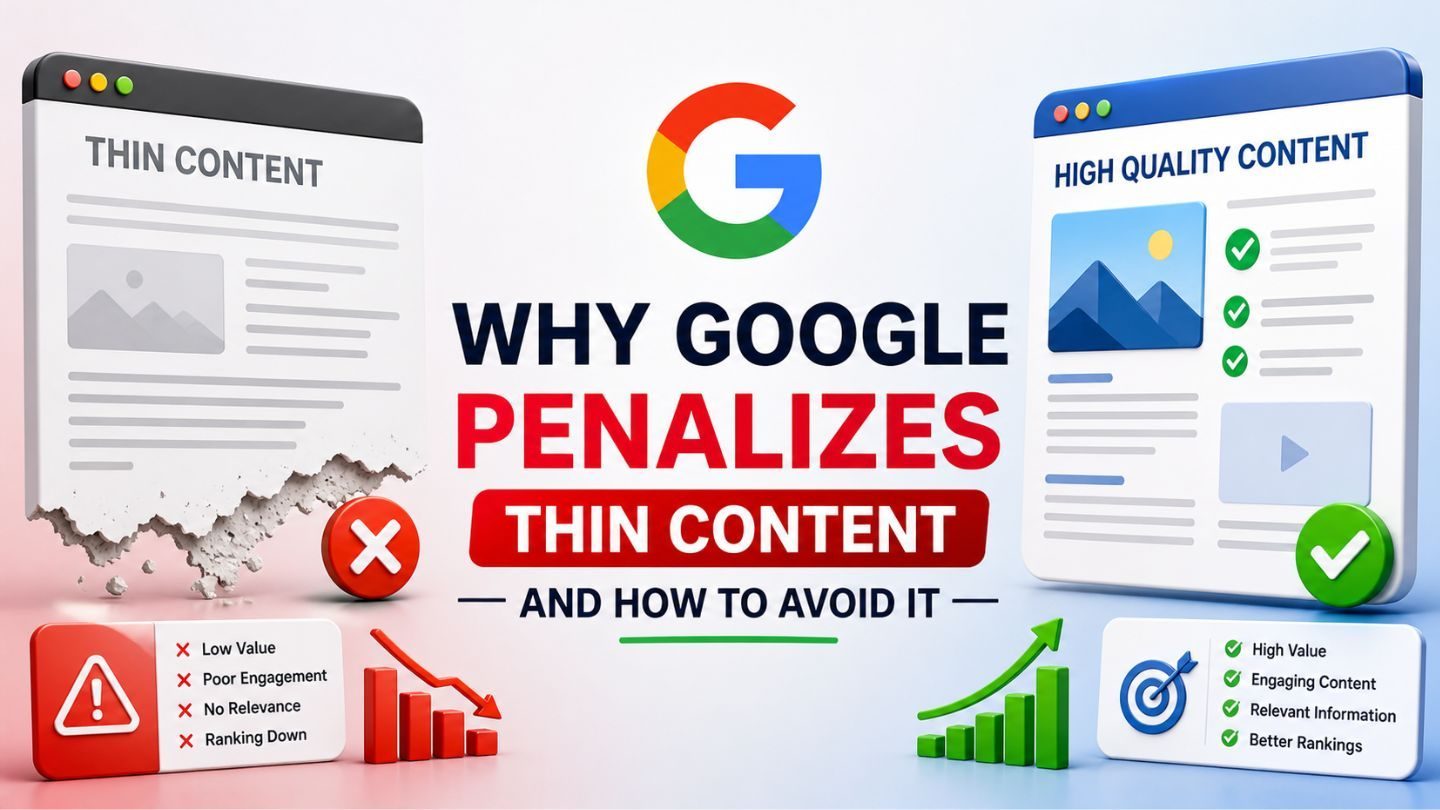
Thin content refers to web pages that fail to provide meaningful, relevant, or sufficient value to users who visit them, and it is one of the most common reasons websites struggle to rank effectively. These pages are often created with the sole intention of gaining visibility on search engines rather than genuinely helping users understand a topic or solve a problem. While many assume thin content simply means short articles, it can also include long pages filled with fluff, repetition, or vague explanations that do not provide real insight. Google evaluates content based on usefulness and intent satisfaction, so any page that lacks depth, originality, or clarity can fall into this category. Over time, publishing such content weakens a website’s overall authority and reduces its ability to compete in search rankings.
Why Google Penalizes Thin Content
Google penalizes thin content because it directly affects user experience and fails to meet the expectations behind search queries. The primary goal of Google is to deliver the most helpful and relevant results, and when users land on low-value pages, it creates frustration and reduces trust in the search engine. Thin content often leads to poor engagement metrics, such as high bounce rates and low time spent on page, which signals to Google that the content is not useful. Additionally, such content usually lacks expertise, authority, and trustworthiness, which are essential ranking factors in modern SEO. By penalizing thin content, Google encourages website owners to focus on creating meaningful, well-researched, and user-focused content that genuinely adds value.
Common Types of Thin Content
Thin content can appear in several forms, and identifying these types is essential for improving your website’s quality and avoiding penalties. One of the most common examples is duplicate content, where the same or slightly modified text appears across multiple pages, reducing originality and confusing search engines. Another major type is auto-generated content, which is produced quickly using tools but often lacks structure, coherence, and relevance. Affiliate pages that provide minimal information beyond product links are also considered thin, especially when they fail to offer comparisons, reviews, or insights. Additionally, doorway pages created solely for ranking purposes and keyword-stuffed articles with little real value are clear indicators of low-quality content that Google actively filters out.
How Thin Content Impacts Your Website

The impact of thin content on a website can be both immediate and long-term, affecting not only rankings but also user trust and overall performance. One of the most noticeable effects is a drop in search engine visibility, as Google deprioritizes pages that do not provide sufficient value. This leads to reduced organic traffic, fewer leads, and limited growth opportunities for the business. Thin content also results in poor user engagement, as visitors are less likely to stay on or interact with pages that fail to meet their expectations.
Over time, this creates negative signals that further damage rankings and credibility. A website with too many weak or outdated pages can also benefit from a structured content pruning strategy, where low-value pages are reviewed, improved, merged, or removed to strengthen overall site quality. This helps search engines focus on the pages that matter most while giving users a cleaner and more useful browsing experience. In addition, consistently publishing low-quality content can harm your brand image, making it harder to build trust and retain your audience.
How to Avoid Thin Content Penalties
Avoiding thin content penalties requires a strategic and consistent approach that prioritizes quality, relevance, and user intent in every piece of content you create. One of the most effective methods is to develop in-depth content that thoroughly covers a topic, offering clear explanations, examples, and actionable insights that users can actually benefit from. However, creating stronger pages also requires understanding which drives better rankings, content depth, or clarity, because both elements influence how users and search engines evaluate content.
A page should cover the topic completely while still remaining clear, organized, and easy for readers to follow. Conducting regular content audits is also essential, as it helps identify weak or outdated pages that need improvement or removal. It is equally important to understand what users are searching for and ensure your content directly addresses their needs instead of focusing only on keywords. By maintaining originality, updating content regularly, and focusing on value-driven writing, you can significantly reduce the risk of penalties and improve your overall SEO performance.
Best Practices for High-Quality Content

Creating high-quality content involves combining proper research, structured writing, and consistent optimization to deliver the best possible experience to users. Start by identifying relevant topics through keyword research, but ensure that the content remains natural and informative rather than overly optimized. A well-structured format with clear headings and logical flow improves readability and helps users navigate the content more easily. This is where skimmable content becomes valuable, especially because users often scan pages before deciding whether to stay and engage.
When content uses clear formatting, organized sections, and easy-to-follow explanations, it reduces friction and encourages visitors to spend more time with the information. Consistency in publishing valuable content builds authority over time and signals reliability to both users and search engines. Additionally, regularly analyzing performance metrics such as engagement and traffic allows you to refine your strategy and continuously improve your content quality, ensuring long-term success in search rankings.
Final Thoughts
Thin content can significantly impact your website’s ability to rank, attract users, and build long-term credibility in search engines. Throughout this blog, we explored what thin content is, why Google penalizes it, and how it affects overall website performance. We also discussed common types of low-value content and practical strategies to avoid penalties by focusing on depth, originality, and user intent. By consistently creating meaningful and well-structured content, businesses can improve engagement, strengthen authority, and achieve sustainable SEO growth.
At The Ocean Marketing, we specialize in SEO and Content Writing solutions designed to eliminate thin content and enhance your website’s performance. We also offer an SEO audit to help identify gaps and opportunities for improvement in your content strategy. Contact us today and let us help you build a stronger digital presence that delivers real results.