
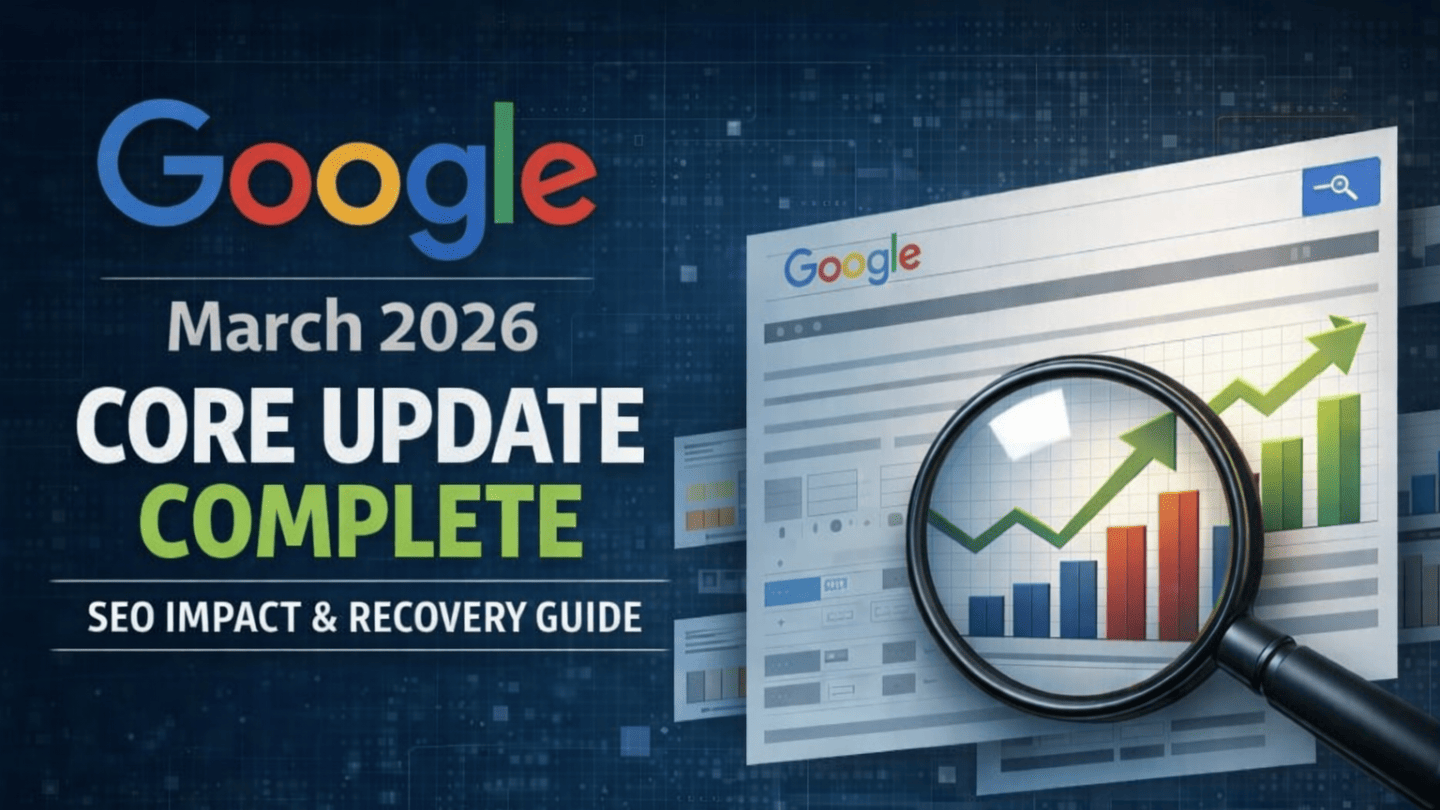
Google’s March 2026 Core Update has officially rolled out, and if you’ve noticed sudden shifts in your rankings, traffic, or leads, you’re not alone. This update has quietly reshaped how Google evaluates content, pushing businesses to rethink what truly matters in SEO today. It’s no longer just about keywords or backlinks; it’s about delivering real value, relevance, and trust in every piece of content you publish. For service businesses and website owners, this change brings both uncertainty and opportunity. Understanding what’s changed and how to respond quickly can make the difference between losing visibility and gaining a competitive edge.
Key Takeaways
- Google’s March 2026 Core Update has reshaped how content is ranked across all industries
- Rankings now depend more on user intent, relevance, and overall content quality
- Ranking fluctuations are normal and do not necessarily indicate penalties
- Outdated, thin, or generic content is more likely to lose visibility
- Regular content updates and improvements are now more important than ever
- Focusing on user-first content is the most effective long-term SEO strategy
- Businesses that adapt quickly will gain a competitive advantage in search results
What Is the March 2026 Core Update?
The March 2026 Core Update is Google’s first broad core update of the year, designed to improve how search results are ranked by prioritizing content that delivers meaningful value to users. Unlike spam updates or targeted algorithm changes, core updates affect the entire search ecosystem and can influence rankings across all types of websites.
Google has clarified that this update is not about penalizing specific sites but about improving how its systems evaluate content. This means that pages may rise or fall in rankings depending on how they compare to other available content for the same query. Even well-performing pages can drop if competitors provide more relevant, comprehensive, or user-focused information.
Why This Update Matters More Than It Seems
Although Google labelled this as a routine update, the scale of ranking volatility suggests a deeper shift in how content is assessed. Many websites have experienced noticeable changes in visibility, which highlights the increasing importance of content quality, structure, and trust signals. This broader volatility becomes easier to understand when viewed alongside the patterns seen during the Google Discover core update, which also reflected shifting visibility across content-driven websites.
What makes this update particularly important is its timing. It followed closely after a spam update and a Discover update, creating a layered effect that has reshaped search results across multiple channels. For service businesses and SEO-driven websites, this means that performance is no longer determined by a single factor but by a combination of content relevance, authority, and user experience. The margin for error is shrinking, and competition is becoming more intense.
What Actually Changed in This Update
While Google did not release detailed specifics, patterns observed across the SEO industry point to several key changes that are shaping rankings after this update.
One of the most noticeable shifts is the stronger emphasis on content that directly satisfies user intent. Google is becoming better at understanding what users are actually looking for, rather than simply matching keywords. This means that content must provide clear, actionable, and complete answers rather than just targeting search terms. This is exactly why understanding query processing and content ranking matters more than ever, because Google is no longer relying on simple keyword matching alone. As search intent becomes more central to rankings, businesses need content that is clearly structured, contextually relevant, and genuinely helpful for the user behind the query. This shift also explains the focus of Google's spam policies, particularly on reducing low-quality and manipulative content in search results.
Another major change is the increased importance of E-E-A-T, which stands for Experience, Expertise, Authoritativeness, and Trustworthiness. Websites that demonstrate real-world expertise and credibility are seeing better performance, while those with generic or low-value content are struggling to maintain rankings.
Additionally, content freshness and relevance are playing a larger role. Even previously high-ranking pages can lose visibility if they are not regularly updated or aligned with current user expectations. This reflects Google’s ongoing effort to prioritize the most useful and up-to-date information. Many of these ranking signals also echo Google's core update and insights, where content depth, usefulness, and search intent alignment became more critical than ever.
Who Is Most Affected by This Update
The impact of the March 2026 Core Update varies depending on the quality and structure of your website. Businesses with strong content, clear messaging, and consistent optimization are more likely to see positive results, while those with thin, outdated, or poorly structured content may experience declines.
Industries that rely heavily on informational content, such as blogs and service-based websites, are particularly affected because they compete directly on content quality. Websites that fail to provide depth, clarity, or unique insights are being replaced by those that better meet user expectations. For service businesses, this also increases the importance of understanding how to rank higher in local search, especially as visibility in local results becomes more competitive after major updates. Businesses with stronger local signals, better optimization, and clearer relevance to nearby searches are more likely to maintain their presence where high-intent customers are actively looking.
What You Should Do Right Now
If your website has been affected by the update, the most important step is to analyze your performance carefully and avoid making rushed decisions. Google itself recommends waiting until the rollout is fully complete before drawing conclusions, as rankings can fluctuate throughout the process. Once you have a clear understanding of the changes, focus on improving your content rather than looking for quick fixes. This includes enhancing the depth of your content, aligning it more closely with user intent, and ensuring that it provides real value to your audience.
Updating existing pages is often more effective than creating new ones, especially if those pages have already built some authority. Improving structure, adding relevant information, and making content easier to read can significantly impact performance.
How This Connects to the Future of SEO

The March 2026 Core Update reinforces a broader trend that has been shaping SEO for years. Google is moving toward a system that prioritizes user satisfaction above all else, which means that traditional tactics like keyword stuffing or mass content production are becoming less effective.
At the same time, the rise of AI-driven search features is further accelerating this shift. As search engines become more advanced, they are better equipped to evaluate content quality and relevance, making it essential for businesses to focus on authenticity, expertise, and user value. This is not just a temporary change; it is part of a long-term evolution in how search works. This long-term shift also reinforces why local citation building matters for Google Maps rankings, because consistent business information continues to support trust, authority, and local relevance. As Google sharpens the way it evaluates credibility, citation accuracy can strengthen the signals that help businesses remain visible in both organic and map-based results.
Final Thoughts
The Google March 2026 Core Update highlights a clear shift in how search rankings are determined, placing greater emphasis on user intent, content quality, and trust rather than outdated SEO tactics. Businesses that focus on delivering meaningful, well-structured, and relevant content are more likely to maintain or improve their rankings, while those relying on thin or generic strategies may struggle to stay visible. Adapting to these changes by refining content and aligning with user expectations is essential for long-term SEO success.
At The Ocean Marketing, we help businesses navigate ever-changing algorithms with SEO driven strategies built around performance, consistency, and sustainable growth. If you want to improve your rankings and stay ahead after this update, take advantage of our free SEO audit and contact us today to discover how we can strengthen your online visibility and drive better results.