Skip to content
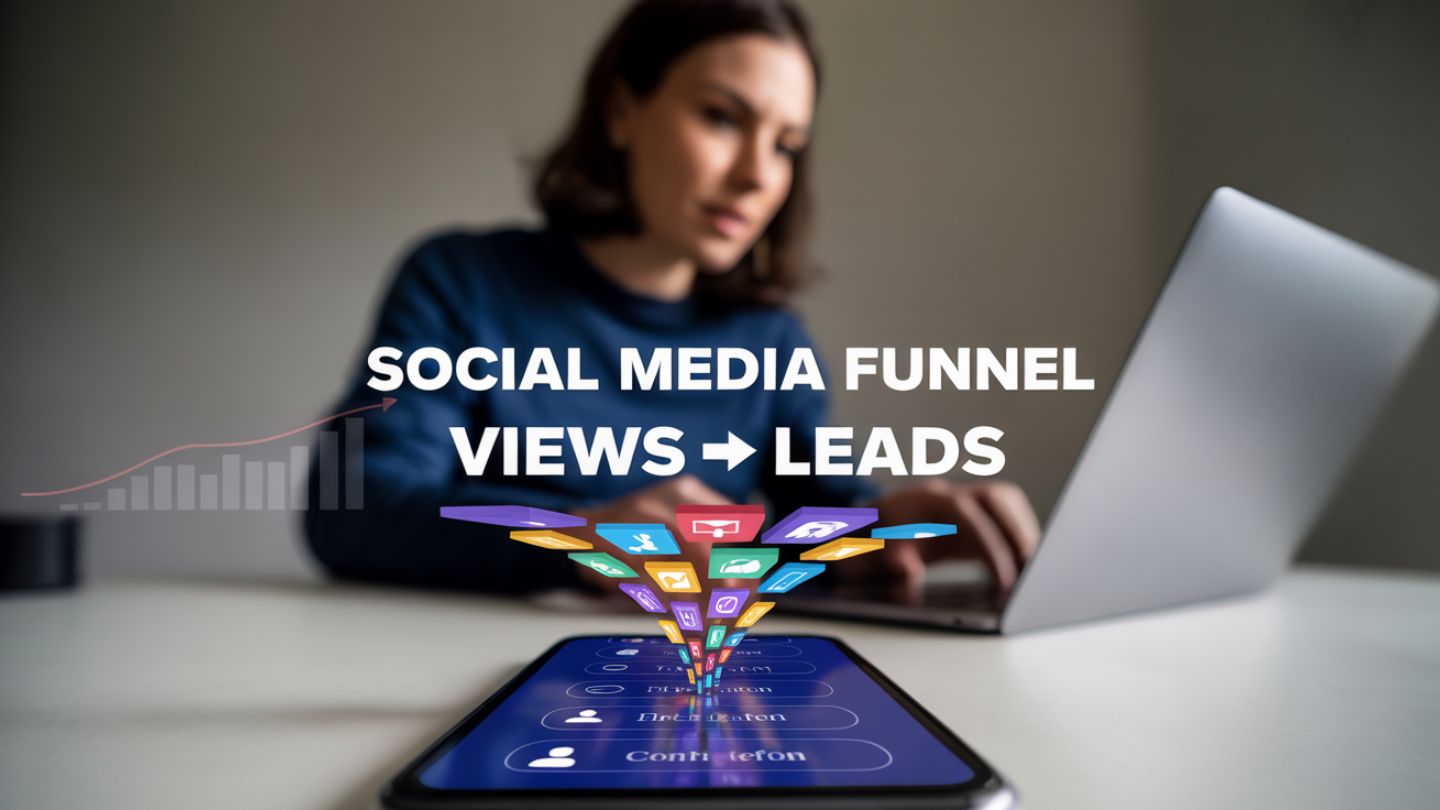
A high view count on your latest social media post feels great, but what does it actually mean for your business? Likes, shares, and comments are valuable indicators of engagement, yet they don’t always translate into sales. The real power of social platforms lies in their ability to guide potential customers on a journey from casual observers to loyal patrons. This is where a well-defined social media funnel strategy becomes essential.
This blog will break down the concept of a social media funnel, explore its critical stages, and provide actionable strategies to help you turn passive viewers into qualified leads. By understanding this process, you can transform your social media presence from a simple broadcasting tool into a powerful engine for business growth.
Key Takeaways
- Views don’t equal leads unless there’s a funnel behind them. A social media funnel guides people step-by-step from awareness to action with the right content at each stage.
- Different stages need different types of content. Use scroll-stopping content for awareness, trust-building proof for consideration, and strong CTAs + retargeting for conversions.
- Your funnel performs best when your website is optimized, too. Pair Social Media Marketing with a free SEO audit to improve landing page performance and convert more traffic into real leads.
What is a Social Media Funnel?
A social media funnel is a model that illustrates the journey a consumer takes from first becoming aware of your brand on social media to making a purchase. It’s not just about posting content and hoping for the best. Instead, it’s a strategic approach designed to attract, engage, and convert an audience through targeted content at each stage of their decision-making process.
Think of it as building a relationship. You wouldn’t ask a stranger for a major commitment at the first meeting. Similarly, your social media strategy should nurture potential customers, building trust and demonstrating value over time. Each stage of the funnel requires a different type of content and a unique approach to move people smoothly to the next step.
A strong funnel also becomes much easier to build when you understand what’s already working for others in your space. Conducting a social media competitive analysis helps you identify patterns in messaging, content formats, and offers that competitors are using to pull people from views into conversions. It also reveals what gaps exist in the market, so your funnel stands out instead of blending in.
Stage 1: Awareness – Capturing Attention
The top of the funnel (TOFU) is all about introduction. At this stage, your primary goal is to reach a broad audience and make them aware that your brand exists. These individuals may not be actively looking for your product or service yet, so your content needs to be engaging, informative, or entertaining enough to stop their scroll.
Strategies for the Awareness Stage:
Create Valuable, Shareable Content: Focus on content that addresses broad pain points, interests, or questions related to your industry. This could include how-to guides, infographics, short educational videos, or entertaining reels. The goal is to provide value without an immediate sales pitch. For example, a landscaping company might share a video on “5 Common Lawn Care Mistakes to Avoid in Spring.”
At this stage, it’s also important to know what engagement signals actually matter. Many businesses get stuck chasing surface-level performance, but understanding Instagram likes vs. saves vs. shares can help you measure real awareness impact. For example, shares often indicate your content is resonating with new audiences, while saves suggest the post is valuable enough for someone to return to later, both of which play a huge role in widening the top of your funnel.
Leverage Paid Advertising: Use social media ad platforms to target users based on demographics, interests, and behaviors. Lookalike audiences, which target users similar to your existing customers, can be particularly effective for expanding your reach to a relevant new audience.
Engage with a Wider Community: Participate in conversations relevant to your industry. Use relevant hashtags, join community groups, and collaborate with influencers or other non-competing brands to introduce your business to their followers.
Success at this stage is measured by metrics like reach, impressions, video views, and follower growth. You are building a large pool of potential customers who now know who you are.
Stage 2: Consideration – Building Interest and Trust

Once you have captured their attention, the next step is to move your audience into the middle of the funnel (MOFU). In the consideration stage, people are aware of your brand and are now evaluating if your solution is the right one for them. They are likely comparing you to competitors and looking for more in-depth information.
Your content should now shift from broad awareness to highlighting your unique value proposition. This is your chance to build trust and position your brand as an authority.
Strategies for the Consideration Stage:
Showcase Social Proof and Expertise: Share customer testimonials, case studies, and user-generated content. Host Q&A sessions or “Ask Me Anything” events on Instagram Stories or Facebook Live to answer questions directly and demonstrate your knowledge.
Provide In-Depth Educational Resources: Offer more detailed content that helps potential customers make an informed decision. This could include blog posts, downloadable guides, webinars, or detailed product demonstration videos. For instance, a software company could host a webinar showcasing how its tool solves a specific industry problem.
Encourage Engagement and Interaction: Create interactive content like polls, quizzes, and surveys. Ask questions in your captions to spark conversation. Responding promptly and thoughtfully to comments and direct messages shows that you are attentive and builds a stronger connection with your audience.
Metrics for this stage include website clicks, lead magnet downloads, comments, and shares. You are successfully nurturing interest when your audience starts actively engaging with your brand to learn more.
Stage 3: Conversion – Inspiring Action

The bottom of the funnel (BOFU) is where you make the sale. Your audience is now well-informed, trusts your brand, and is close to making a purchase decision. Your content at this stage should be direct, compelling, and make it easy for them to take the final step.
This is where your Social Media Marketing efforts come to fruition. The call-to-action (CTA) must be clear and persuasive, guiding users exactly where you want them to go.
Strategies for the Conversion Stage:
Present Compelling Offers: Use strong, action-oriented language to promote special offers, limited-time discounts, free trials, or free consultations. Create a sense of urgency to encourage immediate action. A post might read, “Get 20% off your first order this weekend only!”
Utilize Retargeting Ads: Run targeted ad campaigns aimed at people who have already visited your website, added an item to their cart, or engaged significantly with your content. These warm leads are highly likely to convert with a gentle nudge.
Make it Simple to Convert: Ensure the link in your bio or ad leads to a clear, optimized landing page. The purchasing process should be seamless, with minimal steps. Any friction at this stage can lead to lost sales.
This is where choosing the right types of landing pages can make a major difference. Some funnels perform best with short lead-gen pages that focus on one offer, while others benefit from longer pages that build trust through testimonials, FAQs, and proof points. When your landing page format matches the intent of your social media audience, conversions become smoother and more consistent.
Key metrics for the conversion stage are sales, lead form submissions, demo requests, and conversion rates. This is the ultimate measure of your funnel’s success.
Final Thoughts
A strong social media funnel helps you move beyond vanity metrics like views and likes by guiding people from awareness to consideration and finally to conversion. With the right content at each stage, your brand can build trust, spark engagement, and turn passive scrollers into qualified leads who are ready to take action.
Your work isn’t done after a conversion. The Ocean Marketing helps businesses build full-funnel social media marketing strategies that don’t just grow engagement, but create real lead opportunities and long-term customer loyalty through consistent messaging, smart targeting, and conversion-focused content. To further strengthen results, make sure your website is ready to convert the traffic your funnel generates. A free SEO audit can reveal what’s holding your pages back, whether it’s technical issues, weak content structure, or missed keyword opportunities, so your leads don’t drop off after they click through. Ready to build a powerful funnel that drives real results for your business? Contact us now, our team specializes in crafting custom strategies that turn views into valuable leads and guide your audience through every stage of the funnel.