
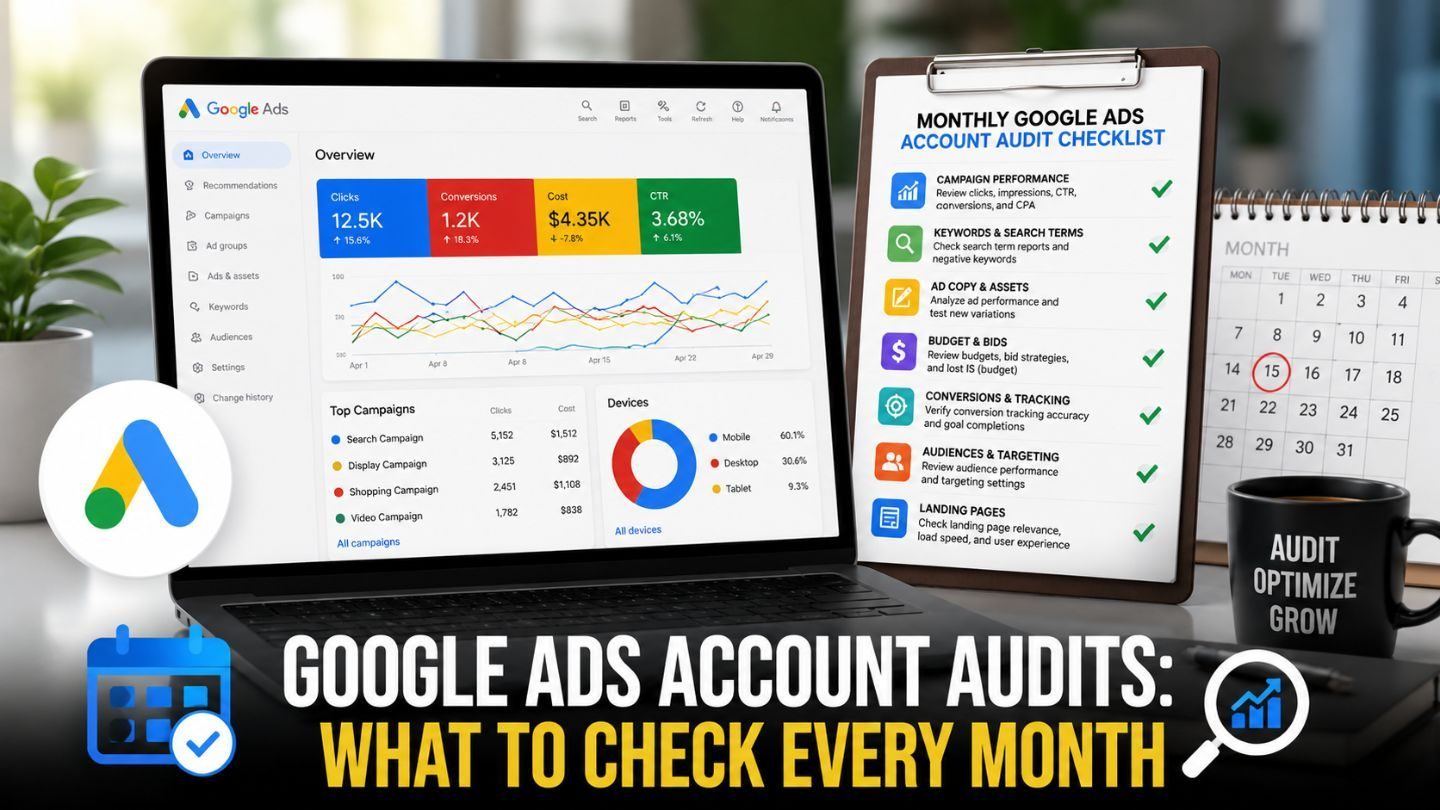
Running Google Ads without reviewing your account regularly is a bit like driving a car without checking the dashboard. Small issues can quietly grow into expensive problems, affecting your budget and campaign performance before you even notice. A monthly audit helps you catch these issues early, uncover new opportunities, and keep your campaigns aligned with your business goals. In this blog, we'll discuss the most important areas to review every month, so your Google Ads account continues to deliver strong results while making the most of every advertising dollar.
Key Takeaways
- Review campaign performance monthly to catch issues before they become costly.
- Monitor keywords, search terms, and negative keywords to reduce wasted spend.
- Keep ads, extensions, and landing pages updated for better engagement.
- Check bidding strategies and budgets to ensure they match current goals.
- Track conversion data regularly to make informed optimization decisions.
Why Monthly Google Ads Audits Matter
Google Ads is constantly evolving. Search behavior changes, competitors adjust their strategies, and Google's automation continues to introduce new opportunities and challenges. Even campaigns that once performed well can gradually lose efficiency if left unattended. A monthly audit helps identify these shifts before they significantly impact your return on investment.
Beyond fixing problems, regular audits help uncover growth opportunities. You may discover new high-performing search terms, identify campaigns that deserve additional budget, or find areas where your targeting can become more precise. Instead of reacting after performance drops, monthly reviews allow you to stay proactive and keep campaigns moving in the right direction.
Review Campaign Goals and Overall Performance
The first step in every audit is taking a step back and looking at the bigger picture. Compare campaign performance against your business objectives rather than focusing only on clicks or impressions. Metrics such as conversions, conversion rate, cost per conversion, click-through rate (CTR), and return on ad spend (ROAS) provide a much clearer picture of campaign success. A deeper review of conversion quality can also support PPC campaign optimization for higher-quality leads, especially when clicks are strong, but lead value feels inconsistent.
It's also worth comparing results with previous months. Seasonal trends, promotional campaigns, or changes in customer demand may explain fluctuations, while unexpected drops could signal problems that require immediate attention. Looking at performance over time helps you distinguish normal changes from issues that need optimization.
Make Sure Your Budget Is Working Efficiently
Budgets should support your highest-performing campaigns rather than remain fixed indefinitely. During your monthly review, identify campaigns that consistently deliver quality leads or sales and consider whether increasing their budget could generate additional results. Likewise, campaigns that spend heavily without producing meaningful conversions may require adjustments.
Also, review whether campaigns are limited by budget. Google Ads often indicates when campaigns lose potential traffic because they exhaust their daily budget too early. On the other hand, campaigns with consistently low spending may have overly restrictive targeting or bidding strategies that deserve closer attention.
Evaluate Keyword Performance Carefully
Keywords remain one of the strongest drivers of campaign success. Every month, review which keywords continue generating conversions and which ones are consuming budget without producing results. Removing or pausing poor-performing keywords helps improve overall account efficiency. This is also where understanding exact-match keywords and broad-match in modern Google Ads can help you decide which terms need tighter control and which can support broader reach.
At the same time, look for opportunities to expand your keyword list. Search trends change throughout the year, and new customer interests emerge regularly. Testing relevant keyword variations allows campaigns to stay competitive while reaching audiences actively searching for your products or services.
Read More: Secondary Keywords: How to Find Them and Use Them Effectively
Don't Ignore the Search Terms Report
The Search Terms Report reveals the actual queries users typed before clicking your ads. This report often uncovers valuable keyword opportunities that deserve their own dedicated targeting. It also exposes irrelevant searches that waste advertising spend.
Adding negative keywords each month helps prevent ads from appearing for unrelated searches. Over time, maintaining a strong negative keyword list improves traffic quality, increases click relevance, and helps control advertising costs. A consistent negative keyword strategy to scale campaigns can make monthly audits more effective by keeping irrelevant searches from draining the budget.
Refresh Your Ad Copy Regularly
Even strong-performing ads eventually experience fatigue. Audiences become familiar with messaging, competitors introduce new offers, and changing customer expectations may reduce engagement. Reviewing your ad copy every month helps ensure your messaging remains fresh and competitive.
Test different headlines, descriptions, and calls to action while keeping your value proposition clear. Small improvements in click-through rate can significantly improve campaign performance over time. Running multiple ad variations also gives Google's optimization system more opportunities to identify winning combinations.
Check Ad Extensions for Accuracy
Ad extensions provide additional information that encourages users to click while increasing the visibility of your ads. However, outdated extensions can confuse potential customers or reduce trust in your business. Review sitelinks, callouts, structured snippets, phone numbers, pricing information, location details, and promotional extensions each month. Make sure everything reflects your current services, offers, and business information. Even minor updates can improve user experience and increase overall campaign performance.
Review Audience Targeting Settings
Audience targeting deserves regular attention because customer behavior evolves continuously. Review demographic data, audience segments, remarketing lists, and geographic performance to ensure campaigns continue reaching the right people. You may discover certain age groups, locations, or audience interests consistently outperform others. Adjusting targeting based on real performance data allows your budget to focus on users most likely to convert rather than spreading spend too broadly.
Inspect Bidding Strategies
Google offers several automated and manual bidding strategies, but no single approach works forever. During your monthly audit, review whether your current bidding strategy still aligns with campaign objectives. For example, campaigns focused on lead generation may benefit from Target CPA, while ecommerce businesses often prioritize Target ROAS. If performance has changed significantly, consider testing alternative bidding approaches while monitoring results carefully before making permanent decisions.
Verify Conversion Tracking
Without accurate conversion tracking, it's impossible to measure campaign success reliably. A monthly audit should always include checking whether every important conversion action is being recorded correctly. Review form submissions, phone calls, purchases, newsletter signups, and any other valuable customer actions. If tracking codes break after website updates or new landing pages are added without proper implementation, campaign optimization decisions become based on incomplete data rather than actual business outcomes.
Double-Check Attribution Settings
Attribution models influence how Google assigns credit for conversions across multiple interactions. Reviewing attribution settings helps ensure reporting reflects how customers actually move through your sales journey. Understanding these insights allows you to make smarter decisions about keywords, campaigns, and bidding strategies while avoiding inaccurate assumptions based solely on last-click conversions.
Review Landing Page Experience

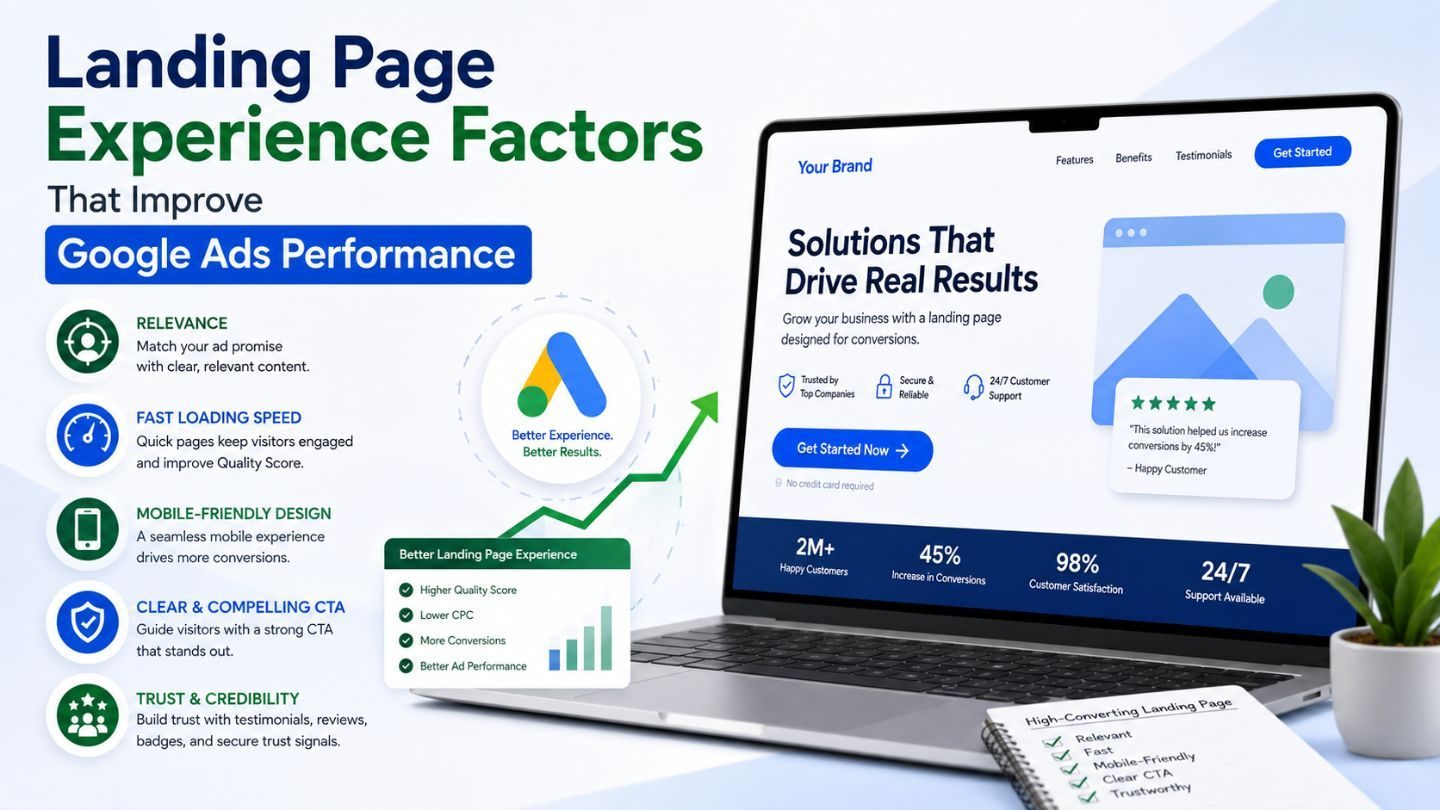
Strong ads alone cannot guarantee successful campaigns. Once visitors click, your landing pages must deliver a seamless experience that encourages action. During your monthly audit, test each landing page from a user's perspective. Check loading speed, mobile responsiveness, clear messaging, easy navigation, and visible calls to action. Ensure the landing page matches the promise made in the advertisement. A consistent experience between ad and landing page improves Quality Score while increasing conversion rates.
Monitor Quality Score
Quality Score directly influences both advertising costs and ad visibility. While Google calculates it automatically, advertisers can improve it by focusing on three core areas:
- Keyword relevance
- Expected click-through rate
- Landing page experience
- Ad relevance
- Overall user experience
Improving these factors often reduces cost per click while increasing ad rankings, allowing businesses to generate better results without necessarily increasing budgets.
Keep an Eye on Competitor Activity
Competitor strategies rarely stay the same for long. While you cannot see every detail of competing campaigns, Google Ads provides useful Auction Insights that reveal how your ads compare with others participating in similar auctions. Review impression share, overlap rate, top-of-page rate, and outranking share every month. Significant changes may indicate increased competition or shifts in market behavior that require adjustments to your own campaigns.
Read More: Competitor Analysis: How to Find Competitors of Any Website
Document Changes and Plan Next Steps

One of the most overlooked parts of account management is documenting changes. Keeping simple records of budget adjustments, keyword additions, bidding changes, ad tests, and performance improvements makes future optimization much easier. Monthly documentation also helps identify long-term trends. Instead of relying on memory, you'll have a clear history of what was changed, why it was changed, and how those decisions affected campaign performance over time.
Final Thoughts
Monthly Google Ads audits aren't just about finding mistakes; they're about continuously improving campaign performance. Regular reviews help reduce wasted spending, strengthen targeting, improve ad quality, and ensure every part of your account supports your business objectives. A consistent audit routine makes optimization far more manageable than waiting until problems become expensive.
Whether you're managing campaigns in-house or looking for expert guidance, The Ocean Marketing can help you maximize your PPC performance with data-driven strategies and ongoing campaign optimization. If you'd also like to improve your website's visibility alongside paid advertising, ask us about our free SEO audit. Contact us today to discover opportunities that can strengthen your overall digital marketing strategy.