
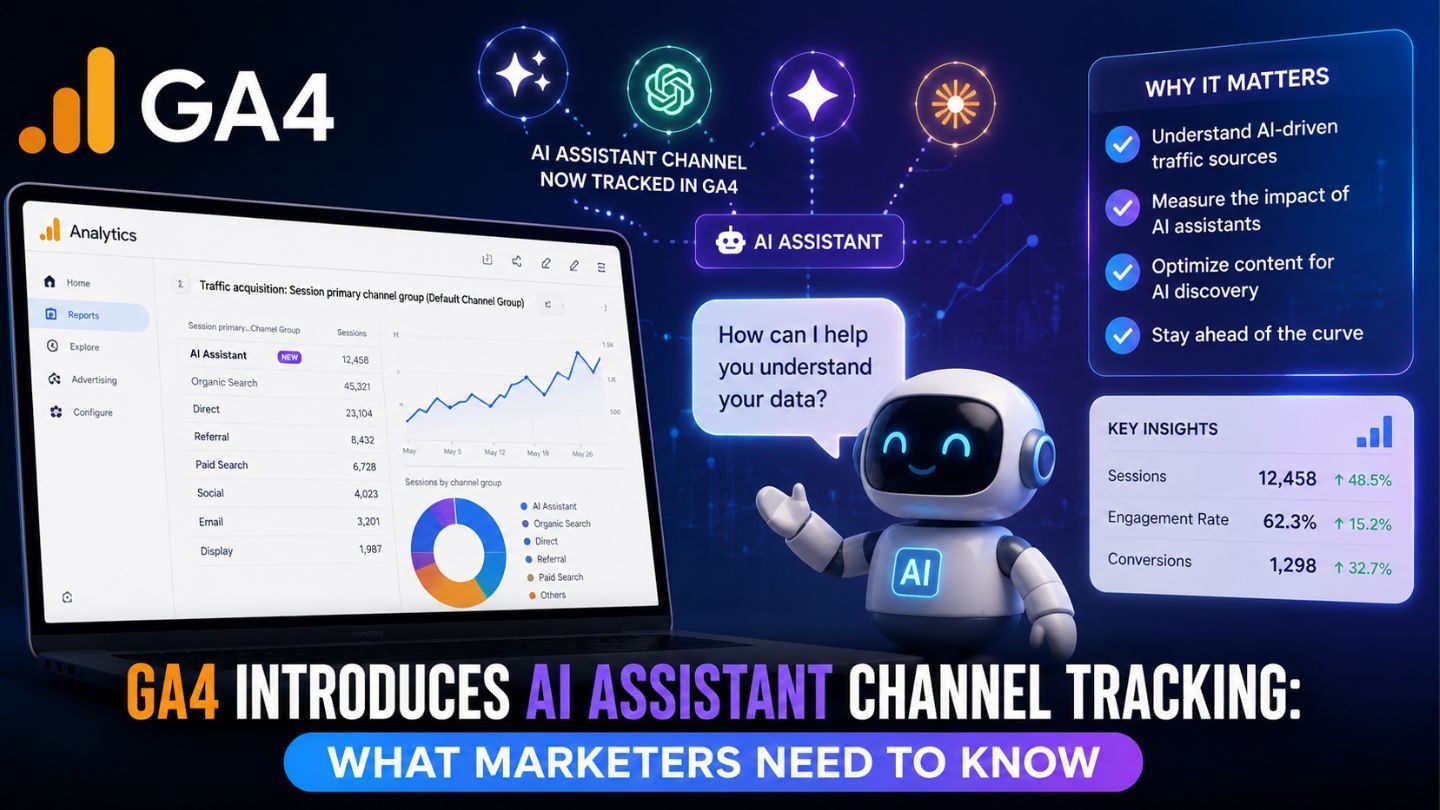
Google Analytics 4 (GA4) continues to evolve, and one of its latest additions is AI Assistant Channel Tracking, a feature designed to make marketing analysis faster and more accessible. Instead of spending time digging through reports, marketers can now ask questions in plain language and receive AI-powered insights about channel performance. This is especially valuable for businesses managing multiple marketing campaigns across different platforms. In this blog, we'll discuss what GA4 AI Assistant Channel Tracking is, how it works, its benefits, and what marketers should know before relying on it for decision-making.
Key Takeaways
- GA4's AI Assistant helps marketers analyze channel performance using conversational prompts.
- The feature simplifies reporting by providing quick, AI-generated insights.
- It can identify trends, traffic changes, and campaign opportunities faster than manual analysis.
- Human review is still important since AI insights should support—not replace—strategic decisions.
- Businesses can use the feature to improve reporting efficiency and marketing optimization.
What Is GA4 AI Assistant Channel Tracking?
Google Analytics 4 has steadily introduced AI-powered capabilities to help users make sense of increasingly complex data. The new AI Assistant Channel Tracking feature builds on that effort by allowing marketers to ask questions about traffic channels using natural language. Instead of manually creating reports or filtering multiple dashboards, users can simply type questions such as, "Which channel drove the most conversions last month?" or "Why did organic traffic drop this week?" The assistant then generates relevant insights based on available GA4 data.
This approach makes analytics far more approachable for marketing teams that may not have advanced technical expertise. While experienced analysts can still dive into detailed reports, the AI Assistant reduces the time required to find common performance metrics and trends. It serves as an intelligent guide, helping users understand their channel data without having to navigate every report manually.
Why This Update Matters for Digital Marketers
Marketing teams often juggle campaigns across search engines, social media, email, paid advertising, referral traffic, and other channels. Analyzing all these data points can become time-consuming, especially when campaign performance changes quickly. AI Assistant Channel Tracking helps reduce this workload by summarizing insights that would normally require several manual steps.
Beyond saving time, the feature encourages marketers to ask more strategic questions. Instead of focusing solely on data collection, they can spend more time understanding why certain channels perform better than others. This shift allows teams to identify opportunities faster, respond to market changes sooner, and improve campaign decisions with less effort.
How AI Assistant Channel Tracking Works
The feature uses Google's AI capabilities alongside GA4 reporting data. Users interact with the assistant through conversational prompts rather than relying entirely on traditional menus and reports. The assistant interprets questions, searches the available analytics data, and generates summarized responses along with supporting visualizations when applicable.
Although the interaction feels conversational, the assistant still depends on the quality of the data collected within GA4. Proper event tracking, conversion setup, campaign tagging, and channel grouping remain essential. If the underlying analytics implementation is incomplete or inaccurate, AI-generated insights will naturally reflect those limitations. This also connects with how ChatGPT, Gemini, and Perplexity discover content and influence AI-driven traffic analysis.
Examples of Questions You Can Ask
Instead of manually building reports, marketers can ask questions such as:
- Which marketing channel generated the highest conversions this month?
- Why has paid search traffic decreased recently?
- Which traffic source has the highest engagement rate?
- What channels contributed most to revenue growth?
- How did email marketing perform compared to last month?
- Which acquisition channel experienced the biggest increase in users?
These conversational queries help marketers access insights much faster than traditional reporting workflows.
Read More: How to Link Google Business Profile with Google Analytics (GA4) to Gain Local SEO Insights
Benefits of AI Assistant Channel Tracking
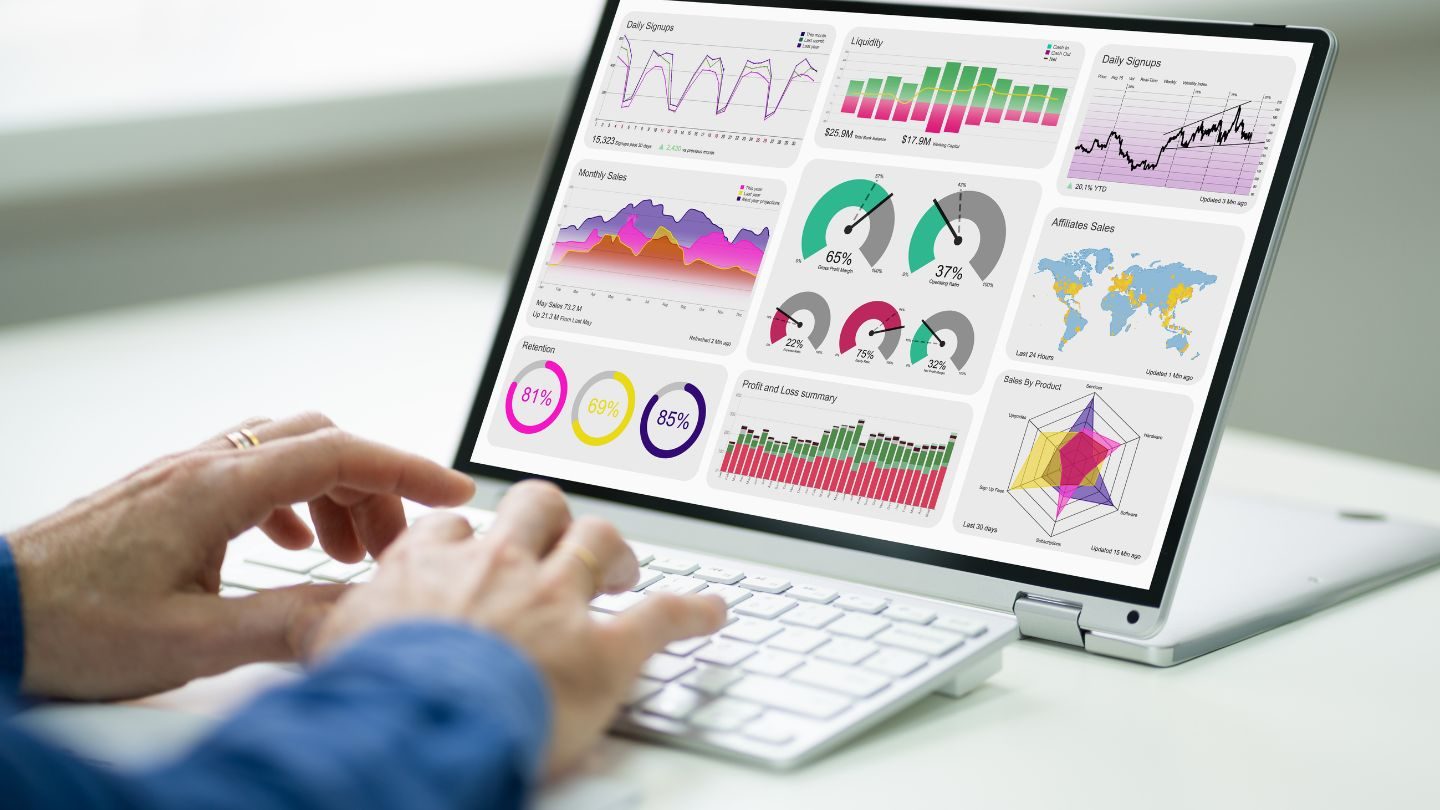
One of the biggest advantages is speed. Marketing professionals no longer need to remember the location of every report or navigate multiple dashboards to answer common questions. The assistant delivers relevant summaries almost immediately, making routine reporting significantly more efficient.
Another benefit is accessibility. Team members who are less familiar with GA4 can still retrieve meaningful insights without extensive analytics training. This makes collaboration easier across marketing, content, management, and sales teams, where data-driven conversations become more inclusive and productive.
The feature also supports quicker decision-making. When campaign performance changes unexpectedly, marketers can identify possible causes sooner and take corrective action before issues grow larger. Faster analysis often leads to faster optimization, helping businesses stay competitive in rapidly changing digital environments.
Where AI Can Improve Marketing Decisions
AI-generated insights become particularly useful when marketers need to evaluate multiple channels simultaneously. Rather than reviewing each traffic source individually, the assistant can quickly summarize performance differences and highlight unusual trends that deserve closer attention. For example, it may identify sudden growth in referral traffic, declining engagement from paid campaigns, or stronger-than-expected organic performance.
These observations help marketers prioritize their analysis instead of manually searching through every metric. The result is a more focused workflow, with attention directed to the areas that matter most. Marketers who want a broader view of AI-driven visibility should also understand how to audit and improve a brand’s visibility in AI search.
Understanding the Limitations
While AI Assistant Channel Tracking offers significant convenience, it should not replace careful analysis. AI summarizes existing data but cannot fully understand business goals, seasonal factors, offline marketing efforts, or organizational priorities. Strategic decisions still require human judgment. This is especially important because first-click and last-click attribution in paid campaigns can shape how teams interpret channel performance.
Marketers should also verify AI-generated recommendations before making major campaign changes. Unexpected traffic fluctuations may result from tracking issues, website updates, algorithm changes, or external events that AI cannot always interpret accurately. Treat the assistant as a helpful advisor rather than the final decision-maker.
Best Practices for Using the Feature
To get the most value from AI Assistant Channel Tracking, businesses should first ensure their GA4 implementation is accurate. Events, conversions, UTM parameters, and channel classifications need to be configured correctly so the AI works with reliable information.
It's also a good idea to combine AI-generated summaries with traditional reports. Use the assistant to quickly identify interesting trends, then validate those findings through deeper analysis. This balanced approach provides both efficiency and confidence when making marketing decisions.
Regularly reviewing data quality is equally important. AI performs best when historical analytics remain consistent and complete. Maintaining clean tracking practices ensures future recommendations become increasingly reliable.
How This Changes the Future of Marketing Analytics
AI is steadily transforming how marketers interact with analytics platforms. Instead of learning increasingly complex reporting systems, professionals can now communicate with data using everyday language. This represents a significant shift from report-building toward insight discovery.
As AI capabilities continue improving, marketers can expect even more predictive recommendations, automated explanations, and proactive alerts. Rather than waiting for someone to notice declining performance, future analytics tools may identify potential issues before they significantly impact campaigns. AI Assistant Channel Tracking is an early example of this broader evolution toward more intelligent, user-friendly analytics.
Read More: Automated SEO in 2026: What It Is, How It Works, and When to Use It
Should Businesses Start Using It Now?

For organizations already using GA4, exploring AI Assistant Channel Tracking is a logical next step. It can simplify routine reporting, reduce the learning curve for newer team members, and help experienced marketers uncover useful insights more efficiently. Businesses that rely heavily on multi-channel marketing may see the greatest productivity gains.
However, adoption should be paired with realistic expectations. The assistant enhances analytics workflows but does not eliminate the need for strategic thinking or accurate data collection. Companies that combine AI assistance with experienced marketing analysis are likely to achieve the strongest long-term results.
Final Thoughts
GA4's AI Assistant Channel Tracking reflects Google's growing focus on making analytics more intuitive and actionable. By allowing marketers to ask questions naturally and receive instant insights, the feature reduces reporting complexity while encouraging faster, data-driven decisions. Although AI cannot replace human expertise, it serves as a valuable tool for uncovering trends, understanding channel performance, and improving overall marketing efficiency.
If you're looking to strengthen your SEO strategy while making better use of GA4 insights, The Ocean Marketing can help. Whether you want to improve website performance, optimize your digital marketing efforts, or understand how your traffic channels contribute to business growth, our team is ready to assist. You can also request a free SEO audit and contact us to discuss how we can help your business grow online.