Skip to content
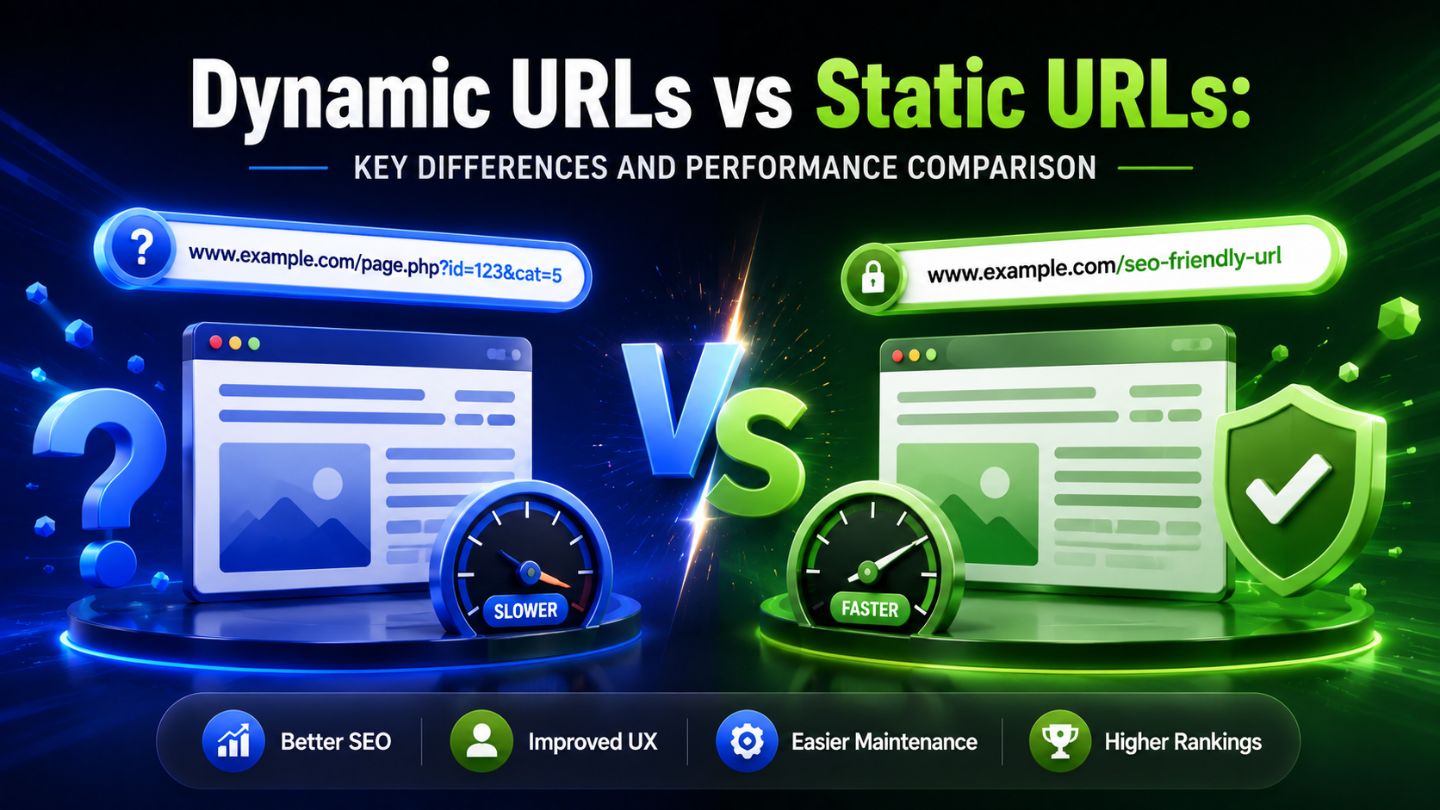
Choosing the right URL structure is a critical step in building a strong and search-friendly website. URLs not only guide users to your content but also help search engines understand and rank your pages effectively. A well-structured URL can improve visibility, trust, and overall user experience. However, many website owners struggle to decide between dynamic and static URLs. This blog outlines the key differences between dynamic and static URLs, along with their impact on performance, usability, and SEO, helping you make an informed decision for your website strategy.
Key Takeaways
- Static URLs are clean, readable, and easier for users to understand
- Dynamic URLs are flexible and suited for large, data-driven websites
- Static URLs generally offer stronger SEO advantages
- Dynamic URLs require optimization to prevent indexing issues
- URL structure impacts user trust and click-through behavior
- Both types can perform well when properly optimized
What Are Static URLs?
Static URLs are fixed web addresses that remain unchanged unless manually modified. These URLs are typically simple and descriptive, often including relevant keywords that clearly indicate what the page is about. Because of this clarity, they are easier for users to read, remember, and share across different platforms. From an SEO perspective, static URLs are highly beneficial because they provide clear signals to search engines about the page content. Their simplicity allows search engine crawlers to index them efficiently without confusion. Additionally, users are more likely to click on URLs that look trustworthy and easy to understand, which can improve engagement metrics over time.
What Are Dynamic URLs?

Dynamic URLs are automatically generated based on database queries or user interactions. They are commonly used on websites that display changing or personalized content, such as e-commerce platforms or large content systems. These URLs are created on the fly and allow websites to serve multiple variations of content without needing separate static pages. While dynamic URLs offer flexibility, they can sometimes appear complex or less intuitive to users. This can affect how users perceive the link when they see it in search results. From a technical standpoint, dynamic URLs rely on backend processes, which can add complexity if not handled properly, especially when dealing with indexing and duplicate content.
Key Differences Between Dynamic and Static URLs
The main difference between static and dynamic URLs lies in how they are structured and generated. Static URLs are manually defined and remain consistent, while dynamic URLs are created automatically depending on user actions or system logic. This difference influences everything from readability to performance and SEO effectiveness. Static URLs are generally shorter and more meaningful, making them easier for users to understand briefly. Dynamic URLs, however, are designed for functionality and scalability, which allows them to support large websites with constantly changing data. While static URLs prioritize clarity, dynamic URLs prioritize flexibility, and both serve different purposes depending on the website’s needs.
SEO Impact of Static vs Dynamic URLs
Static URLs are often preferred in SEO strategies because they are clean and keyword-focused. Search engines can easily interpret their structure, which helps in better indexing and ranking. This becomes even more important when understanding how search engines process websites, especially when considering the difference between crawling and indexing in SEO, as both stages determine how effectively URLs are discovered and stored. A well-structured static URL can improve visibility and make the page more relevant for specific search queries. Dynamic URLs can also perform well in SEO, but they require additional optimization.
Without proper handling, they may create duplicate versions of the same page or make it harder for search engines to crawl efficiently. Techniques like URL rewriting and canonical tags help ensure that dynamic URLs do not negatively impact SEO performance. User behavior is another important factor. People tend to trust and click on URLs that are simple and readable. Static URLs naturally support this behavior, while dynamic URLs need optimization to achieve similar results. Improving how URLs appear can directly influence click-through rates and overall engagement.
Read More: How Canonical URLs Work and Why They Matter for SEO
Performance Comparison
When it comes to performance, static URLs often have a slight advantage because they do not rely heavily on real-time processing. The content is already defined, allowing faster delivery and a smoother user experience. This makes them particularly useful for websites where speed and consistency are priorities. Dynamic URLs depend on server-side processing and database queries to generate content. While this adds flexibility, it can also introduce delays if the system is not optimized properly. Poor URL handling can also make it harder to identify redirect chains, especially when multiple redirects slow down page loading and create unnecessary barriers for search engine crawlers.
However, modern technologies like caching and advanced hosting solutions have significantly reduced this gap, allowing dynamic URLs to perform efficiently when managed well. Scalability is where dynamic URLs stand out. They allow websites to handle large volumes of content without manually creating each page. Static URLs, while faster and simpler, may require more effort to manage when dealing with extensive content libraries. The choice ultimately depends on balancing speed with functionality.
When to Use Static URLs

Static URLs are best suited for websites where content does not change frequently. Blogs, service pages, and informational websites benefit the most from this structure because it enhances readability and improves SEO performance. Their simplicity makes them easier to manage and maintain over time. They are also ideal when building a strong brand presence, as clean URLs are more memorable and easier to share. For businesses focused on long-term growth and search visibility, static URLs provide a reliable foundation.
When to Use Dynamic URLs
Dynamic URLs are ideal for websites that require constant updates or large-scale content management. However, large websites must also understand how to fix index bloat, especially when too many unnecessary URL variations begin competing with the pages that deserve stronger visibility. Platforms that rely on filters, search results, or personalized content need dynamic URLs to function effectively. They allow for efficient handling of complex data without creating separate pages for each variation. To get the best results, dynamic URLs should be optimized to reduce complexity and improve readability. This ensures that they remain functional while still supporting SEO and user experience goals.
Read More: URL Structure Optimization: Does URL Depth Still Matter?
Final Thoughts
Understanding the difference between dynamic and static URLs is essential for building a well-optimized website. Static URLs offer simplicity, better readability, and stronger SEO advantages, making them ideal for content-focused pages. On the other hand, dynamic URLs provide flexibility and scalability, which are crucial for large, data-driven websites. Both types have their own strengths, and the right choice depends on your website’s goals, structure, and long-term strategy. With proper optimization, either approach can support better performance, improved user experience, and higher search visibility.
At The Ocean Marketing, we specialize in helping businesses improve their SEO performance with tailored strategies that deliver measurable results. Our team offers a free SEO audit to identify opportunities and optimize every aspect of your website for better rankings and growth. Let us help you build a stronger digital presence – contact us today to get started.