Skip to content
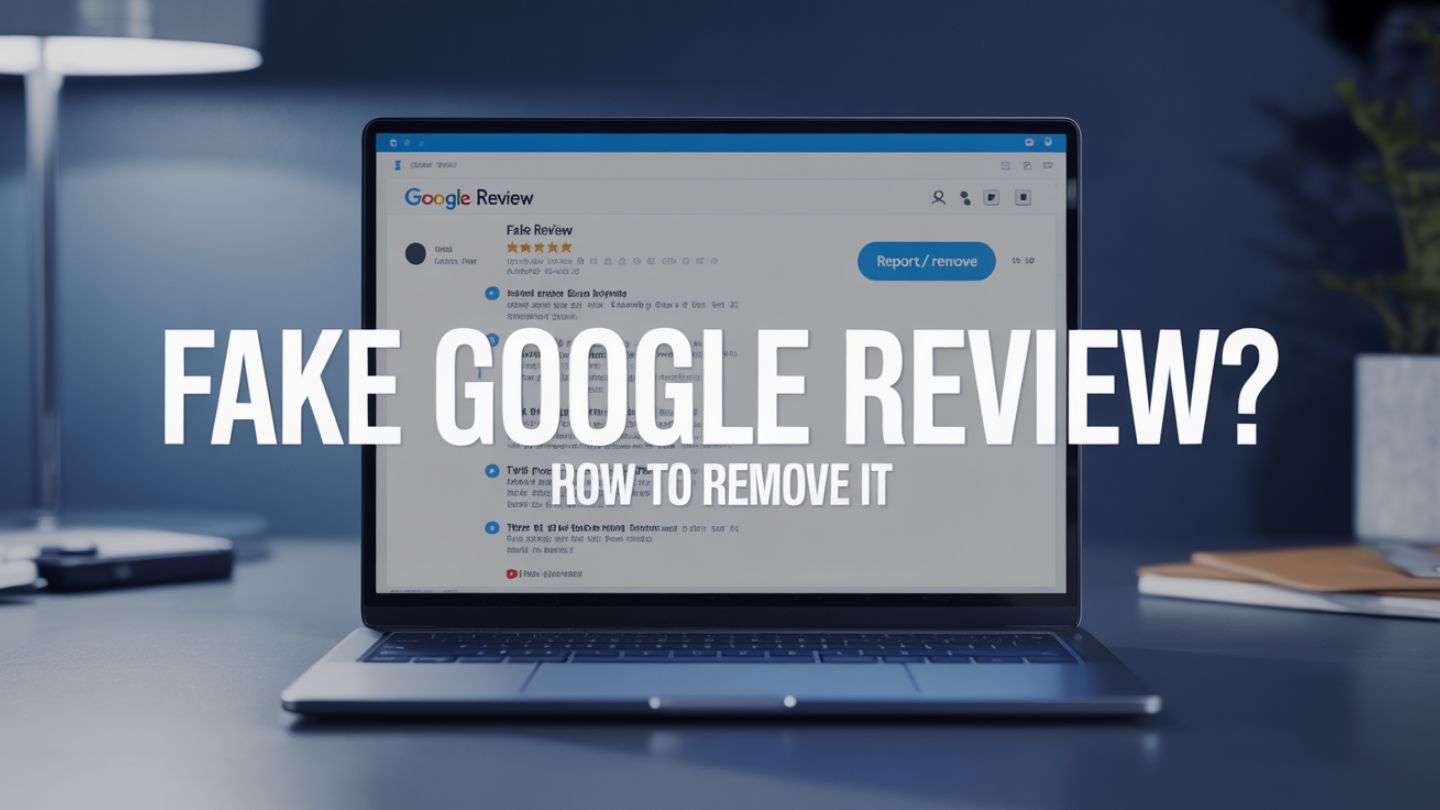
You wake up, grab your coffee, and check your business notifications. Suddenly, your heart sinks. There it is: a one-star review on your Google Business Profile. The reviewer claims your staff was rude, your product was defective, and they will never return.
The problem? You have no record of this customer. Their name doesn’t match anyone in your database. The incident they described never happened. You have just been hit by a fake review.
In the digital age, your online reputation is your currency. A single malicious review can feel like a personal attack, but more importantly, it can damage your credibility and deter potential customers. While you cannot simply delete reviews you dislike, Google does have mechanisms to remove content that violates its policies.
This guide provides a comprehensive roadmap for identifying, reporting, and removing fake reviews from Google. We will also explore how these reviews impact your local SEO and what strategies you can use to protect your brand’s integrity.
Key Takeaways
- Fake Google reviews can harm your reputation, customer trust, and local SEO rankings, making it important to address them quickly and professionally.
- To remove a fake review, first respond calmly, then report it through Google Business Profile and the review redressal tool if it violates Google’s policies.
- If removal fails, focus on generating more authentic positive reviews and actively managing your reputation to reduce the impact on your ratings and visibility.
The Real Impact of Fake Reviews
Before diving into the removal process, it is crucial to understand what is at stake. Fake reviews are not just annoying; they have tangible business consequences.
1. Erosion of Consumer Trust
Modern consumers are savvy researchers. BrightLocal studies consistently show that nearly all consumers read online reviews for local businesses. A few fake negative reviews can significantly lower your average star rating. If your rating drops below 4 stars, many potential customers will simply scroll past you to a competitor with a cleaner record. Trust takes years to build but can be shaken in moments by a coordinated attack of fake feedback.
2. Financial Losses
There is a direct correlation between star ratings and revenue. A Harvard Business School study found that a one-star increase in Yelp rating led to a 5-9% increase in revenue. Conversely, a drop in rating due to fake reviews can lead to a noticeable dip in sales. Customers who see recent negative feedback often assume the business is on a decline, regardless of whether that feedback is genuine.
3. Damage to Local SEO Rankings
Google’s local search algorithm heavily weighs prominence and relevance. Reviews are a key signal of both. A sudden influx of negative reviews can signal to Google that your business is providing a poor user experience. This can cause your ranking in the “Local Pack” (the map listing at the top of search results) to plummet. Since local SEO is often the primary driver of foot traffic for small businesses, this drop in visibility can be devastating.
It’s also important to remember that visibility isn’t driven by reviews alone. Your listing setup plays a major role—especially Google Business categories, which help Google understand what you do and when to show your profile in map results. If your categories are too broad, mismatched, or incomplete, a wave of negative sentiment can hit harder because your listing already has weaker relevance signals. If you’re refining your category strategy, this breakdown on how Google Business categories impact map visibility explains what to prioritize.
How to Identify a Fake Review
Not every negative review is fake. Sometimes legitimate customers have bad experiences, and they have the right to voice them. Distinguishing between a disgruntled customer and a malicious actor is the first step in the removal process.
Look for these tell-tale signs of a fake review:
- Vague or Generic Details: The review lacks specifics about the product purchased or the service date. Phrases like “Bad service” or “Don’t go here” without context are suspicious.
- Missing Customer Record: You cannot find the reviewer’s name in your point-of-sale system, reservation book, or email list.
- Competitor Activity: Sometimes, a rival business will leave fake reviews to lower your rating. If the reviewer recommends a competitor in their text, that is a major red flag.
- Spam Patterns: The reviewer has left a string of 1-star reviews for various businesses in a short period, or their profile was created the same day the review was posted.
- Conflict of Interest: The review is from a former employee or someone with a personal vendetta against the business owner, rather than a genuine customer experience.
Step-by-Step Guide to Removing a Fake Review
Once you are certain a review is fake, you need to take action. Google will not remove a review just because it is negative; it must violate their Prohibited and Restricted Content policies. These policies ban spam, fake content, conflicts of interest, and harassment.
Step 1: Reply to the Review (Strategically)
This might seem counterintuitive, but your first move should be to reply. Do not get angry or defensive. Keep it professional, polite, and factual.
Example Reply:
“Hello [Name], we take all feedback seriously, but we have no record of a customer experience matching these details or a transaction under your name. We pride ourselves on our service and would like to investigate this further. Please contact us at [Phone/Email] so we can address this directly.”
Why this helps:
- It alerts legitimate customers: A polite response shows prospective clients that you are proactive and reasonable.
- It signals the reviewer: If they are a real person using a pseudonym, they might reach out. If they are a fake bot or malicious actor, they will likely stay silent.
- It helps your case with Google: It demonstrates that you attempted to resolve the issue appropriately.
Step 2: Flag the Review in Google Business Profile
The standard way to report a violation is through your dashboard.
- Log in to your Google Business Profile.
- Navigate to the Reviews
- Find the fake review.
- Click the three dots (menu) next to the review.
- Select “Flag as inappropriate.”
- You will be asked to choose the reason for the violation. Select the option that best fits, such as “Spam and fake content” or “Conflict of interest.”
This sends the report to Google’s moderation team. Review times vary, but it can take anywhere from a few days to a few weeks.
Step 3: Use the Google Business Profile Redressal Tool
If flagging the review doesn’t work, or if you need a more formal approach, use the Google Business Redressal Complaint Form. This tool is designed for reporting fraudulent activity that affects local search results.
- Search for “Google Business Profile Help – Tool for removing reviews” or access the tool directly through Google Support.
- Confirm your account email and select the business location.
- Select the specific review(s) you want to report.
- Provide a detailed explanation of why the review violates Google’s policy.
Crucial Tip: Do not just say “It’s fake.” Provide evidence. For example: “This reviewer has never purchased from us. Their profile shows 50 one-star reviews for businesses in this city posted in the last hour. This violates the Spam and Fake Content policy.”
Step 4: Contact Google Support Directly
If the automated tools fail, you can try contacting Google Business Profile support directly via email or chat (if available).
- Go to the Google Business Profile Help Center.
- Scroll down to “Contact Us.”
- Fill out the form describing your issue.
- When you get a case number, hold onto it.
When communicating with a support agent, clearly state which policy the review violates. Attach screenshots or other evidence if the form allows. The more documentation you have, the better your chances.
Step 5: The “Nuclear Option” (Legal Action)
In extreme cases where a specific individual is targeting your business with defamatory content, you may need to involve a lawyer. This is costly and time-consuming, so it should be reserved for severe situations where the reviews are causing significant financial damage.
A lawyer can send a formal demand letter to Google’s legal department requesting the removal of defamatory content. This typically requires a court order proving the content is illegal defamation, not just a negative opinion.
What to Do If Google Refuses to Remove the Review
Realistically, Google will not remove every review you report. Their default stance is to preserve user speech unless there is undeniable proof of a violation. If your request is denied, do not panic. You have other ways to mitigate the damage.
Burry the Negative with the Positive
The solution to pollution is dilution. If you have one fake 1-star review sitting at the top of your profile, it looks bad. If you have that same 1-star review buried under twenty new 5-star reviews, it becomes irrelevant.
Launch a campaign to get more legitimate reviews:
- Ask happy customers: After a successful transaction, simply ask, “If you were happy with our service, would you mind leaving us a Google review?”
- Use QR codes: Put a QR code on your receipts or business cards that links directly to your review page.
- Email follow-ups: Send a follow-up email thanking customers for their business and including a review link.
A steady stream of positive feedback signals to Google that your business is active and trustworthy, which helps recover any local SEO ranking you might have lost. This is where Google reviews and SEO connect in a very practical way. Consistent, authentic review velocity strengthens trust signals, improves conversion rates from the map results, and can help stabilize visibility even when a bad review slips through. For businesses that need a repeatable approach, some Google reviews SEO advanced strategies that scale explains how to build momentum without risking policy violations.
Respond and Move On
If the review stays, your response stays too. Ensure your reply is perfect. Use it to showcase your professionalism. A well-crafted response to a fake review can actually win you customers. People can spot a rational business owner dealing with an irrational review. It highlights your patience and dedication to customer satisfaction.
Protecting Your Business from Future Attacks
You cannot prevent fake reviews entirely, but you can build a defense system that makes them less damaging.
Monitor Your Online Presence
You need to know about a fake review the moment it happens. Use monitoring tools or simply check your Google Business Profile regularly. The faster you respond and report, the less time the fake review has to influence potential customers.
Maintain Accurate Records
Keep detailed transaction logs, appointment books, and customer databases. Being able to definitively say “We have no record of a customer named John Doe on this date” is a powerful piece of evidence when reporting to Google.
Strengthen Your Overall SEO Strategy
Fake reviews attack your reputation, which is a pillar of SEO. By building a strong, holistic search engine optimization strategy, you create a buffer. A site with high domain authority, quality backlinks, and excellent content is more resilient to minor fluctuations in star ratings.
Consistency across your online business info matters here too. Even small discrepancies in your Name, Address, or Phone number can weaken trust signals and create confusion across directories and maps, especially if you operate multiple locations or service areas. Tight NAP consistency reinforces legitimacy across the ecosystem, helping your Google Business Profile align with supporting citations and reducing the chance that bad data amplifies the impact of reputation hits. Understanding why NAP consistency is crucial for local SEO breaks down what to standardize and where inconsistencies typically show up.
The Connection Between Reviews and SEO
It is impossible to separate reputation management from SEO. Search engines want to serve the best possible results to their users. A business with a high star rating and frequent positive reviews is a strong signal of quality.
Reviews impact:
- Click-Through Rate (CTR): Higher ratings mean more clicks.
- Local Pack Rankings: Review signals make up roughly 15% of Google’s local ranking factors.
- Keyword Relevance: Reviews often contain keywords (e.g., “best pizza,” “fast plumber”) that help Google understand what your business offers.
When you actively manage fake reviews, you are not just protecting your ego; you are protecting a critical component of your SEO infrastructure.
The Final Thoughts
Dealing with fake reviews is a frustrating reality of doing business online. It feels unfair because it is unfair. However, by staying calm, following the official reporting channels, and focusing on gathering genuine positive feedback, you can neutralize the threat. Your reputation is built on years of hard work, not a single malicious comment.
At The Ocean Marketing, our results-driven SEO services are built to protect and strengthen your entire digital presence. We understand that online reputation management is only one part of a much larger strategy, and a single fake review should never stand in the way of your success. Our team combines technical expertise with proactive reputation management to create a strong, resilient online foundation. From optimizing local listings to performing comprehensive website evaluations, we help your business stay competitive and safeguarded against bad actors. Get started with a free SEO audit to identify risks, uncover growth opportunities, and enhance your overall performance. If you need guidance navigating Google’s policies or improving your search visibility, contact us today, and let’s build a smarter, stronger search engine optimization strategy together.